"What is an exhibition?" with a passionate curator at Nara National Museum
2020/04/03- text and edit by
- Yuki Shimokuni
A dialogue project on the theme of "The possibilities of space creation now and in the future."
A curator from Nara National Museum and a space production planner
They will talk about the appeal of creating exhibitions from their respective perspectives.
If you look up how to work at museums and art galleries, you will first learn about the job of "curator".
This is the job of researching and researching resources in museums and government agencies, and disseminating them widely.
Furthermore, if you want to specialize in exhibitions or be involved in design, you will find space producers like us.
I think you can find a company or a design company.
Curator and Space Produce Planner
(It is also called an "exhibition planner" when specializing only in exhibitions.) What is the difference?
We will consider how to relate to the space of the museum from each standpoint.
This time, we interviewed a professional who is deeply involved in history. This is a summary of the passionate conversation that lasted more than 3 hours!
Nara National Museum
Nara National Museum is a national museum that opened in 1895 and is one of the national cultural facilities under the jurisdiction of the Agency for Cultural Affairs. It has a rich collection of art, primarily Buddhist art, and is also committed to research and preservation activities. In particular, the Shosoin Exhibition, held every autumn, has attracted national attention and become a symbol of autumn in Nara. The museum is located among World Heritage sites such as Todaiji Temple and Kofukuji Temple, making it a popular spot to visit when sightseeing in Nara.
What is a curator?
Curators working at museums and art galleries are responsible for a wide range of tasks, from planning exhibitions and collecting materials, to preserving them and providing explanations to visitors. They use their specialized knowledge in creating exhibitions to convey the appeal of cultural assets and works of art.
Considering the differences in the results of archaeologists, curators, and exhibition planners from the Nara National Museum exhibition
Shimoguni
Thank you for coming from Nara today.
I would like to ask Mr. Nakagawa if I want to talk next time! I was aiming for it (laughs)
First of all, let me introduce you to Mr. Nakagawa.
Nakagawa
I am currently a museum curator at the Nara National Museum.
When I started working at the Nara National Research Institute for Cultural Properties (hereinafter abbreviated as "Nabunken") in my previous post, I was not a "curator".
I was a "researcher".
After joining Nabunken, excavation was the main work for 6 years, and after that, exhibition work for 6 years. I worked there for a total of 12 years.
There are many people who think that people who are exhibiting are curators, but at that time they were called "researchers".
By the way, 90% of the people who are excavating are not archaeologists, but civil servants working for prefectures and municipalities.

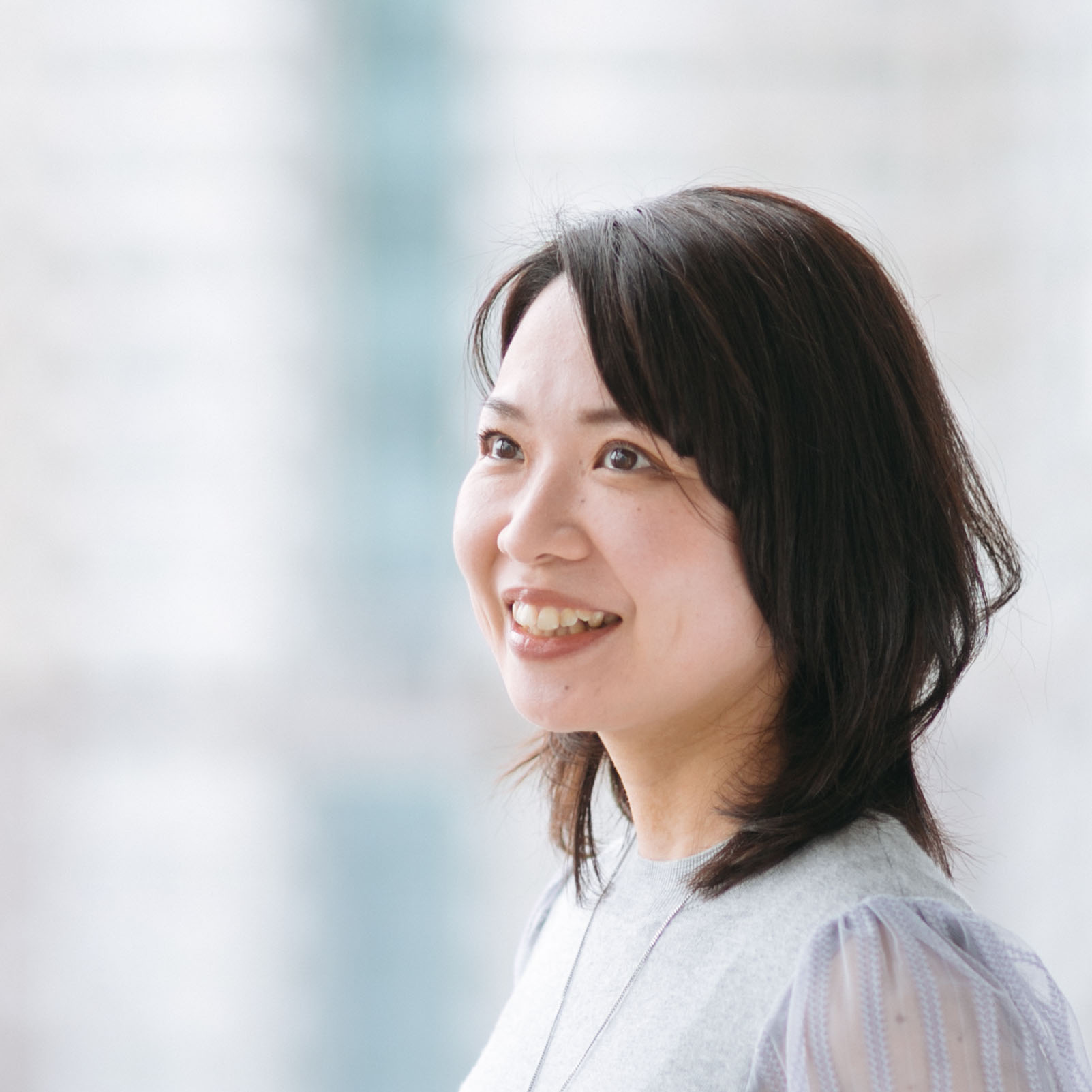
Aya Nakagawa
Nara National Museum curator and curator.
As a mother of two elementary school children, she is active in researching the history of metal crafts and exhibiting at the museum she belongs to.
At the special exhibitions he is in charge of, the exhibition planners of our company pay attention to him every time he holds a novel approach and display ideas.
Shimoguni
Excavation is an image of an archaeologist, but he is a civil servant!
I thought Inty Jones and adventurers were more gambling professions.
Nakagawa
Certainly, it is extremely important for people involved in excavation to hone their sensibilities!
In order to achieve results under limited conditions, such as an eye for assessing the soil, arrangements in a limited construction period, and cost estimation.
I need a hunch.
Archeology is special among various academic fields, and the distinction between professionals and amateurs is very vague.
First of all, even if you are not a researcher or curator, you can publish your research results.
A city hall employee from the Cultural Properties Division sometimes writes a thesis as a "researcher."
Curators who belong to museums are engaged in curatorial work during business hours, not only for research and exhibition,
I do a lot of different things to run the business.
I don't have enough time for research during work hours, so I spend my private time doing research and writing papers.
Isn't it similar to NOMURA Co., Ltd. 's creative work?
Shimoguni
I go to see exhibits and facilities that will be helpful, and I act while I have work in my head.
In that sense, there is certainly no distinction between on and off.
Nakagawa's research and papers are
For us, it is "thinking about exhibitions, communicating plans to clients, and creating".
These deliverables are part of the work to convey the plan, and the important thing is
I think that it is “self-development” that produces knowledge that produces them and plans that sell.
I guess you could say "create yourself".
(Photo by Hideki Sato)
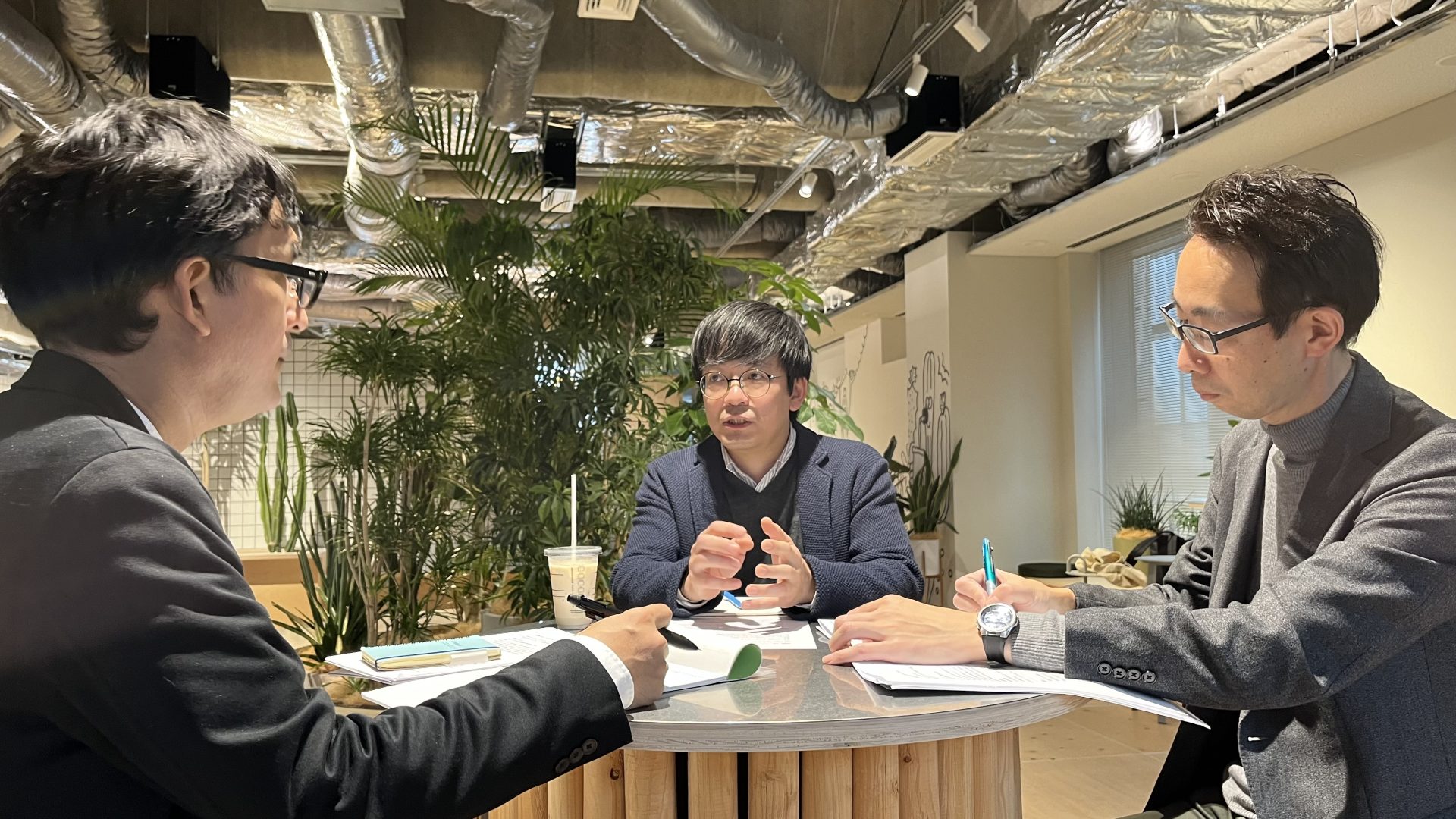
In fact, this time, not only me but also another planner joined in a three-person talk. Since each of them has a completely different background, it was a conversation from a variety of perspectives.
(Left) NOMURA Co., Ltd. Planner/Mao Horii (Center) Aya Nakagawa (Right) NOMURA Co., Ltd. Planner/Yuki Shimokuni(PHOTO by Hideki Sato)
*As for the job of archaeology curator, he actually graduated from a graduate school in science after that,
We had an in-depth discussion with Horii-san, who is in charge of exhibition planning for natural history museums and science museums. We look forward to Horii-san's nomlog writing!
The relationship between curators and exhibition companies as seen through the example of an exhibition at the Nara National Museum
Nakagawa
At the time of Nabunken, it was a handmade exhibition that we did from planning to construction by ourselves.
The person in charge assembled the exhibition plan by himself and ordered the production to the construction company.
For catalogs, we just create the planning structure and page layout ourselves, and then have a vendor print them out for us.
Part-time workers with skills such as “can do graphic design” and “can draw illustrations”
was hiring.
Shimoguni:
The more you go to the countryside, the more handmade the exhibits are.
It's a warm feeling, with a direct expression of the thoughts of the curators and facility operators.
When there is a request to renew a facility, such “feelings” and “likeness” create a concept.
become the nucleus.
Nakagawa
The Nara National Museum (hereafter abbreviated as "Nara Expo") is large in scale, so the atmosphere of the exhibition is different.
The curator will indicate the academic policy to some extent, and after that we will ask the exhibition company to plan.
It's interesting to come up with completely different ideas.
Shimoguni:
When creating exhibits, there are commentary panels to deepen the understanding of the exhibits.
Does Nakagawa-san also write the manuscript?
Nakagawa
write write! I will write a lot.
Some (among the curators) do not write, and some write too much.
Too many sentences, too difficult to express...Think about having visitors read and deepen their understanding.
I feel that it is necessary to change the awareness of curators because there is a need.
In the old days, when making catalogs, they were laid out by hand on A4 paper, and the photos were copied and pasted one by one.
I was peeling it off.
Now you can submit manuscripts with design software such as Illustrator and InDesign, as well as PowerPoint.
It has become much easier to pour characters and create paper.
But most people are still analog (laughs)
Shimoguni
Knowing that there were few job openings for curators and that there were companies that created exhibitions, I decided to start an exhibition company like ours.
Some people aim or come to change jobs.
When I was a student, I also thought that museum curators planned and installed all dinosaur and mummy exhibits.
Of course, there are many exhibitions held only by curators,
It is necessary to design the space when building the museum itself or when renovating the exhibition room after setting it up.
An exhibition planner / space production company like us can help you
It's going to be a project.
Buddhist Art Exhibition at Nara National Museum: A "Welcome" Approach to Lowering the Barrier
Shimoguni
I would like to introduce the special exhibition that Mr. Nakagawa worked on last summer.
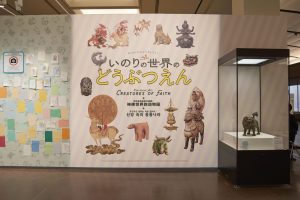
Nara National Museum Special Exhibition “The Animal World of Inori” July 13 (Sat)-September 8 (Sun), 2019
*This exhibition has already ended.
A summer vacation special exhibition that introduces a collection of works representing animals and imaginary creatures from Buddhist art.
We will approach the secret of why "animals" are so popular in the world of Buddha and gods.
Also, before Buddhist art was created in earnest in Japan,
We will also introduce animal sculptures related to life in our lives.
From children to adults, it is full of various ideas that can be enjoyed while being excited.

Shimoguni
I saw it in July just before the summer vacation.
When we think of exhibitions at the National Museum, we tend to think of it as a precious time spent admiring treasures.
This exhibition was an exhibition story that intentionally divided the way of looking at the works.
When you see a lot of exhibits, which one did you see today? And my memory tends to be vague...
Exquisite selection of exhibits based on "animals" and theme setting, all of which are memorable
It was something. Please tell us about your role, concept and goals in this exhibition.
Nakagawa
The role is the main person in charge of the entire exhibition. I raised my hand to propose a plan for the summer vacation.
It's sudden, but do you know what "Shichishichiki" means?
Shimoguni
Excuse me... I studied Buddhist art when I was a student, but I don't understand at all! (smile)
Nakagawa
The answer is the "forty-nine days" of the important Buddhist memorial service. 7 x 7 means 49 days.
Not only can you appreciate the prestigious exhibition, but you can also have an extraordinary experience, which is wonderful.
However, there is no explanation of words on the explanation panel, and difficult words and terms may be written.
To be honest, even as a researcher, there were some things I didn't understand even after reading the commentary panels in different fields.
I was ashamed of not knowing and felt rejected.
Furthermore, even ``forty-nine days'' is not universally recognized in other languages, so an explanation is necessary.
Shorten the distance to Buddhist art, which has a high threshold. you are welcome
Rather than letting you know all of the works in front of you,
My first thought was to find phrases that people could relate to.
So I cut off academic information.
The concept is "welcome".
Shimoguni
Cut academic information straight away...that's a difficult thing to do, isn't it?
How was the result you saw beyond the frame that exhibition should be learning?
Nakagawa
During the exhibition, I visited the venue many times to see how the visitors were doing.
We also conducted a face-to-face questionnaire for visitors...
When I asked families staying in the experience corner, adults watching alone, and visitors from overseas,
It was also highly rated by those who said, "I have been to Nara Expo three times or more."
I was happy that it was well received by regular visitors.
Shimoguni
Even though I tried something new, the regulars said, "It's different from the usual exhibition."
As the person in charge of the planning exhibition, I'm in trouble. It also makes it harder to challenge yourself.
Nakagawa
I realized the difference between feeling familiar with the exhibits and feeling that the contents are thin.
If the exhibition planner has a solid concept and shows what they want to convey,
Even if it's different from usual, I wonder if it resonated with people who originally liked appreciation.
Shimoguni
Ah, I understand that.
I also thought, "Isn't it better to have a more free way of communicating?
I think it would be good to sharpen the project and say that this kind of presentation is a feature and individuality.
While we've been receiving a lot of heated talk, do you like exhibitions, Mr. Nakagawa? Do you like making exhibitions?
Nakagawa
I love looking at it and making it!
The exhibition work is very attractive, and if I have two bodies, I would like to work at NOMURA Co., Ltd.
At my root, I have a desire to know more about the world,
I don't just want to know, I want to understand while being moved.
For that reason, I think it is important to have “things”.
It's not only two-dimensional information, but the existence of things shakes your heart.
However, as someone involved in the creation of the exhibition, there was one thing that bothered me.
When I checked the reputation on SNS, there were many "favorable" comments from art lovers, saying, "Although it is for children, there are many national treasures and important cultural properties."
But that
Not the exhibition itself, but the value of things (and the value given in modern times) is just appreciated...?
It was a shock. If the item is of high quality, will the visitor satisfaction be high?
How many people are shaken by the story and composition? don't you need it? and.
Shimoguni
Certainly, if there is a good one, the story doesn't matter! There is also an exhibition called.
Just looking at it is enough to satisfy you, which is close to art appreciation.
Talking about this matter is quite addictive and interesting, so let's do it again next time! (smile
Venue entrance (courtesy: Nara National Museum)

In addition to the venue entrance, a photo spot booth was set up at the museum entrance. The characters are so adorable!

"Yuru Venue Report" drawn on the Shinkansen on the way back because photography was prohibited inside the museum

Yuru-chara discovery! cute. . (Shikamaro-kun belongs to: Nara City Tourism Association)
Learning about the roles of curators and exhibition planners from exhibit creation at the Nara National Museum
Shimoguni
In fact, when you were at Nabunken, you were working with our planners to create an exhibition.
Were there any differences or good points between an exhibition created only by curators and an exhibition with an external exhibition planner?
*“Heijokyo Izanaikan”: Guidance facility built in the Suzakumon Hiroba maintained in the National Heijokyu Ruins Historical Park.
The space is roughly divided into three parts, and each zone has a different perspective, and by impressing the specialness through the five senses, it is an exhibition that leads to the impression of the site.
Opened in 2018.
Nakagawa
I am very interested in the exhibition and wanted to make it better, so I am similarly conscious of the exhibition.
It was very helpful to have a planner to talk to.
However, the owner of Heijokyo Izanaikan was a separate organization from us, who planned and proposed the project, so the planners were able to do their best.
I have the impression that it didn't burst (laughs).
It was a shame because it was an opportunity to collide ideas with an outside exhibition planner.
However, I thought that having a planner who is a professional of the exhibition would raise the level of the design.
I think that a "planner" is essential to create something that moves people's emotions in an exhibition and make it comfortable.
Shimoguni
We are not 100% planners/designers who create exhibitions, but we are
I'm going to study a lot.
First of all, if you don't have the basic knowledge, what the curator or person in charge wants to convey, and what is the point
Because I don't understand.
It is important to break it down further and plan and design stories and presentations that are easy to convey to visitors.
I think it is the role of exhibition planners and exhibition designers.
What kind of person do you want your exhibition planner to be?
Nakagawa
Personally, I want planners to come without studying!
It's a waste to know that the number of views from different angles decreases.
It is my personal hope that we would like them to confront us with a perspective and sensibility that we do not have.
It is important for the curator to show the planner the facts and information that he/she wants to convey.
I think it's a role in the making of the exhibition.
In the first place, I think that curators have a love for the things and things they are in charge of.
I am interested in collecting, storing, and researching exhibitors.
That said, although I would like to have (planners), it is quite scary to have an external organization create an exhibition alone.
If I don't have someone who understands my work the best, I worry a lot.
The curator will protect it no matter what! Because it is at the root of
On the contrary, there are parts that are too biased towards storage and display (laughs)
Shimoguni
It is just an exhibition of research presentations if the facts and information are just leaked.
We don't need there.
Isn't it better to study planners in order to express what you want to convey and show as much as possible?
Of course, I can't reach the level of a curator, but I want you to see and feel Mr. Nakagawa's exhibition creation.
As if to narrow down the points, ask questions such as "This is an interesting point!"
In order to create new perspectives to create empathy, we ourselves must ask ourselves, "Hey!" and "Why?"
I think that people who think "It's interesting" will increase their expression and creativity!
After that, Mr. Nakagawa and I had a great time asking, "What is the ultimate exhibition you want to create in the future?"
However, since you've already read this far, I'm sure you've scrolled through the screen quite a bit, so please go somewhere else!

(Photo by Hideki Sato)
Since we work together to create the exhibition, the curators and the exhibition planners are both customers and like comrades.
In order to create a better exhibition, there are many things to passionately argue, empathize and learn from each other.
【notice】
The 2nd special exhibition by hot curator Mr. Nakagawa!
Special Exhibition in Commemoration of the Imperial Palace "Reviving Shosoin Treasures -Tenpyo Techniques Seen in Reproductions-"
Scheduled to be held from April 18th to June 14th, 2020.
(Due to recent circumstances, the date and time of the event may change. For details, please see the Nara National Museum website.)
*This exhibition, which had been postponed due to the spread of the new coronavirus infection,
Due to the inability to prepare for the exhibition as scheduled, the Nara National Museum's exhibition period has been changed as follows.
(2020.7.7 postscript)
Date: July 4th (Sat) – September 6th (Sun), 2020
The Shosoin Treasures, which have survived nearly 1,300 years to the present day, are extremely fragile.
Except for a part of the exhibition at the "Shosoin Exhibition" held in Nara every autumn, it has hardly been shown to the public.
Full-fledged imitation of the Shosoin treasures began with the Nara Exposition held at Todaiji Temple in Nara during the Meiji period.
Initially, imitation production was tackled as a business integrated with repair,
From 1972 (1972) by the Shosoin Office of the Imperial Household Agency, which manages treasures
Imitation production began with an emphasis on faithfully reproducing the materials, techniques, and structures of treasures.
From among the hundreds of reproduction imitations produced so far, this exhibition presents
It is a collection of selected gems in one place and open to the public.
Experience the beauty and skill of the recreated Tenpyo,
You can also feel the significance of inheriting Japanese traditional techniques.
https://www.narahaku.go.jp/exhibition/2020toku/homotsu/homotsu_index.html
※please note
・The address of the website posted in this notice is the one at the time of creation of this page.
・The website address may be abolished or changed.
Please check yourself for the latest address.
❆°˖❆˖°❆*❆°˖❆˖°❆*❆°˖❆˖°❆*❆°˖❆˖°❆*❆°˖❆˖°❆
Aya Nakagawa, thank you for appearing as our second guest! !
Who can you meet in the 3rd interview? Please look forward to it.

Like this article?