空間づくりの“裏側”に広がる信頼とつながりの軌跡 DESIGNART TOKYO 2025『CREDIT -手間のかけら-』展
2026/02/04- share
-


- text and edit by
- nomlog editorial department
DESIGNART TOKYO 2025 was held from October 31st to November 9th, 2025, in various locations around Tokyo, including Shibuya, Omotesando, and Roppongi. This marked NOMURA Co., Ltd. third time exhibiting on the theme of sustainability. This year, they once again held the exhibition "CREDIT - A Fragment of Effort," based on questions and design approaches toward a sustainable society.
Every day, we are involved in creating spaces under the vision of "opening up all kinds of spatial possibilities, starting from the creativity of each individual," but the concept for this exhibition was expanded from the hypothesis that "if we could show people what goes on behind the scenes in creating a space, perhaps it would deepen their attachment to objects and spaces."
In this article, we look back on the "CREDIT - A Fragment of Effort" project through the exhibition and the talk events held during the exhibition.
--------
<Notice of re-exhibition>
This exhibition, as well as other exhibitions from 2023 to 2025, will be on display at the "NOMURA OPEN LAB" to be held at NOMURA Co., Ltd. from February 2nd (Mon) to 6th (Fri), 2026. Don't miss this opportunity to see them.
DESIGNART Archives
・会場 乃村工藝社本社 地下1階 ノムラスタジオ
・会期 2026年2月2日(月)~6日(金)
・時間 10:00-17:30
・主催 乃村工藝社 クリエイティブ本部 未来創造研究所
・公式サイト NOMURA OPEN LAB 2026
https://rd.nomurakougei.co.jp/topics/event/page/nomura-open-lab-2026
―――――
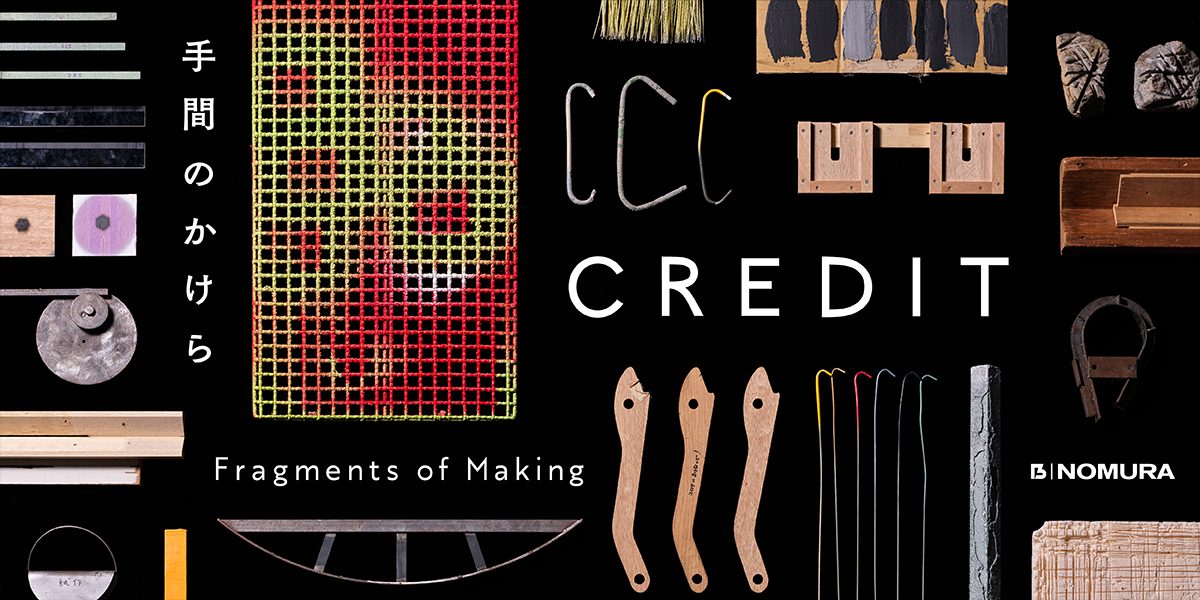
"CREDIT -A Piece of Effort-"held atHarajukuSAS
NOMURA Co., Ltd., which gave presentations at DESIGNART TOKYO in 2023 and 2024 on the theme of "sustainability," decided to start its 2025 presentation with the following questions in mind: "How can we express the idea of long-lasting use and caring for things?" and "What kind of expression can we use to give people the feeling of caring for space?"
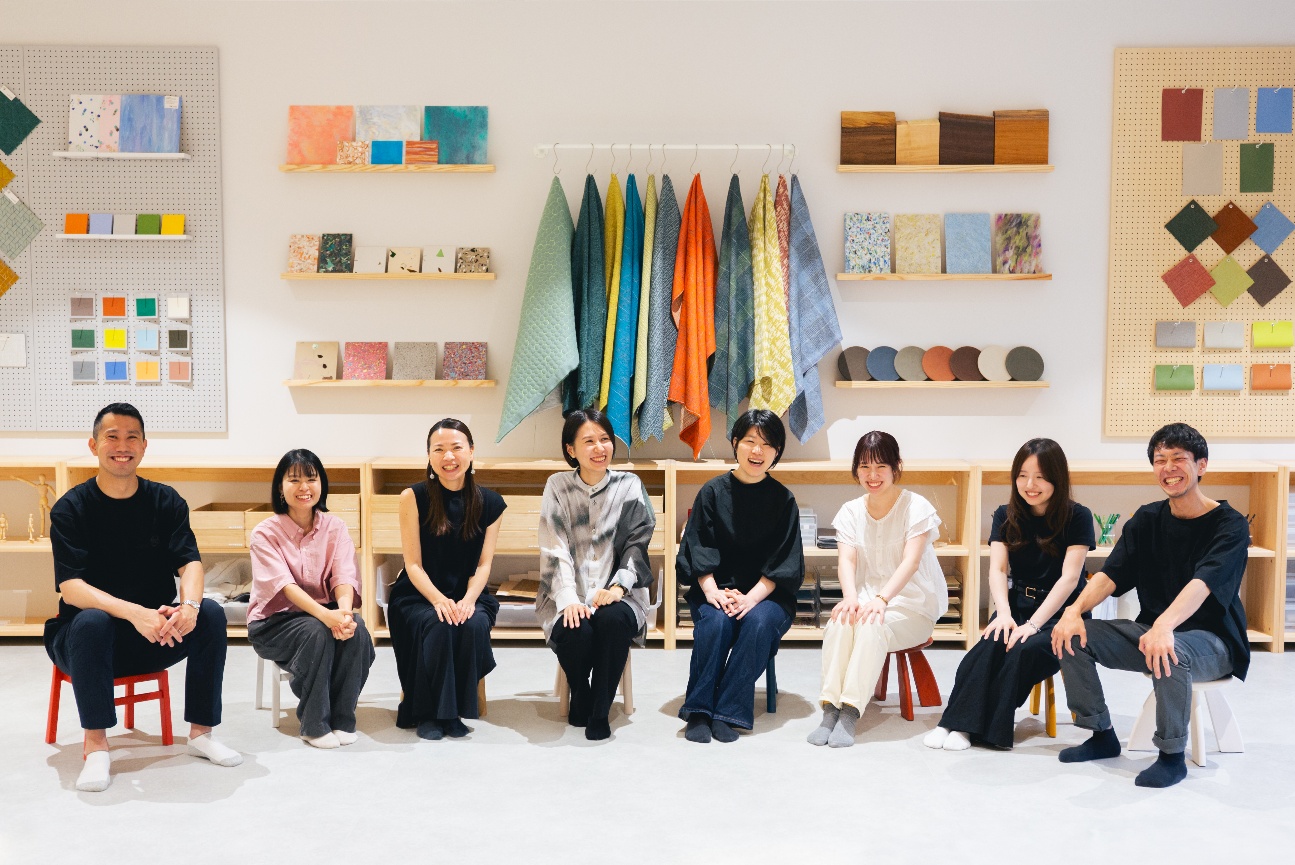
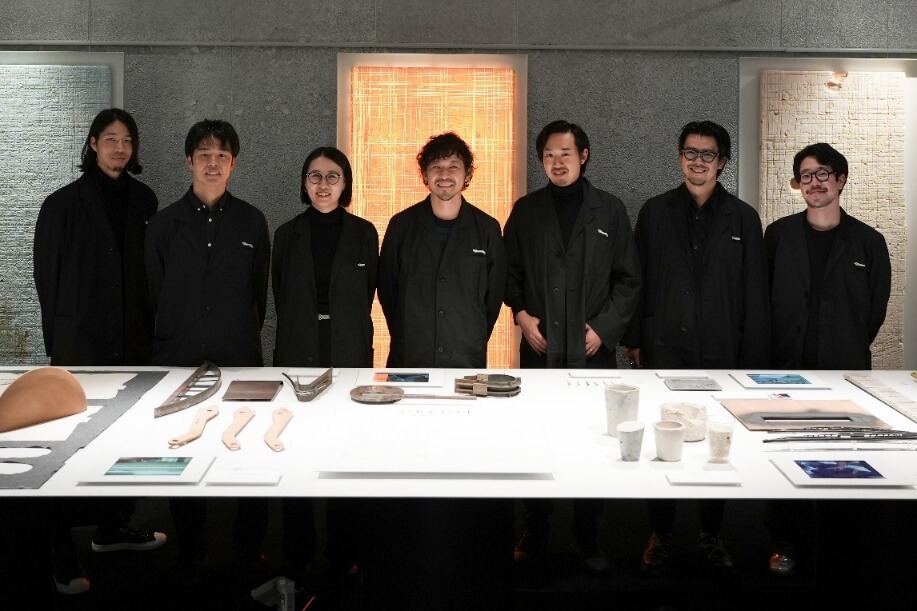
The project members consist of six young designers who handle spatial design and branding for corporate PR facilities, hotels, residences, and exhibitions, and one production manager who is responsible for on-site supervision and construction management.
NOMURA Co., Ltd. Co., Ltd. Shimizu Shigemi, Yasuda Hiroki, Watanabe Kotaro, Nishihara Kai, Toyoda Mayu, Yamanashi Ren (all designers), Arai Mikio (production manager)
*Titles and affiliations are current as of November 2025.
The exhibition "CREDIT - A Fragment of Effort" held at the Harajuku space "SAS" was conceived as an experimental initiative towards a sustainable society, not to question the value or design of the objects themselves, but to create an opportunity to bring about a slight change in the "criteria for selection" and "way of looking at things."
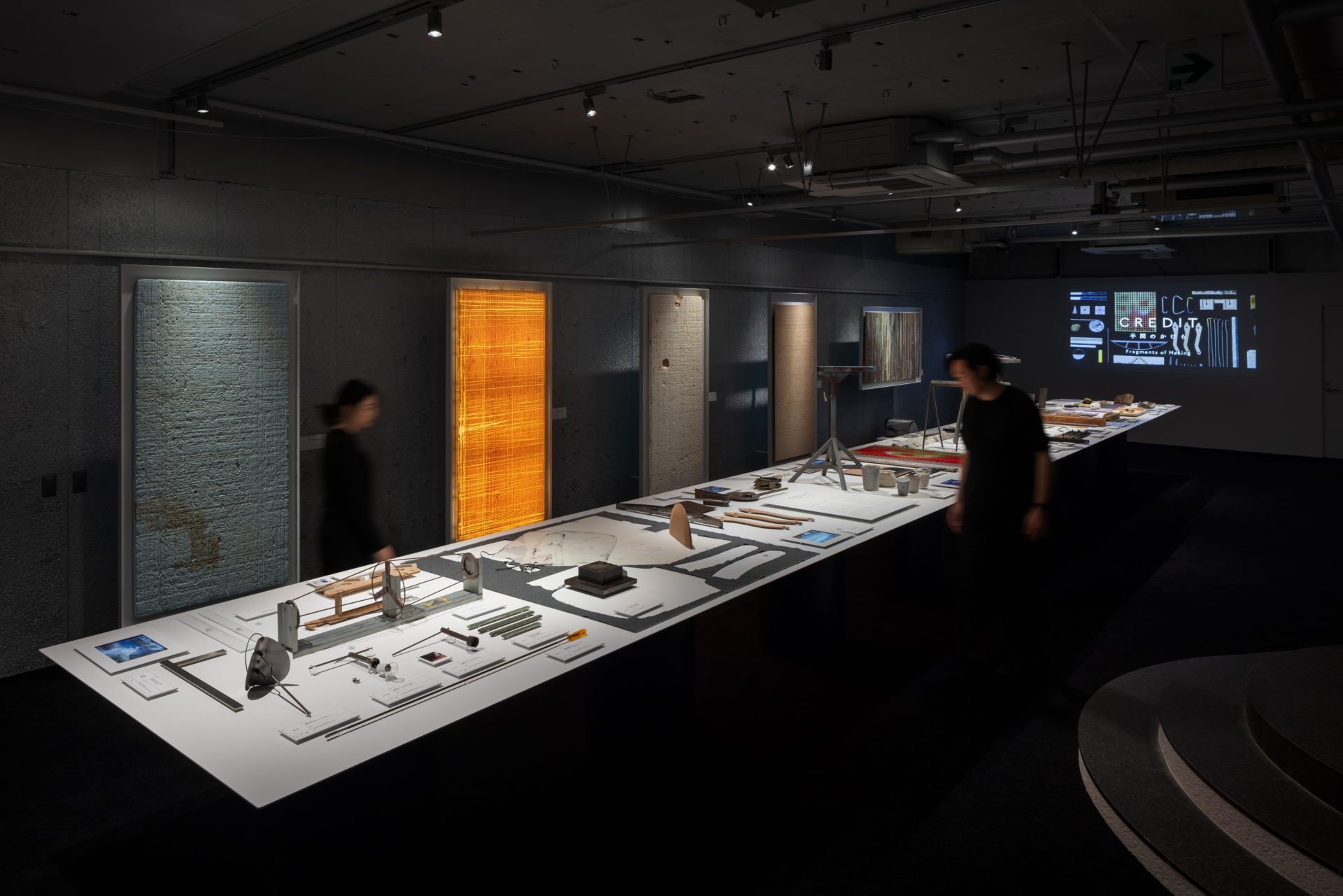
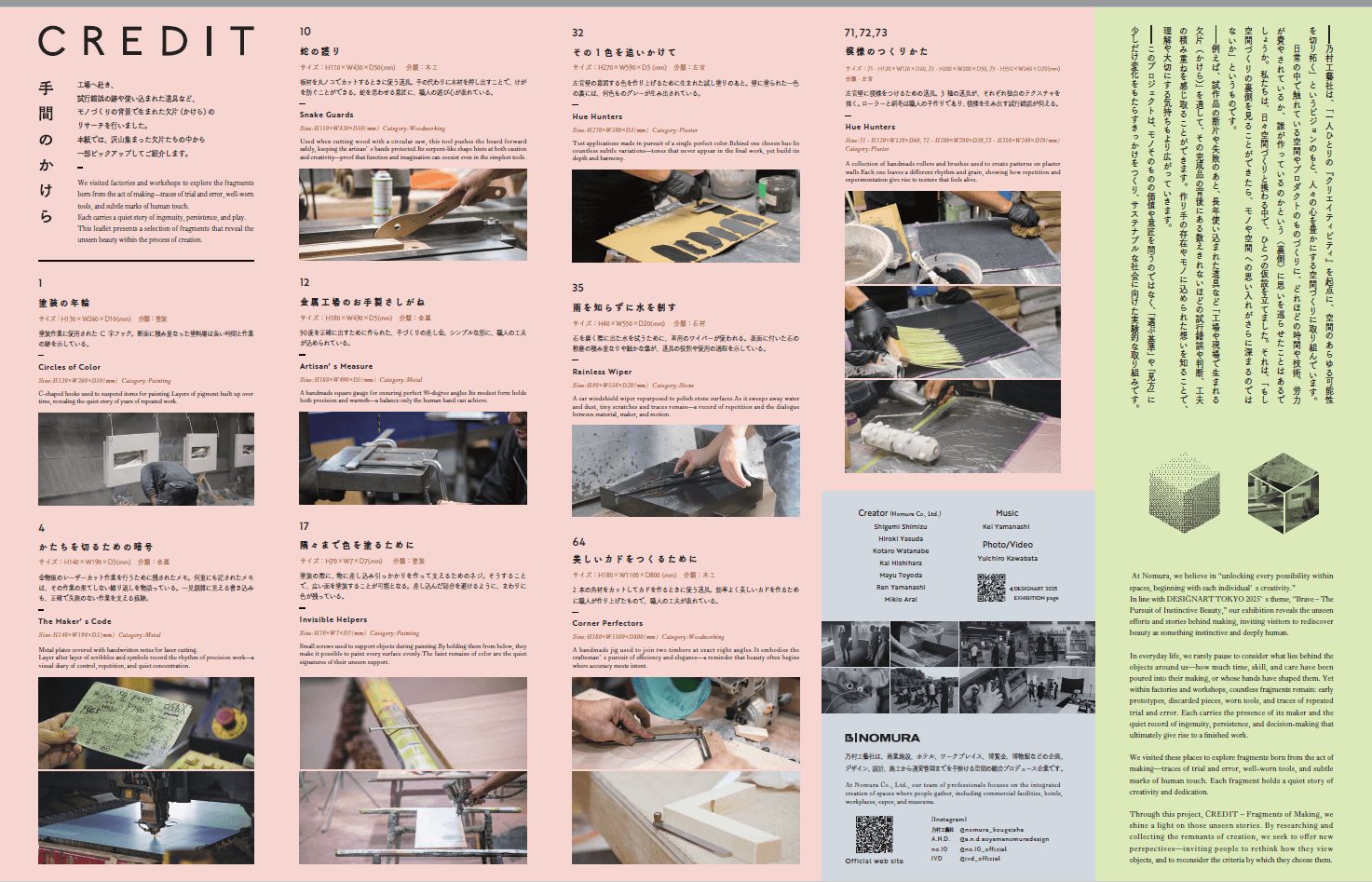
In preparation for the exhibition, designers and production managers visited the people from partner companies around the country who normally support NOMURA Co., Ltd., Ltd.'s spatial creation in every aspect, particularly the craftsmen who are responsible for manufacturing at factories and construction sites. They collected "fragments" such as tools used daily and fragments of prototypes left in corners of factories, and the exhibition displayed the actual tools and prototypes along with videos and stories. By visualizing the effort and ingenuity of the craftsmen involved in creating the space, such as who uses them for what tasks and how they were made, the aim was to heighten a sense of appreciation for the space.
In a special interview published on DESIGNART TOKYO's official website ahead of the exhibition (https://www.designart.jp/designarttokyo2025/interview/13591/), designer Yasuda spoke about the exhibition, saying, "Even though we often visit construction sites and factories for inspections, we rarely have the opportunity to hear the real voices of craftsmen. I think there is meaning in approaching this issue with a reverse approach, and creating an exhibition where the perspectives of the makers and the designers overlap."
Watanabe also said,
"My source of inspiration came from the vegetables with faces you often see in supermarkets. When I wondered why we are tempted to choose them even if they are a little more expensive than others, I thought that perhaps the face of the producer could be replaced by the effort that went into the design and the ingenuity of the artisan. Being able to see the effort and ingenuity increases trust, and like film credits, allowing people to see what goes on behind the scenes of how something is made increases its value. That is one of the meanings behind the design."
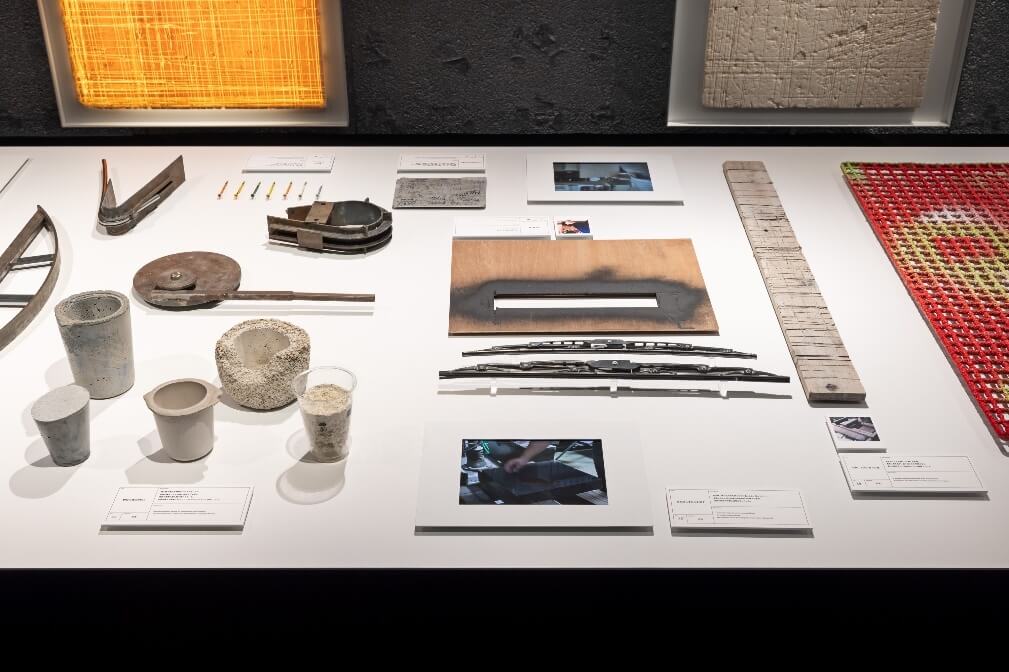
During the 10-day event, many visitors came and interacted with the project members who were present, as well as the cooperating companies and craftsmen who provided the tools and prototypes. Here are just a few of the comments we received.
――――――――
- I felt that it was significant that NOMURA Co., Ltd. was holding this kind of exhibition. I thought it was great that the perspectives of the construction company and craftsmen were presented equally on the one hand, and the perspectives of the designers and viewers on the other, so that there was no superiority or inferiority between the two. (Designer)
- I realized that it is important to know the background when selling something. (Manufacturer)
- I was surprised to see how something that we normally see casually can look so cool just by changing the way it's presented. I realized that there are people who find value in things that we think are worn out. (Construction company)
- I found the process of using things (tools), using them again, and making things interesting. (Elementary school student)
- It was also good that the designers explained the exhibits and we were able to deepen our understanding by viewing them while having conversations with them (Art and design industry insider).
――――――――
A talk event was held with Shiota, editor-in-chief of "Shotenkenchiku"
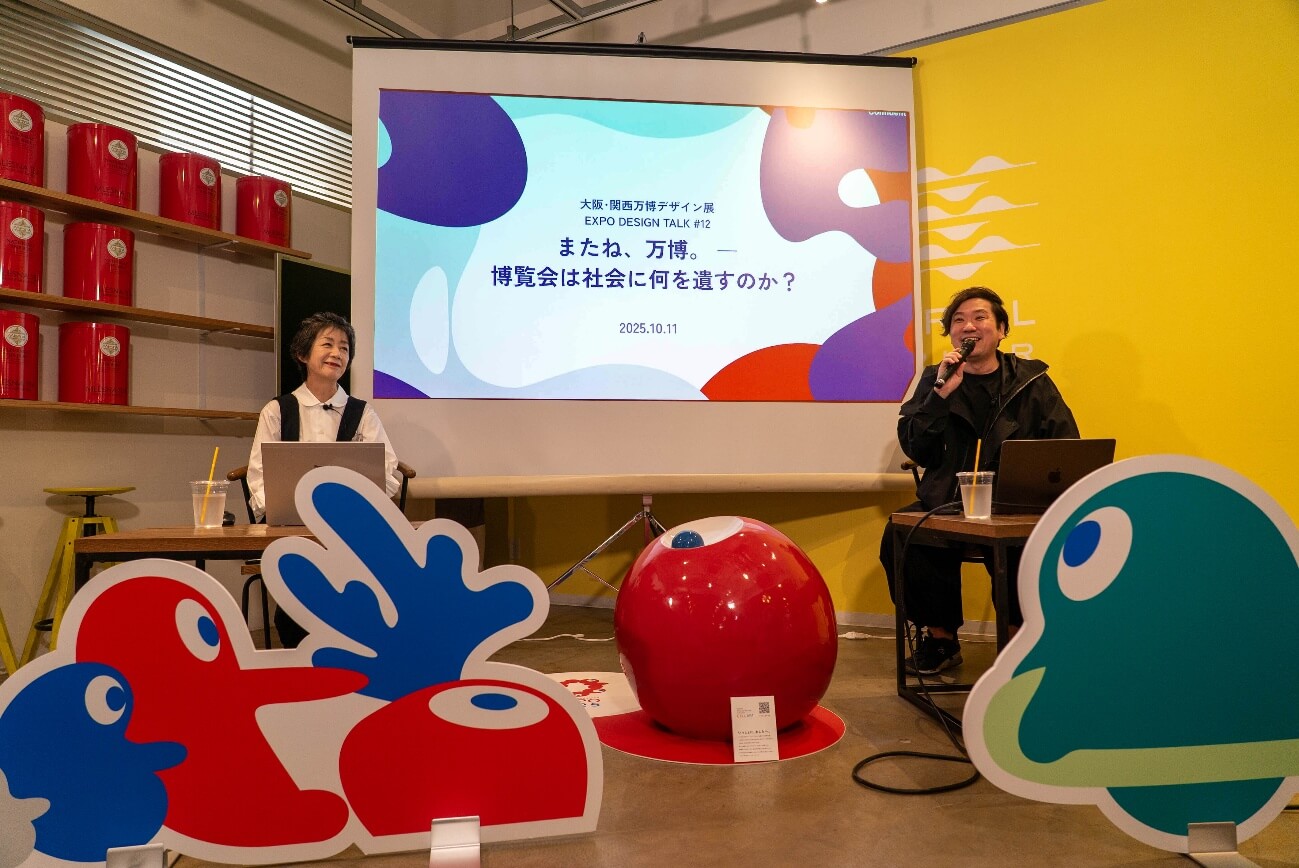
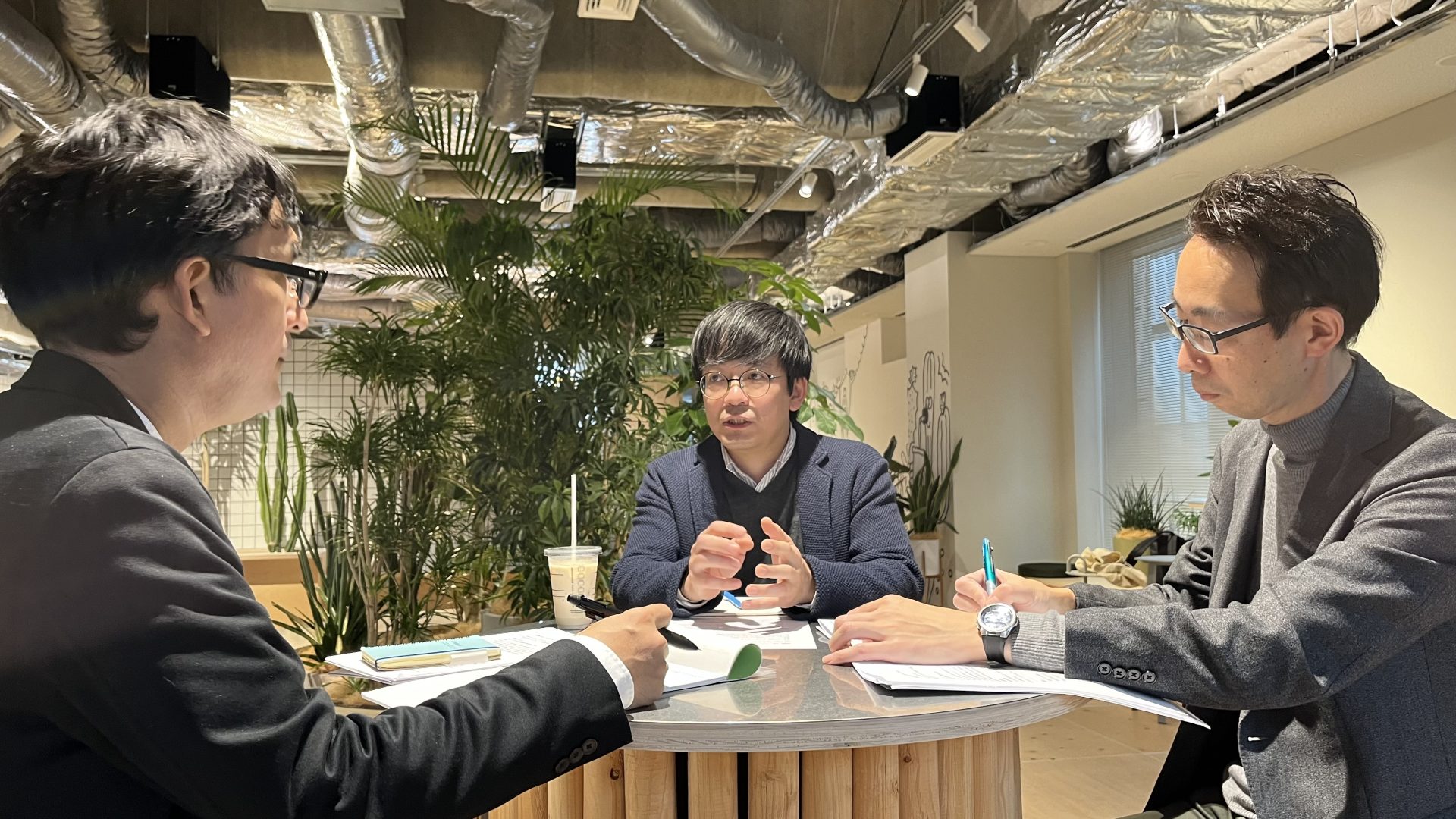
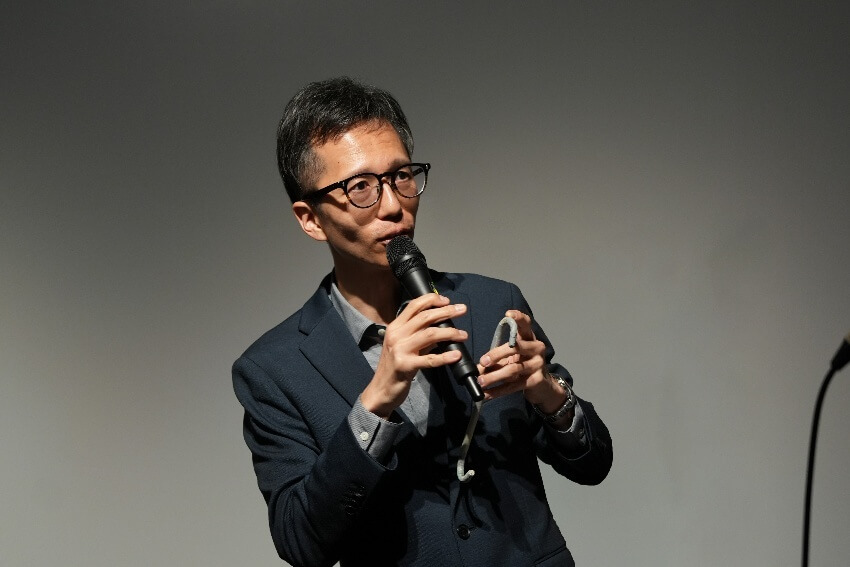
A talk event was held on November 4th during the event, welcoming Kenichi Shiota, editor-in-chief of "Shotenkenchiku" as the audience, and Shimizu, Watanabe, and Yasuda, representing the project members, took the stage. The event began with a quiz for the audience.
"What do you make with this tool, and what kind of work is it used for?" asked Editor-in-Chief Shiota, holding up an item he had picked out from the exhibition space.
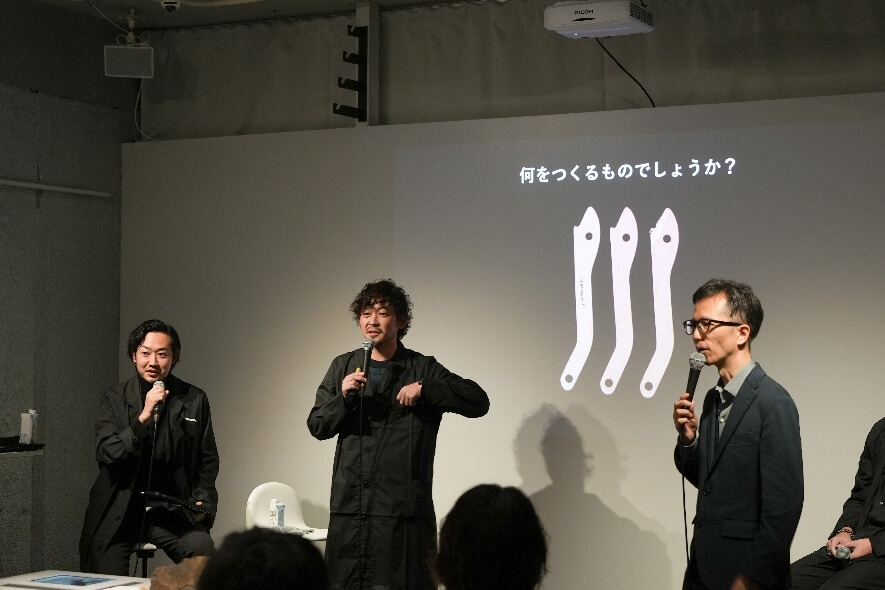
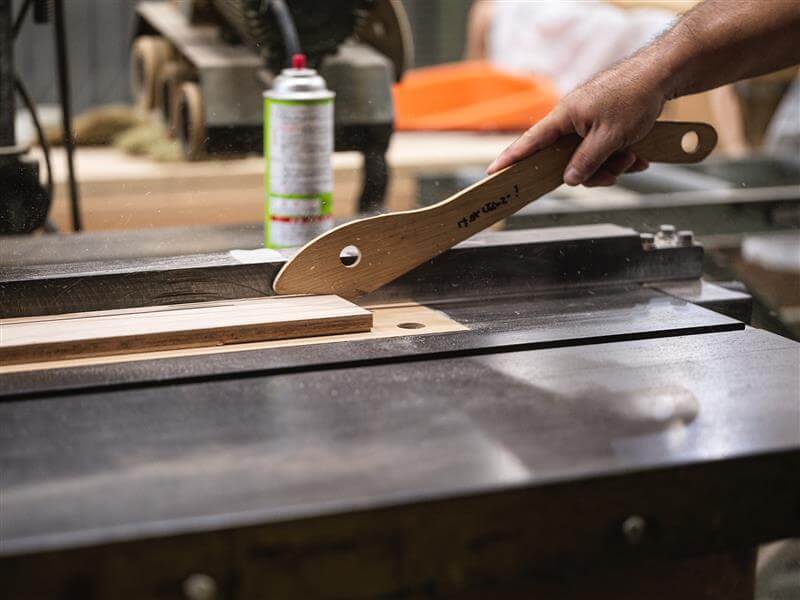
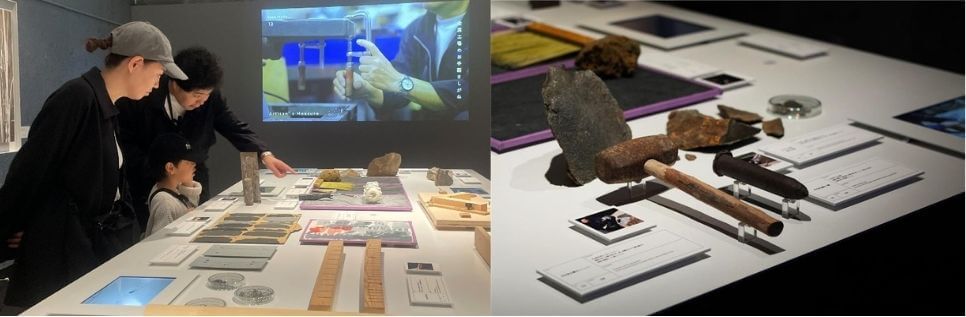
The correct answer was a "snake charm," a tool used to support the hand when cutting thin wooden parts with a circular saw. Other items on display included notes filled with scribbles on how to work accurately with a metal laser cutter, and sponges and roller brushes used to apply patterns to plaster walls.
After viewing the exhibition, Editor-in-Chief Shiota commented, "It made me think about a lot of things and I felt that it was an exhibition that really made me feel something."
Editor-in-Chief Shiota
First of all, I think the method of showing what kind of people are making the products and what process they go through is appropriate for the current era.
The idea of open kitchens in restaurants and traceability of ingredients has been around for a while, but it's also becoming more common in retail businesses, with skincare brands showcasing their manufacturing processes and setting up cafes and event spaces, for example. Making processes transparent and letting customers know about them is a way of creating fans and increasing the number of people who understand, and this exhibition is interesting in that it fits right in with that trend.
And the way I saw the city changed before and after seeing the exhibition. I walked back to Shibuya Station, and things like shop doorknobs, streetlights made from bent iron pipes, and guardrails caught my eye. I wondered, "How did they bend it at such a right angle?" or "How did they make this gentle curve?" The resolution of my vision of things increased, and I was able to imagine who made it and how, and I really felt like I'd been blown away (laughs).
Shimizu
Thank you very much for your wonderful feedback. I think you have truly fallen into the "swamp of the background of manufacturing."
Visualizing the "effort" and "ingenuity" that had not been communicated until now
Preparations for this exhibition began around spring, but Watanabe revealed, "For about three months after we started, we had a common understanding that we wanted to use this design to make the space look better, but we weren't making much progress in any concrete way."
Watanabe
As the members continued to brainstorm, the idea that came to mind was the value they felt for the vegetables they could see the faces of, sold at supermarkets. What makes people want to buy them? We thought that if we applied this to creating a space, it could lead to new values and realizations.
In the pages of Shoten Kenchiku, the staff and construction companies involved are credited, but I wondered how we could convey their value more clearly, like the faces of vegetables.
After much deliberation, we came up with the question: by making visible the efforts and ingenuity of the craftsmen, we might be able to increase the sense of cherishing the space and raise the value of the space itself.
Editor-in-Chief Shiota
I see. So you're saying that by letting everyone experience the finished space and learning about the effort and ingenuity that went into it, they'll be able to enjoy it more deeply and it'll look even better.
Yasuda
Even before the planning for this exhibition began, I had been thinking that it would be nice to exhibit it somewhere, so I came up with a variety of ideas. For example, one of the exhibits in this exhibition is the Styrofoam that the craftsmen used as a base when cutting boards and plywood when setting up this venue, and by the time one site is finished, countless cut marks remain. However, once the construction is finished, it is thrown away.
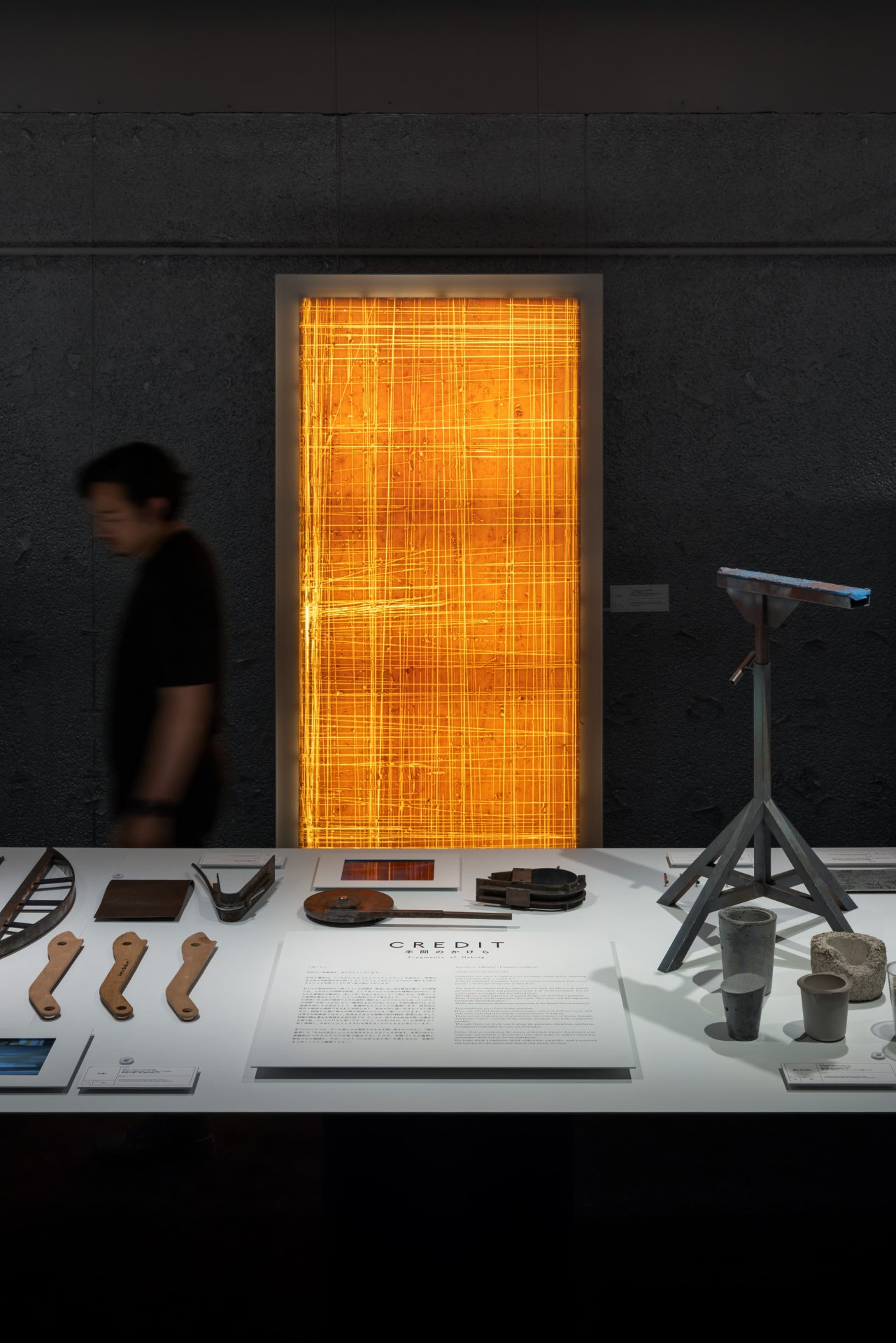
"When you attach a frame and shine an internal light on it, it looks like stone or wood, but it's actually Styrofoam," says Editor-in-Chief Shiota.
Shimizu
Looking back, I think that until now, the value of a space has only been measured in the finished product, and although it takes a lot of time and people, we haven't really seen who created it and how.
Editor-in-Chief Shiota
Now that you mention it, it certainly is an important thing. By transmitting the labor and traces of history along with knowledge and information, we can gain a deep sense of emotion that goes beyond just being fun, interesting, or beautiful, which is a uniquely human way of enjoying things.
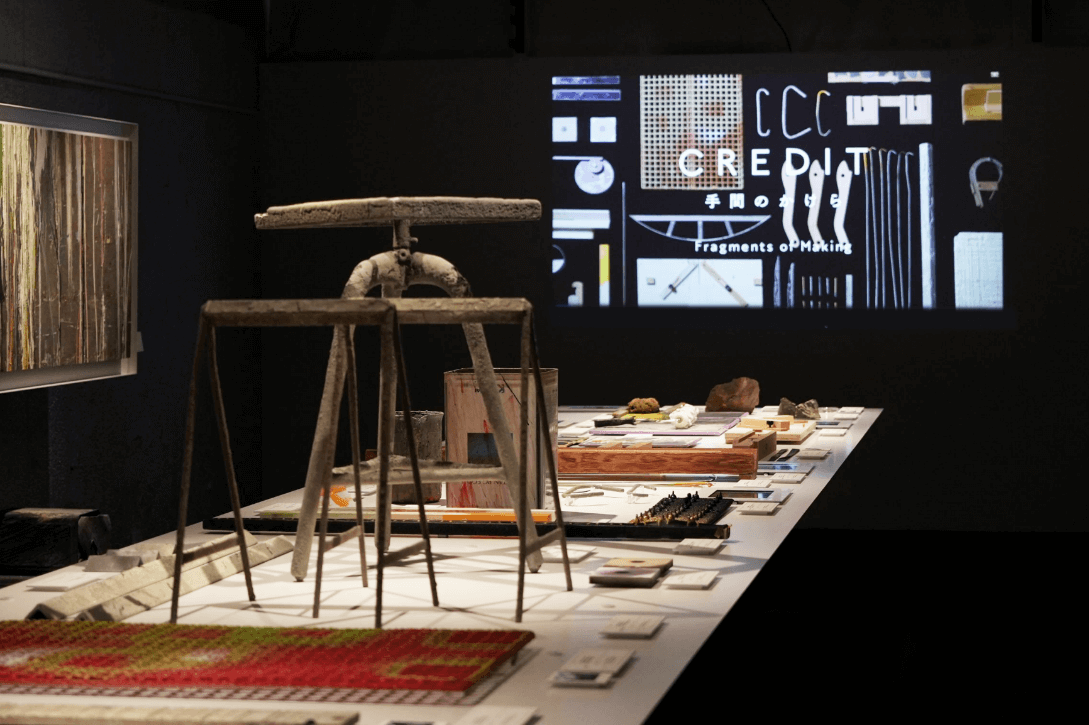
A space reminiscent of the end credits of a movie, with displays of tools whose functions are unclear
Regarding the overall space of this exhibition, Yasuda said, "I imagined it as a floating piece of paper, like the end credits of a movie, and I arranged traces of the people who were involved on top of it."
Editor-in-Chief Shiota
This is truly an opportunity for the designer to show off his skills. It's a space that can be enjoyed like a piece of contemporary art, changing the way we see things.
The title of this exhibition, "CREDIT -Fragments of Effort-," expresses the concept of the exhibition well, but it must have taken a considerable amount of effort to research and collect the items on display here from factories and business partners across the country.
Watanabe
Well, first of all, this isn't a tool exhibition, but rather I wanted to show how interesting it is that spatial creation can be so unusual and involve so many different people, and to show the value of that.
When creating a space, everything is haute couture, custom-made. All the tools are made just for that purpose, and when you go to the factory, you see a lot of tools you've never seen before.
Therefore, the items on display are selected to be human-like tools that are unique to haute couture manufacturing and spatial creation, tools that convey the love of the artisans.
Shimizu
When I collect things, the key point is to find things that are unique, in a good way. Things that reflect the owner's wisdom, as expressed through their story.
Yasuda
For me too, rather than just thinking that something is cool or beautiful, I also think about the value of time, such as how much time it took to make.
Editor-in-Chief Shiota
I see, it seems that human-like tools and quirky things have similar meanings, and it's important to be able to sense the time and effort that went into making a tool. That's why their roles aren't clear, and it's hard to tell what kind of tool they are, which is interesting.
When asked about their favorite items, Yasuda mentioned the aforementioned Styrofoam, while Watanabe chose colorful plywood.
Watanabe
It looks like a Jackson Pollock work (drip painting, where paint is sprinkled on a canvas placed on the floor), but it is actually paint that was flowing from used 18L cans in a paint factory and was placed in a place to prevent it from touching the walls and floor of the warehouse.
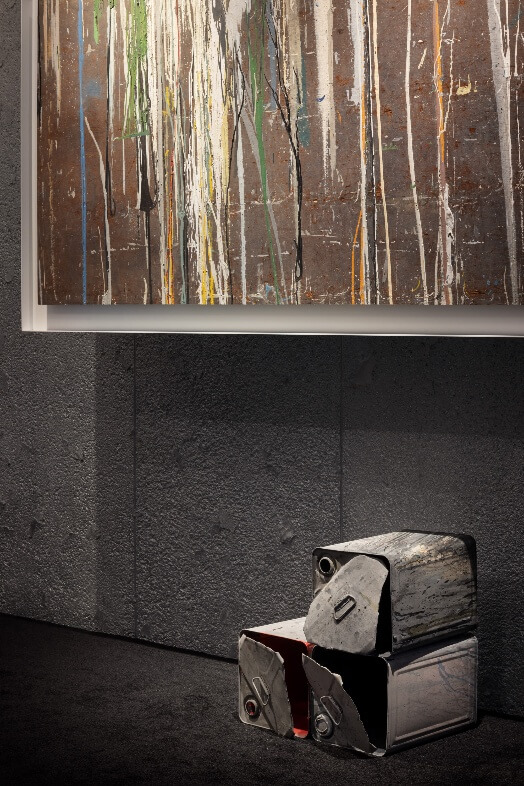
When I tried to borrow it for this exhibition, I was asked, "Why are you taking trash?" (laughs), but I thought that it had been there for about 20 years, and that the accumulation of time there must have value. It was something that came about by chance through the ingenuity of the site, and it's not something that can be made just by thinking about it.
Editor-in-Chief Shiota
It's interesting. If it was just leaning against the wall of a factory, many people might not even notice it, but it really changes the way it looks and it looks like a work of art worth appreciating. Watanabe's sense in choosing this is also unique.
Shimizu then introduced a long-handled extension screwdriver that is only used when assembling custom-made lighting fixtures, calling it an "interesting idea."
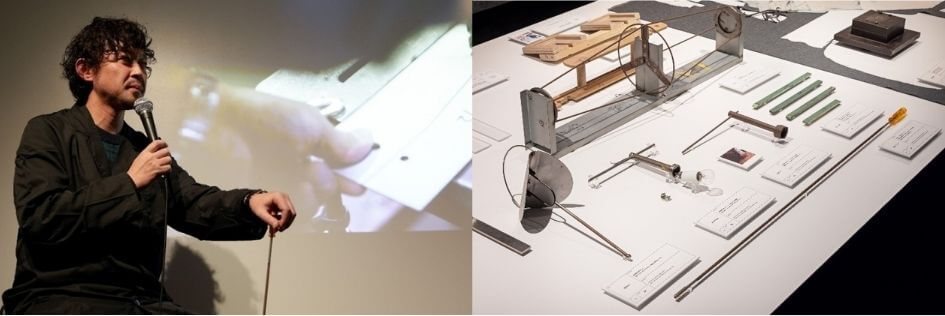
The owner, Mr. Chino of Chino Lighting Manufacturing, who was also in attendance, commented, "All of our lighting fixtures are custom-made, so we have to innovate and make the tools needed each time. Some are fairly easy to make, while others require a bit of trial and error."
Finally, Arai, the production manager, was handed the microphone and took to the stage to present a C-shaped hook titled "Paint Rings." This C-hook was used in painting work, and the layers of paint that have built up on its cross section show the traces of a long period of time and work.
Arai
It's used to hang the item to be painted, but it was thinner at first, and the more paint was applied, the thicker it became and the more layers it formed. I like how the years and effort that went into painting are now visible, just like tree rings.
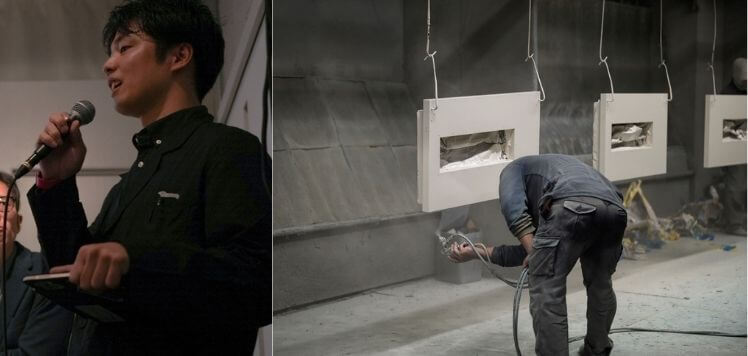
What grows from"credit" and "a little effort"
Towards the end of the talk event, Editor-in-Chief Shiota posed questions such as, "What essential values do you want to emphasize in future manufacturing?" and "What values do you want to convey through spatial design?" This led to a very interesting conversation that expanded into a time of reflection on what is important in today's society.
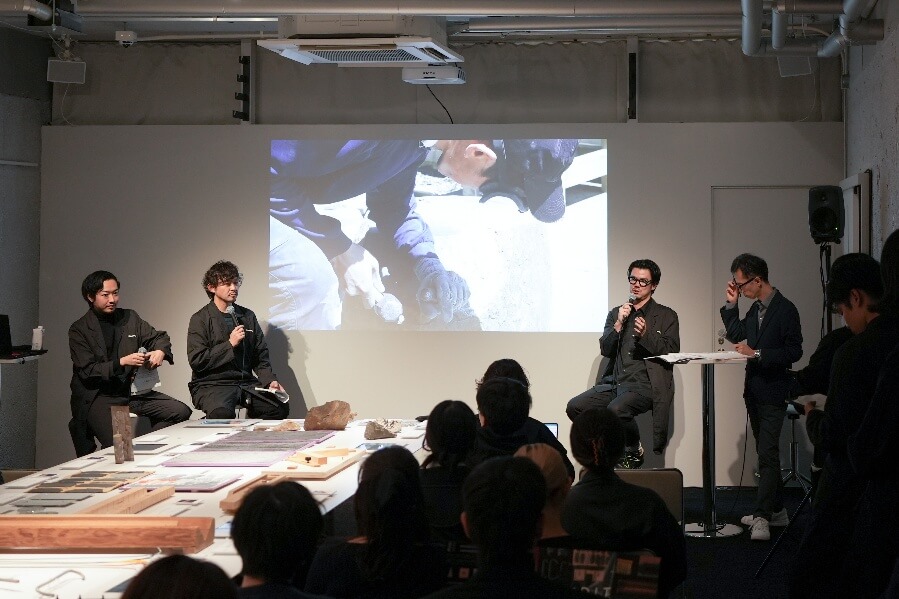
Shimizu
There are many different members involved, including us designers, the makers and craftsmen, and the production and construction staff who connect the two, but I think the key is for everyone to have pride and respect for each other and continue to work towards creating something good. I think it's important to maintain an appropriate distance and be able to communicate, saying, "I want to make something even better, so I want to do this, but how should I go about it?"
Editor-in-Chief Shiota
I feel the same way when it comes to making magazines. How you communicate is important, and if you mess up that, it won't work out even if both parties have good ideas and excellent technology.
Yasuda asked, "Although there are exhibits that focus on individual companies, I think there are few opportunities to introduce so many different companies and individuals all in one place like this. What did you honestly think?" Editor-in-Chief Shiota replied, "I was shown some very unusual things, and I learned a lot myself, so I feel very grateful."
"This is a very big topic, but since the end of the war, and especially over the last 30 years or so, it feels like many things in our society, especially those living in cities, have become black boxes," he continued.
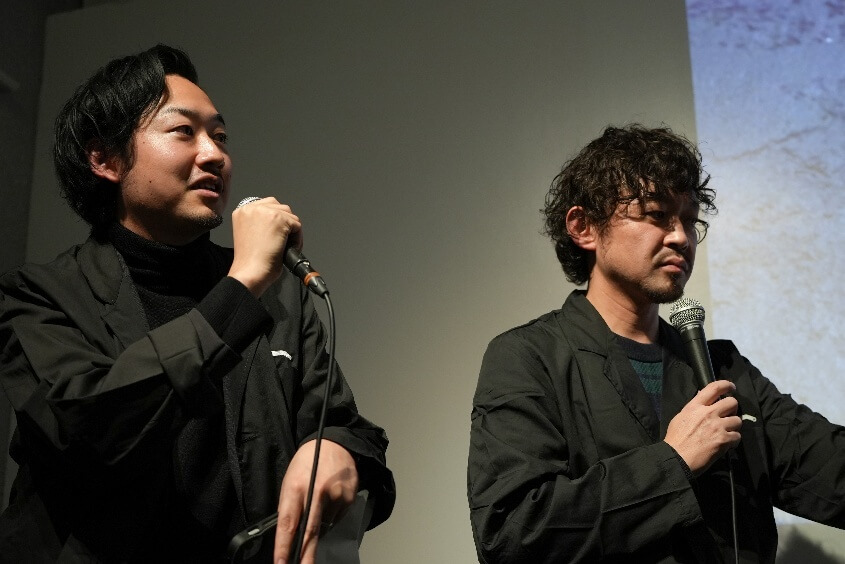
Editor-in-Chief Shiota
Currently, we have no choice but to enjoy the finished product unilaterally, and it feels as though individuals have no way of intervening in the process, which is very unhealthy.
However, there are many people involved in the manufacturing process, and I think it is very important to have the mindset that things can be changed through consultation, negotiation, and ingenuity.
In that sense, I felt that it was extremely important to have an exhibition like this, which shows things that were previously invisible and makes it possible for anyone to intervene and participate.
Watanabe
The title of this exhibition, "CREDIT," literally translates to "trust," and I believe spatial design is an industry that is built on relationships of trust. It's all about getting clients and partner companies to trust our proposals, which are based on our drawings and finished images and allow them to imagine what we can do.
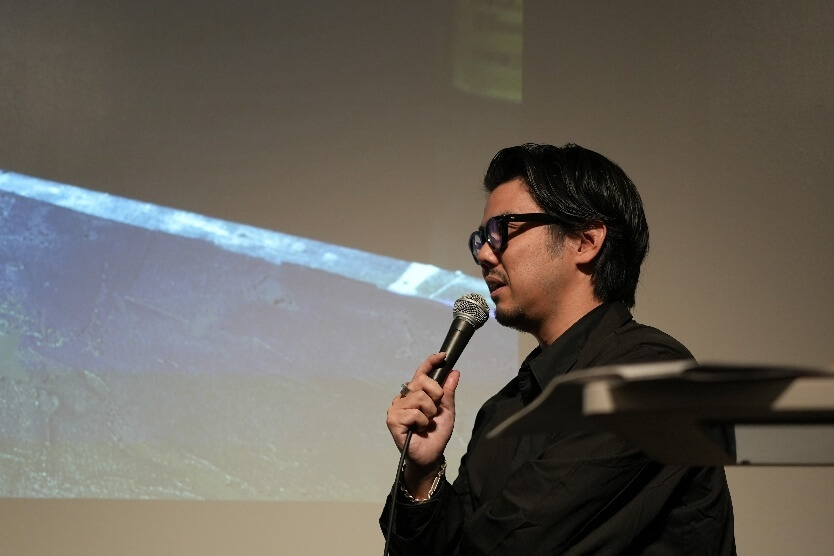
Yasuda
The members and I talked about how it would be great if this exhibition could be a place that connects those who experience the products and those who buy them with the creators, and an opportunity to create various types of trust and connections.
Shimizu
Trust may be something only humans can achieve. And it's fascinating to think about it this way.
I would be delighted if this exhibition serves as an opportunity to think about and deepen our understanding of various perspectives and words, not only in terms of manufacturing, but also in this way.
Editor-in-Chief Shiota
Trust is important. Throughout this talk event, many keywords came up, such as humanity, time, wisdom, ingenuity, effort, and traces, but trust is crucial.
The "fragments" in the exhibition's subtitle, "Fragments of Effort," also inspires a variety of inspirations. The exhibition is filled with fragments and pieces, so you can look at them in any order, from any angle, and new uses can even come to mind. Everyone who sees the exhibition can feel and think about different things. It's an exhibition that is open-ended and openly interesting.
Through this project, we were able to experience the effort and ingenuity that goes into the manufacturing process, as well as the passion that goes into it. We realized that even the things we see every day can take on new value depending on how they are presented and described, and that anyone can become involved in the manufacturing process.
The exhibition was completed through dialogue and exchange of the positions and perspectives of artisans, designers, production managers, and participants, and these 10 days fostered a sense of "valuing space."
We hope that this initiative will provide an opportunity to sense the stories and connections behind objects and spaces, and raise awareness for a richer society.
Highlight video of this talk event (10minutes) can be found here.
https://youtu.be/KsdX8fVOb_8
Project members: NOMURA Co., Ltd. Co., Ltd. Manager Yamaguchi Akane / Creative direction Shimizu Shigemi / Design, exhibition composition and production Yasuda Hiroki, Watanabe Kotaro, Nishihara Kai, Yamanashi Ren (all designers), Arai Mikio (production manager) / Visual direction Toyoda Mayu / Project management Sumida Mai, Ibe Reiko / Public relations Okamura Yukiko, Sasaki Toshie, Ando Shuntaro, Haruna Hiromi
*Titles and affiliations are current as of November 2025.
Written by: Naomi
Photo: Yamanashi Ren/Nacasa and Partners
Related links:
DESIGNART TOKYO 2025 "CREDIT - A Piece of Effort" Exhibition Overview Page, Interview
https://www.designart.jp/designarttokyo2025/interview/13591/
Like this article?
- editor
-

-
A team that pursues “space and experience”
Cutting out the possibilities of "space and experience" from a professional's point of view