Inclusive Design x Pattern Language: Creating an Original Workshop Tool
2025/10/03- share
-


- text and edit by
- Future Creation Research Institute
"Inclusive design" - is there a good way to turn the vague images and concepts that come to mind when we hear this term into something concrete and share it, and to turn it into better spatial functions and designs?
With this in mind, members of the Future Creation Research Institute's R&D "Inclusion & Art" team were searching for a solution on a daily basis when they came across the "Pattern Language" method. This led to the development of NOMURA Co., Ltd. Ltd.'s original inclusive design workshop program and tool production.
After several years of hard work, we finally completed the "NOMURA Inclusive Design Patterns," which we are now beginning to use in various workshops.
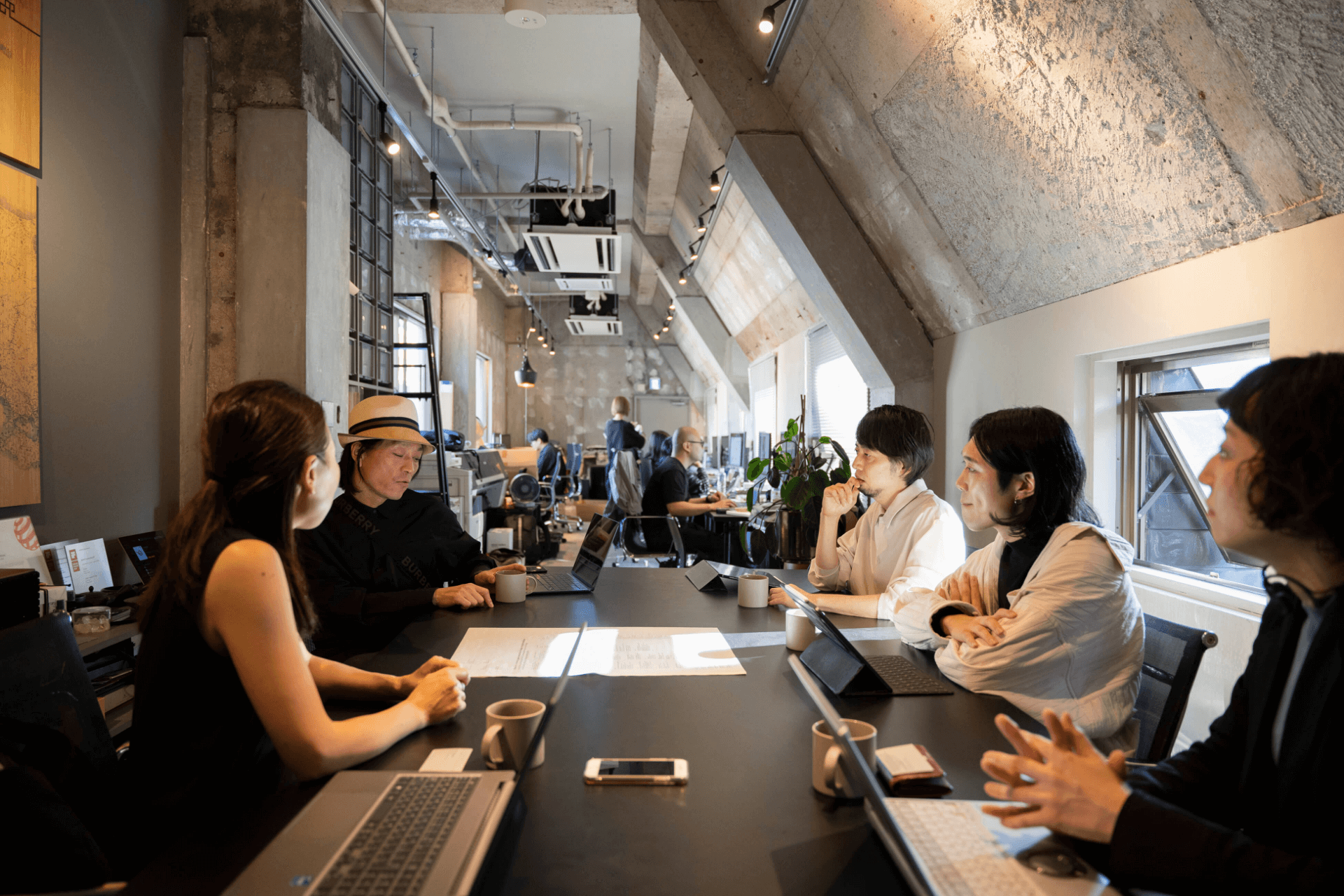
This project started from scratch, and we welcomed Miho Masai, CEO of Creative Shift Inc., who worked alongside us as an expert in pattern language, as our guest. We looked back on the efforts leading up to completion and discussed our outlook for future workshops and space creation.
[Interviewer]
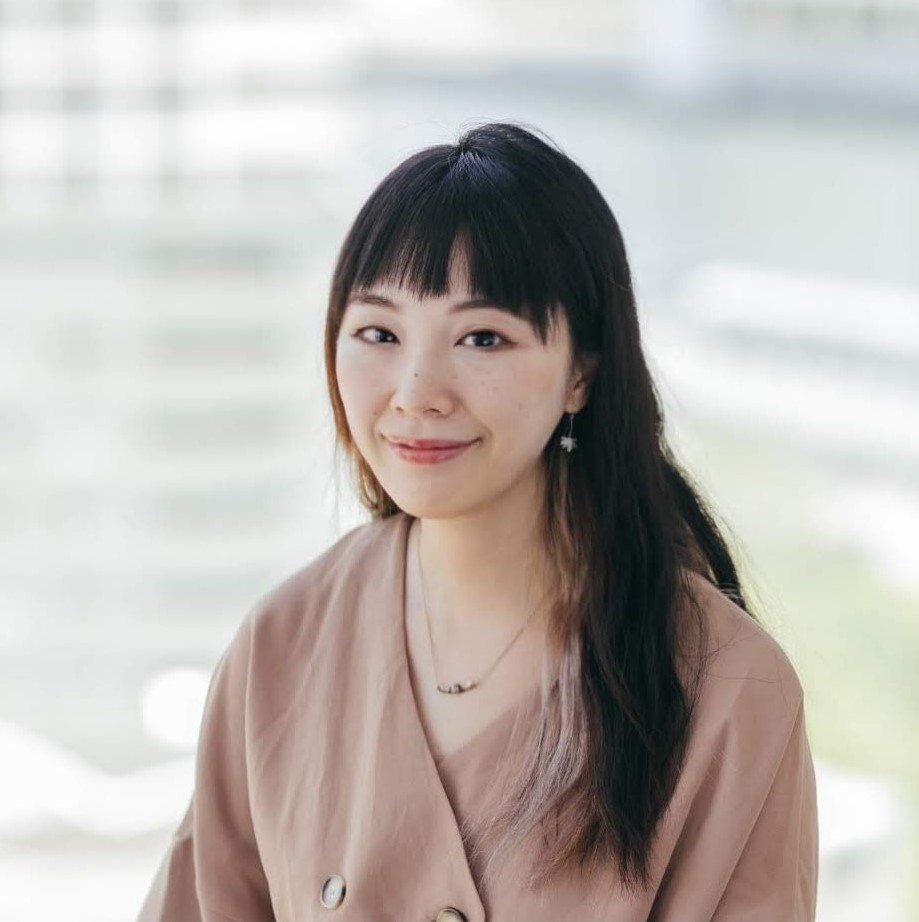
Creative Shift Representative, Miho Masai
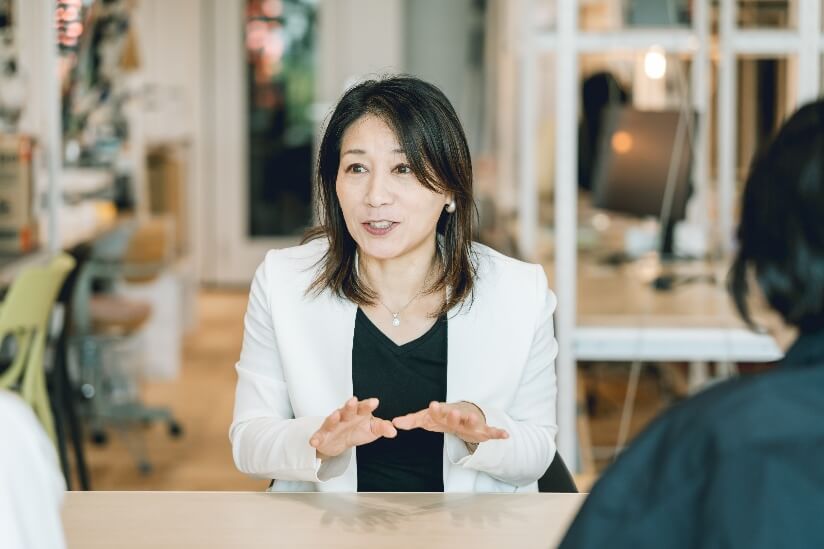
NOMURA Co., Ltd.
Future Creation Institute Inclusion & Art
Mari Matsumoto
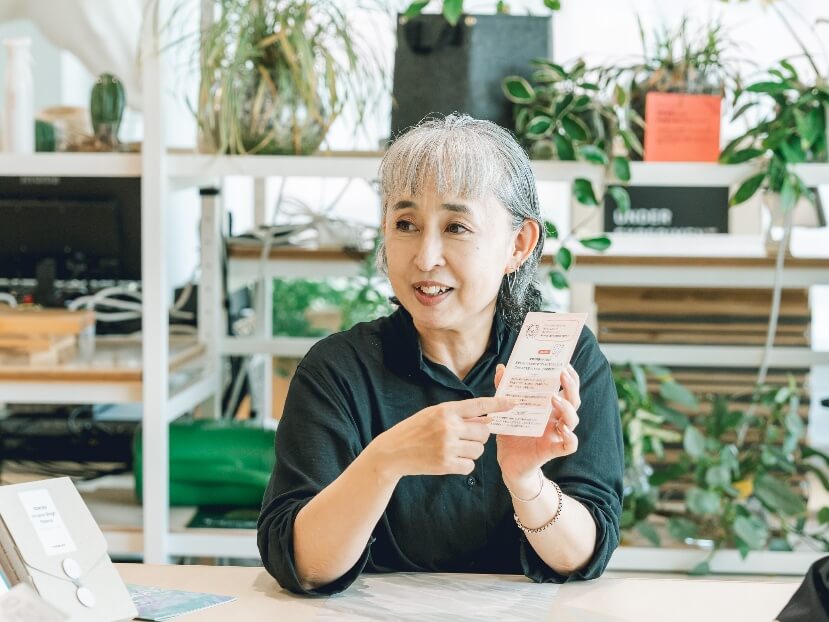
NOMURA Co., Ltd.
Future Creation Institute Inclusion & Art
Wakako Satake
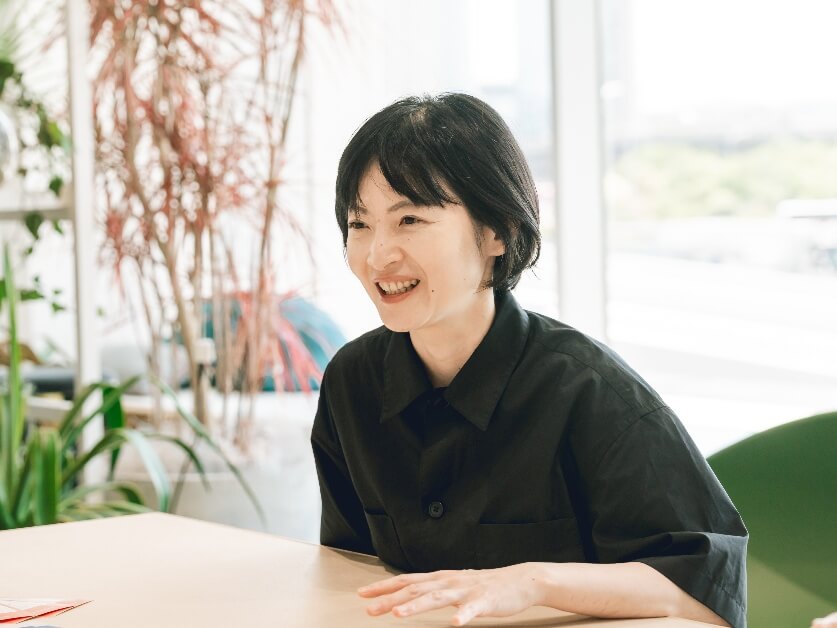
NOMURA Co., Ltd.
Future Creation Institute Inclusion & Art
Reiko Ibe
"Pattern Language" that accepts the "voices" of diverse people and turns them into a common language
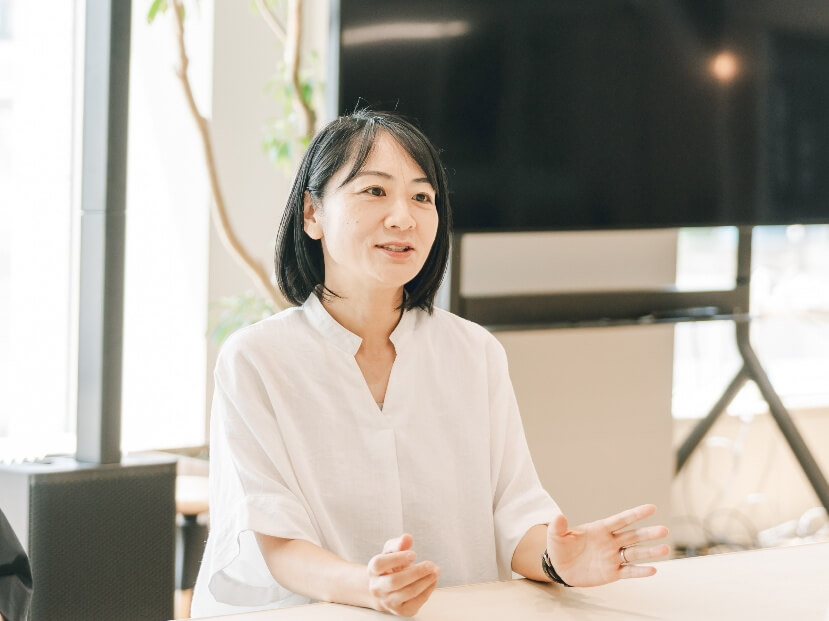
"Pattern language" is a participatory urban development method proposed byarchitect Christopher Alexander in the 1970s. It extracts and classifies various tips from the knowledge and successful experiences of a certain person or organization as "patterns." A "problem" that arises ina certain "context"and its "solution"aregrouped together, described as a "language" that can be shared with many people, and given a "name" (pattern name).
Pattern languages were originally developed for citizen participation in urban development, butthey began to be appliedto software in the1990s and to human behavior from the 2000s onwards.
Creative Shift's CEO, Masai, founded the company together with Takashi Iba, a leading expert in the research and application of "pattern language" in Japan. The company supports the creation and application of "pattern language" at the request of various companies and organizations.
Masai-san
We believe that the support we provide for creating "pattern languages" involves turning abstract concepts into reality and turning them into "words" that will consistently bring about good results.
Our collaboration with NOMURA Co., Ltd., Ltd. began when they approached us to create a "pattern language" for inclusive design based on the vast amount of questionnaires and interview records they had collected up to that point, and to use this in creating spaces.
Matsumoto
We heard that Creative Shift supports people from a wide range of industries and organizations and uses customized "pattern language" techniques, and we thought that this might be an affinity with our challenges in working on inclusive design, so we contacted them.
Satake
The places we plan and design, such as museums and public facilities, are places used by everyone. We were exploring within our team how we could fully reflect the perspective of inclusive design in the creation of these spaces, and also exploring whether we could create tools that could be used in the many workshops we hold with people from various walks of life, including families, the elderly, and people with disabilities, during the planning and design stages.
Ibe
It would be good to have something that could ease the vague image of inclusive design and the high psychological hurdles, and serve as a starting point or clue for everyone to think about it together.

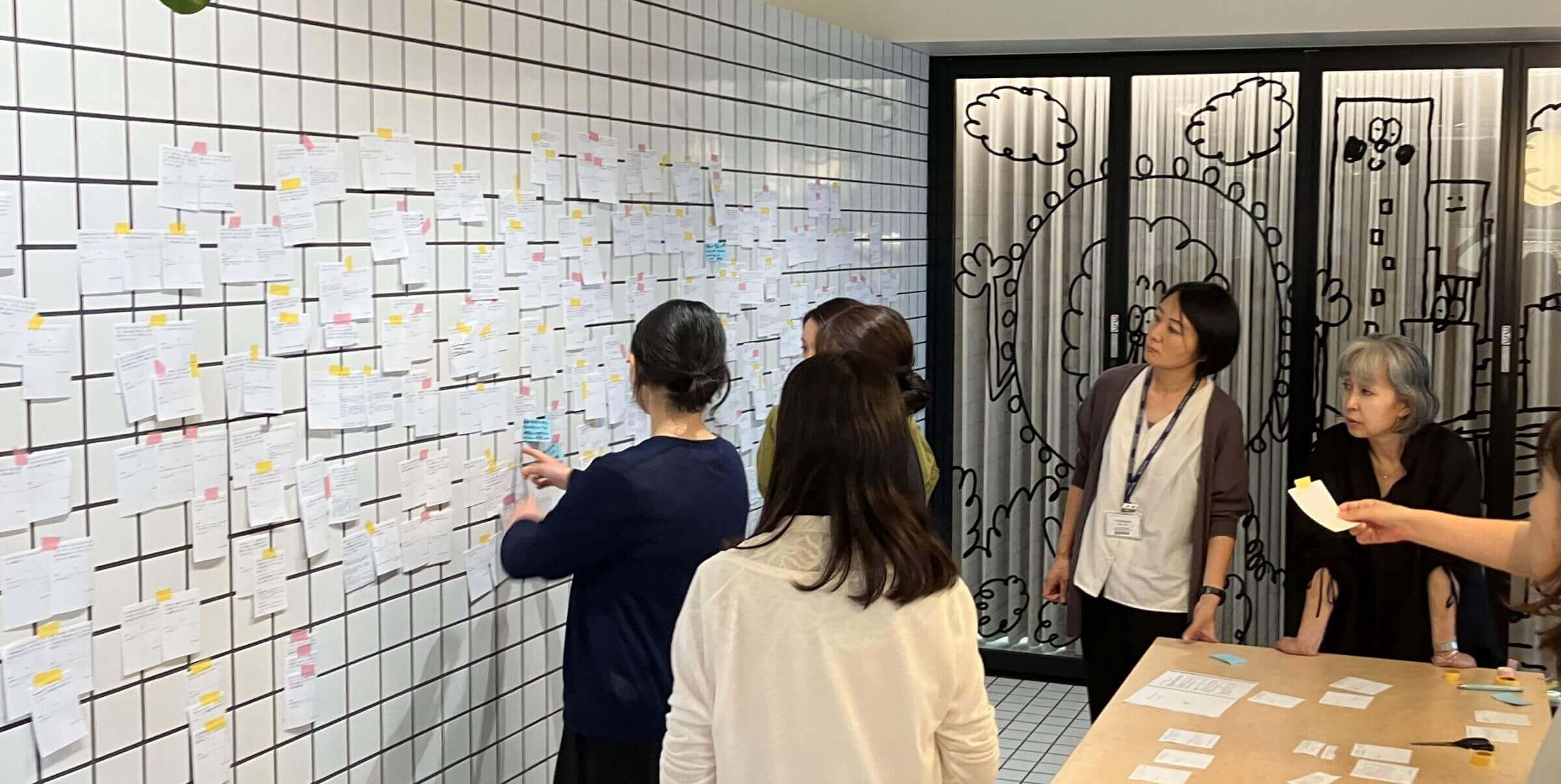
Members of the R&D"Inclusion & Art" team have collected a vast amount of"voices"from approximately 400 people through methods such as questionnaires, interviews, and workshops. Working with Masai, the team carefully examined the valuable data and conducted additional research in areas where there were gaps. This process of consolidating and abstracting the data by clustering it into specific issues and themes continued for several months.
Satake
Figuring out how to cluster the data was extremely difficult, as it was important to make sure that the intent of the assignment didn't change when the data was grouped together.
Ibe
On the other hand, for example, the issues faced by parents raising children and people with disabilities may seem completely different, but in fact they have a lot in common. I thought it was a good idea to take a bird's-eye view and closely examine the contents of the questionnaires and interviews answered by people with a variety of attributes.
Masai-san
That's exactly what it means to "find the essence." The key to "pattern language" is how to extract the essence of human behavior, the "correct answer," and turn it into "words" that will motivate people to act. For this reason, the data used as the basis must collect information on both issues and solutions, but in this case, the information was biased toward issues only, and various cases were mixed together.
From our perspective, the data that was being produced was somewhat irregular, but perhaps because you are all accustomed to thinking back and forth between the concrete and the abstract when creating spaces, and perhaps because you are working on multiple projects simultaneously, the process of abstracting multiple individual, specific examples and consolidating them into the essential issues and solutions was very speedy.
Ibe
Thank you. However, it was extremely difficult to write it down as a "language" and give it a "name" (pattern name) at the end. It was difficult to choose words that anyone could understand, yet that would leave a lasting impression.
Masai-san
We exchanged data files over and over again, examining them closely together. We carefully considered until the very end whether the content was truly correct as a "pattern language" and whether all the necessary elements were included. We were able to successfully complete the "NOMURA Inclusive Design Patterns."
Satake
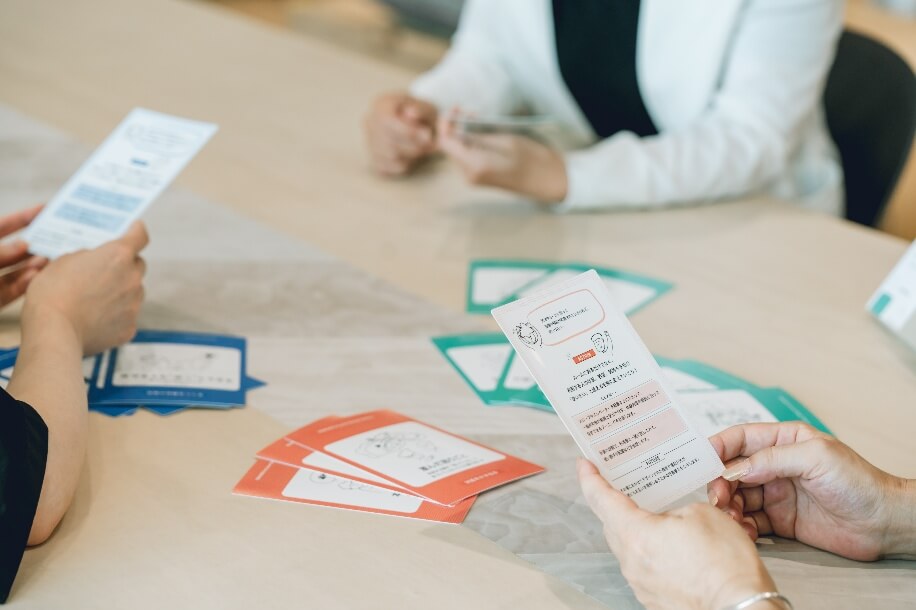
It took about a year from the time we came up with the words for "NOMURA Inclusive Design Patterns" to the time we turned them into a workshop tool in the form of cards. We created the cards while simultaneously considering what kinds of programs could be developed and what those options would be, so that they could be used in workshops in a variety of settings.
The team members tirelessly examined every detail, from the layout of the text on the front and back, to the illustrations to use to visualize the examples, the size and shape of the card itself, the type and thickness of the paper, the packaging to store the cards in, and the instruction manual. Thanks to this, I think we ended up with a product that we are truly satisfied with.
Hints for everyone to think about and work on "inclusive design"
NOMURA Inclusive Design Patternswas carefully created over a long period of time, gathering input from a wide range of people. In fact, this was the first time Masai had ever held the completed cards in his hands. "It's pointless if people don't use them, so it's important to focus on the quality of the design. I think it's very important to give the impression that it looks fun," he said with a smile.
Masai-san
It seems like you've all been involved in the project with people from all walks of life, and created the space together, and there are many unique details that you can only come up with. It's important to be able to involve people in a fun and positive way.
Matsumoto
Thank you. We paid particular attention to the card paper, package design, and even the format of the instruction manual.
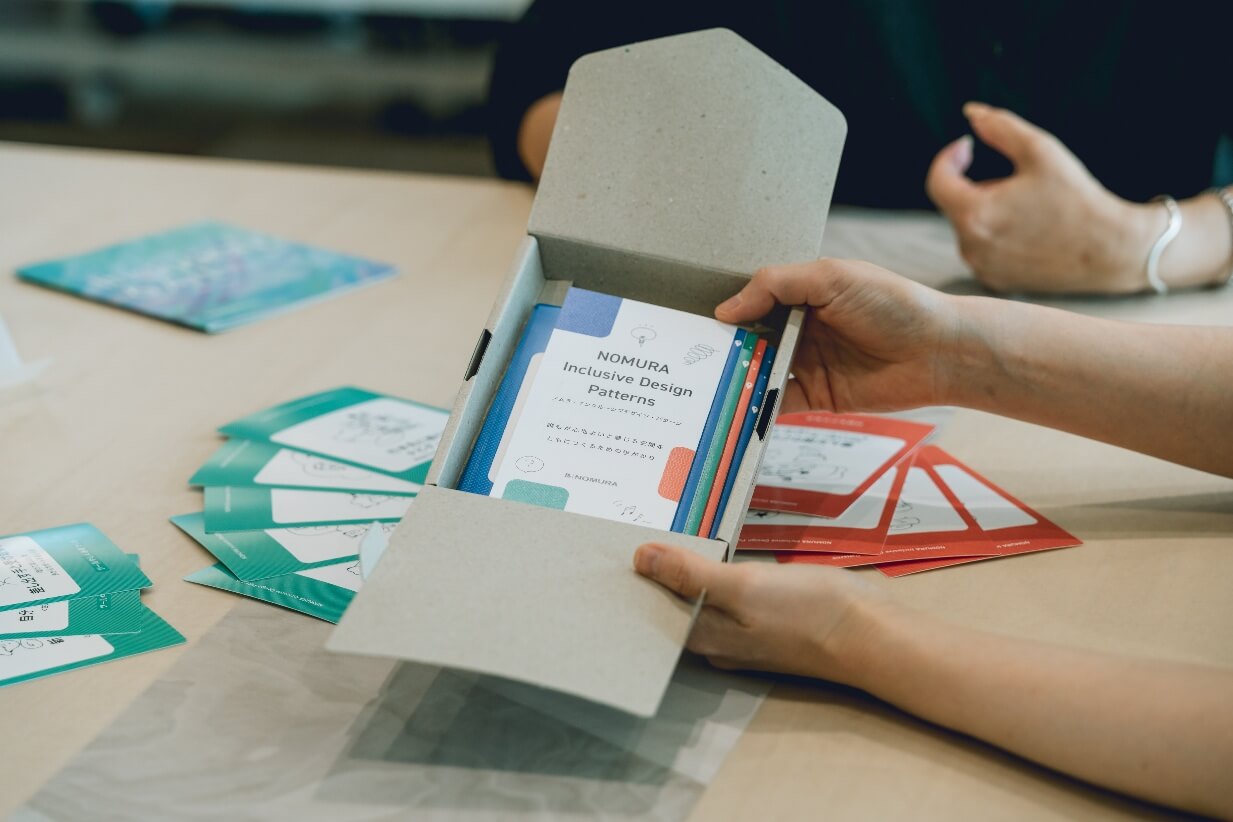
Currently, we are slowly but surely holding workshops using these cards at various companies, museums, university classes, and more.
Ibe
The other day, when I visited with staff from a facility that operates as a playground open to all children, there was a lively and positive exchange of opinions, with comments such as, "Actually, I've been thinking about doing more of this," and "There's more we can do." Even though they usually work in the same facility, due to their different positions, they don't often have the opportunity to sit down and discuss things together, so this was a good opportunity for them.
Masai-san
That's great to hear. The cards we created became a "common language" and functioned as a tool to connect people who normally have different positions, perspectives, and ways of thinking. I think that through the cards, we were able to visualize each person's individual cases and thoughts beyond their own positions.
Another great thing about this tool is that it can be used in a variety of ways, without being limited to a specific scenario.Of course, you can use it after carefully reading and fully understanding what is written on the cards, or you can use it as a conversation starter or icebreaker in meetings or training sessions, and it can also be a starting point when thinking about new services.
Satake
On the other hand, when we tried using it with members of another department within the company, one of them responded that since the answers aren't written on the cards to begin with, the mere act of thinking about the answers could be perceived as troublesome.The important thing is to use them as hints and clues to think about what we can do from there, and how we can create meaning and value together.
Masai-san
"Pattern Language" does not present "answers," but supports each individual in thinking and finding "answers." If you try it even a little, you will be able to realize the importance and significance of thinking using "Pattern Language."
Matsumoto
I feel that what kind of initiatives we take and how we deepen them based on these cards will depend on the design of the workshops we will be holding in the future.
Masai-san
I would be happy to continue to hear about how the completed "Inclusive Design Pattern Language" is being used.
NOMURA Inclusive Design Patterns was developed as a guide to creating spaces that are comfortable for everyone and bring joy and excitement. Comprised of three themes - "Spaces and Experiences," "Tools and Systems," and "Building Dialogue," the 18 cards contain key clues to each theme. On the front of the card are words and illustrations that express the ideas that are important when creating spaces and experiences, and when you turn them over, you will find hints for thinking about the underlying issues and what can be done. This highly versatile tool can be used in a variety of ways to suit different purposes, such as workshops to generate ideas for space creation or icebreakers for meetings.
Toward the realization of a society where we respect and accept each other, we understand "inclusive" to mean creating an environment in which "everyone can participate" regardless of age, gender, nationality, or disability. We will use the term inclusive in a variety of ways to promote the creation of spaces and facilities that involve a diverse range of people, including users and workers, regardless of age or position, and that reflect the ideas and perspectives of each individual.
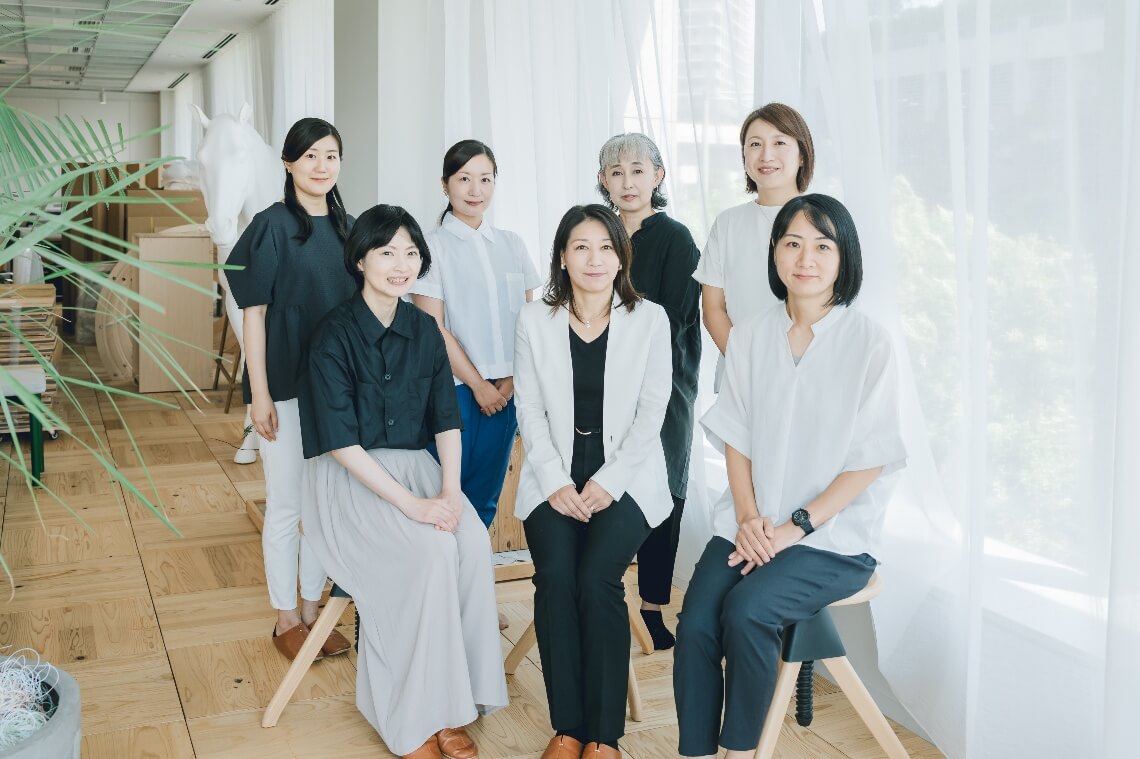
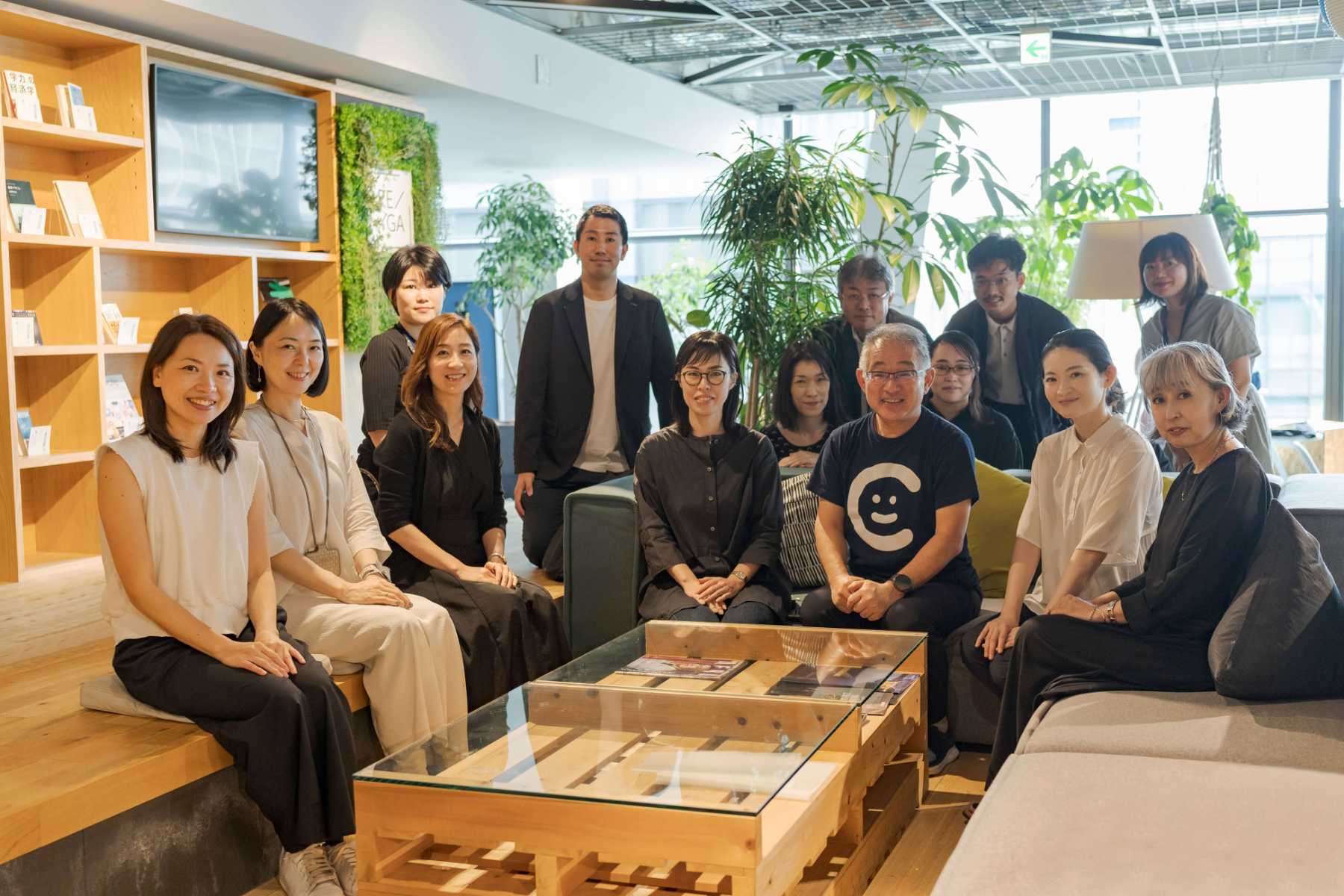
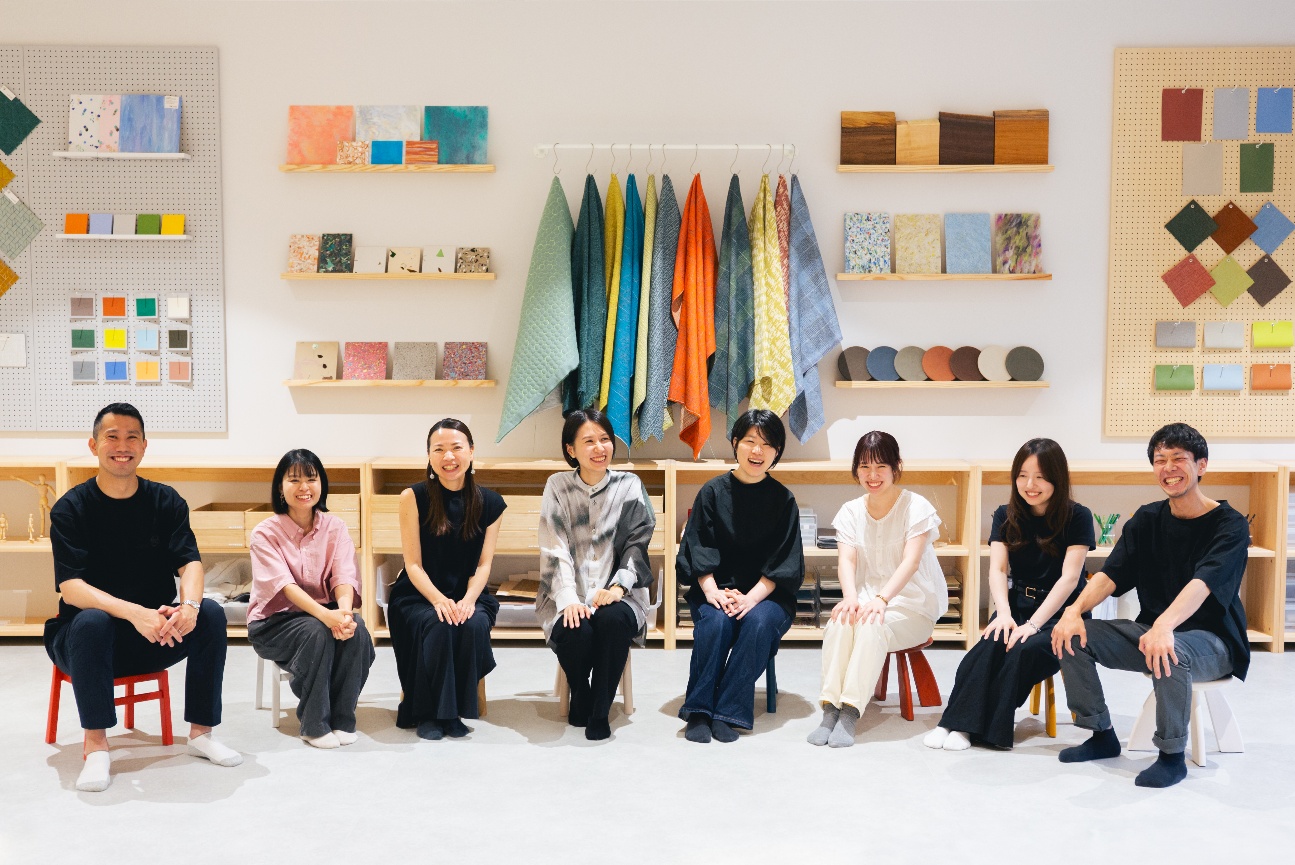
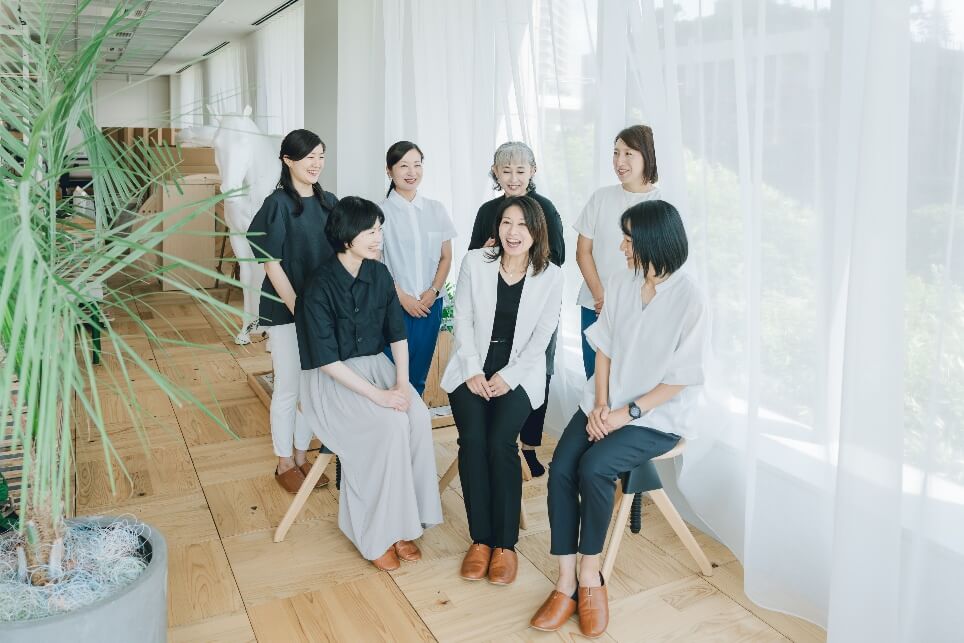
Front center: Miho Masai, CEO of Creative Shift
Project Members
Ikue Sekiguchi, Yokohama Sales Office, Development Department 1, First General Affairs Division, Business Production Headquarters
Haruka Amano, Sales Promotion Headquarters, Cultural Environment Business Division, Sales Department 1, Section 2
Sales Promotion Headquarters, Third Business Division, Sales Department 2, Section 1, Ai Nomoto
Kiyoka Miyasaka, Sustainable Design Lab, Vision Design Department, Future Creation Research Institute, Creative Headquarters
Mari Matsumoto, I&A Design Lab, Social Design Department, Future Creation Research Institute, Creative Headquarters
Creative Headquarters, Future Creation Research Institute, Social Design Department, I&A Design Lab, Reiko Ibe
Wakako Satake, Social Design Department, I&A Design Lab, Future Creation Research Institute, Creative Headquarters
Written by: Naomi
Photo: Tomo Kawakami
Like this article?
- editor
-
-
Future Creation Research Institute
Research, creativity, and the future
Creative Research Institute