The power and appeal of authentic materials
~2025 Summer EXPO GALLERY Public Open Report~
2025/11/07
- share
-


- text and edit by
- NOMURA Co., Ltd. Archive Team
In early August 2025, we opened the EXPO GALLERY located within our Osaka office to the public. Until now, the EXPO GALLERY had been open to a limited audience, primarily customers and researchers, but with the 2025 World Expo in Japan (Osaka-Kansai Expo) approaching this year, we decided to open it to the public out of a desire to share with as many people as possible the "significance of the Expo" and the "power of spatial creation."
We received far more applications than we had initially expected, and the event was held six times over four days, with a total of 67 people attending. We will report on the event, which ended with great success.
NOMURA Co., Ltd. and Expo materials
First, we would like to briefly introduce the Expo materials we have in stock and the EXPO GALLERY.
Our company currently holds approximately 20,000 items of materials related to the Expo. The base of the collection is approximately 10,000 items donated by Mr. Tsuyoshi Terashita, a practitioner and researcher of the Expo. The materials were donated under the condition that they be "used for the benefit of society, not kept privately," and in 2005 we made the database "EXPO 2005 Materials Collection" publicly available.
In preparation for the Osaka-Kansai Expo, the "EXPO GALLERY" will open in 2022. The gallery will consist of a library for storing materials and an exhibition room where selected materials will be displayed.
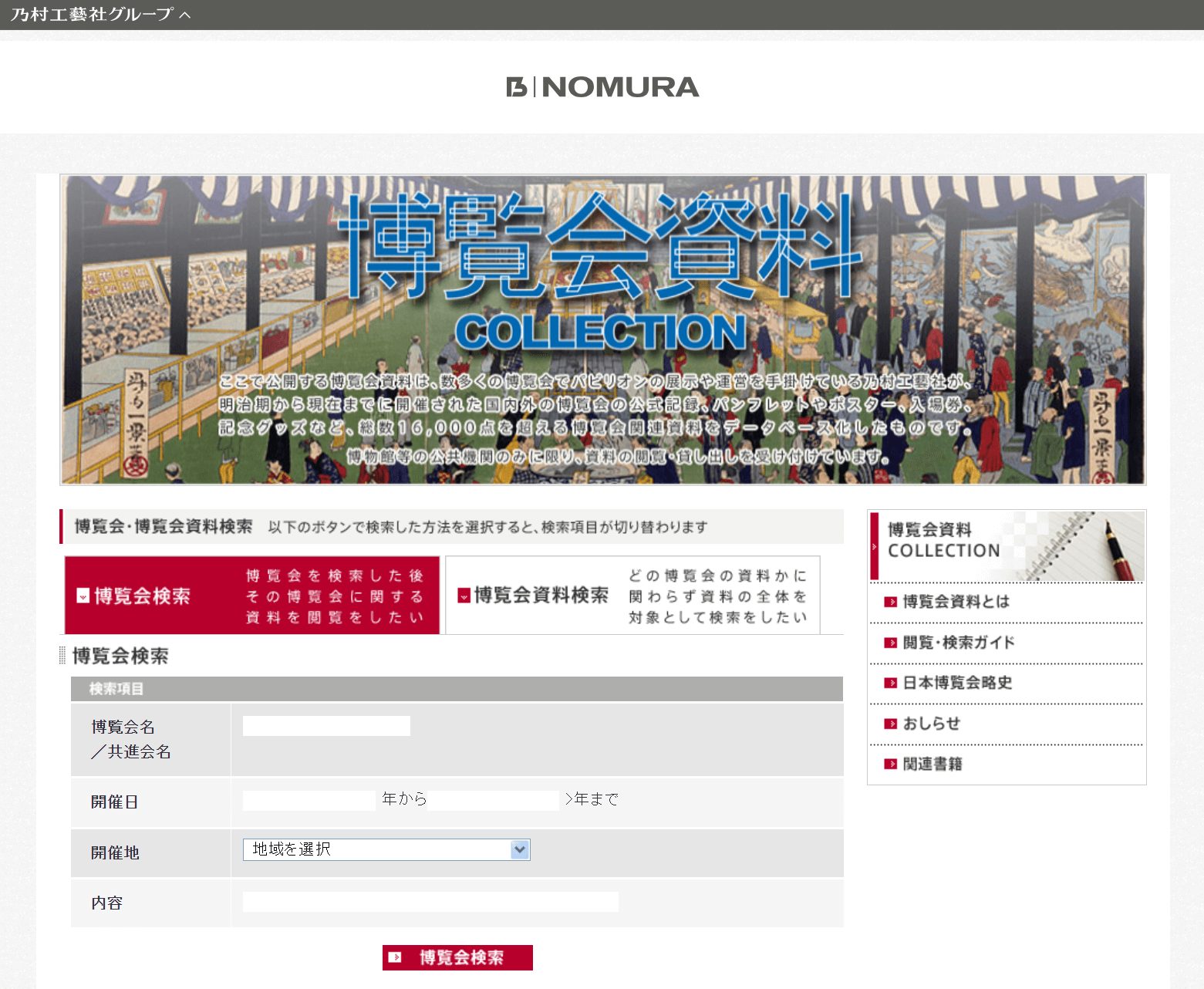 "EXPO Materials COLLECTION" published on our corporate website
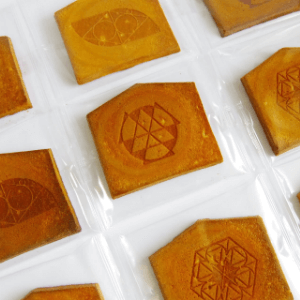
Introduction to the Expo medals
The event began with an introduction to the medals on display on the reception floor of the Osaka office, which displays medals from Japanese expositions from the Meiji period to the early Showa period.
At the time, there was a commendation system in place at the expositions, and these medals were awarded. It is said that this system later led to the awarding of medals at the Olympics.
Medals come in a variety of designs and shapes, including square medals.
The participants immediately began peering into the display cases with great interest.
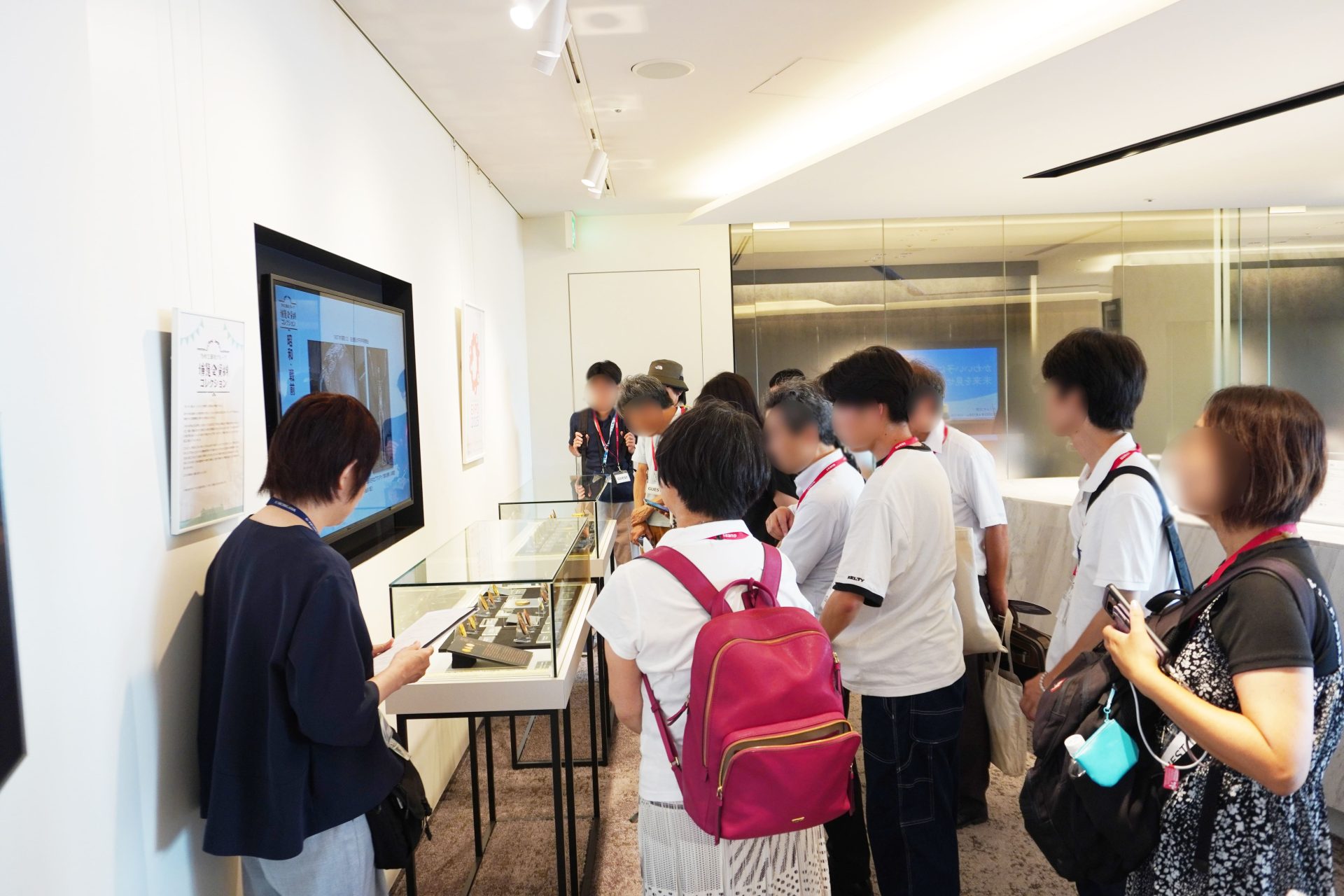 Osaka Office 19th floor reception floor
The appeal and impact of the Expo
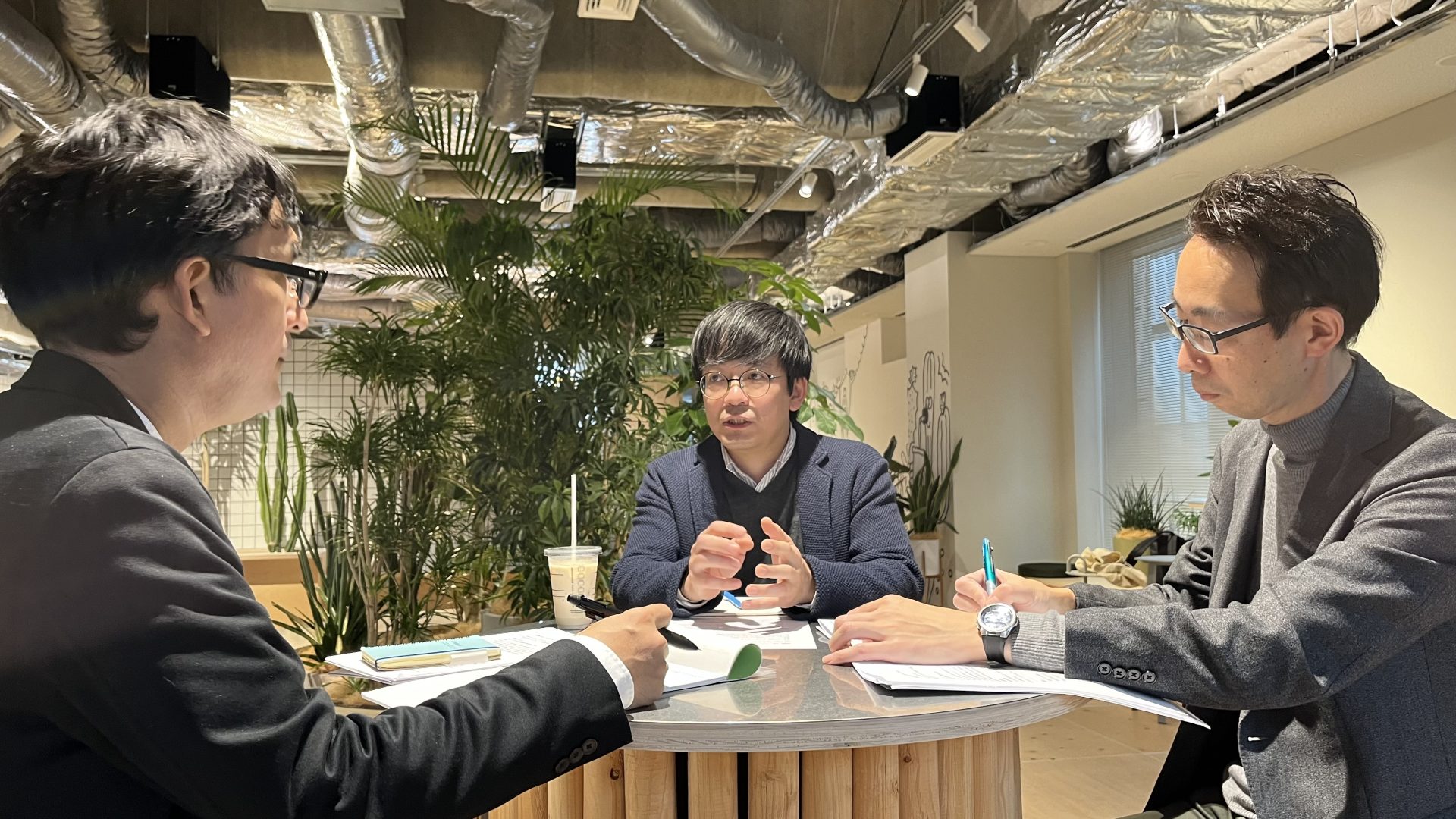
After the medal presentation, the speaker moved to another floor and gave a 30-minute lecture titled "The Appeal and Influence of the Expo." He spoke on four themes: "What is an Expo?", "Expositions and NOMURA Co., Ltd.", "The Unchanging Appeal of Expos," and "The Impact of Expos that Changed Human Activities."
The first world's fair was the Great Exhibition in London in 1851. At the time, portable steam engines and other items were exhibited to let the world know about the prosperity of Britain, which had successfully carried out the Industrial Revolution. The fifth Paris Exposition in 1900 was the last world's fair of the 19th century, and featured an exhibition scene that evoked the end of the century, with horse-drawn carriages and automobiles displayed side by side.
The 1967 Montreal World's Fair is said to be the one where video exhibitions flourished, with numerous exhibits making full use of new technology. This video exhibition is said to have had a major influence on the corporate pavilions at the 1970 Osaka World's Fair in Japan.
Fast forward to 2005, when the significance of hosting an Expo was called into question and the World Exposition, Aichi, Japan, underwent a major change in direction. In the early 1990s, a debate arose as to whether the World Expo was even necessary amidst continuing deficits. In response to this, the Bureau International des Expositions (BIEX) resolved in 1994 that "the direction of 21st century world expositions should be to become a forum for resolving global issues." The first World Expo to reflect this was the Aichi Expo.
The Expo, which began as a way to "understand the world," gradually evolved into a cultural event that could be described as "a mirror reflecting the world" while showcasing various technological developments.
Our company's involvement with expositions dates back to the 1914 Tokyo Taisho Exposition. 25 years later, in 1939, the San Francisco World's Fair was our first participation in a world's fair. On this occasion, we were in charge of construction of the tourist section of the Japan Pavilion. Since then, up to the present day, we have been involved in over 200 world's fairs and domestic expositions.
One of the attractions of an exposition is being able to see the actual objects. At the 1970 Osaka Expo, a moon rock was exhibited, which caused quite a stir. At this year's Expo, the Japan Pavilion is exhibiting a rock from Mars, and the Italian Pavilion is also making waves with the arrival of a succession of valuable materials that are now on display.
Expos also have a major impact on society. Many things that we take for granted today actually originated at the Osaka Expo. For example, the popularity of canned coffee was sparked by the Expo, and conveyor belt sushi restaurants were first established at the Expo. Expos have continued to develop despite being heavily influenced by the emergence of media and the internet.
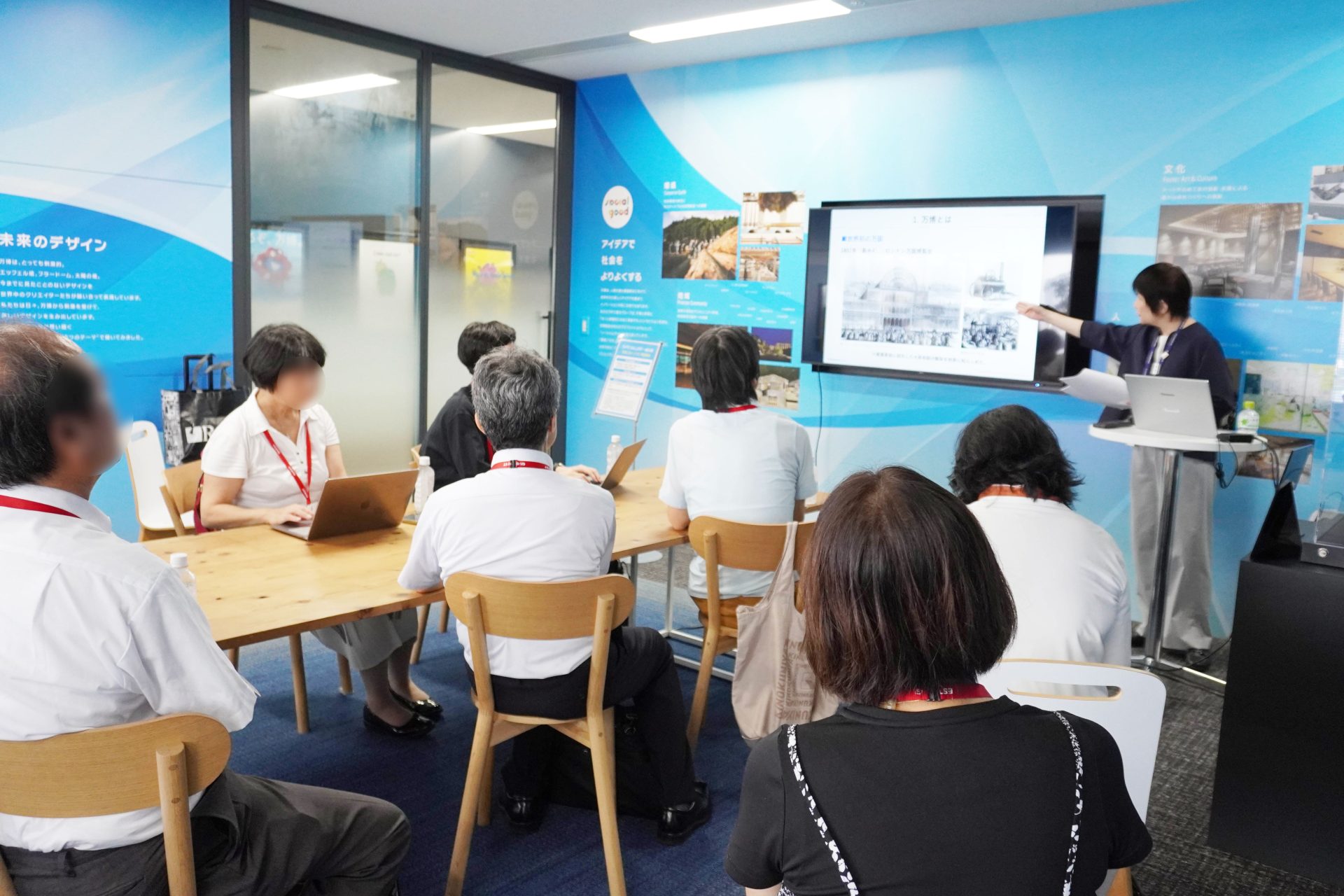 The lecture
Library:Storage of 20,000documents
After the lecture, we will move to another location where you will be able to actually look at the materials.
The library is packed with bookshelves and drawers, with a wide variety of materials stored, ranging from the oldest materials from the 1851 London Great Exhibition to the current 2025 Osaka-Kansai Expo.
There are a wide variety of materials, including not only official records and merchandise, but also preparatory materials such as minutes of meetings held before the event, but among them are even paper cups and empty beer cans that would normally be thrown away. When these were introduced, participants responded with surprise, saying, "Wow!"
The poster that seemed to garner the most interest was the one from the 1970 Osaka Expo. As it was likely created by hand, not digitally, you could see the blurring of the lines. After hearing this explanation, everyone looked at it intently.
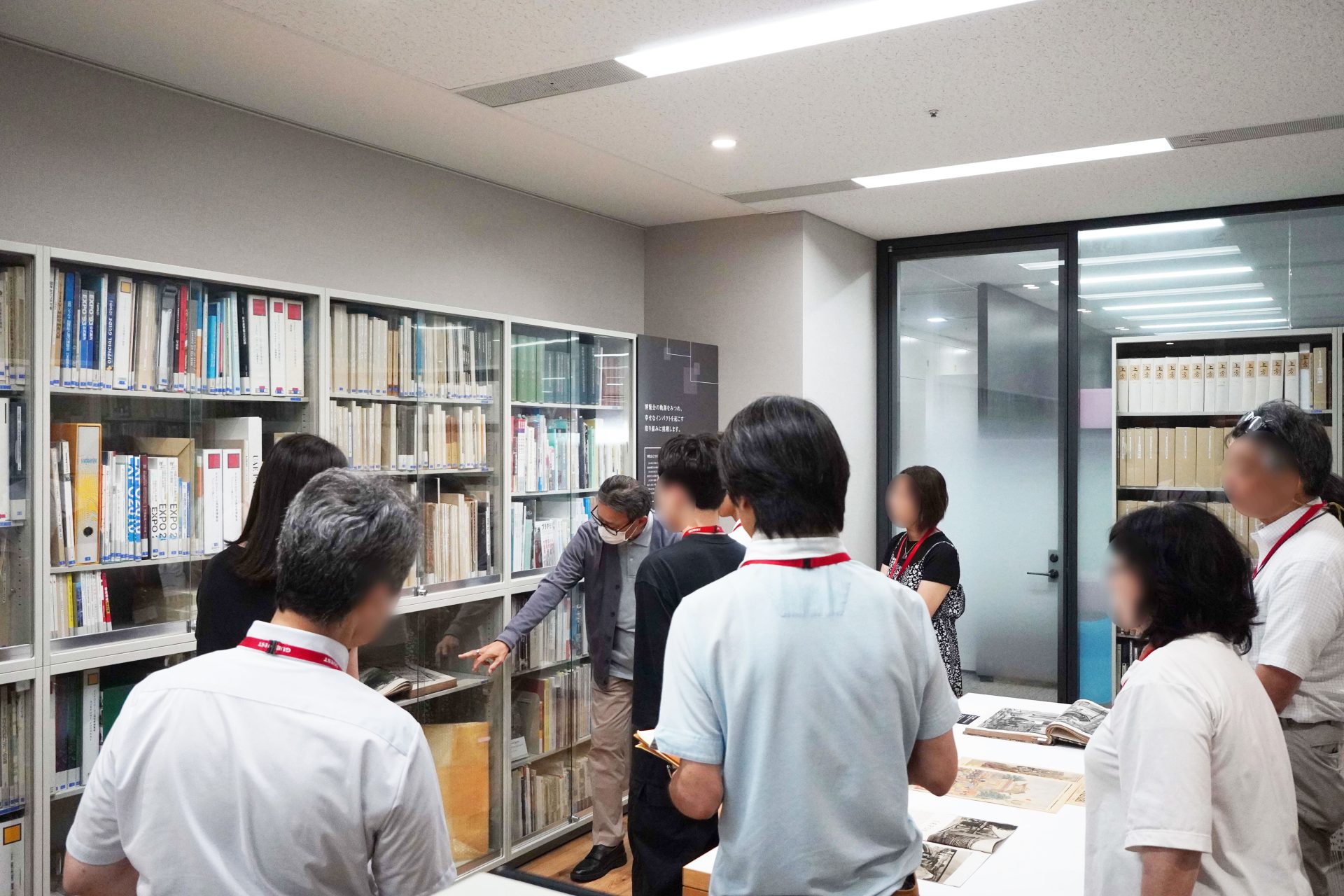 The bookshelves also contain materials from the 1851 London Great Exhibition, the oldest of the museum's collection.
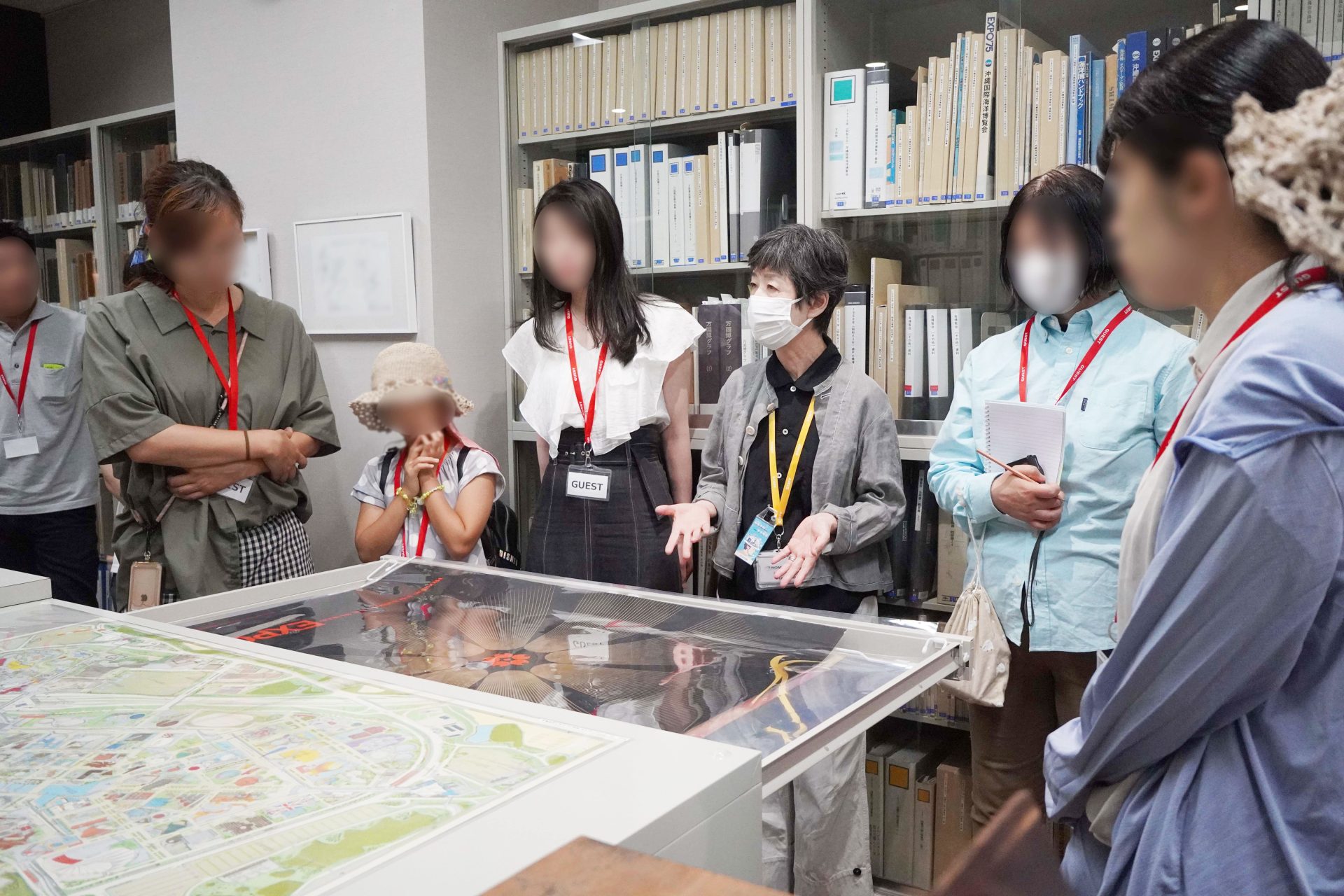 Introducing the poster for the 1970 Osaka Expo
Exhibition room: 100pieceson the theme of "Expositions and NOMURA Co., Ltd. "
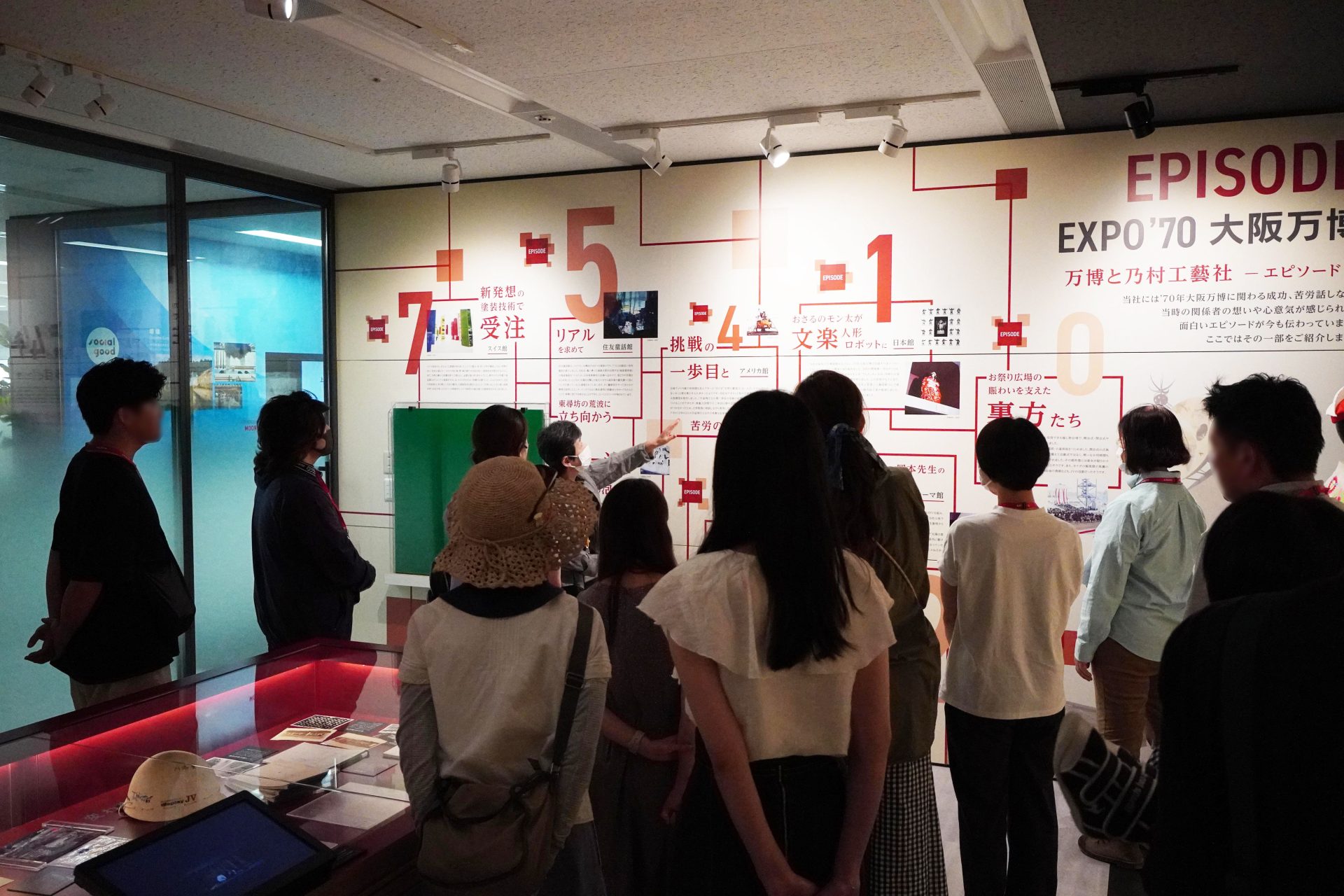
In the exhibition room connected to the library, approximately 100 documents are on display under the theme of "Expositions and NOMURA Co., Ltd." The walls feature a timeline of past international expositions and an introduction to the company's achievements at the five world expositions held in Japan. Valuable materials on display include original plans, drawings, cost estimates, and the script for the opening ceremony of the 1970 Osaka Expo. Also on display is a ticket for the 1940 World Expo, a phantom World Expo. While the ticket was unfortunately never used, participants were surprised to learn that it could also be used at the 1970 Osaka Expo and the 2005 Aichi Expo, and that records of its actual use remain.
In the exhibition room, everyone was able to look at the materials in their own way while listening to explanations from employees.
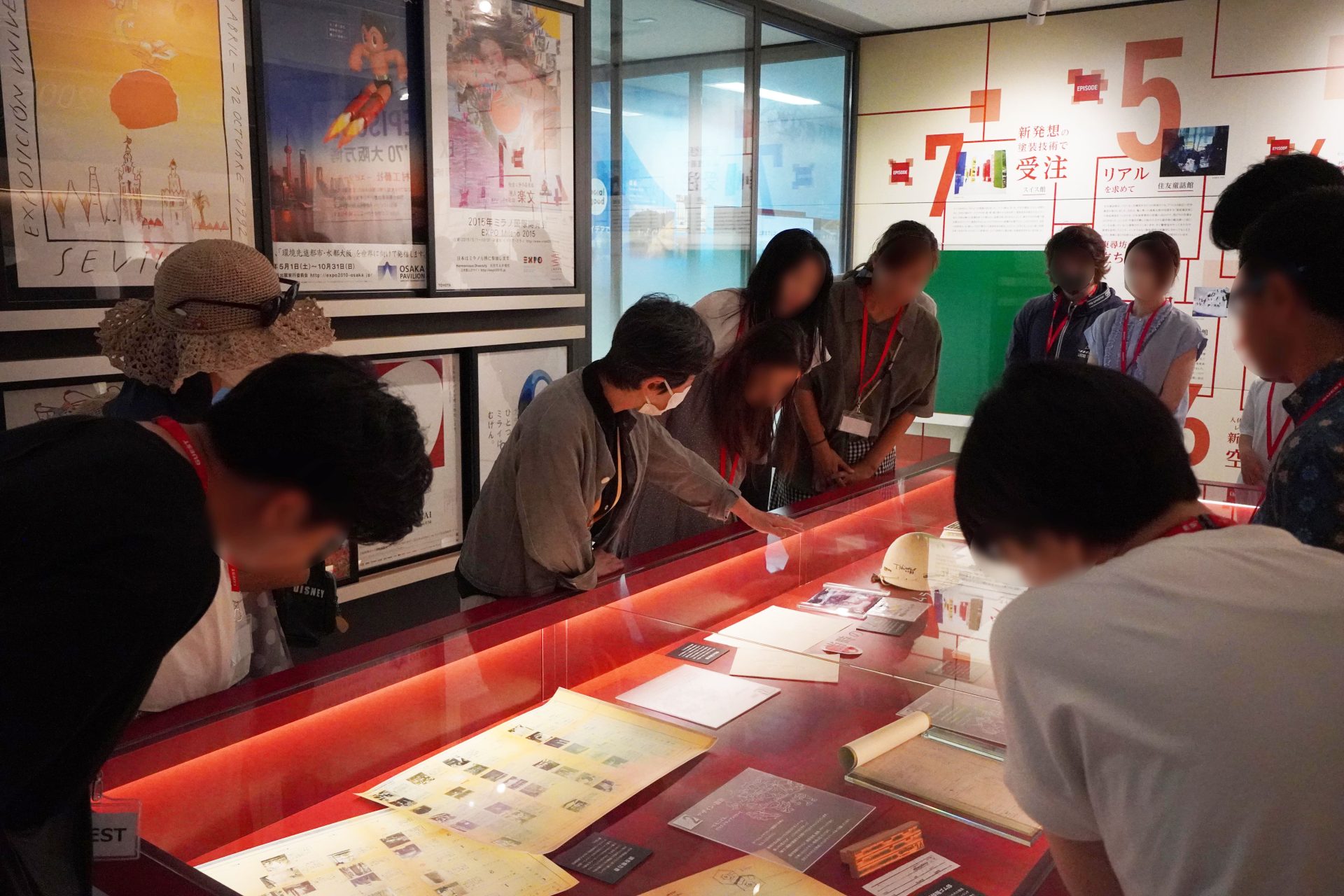 The display cases are lined with on-site helmets and cost estimate documents signed by people involved with EXPO 70.
Initiatives at the 2025Osaka-Kansai Expo - Documentary screening
Finally, a video documenting our efforts for the 2025 Osaka-Kansai Expo was screened. For this Expo, our company is involved in 25 pavilions and over 50 projects. The video mainly consisted of interviews with employees involved in the projects, and we believe the audience was able to sense their strong feelings about their involvement and how they plan to pass on this experience.
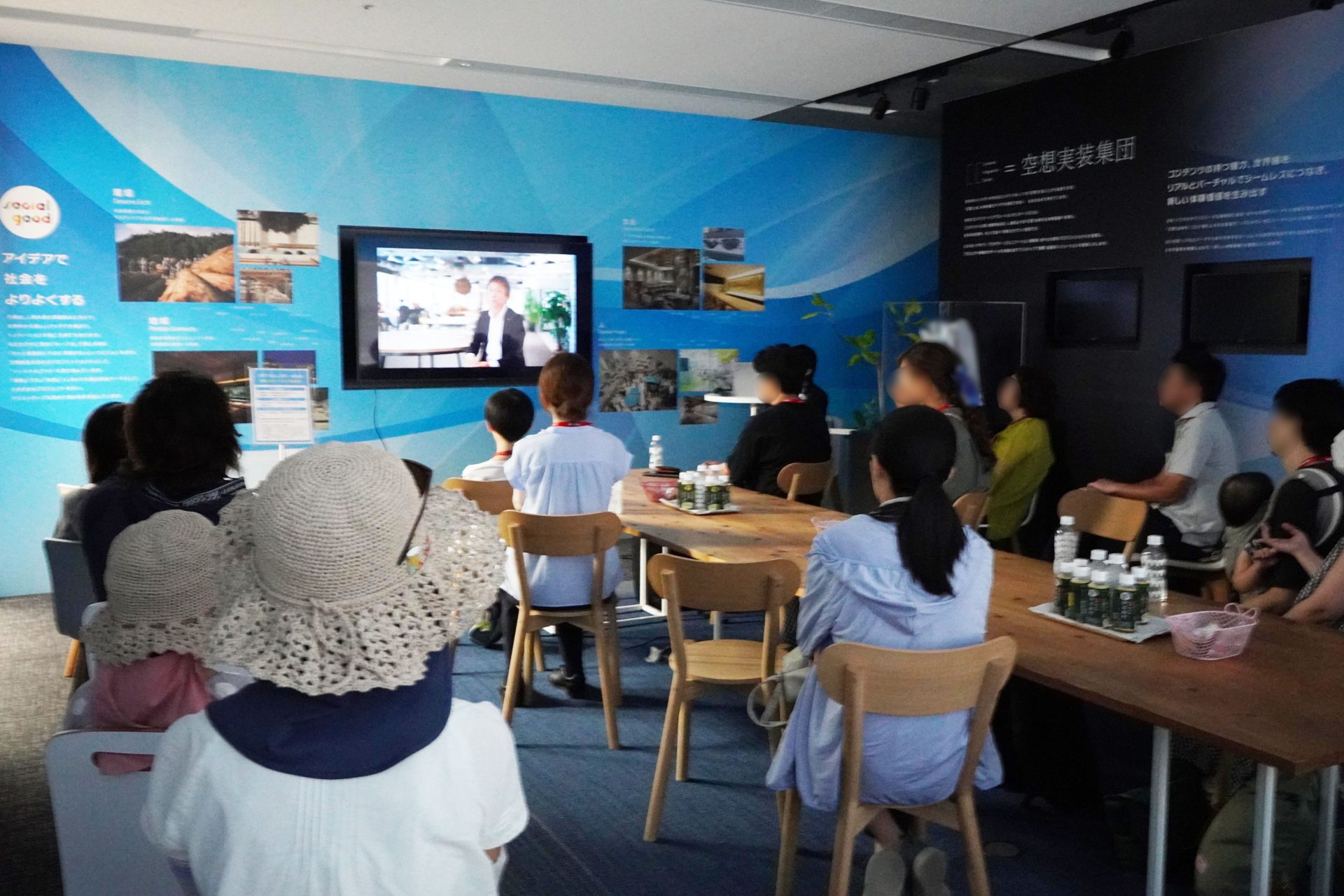 Screening of documentary footage from the 2025 Osaka-Kansai Expo
Conclusion: Actually looking at the materials
In the survey conducted after the event, we received many comments about the materials, such as "It was great to be able to see so many valuable documents," "I was overwhelmed by the wealth of materials," and "The power of the actual materials is amazing." One person even asked, "Can we see the 1970 poster again?"
Watching the tour, it was very impressive to see everyone looking at the exhibits with great interest.
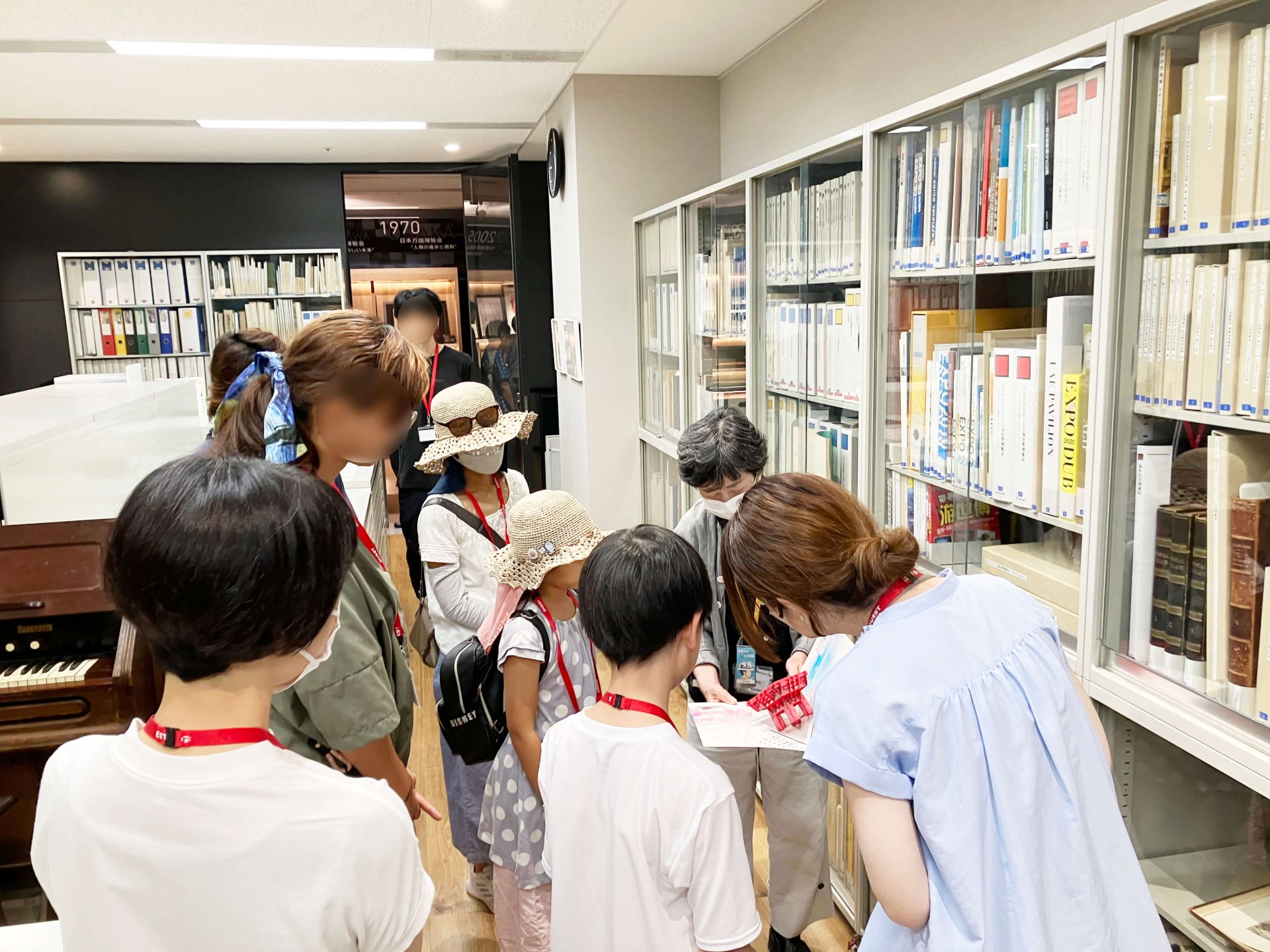 Elementary school students were fascinated by the pop-up picture book-like material (2010 Shanghai World Expo pamphlet)
Through this event, I was reminded of the value of actual materials. It was impressive to see the participants intently examining the materials, and I realized that even in a world where digital technology is advancing every day and information can be accessed anywhere, it is still moving to see and experience real materials.
With the materials in front of you, you can feel the materials and colors on your skin, and sometimes even touch them. You might even be able to imagine how the materials were made and used. This is the appeal of physical materials that digital materials cannot offer. I hope to continue to convey this appeal.
Text: Risako Kumetani, Archives Division, Brand Communication Department
Like this article?
- editor
-

-
Unraveling the past of the display industry and opening up its future.