Nagasaki Museum of History and Culture celebrates its 20th anniversary (Part 2) Urban development that leverages connections between the region and the world
2025/11/26- share
-


- text and edit by
- NOMURA Co., Ltd. Facility Management Business
As a comprehensive space production company, NOMURA GROUP not only designs and constructs spaces, but also manages facilities after they open. The Facilities Business Management Department of the Business Production Headquarters comprehensively manages museums, science museums, art galleries, and other facilities, including research and curatorial departments.
Our facility management business began with the designated management of the Nagasaki Museum of History and Culture, which opened on November 3, 2005. This article, commemorating the 20th anniversary of the Nagasaki Museum of History and Culture's opening, introduces the current state of the museum and its future prospects through interviews with staff and related parties in two parts.
In the first part of the article, we focused on the design concept of "connection" for the 20th anniversary logo mark and interviewed staff involved in the activities.
Nagasaki Museum of History and Culture celebrates its 20thanniversary (Part 1) - A look at the work that continues to connect the local community with the world
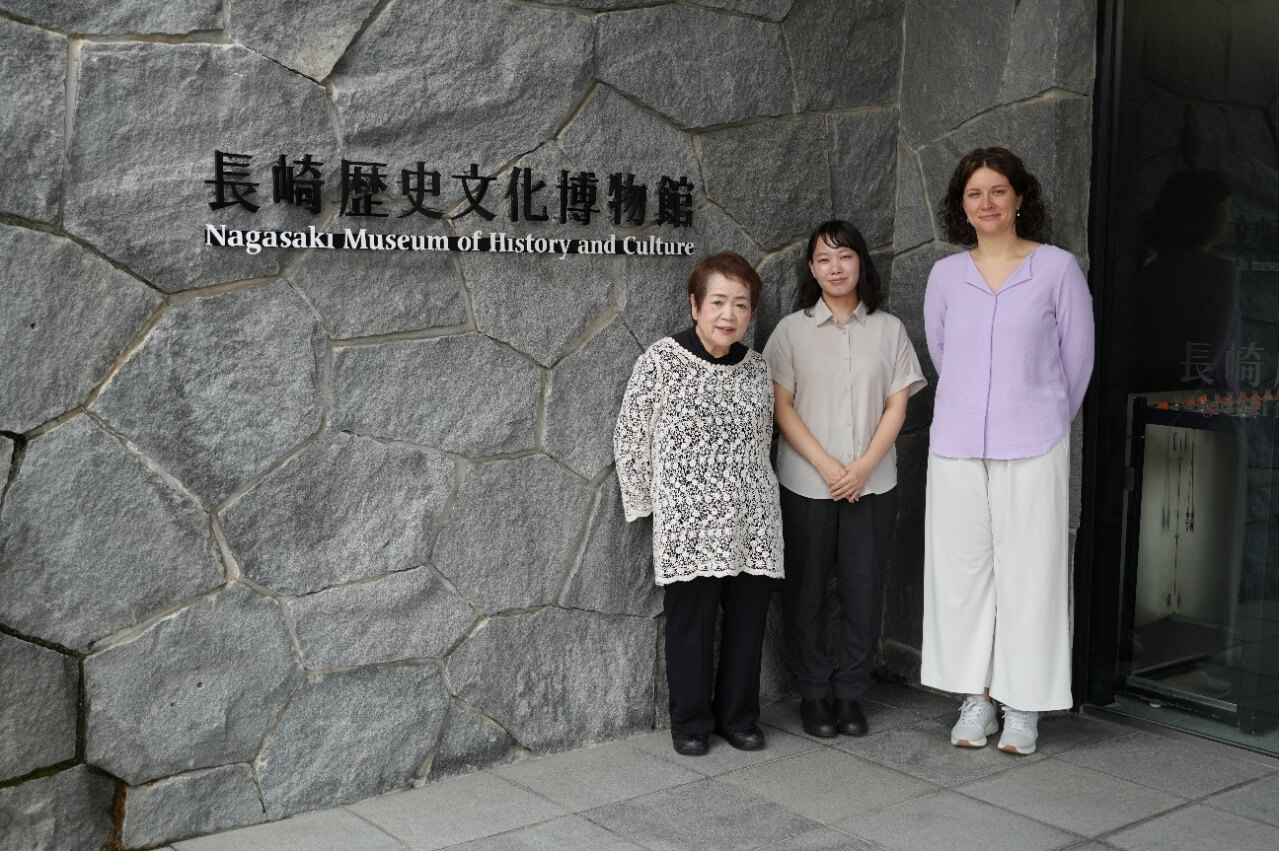
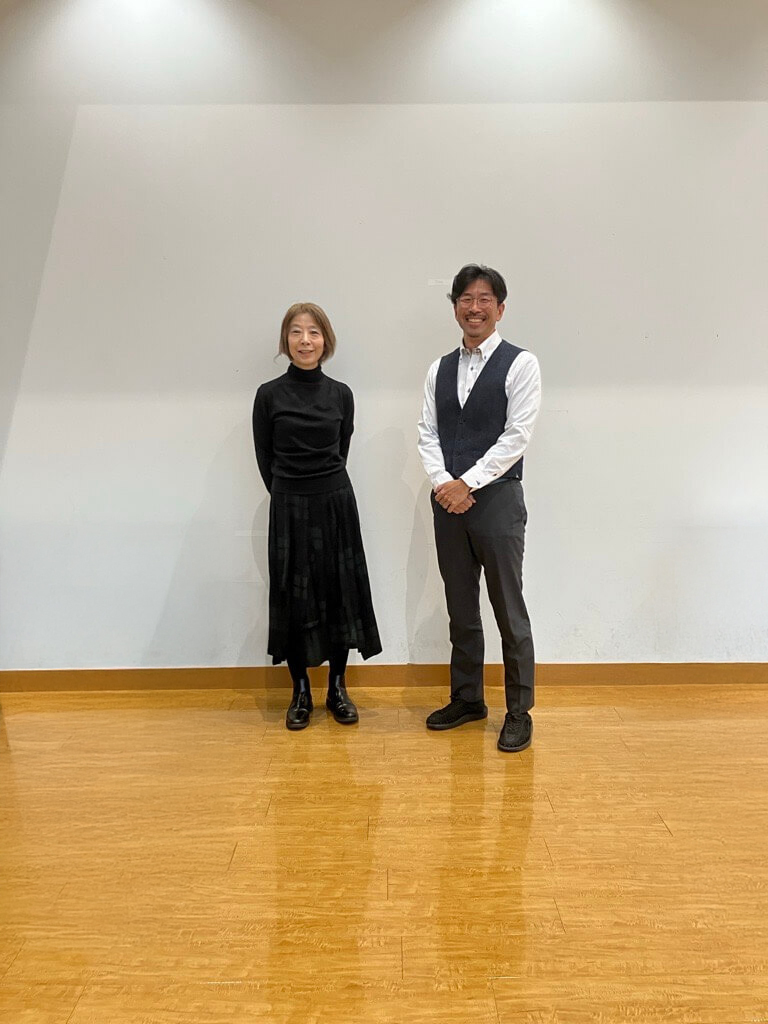
In the second part, we welcomed Mr. Tsuruta from the Nagasaki Regional Policy Research Institute, a public interest incorporated foundation, and together with Mr. Banno, deputy director and general manager of the Nagasaki Museum of History and Culture, we spoke about the role of museums in the local community of Nagasaki, an international exchange city, and their future prospects, based on the results of an ``Economic Ripple Effect Survey'' on the impact that museums have had on the local community.
The economic ripple effect that the museum has had on the local area
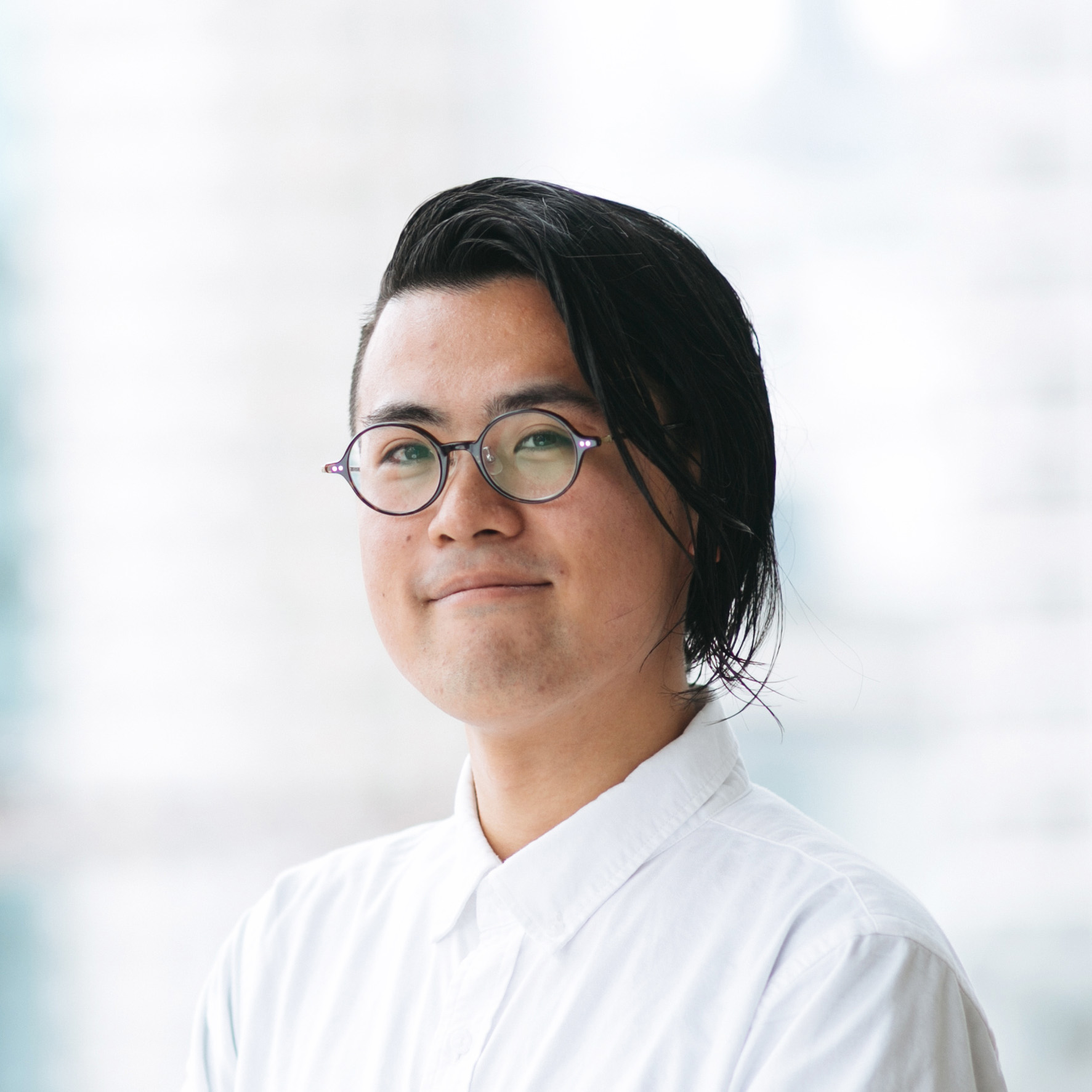
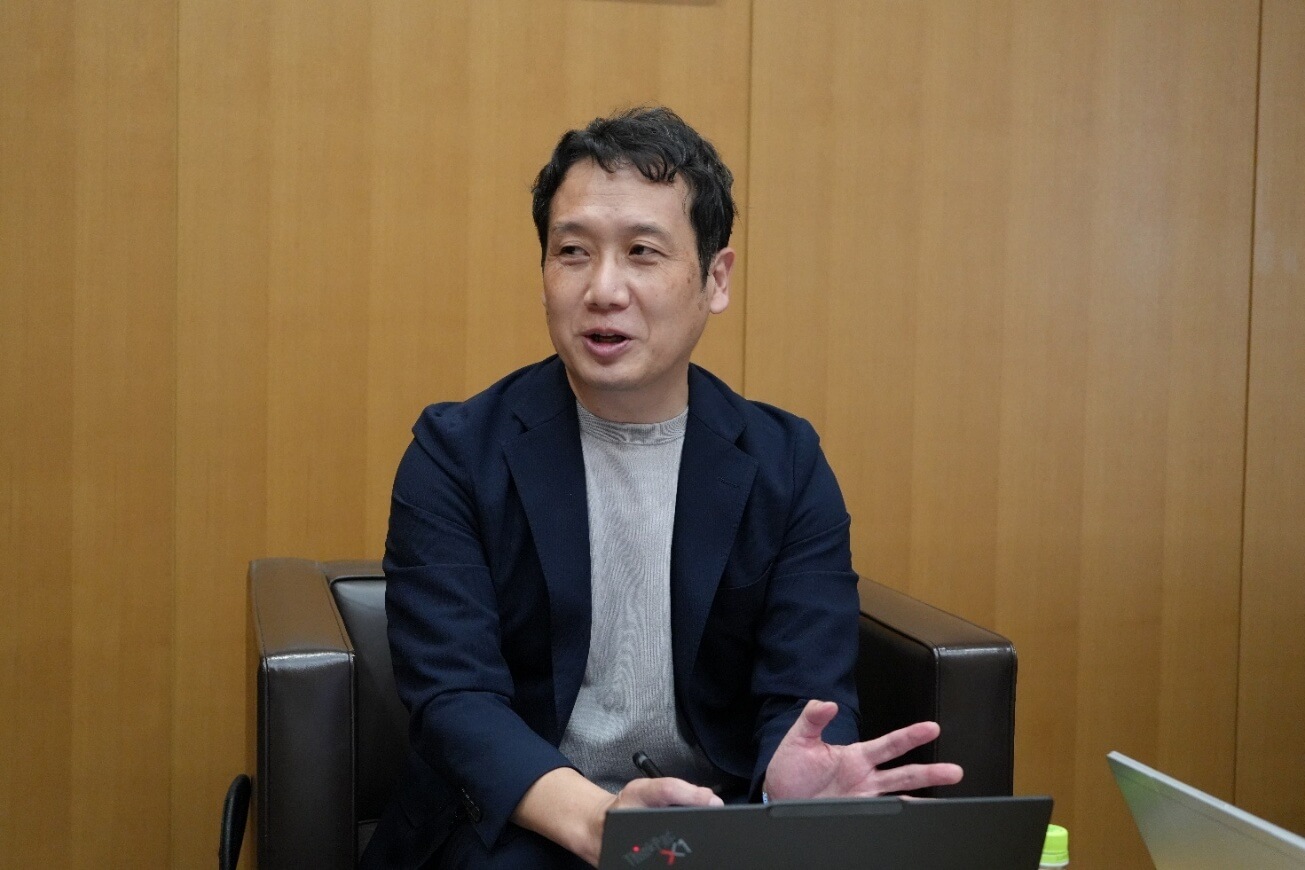 Director and Chairman of the Nagasaki Regional Policy Institute, a public interest incorporated foundation
Takaaki Tsuruta
As a specialist in regional policy, he has promoted a variety of projects, including EBPM (Evidence-Based Policy Making) and regional branding. He collaborates with the government and citizens to paint a vision for the region's future and contribute to creating value for Nagasaki.
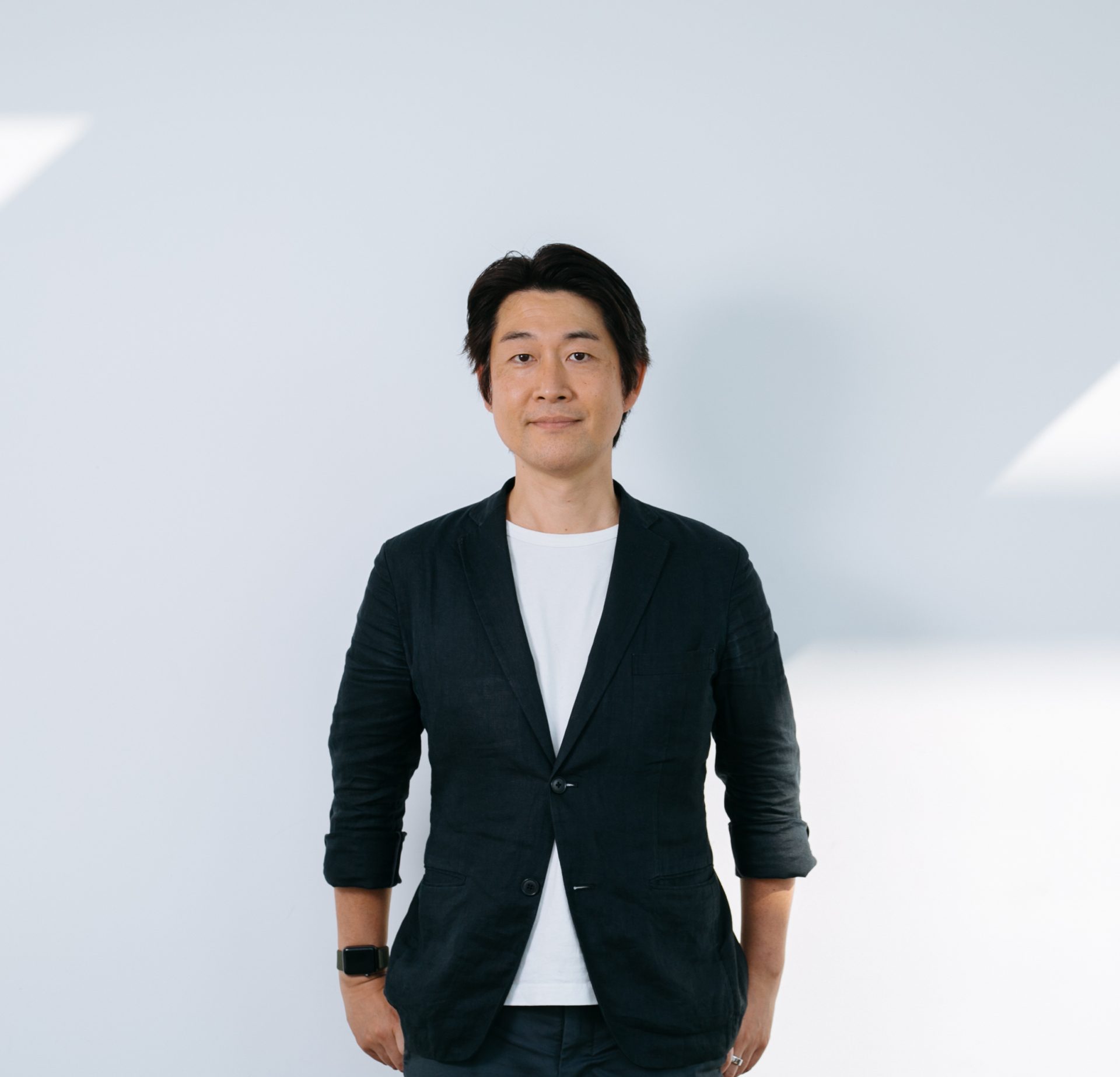
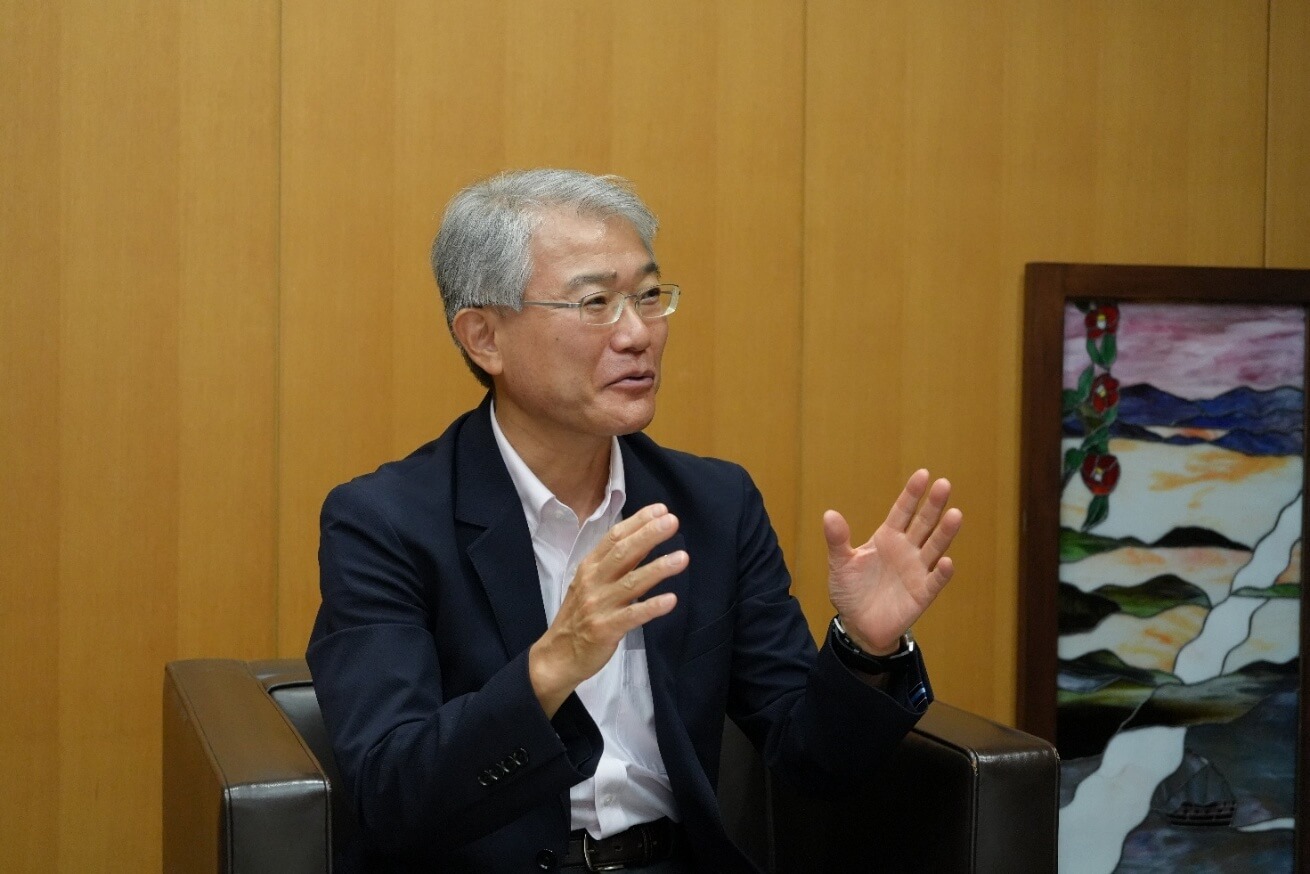 Deputy Director and General Manager, Nagasaki Museum of History and Culture
Tamotsu Banno
In 2024, he will become general manager of the Nagasaki Museum of History and Culture.
He is responsible for the overall management of the museum and serves as vice-chairman of the executive committee for the 20th anniversary project.
--I heard that the Nagasaki Museum of History and Culture, on the occasion of its 20th anniversary, analyzed the economic ripple effects that the establishment and operation of the museum has had on the local area. What was the purpose of this analysis?
Banno-san
The Nagasaki Museum of History and Culture was jointly established by Nagasaki Prefecture and Nagasaki City in 2005, and our company has been the designated manager since it first opened. Since its opening, as a museum themed on the history of international exchange, we have aimed to evolve our operations by formulating business plans and reviewing results every year, based on the philosophy of connecting Nagasaki's history and culture to the future.
However, the reality is that we have not fully examined the ripple effects on the local community. Therefore, as we approach the milestone of our 20th anniversary, we wanted to analyze the quantitative (economic) impact that our activities have had on the local community and use this as a reference for future museum activities. In order to carry this out, we consulted with Mr. Tsuruta, the director of the Nagasaki Regional Research Institute, which has been involved in many evidence-based regional policy development projects, and he was happy to cooperate.
Tsuruta-san
I think that investigating the economic ripple effects is a very important new initiative for museums. As stated in the Basic Law on Culture and the Arts, museums are expected to have connections with urban development and industry.
This survey calculated how much the Nagasaki Museum of History and Culture's operating expenses, special exhibitions, PR activities, etc. contributed to the local economy, and found that it had an economic effect of approximately 40.2 billion yen over a 20-year period.
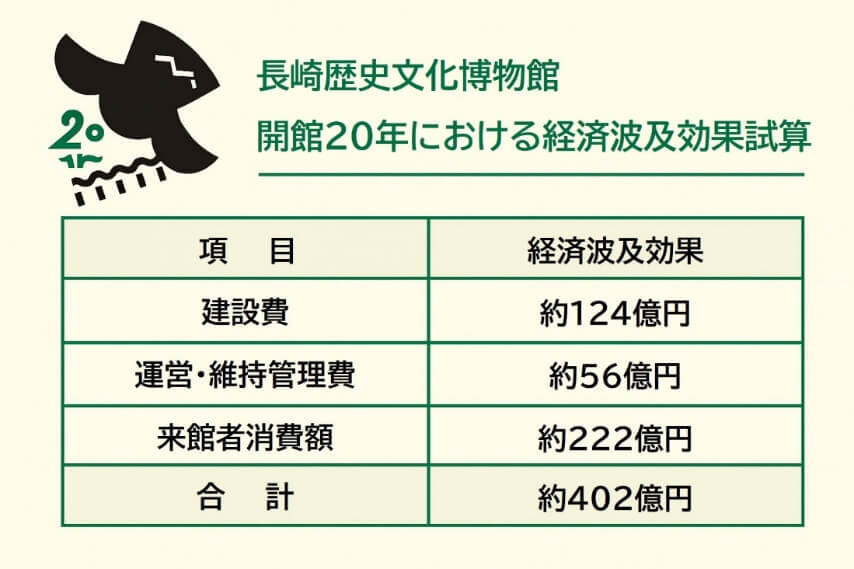 From "Analysis of the Effects of the 20th Anniversary of the Opening of the Nagasaki Museum of History and Culture"
(Nagasaki Museum of History and Culture, Nagasaki Regional Policy Research Institute, Public Interest Incorporated Foundation)
Banno-san
We believe that it is a significant achievement that we were able to confirm the consumption effects of visitors not only inside the museum but also eating, drinking, and shopping in the surrounding area.
Tsuruta-san
Another important point to consider is how much of the museum's special exhibitions, various projects, facility management, and other work is commissioned and returned to the local community. Calculations using an economic model revealed that over 30 billion yen in operating costs alone, excluding construction costs, is returned to the local community. I believe this is evidence that the museum is functioning properly as part of the local economy.
Banno-san
Of course, there are aspects that cannot be explained solely by economic effects. The museum's activities also have an intellectual ripple effect and contribute to the creation of a regional brand. Along with these quantitative results, we would like to make the qualitative value more visible as well.
For example, our museum is also focusing on outreach activities (educational outreach) for residents of the prefecture who live in remote areas, such as remote islands. By conducting more than 17 visiting lessons per year (2024 results) and also operating a mobile museum, we strive to fulfill our role as a core museum in Nagasaki Prefecture. In the future, we hope to be able to visualize the effects of these efforts.
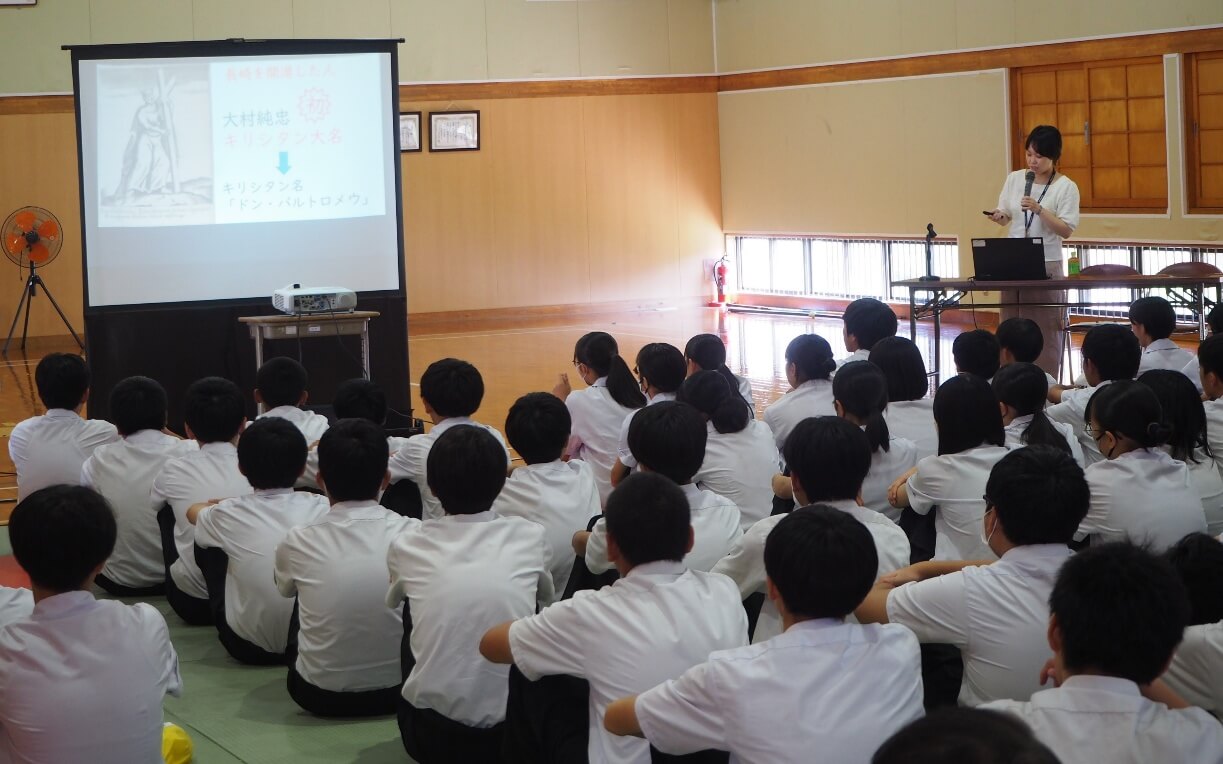 Visiting classes held in various locations for schools within the prefecture
Tsuruta-san
It's something that the local people don't often notice, but I think these activities will lead to awareness and pride in the local area. It's also important to use the numbers to raise awareness of the museum's diverse activities.
The museum fosters the Nagasaki brand and a love for the region
--The role that museums play in the Nagasaki brand was also mentioned in this survey.
Tsuruta-san
A brand survey of Nagasaki City found that history and culture are recognized as top elements of the local brand. It is extremely important that the museum experience fosters a sense of attachment to the local area and a sense of brand awareness.
Banno-san
An increasing number of people are now volunteering at the museum as university students after experiencing a workshop when they were in elementary or junior high school. Those who visited as children are now parents, and are now bringing their own children. I believe that these intergenerational connections are proof that the museum has taken root in the community.
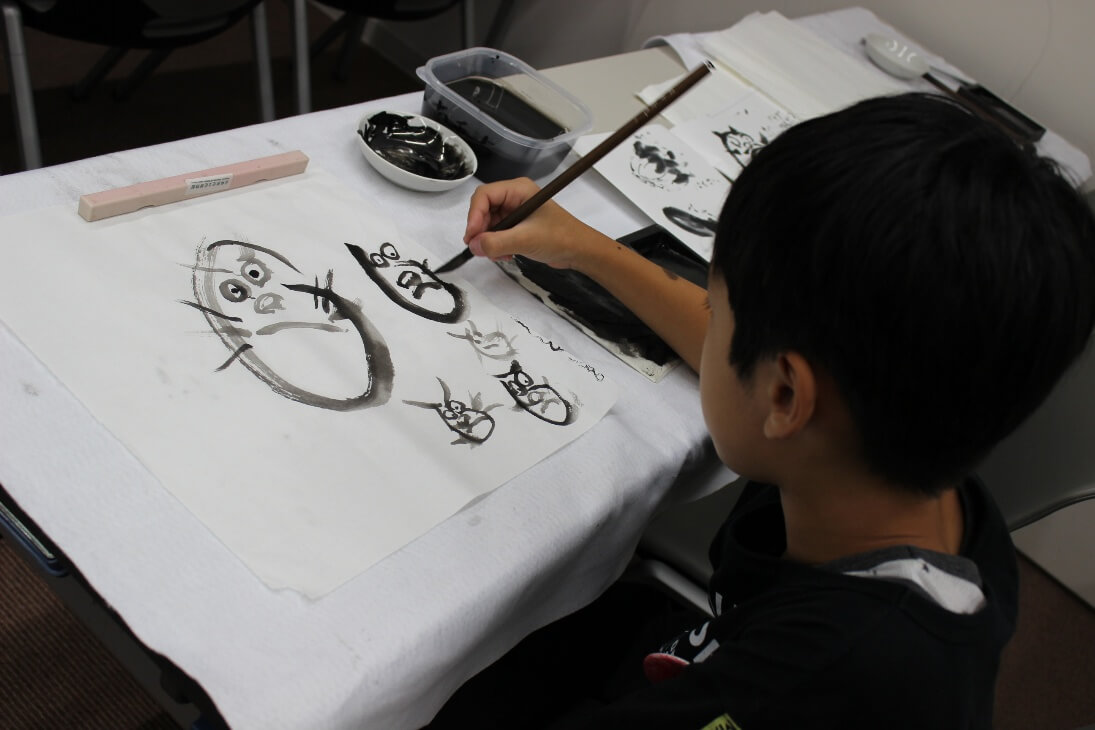 The Rekibun Children's Club has been running since 2009 with the aim of increasing interest in Nagasaki's history and culture through ongoing engagement with the museum among elementary school students.
Tsuruta-san
It's interesting how childhood experiences at museums can lead to a sense of attachment to the local area and awareness of the brand even after one grows up.
A survey of prefectural residents also found that there is a strong correlation between attachment to history and culture and ease of living. Analysis has shown that the reason why the younger generation wants to return to Nagasaki in the future is because of their attachment to the local brand. It is also important to note that experiences at museums contribute to the formation of attachment to the local brand. It is likely that these experiences are also influencing the reason why the younger generation wants to return to Nagasaki in the future.
Banno-san
I am convinced that the museum's activities are making a significant contribution to the creation of a brand centered on the history and culture of the region. In the future, I would like to examine the long-term impact that the museum has on local people. I would also like to further strengthen the museum's role in fostering attachment to the region and communicating its brand value.
Nagasaki's diversity and inclusiveness and its future as an international city
--Finally, I'd like to ask you about the future of Nagasaki as a city of international exchange. What role can the museum play as a museum of the history of international exchange?
Tsuruta-san
In Nagasaki City, the number of cruise ships calling at the international terminal is increasing, but inbound tourism is still low, so there is a lot of room for growth. While improving excursion programs for short-term visitors such as cruise passengers is one issue, it is also important to create long-term stay programs targeting those who find value in Nagasaki's history and culture.
Banno-san
We hope that the museum will also serve as a platform to enhance Nagasaki's international tourism brand value.
Tsuruta-san
While Nagasaki has a strong image as a historical and cultural destination, it is not yet sufficiently recognized as a tourist destination or disseminating information about it. For example, when you ask people from outside the prefecture about Nagasaki's food, they often only think of "champon" and "castella." We need to tell a new story about Nagasaki as a tourist destination and convey the appeal of modern-day Nagasaki. It would be great if the museum could become a hub for spreading that story.
Banno-san
It is important to tell a story about Nagasaki's historical background, as well as its present and future.
Tsuruta-san
It is important to take advantage of Nagasaki's history as an international city where diverse cultures coexist, and to promote its brand value of "symbiosis" to the world. Even when walking around the city surrounding the museum, you can see that shrines, churches, and Chinese-style temples coexist, and that diverse cultures have blended together. By emphasizing Nagasaki's cutting-edge, mobile, and future-oriented approach as a model for a society that accepts diversity and inclusiveness, we will be able to attract the interest of international tourists.
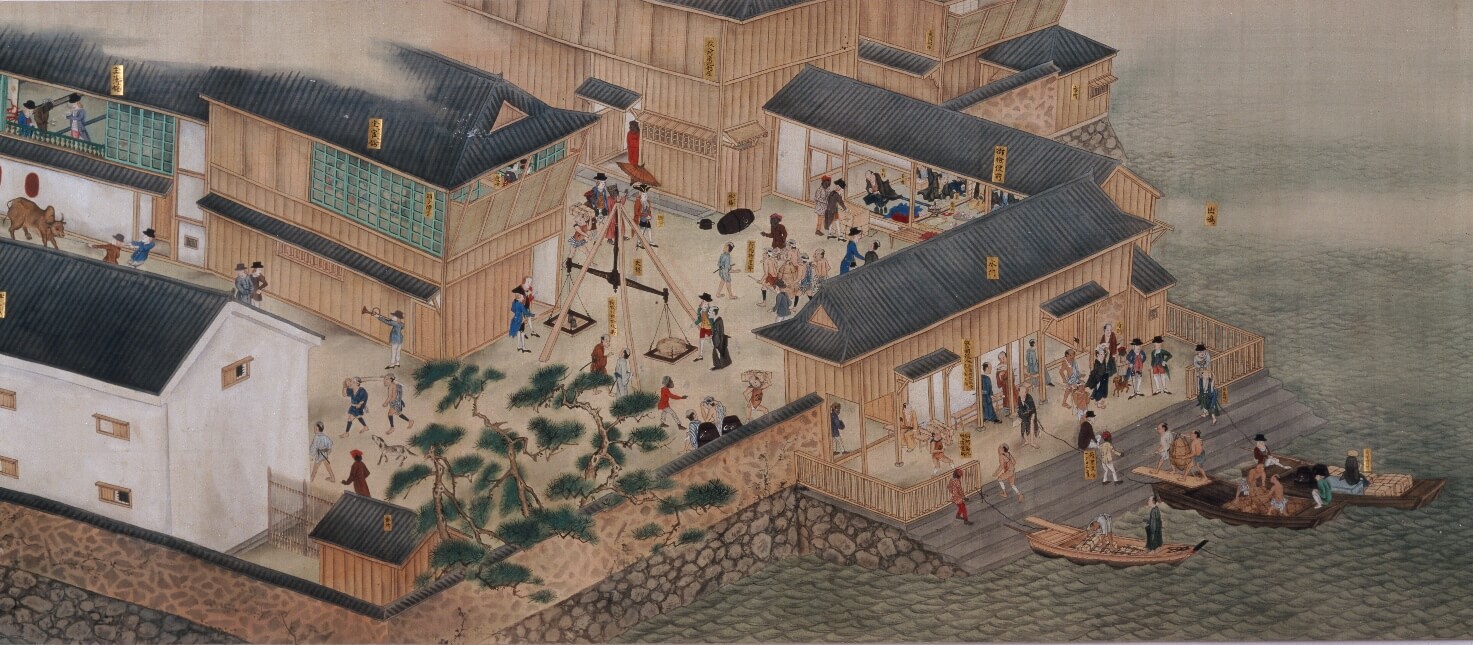 Diversity seen in the trading scene at Dejima depicted in the "Tang Dynasty and Dutch Dynasty Picture Scroll" (by Ishizaki Yushi, housed at the Nagasaki Museum of History and Culture)
Banno-san
Coexistence and diversity are becoming increasingly important themes in modern society. Our museum is also working to provide multilingual services, aiming to be a museum that everyone can use with confidence. We hope to continue deepening our research and spreading the message of "coexistence" through historical and cultural content and services, which will also lead to pride for the local community.
Tsuruta-san
Another challenge for Nagasaki's tourism strategy is to increase mobility within the prefecture. It is important to create a network that covers not only Nagasaki city but the entire prefecture, and to reach out to remote islands. By encouraging tourists to visit the entire region, rather than just one facility, we can expect to revitalize the entire region.
Banno-san
Every year, our museum holds study tours to introduce the history of international exchange in various parts of the prefecture. We hope to continue to promote initiatives that allow people from both inside and outside the prefecture to enjoy Nagasaki as a whole.
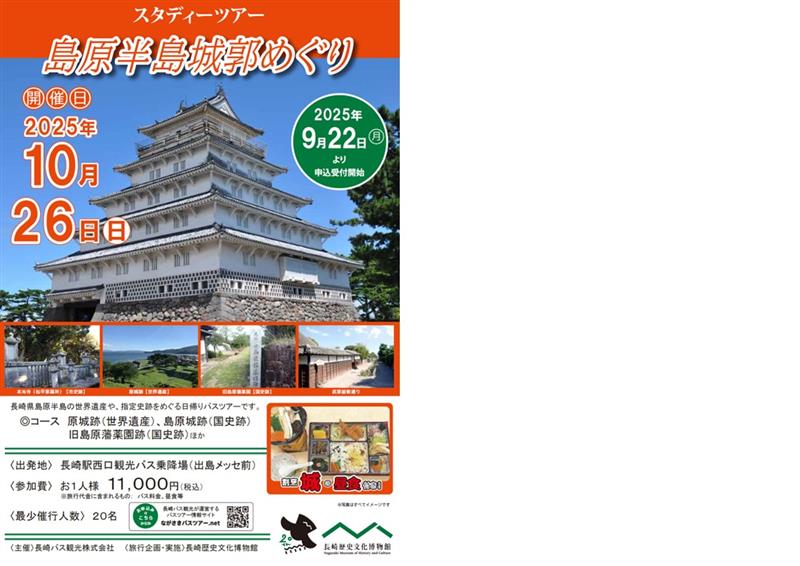 "Study Tour" planned by Nagasaki Museum of History and Culture
Tsuruta-san
Future challenges include outreach using digital technology and data-driven management. For example, I think we need to think of museums as "technology hubs" that can serve as bases for implementing technology in society.
Banno-san
As a designated manager, I believe it is important to steadily carry out the museum's basic activities while also occasionally taking on cutting-edge projects that only the private sector can undertake. I would like to be even more actively involved in branding the entire region and refining its tourism content.
Tsuruta-san
We are also focusing on the fact that Nagasaki's attractions, along with its history, culture, and food, are also cited as the "kindness of its people." Perhaps the prefecture's historical background is also connected to the character of its people. We are also conducting research to provide evidence to prove this.
Banno-san
Regional pride and identity are likely to become increasingly important themes for Nagasaki in the future. As a museum, we would like to continue evolving with the aim of creating new value that connects to the Nagasaki brand. Thank you for today.
NOMURA Co., Ltd. 's facility management business, which began with the designated management of the Nagasaki Museum of History and Culture, is celebrating its 20th year this year. We will continue to report on initiatives aimed at revitalizing facilities and the local community, working together with users, the facility's operator (government), and local residents.
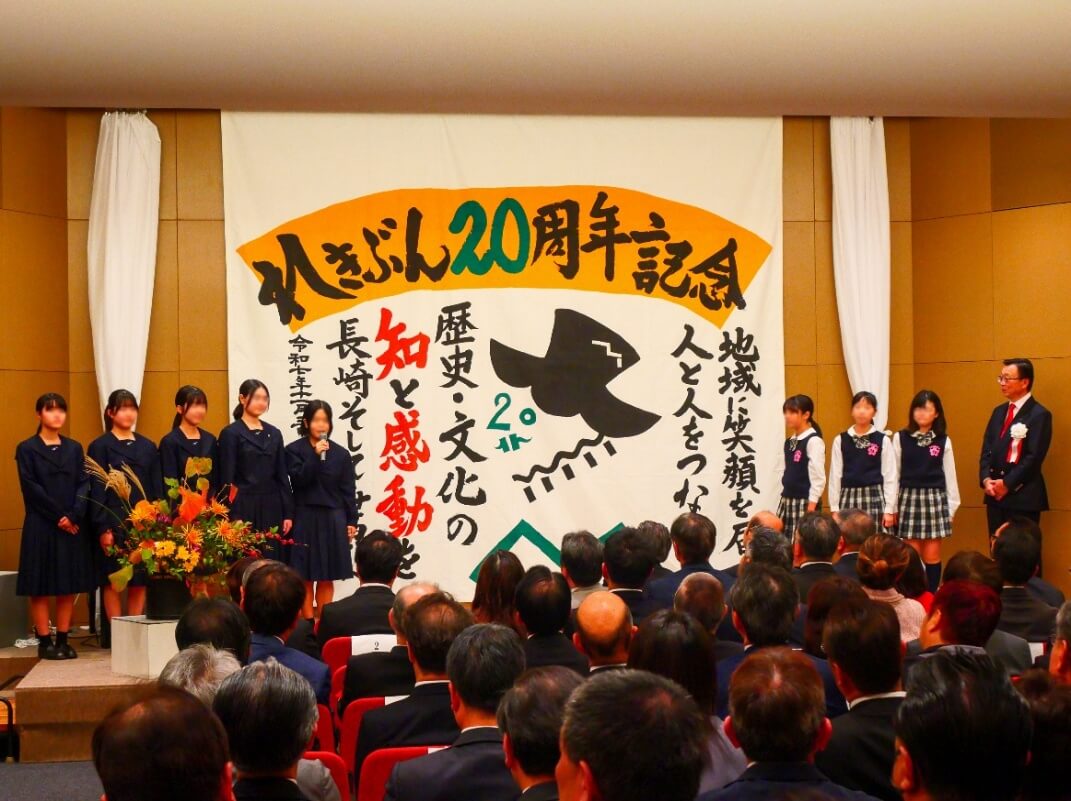 A ceremony commemorating the 20th anniversary of the opening of the Nagasaki Museum of History and Culture was held with local elementary and high school students in attendance (November 3, 2025).
Opening20Click here for information on the anniversary project
2025 marks the 20th anniversary of the museum's opening | Nagasaki Museum of History and Culture
20thAnniversary Event: PokémonxCraftsExhibition - Great Discoveries of Beauty and Crafts
Friday,September12,2025-Sunday,December7,2025
 ©2025 Pokémon. ©1995-2025 Nintendo/Creatures Inc./GAME FREAK inc. TM, ®, and character names are trademarks of Nintendo.
20th Anniversary Pokémon x Crafts Exhibition: A Great Discovery of Beauty and Crafts | Nagasaki Museum of History and Culture
[Planning/Person in charge]
NOMURA Co., Ltd. Co., Ltd.
Business Production Headquarters, Third General Affairs Department, Facilities Business Operations Department
Miki Mori Planning Director
Junji Yamazaki
Risa Aoki
Composition and text: Miki Mori, Risa Aoki Photography: Junji Yamazaki
Like this article?
- editor
-
-
NOMURA Co., Ltd. Facility Management Business
Taking facility management business to the next stage