Museums are more interesting than ever—the future of museums seen from the outside
2026/02/27- share
-


- text and edit by
- Keiko Watanabe
The Street Museum General Incorporated Association is working towards a future where museums are utilized in people's daily lives. Since its founding in 2020, the association has been carrying out a variety of initiatives, including outdoor displays of 3D printed animal skeleton models, the creation of 3D models of museum specimens, and research into museums that are quietly closing.
NOMURA Co., Ltd., which is exploring how to convey the appeal of museums to society, spoke to this street museum about its ideas and behind-the-scenes practices.
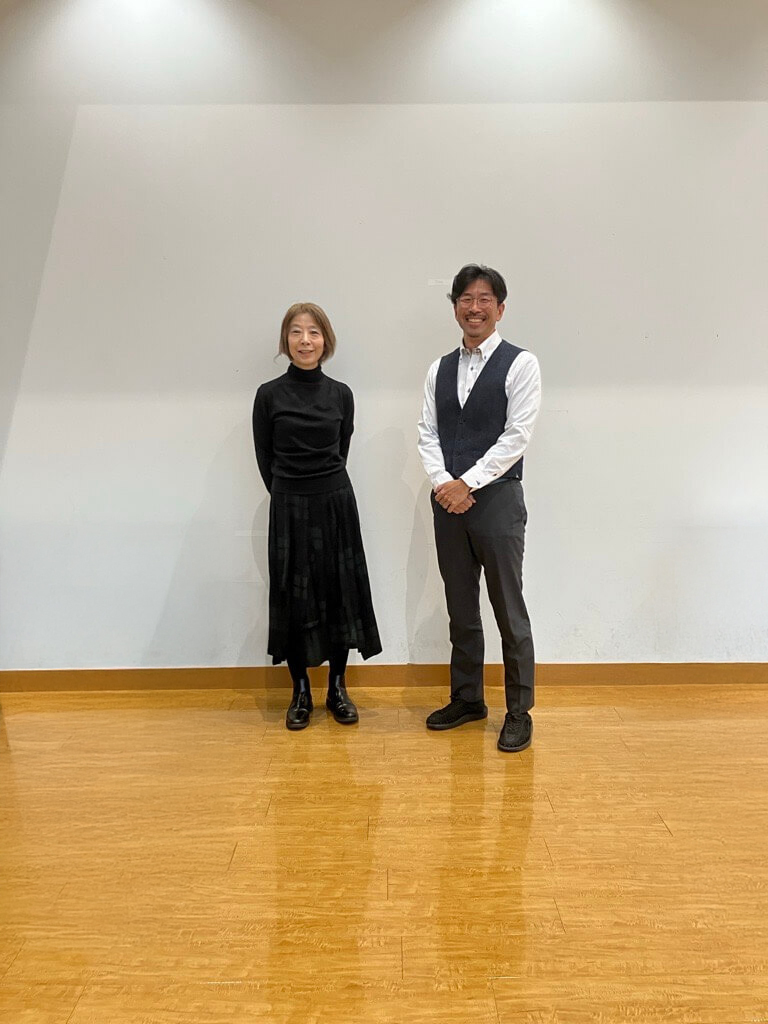
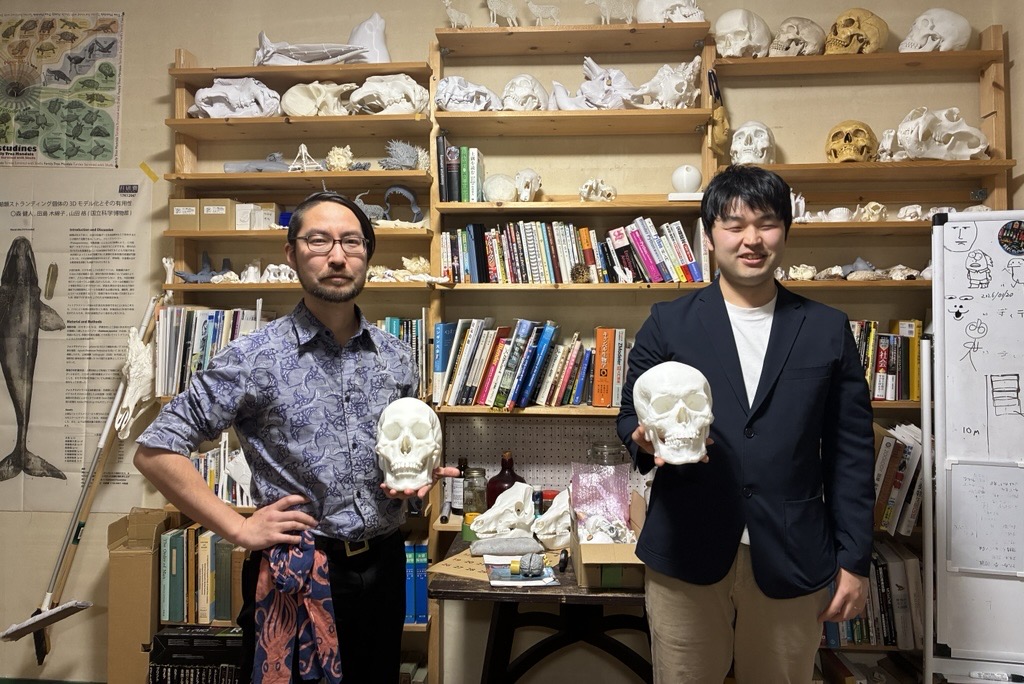
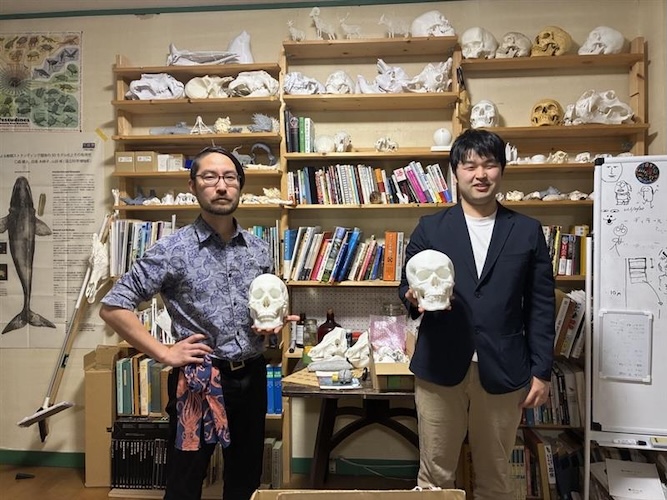 With his own 3D scanned skull. Left: Mori Taketo (Director and Representative Director), Right: Saito Kazuki (Director)
The beginnings of the Street Museum and its activities
Director Mori
In fact, museums are still a relatively minor presence in society.
Those who work in museums may not realize this, but the reality is that many people don't visit museums very often. I myself wasn't particularly interested in museums until I went to graduate school.
Even if museums organize various events and collaborations aimed at these "people who don't normally go to museums," it's difficult to get the word out that "museums even exist." That's when we thought, "Perhaps museums need to get out and about," and so we launched the "Street Museum." We continue our activities, starting with going out onto the streets and letting people freely touch 3D printed replicas of skeletal specimens.
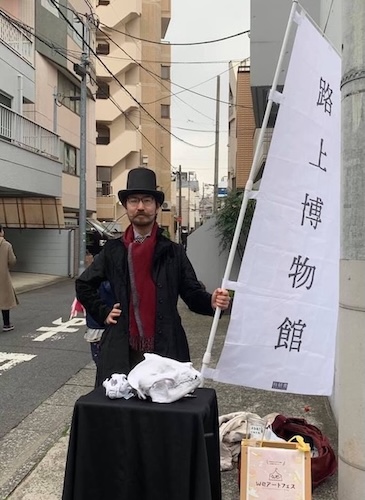
The origins of the street museum
For example, even if it rains today, most people won't think, "It's raining, let's go to the museum." They'll likely think, "I'll just watch a video at home." Even if they do go out, they'll choose a shopping mall or something, and museums aren't even on their list of options for places to go out.
We believe this is largely due to the fact that few people think of museums as "interesting places," and that the feeling that "museums belong to everyone" is not sufficiently shared. So for about five years, we have been taking 3D printed models outside and working to create connections between museums and people. Our activities are closer to "raising awareness" than "popularizing."
We want more people around the world to know about the existence of museums, and we want to foster a more organic connection between museums and people.
In fact, when a street museum was held in Ueno Park and 100 people were invited, only two people had ever visited a museum of their own accord. Awareness of museums is far lower than industry insiders and experts would imagine.
I want to create a flow of visitors that makes visiting the museum itself a goal. However, even if we want to increase the number of people who visit, many people don't have basic information about what a museum is or what activities are carried out at the museum. Because they don't receive that information, they don't come to see the museum or search for it.
There are various ways to access museums, but for example, the National Museum of Nature and Science in Ueno is adjacent to an art museum and a zoo. So, thinking that passersby might think, "Maybe I should stop by the science museum while I'm there," we decided to literally set up a "street museum" in Ueno Park.
The results were surprising. I spoke to about 100 people in Ueno Park in one day, but only two of them said they had ever visited a museum on their own, excluding elementary school field trips.
These are the people walking in Ueno Park. I was shocked.
Before I went out onto the streets, I had thought, "The people walking around Ueno are all repeat visitors to the National Museum of Nature and Science, so I don't think it will have much impact in terms of spreading awareness." That's why this result was such a big revelation.
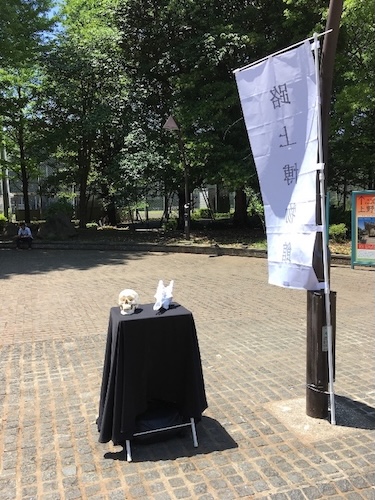
Street Museum @ Ueno Park (in front of the police box on the main street leading from Ueno Station to Ueno Zoo)
We have also created 3D versions of skeletal specimens from places like Tennoji Zoo and sold them nationwide as capsule toys. For us, who have been holding events on the streets to raise awareness up until now, this project was a way to expand our connection with the museum to the outdoors.
I tried making some items using my own 3D printer and they were more popular than I expected, which gave me a sense of accomplishment.
Nowadays, there are many areas in commercial facilities that sell capsule toys. We wonder if we can turn these areas into "new points of contact" where people can meet the museum.
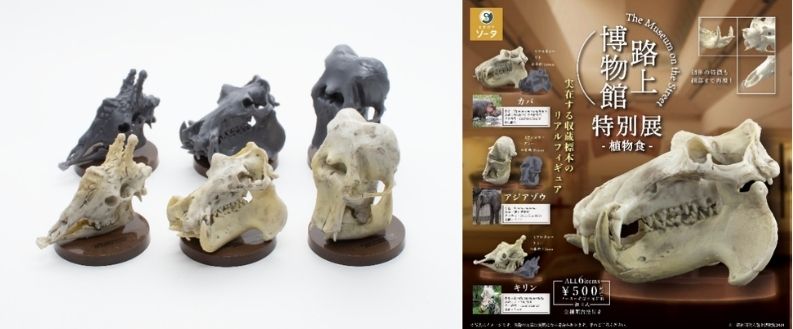 A capsule toy based on a 3D skeleton
By letting people touch the materials, we hope to convey their depth and value.
Director Mori
Bones feel very rough to the touch. We want people to feel that even with 3D prints, "This was really something that was inside the body of this animal," so we take the 3D replicas outside and exhibit them.
When you tell people to "feel free to touch it," they become interested and reach out to touch it. When you create an environment where people can dig deep into things, they naturally find it interesting.
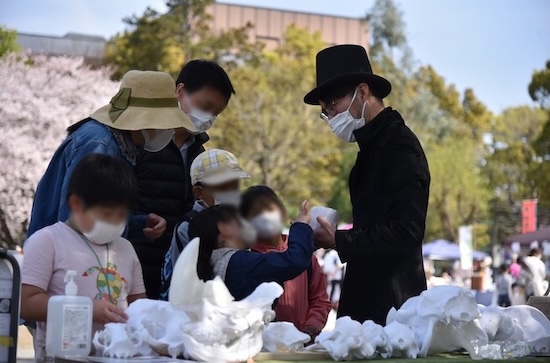 Event exhibit
For example, this is a replica of a giant panda skull, but in the exhibition room it is often simply described as "a giant panda skull."
But in reality, they are two separate individuals named "Huan Huan" and "Ton Ton," mother and daughter. When you compare them, you'll find that there are actually quite a few differences between them.
The mother, Huan Huan, is looking slightly downwards, while the daughter, Ton Ton, is facing forward. Even with just one generation difference, these differences are clearly visible. Even a single bone has its own distinct "personality."
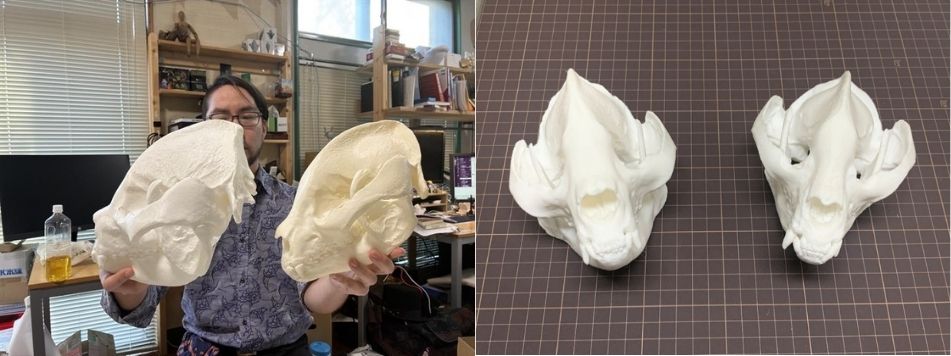 Giant panda mother and daughter skull replicas (Left: Huan Huan / Right: Tong Tong)
Such in-depth stories are difficult to present in a museum's permanent exhibition, partly due to limited exhibition space.
That's why we want to provide visitors with an experience that allows them to make their own comparisons and observe closely. We want to continue creating many footholds that will allow visitors to reach a deeper understanding that captions alone cannot.
Issues facing museums as treasure troves of information
Following the revision of the Museum Act, there has been active discussion in the museum industry in recent years about "digital archiving." However, many museums have not made progress in developing the basic archives, and fundamental issues remain, such as where data belongs, responsibility for server management, the reliance on part-time staff for resource room management, and the lack of a collection list.
Director Mori
In order to advance digital archiving, we first need an "archive."
Whatever the format, the "original documents" must first be properly organized. Everyone talks about "digitalization" and "DX," but first you need to properly organize the original documents, clarify their location, and manage the information in a systematic way -- without this foundation in place, digitalization cannot demonstrate its true power.
I believe that this way of thinking is deeply connected to the origins of museums in Japan.
The roots of Japanese exhibition culture lie in the Yushima Seido exhibitions. Unlike the Western trend where exhibitions developed from storage facilities, I believe that Japan's culture began with the idea of "showing." Therefore, it is natural to feel that the experience of visiting a temple is similar to the experience of visiting a museum.
As an extension of this trend, there are some aspects of Japanese museums that have not been able to completely break away from the "spectacular" aspect.
That is why we must change this situation - it is with this idea in mind that we have established our museum's vision: "Make museums more interesting."
Street Museum logo
I first realized how interesting museums are after I started visiting them as a student.
Until then, I only had the impression that it was a "childish place" and "a bit stuffy."
However, once you enter the staff area, the number of things you can touch suddenly increases, and you can freely see what you want to see.
What surprised me most was the museum's "liveliness." Though it looks dry from the outside, the inside is very damp and full of signs of life. The fascinating nature of this dampness is almost invisible to the average visitor. I discovered this fascinating aspect that only the staff know, and that's how I ended up getting sucked into the museum (laughs).
In fact, the origins of the Street Museum lie in my cosplay creative activities.
Creators are hungry for primary sources, so I hope museums will open their doors more to students and people who are creating things on their own.
In fact, these people are in a very difficult situation. When they start researching, "Where can I find authentic information?", they end up at museums. But it gets difficult from there.
When I was making the pig masks, I had no idea where I could see a real pig. I was told, "There's one in a museum," so I went, but there was just a huge amount of information lined up, and at first I didn't even know how to find information about pigs.
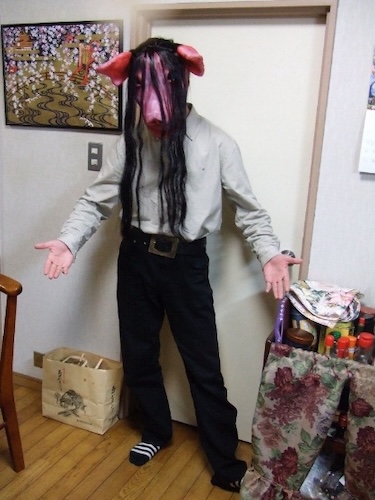
Director Mori wearing the pig mask he created
Museums are open to specialized researchers, but I feel that they are still not enough to satisfy the desires of people who want to "create something" or "learn." I want museums to become places that are more accepting of the motivations of creators. Just as people themselves are diverse, so are their goals. That is why museums must become "places where everyone who comes can see what they want to see."
So how can we become such a place?
I believe the key to this lies in the nature of libraries. People of all ages and genders gather in libraries, and each person is free to stay there according to their own purpose. I would like museums to be similarly places where people can visit for a variety of purposes.
One concrete example I would like to give is the New York Public Library's Performing Arts Library. It is called a "library" because it houses books related to Broadway performing arts, but in reality, only about 30% of the collection is books. The remaining 70% is a wide variety of materials related to stage production, such as costumes, stage sets, and models. It is precisely because of this abundance of materials that people creating new Broadway productions can refer to past performances and create their own works.creative activities can be done.
In other words, this library has become a "creative infrastructure" that directly motivates creators. The purpose of the space and its intended use is very clear.
I believe that a useful place is one that provides what you need, depending on your purpose. I believe that museums can and should become that kind of place.
An example of a small museum is the Handmade Science Museum Exedra in Kashiwa City. It is very compact, measuring the size of a single apartment building, but it is a members-only museum where children can freely carry out experiments based on their interests. The level of the experiments is quite high, and it seems that they also carry out serious efforts such as making fossils. When people say, "I want to do a dissection but I don't have the space," they are sometimes willing to do it here. In this way, the science museum is open as a place where people can realize their dreams.
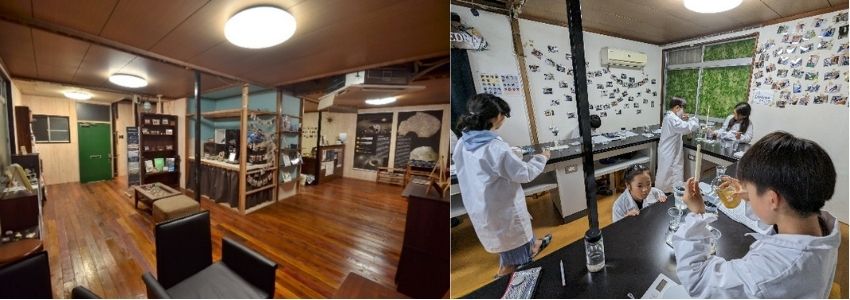 Interior of the "Handmade Science Museum Exedra" /Children's activities
Museums belong to the people - what we can do to preserve culture
In Japan, there is a sense of guilt about "making money," and museums tend to avoid commercial use. However, in order to preserve culture for future generations, it is essential to balance economy and culture.
Director Mori
Frankly speaking, I believe that museums should exist as places where citizens can conduct research. The act of research is a fundamental human activity, and it also contains the entertainment aspect of being interesting.
Recently, there has been a rapid increase in creators who create works and post them on social media, or who create and upload their own videos. Despite the availability of tools, these people find it difficult to access primary sources. Furthermore, with the advent of AI, information has become increasingly confusing, leading to a situation where it is difficult to know what is true and what is false. However, museum collections are the "real thing."
That is why museums will become increasingly important in the future. In an age where it is difficult to distinguish between authentic and non-authentic, museums offer authentic exhibits. This is the museum's greatest strength, and I hope that museums will move in a direction that makes the most of this value.
We would like to continue to widely communicate the museum's unique character and spread the appeal of authenticity.
Incidentally, the "goodness of the real thing" is easiest to understand when compared to a fake. When you see the real thing after seeing a 3D printed replica, you realize, "Wow, the real thing is so amazing." If you only know the real thing, you wouldn't realize that. It's similar to the feeling of realizing the good things about Japan when you travel abroad.
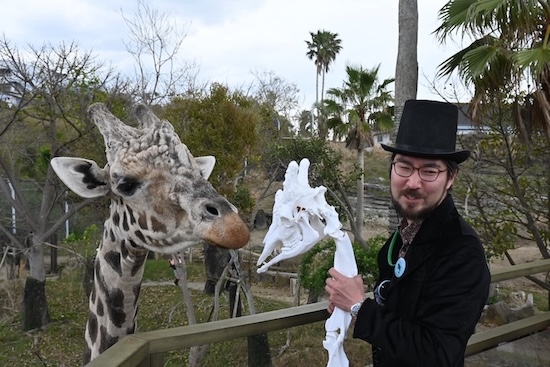
Saito-san
There is a limit to the amount of information humans can digest at one time.
Because real-life materials are packed with a huge amount of information, if there is too much information, people can only take a quick look at it. This is why, when people without prior knowledge look at real bones, they are limited to comments like, "It's big," or "It looks like a dinosaur."
On the other hand, a stripped-down 3D replica still allows you to get the important points. By receiving feedback not only visually but also through touch, the "resolution" of the object gradually increases. The concept of "what on earth is this" begins to take shape in your mind.
Once you have gained that level of understanding, when you see the real thing, you will naturally be able to make comments that are closer to the essence, such as, "Huh? This looks carnivorous." As for me, an expert named Mori taught me "where what muscles are attached and how they move," and as I explained this to people at events, my understanding became increasingly clear.
Before I knew it, I was able to understand much more when looking at the real thing than before. When your eyes become more discerning, the world you can see expands, and it's really fun.
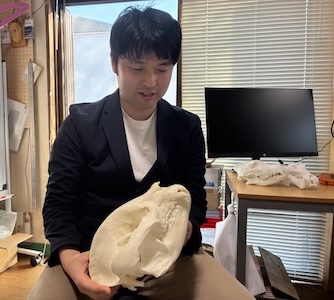
Mr. Saito looking at the 3D replica
The Street Museum is also working on creating a system called the "3D Photography Brigade" that will allow members of the public to go behind the museum and take and organize photos.
Director Mori
We also have an activity called the "Street Museum 3D Photography Brigade." This was born from the idea of "how can we create a system that can take people directly behind the scenes of museums?" We propose that people be allowed into the storage room and backyard, and that we will take 3D photographs of museum collections free of charge and make them available to the public.
As someone who knows how fascinating museums are, I would like museums to have the special experience of touching the materials in the backyard as an "acceptance experience." As a result, I would be happy if people realized that "accepting the general public is actually quite possible." I would like to lower the barriers for both citizens and museums, even if just a little.
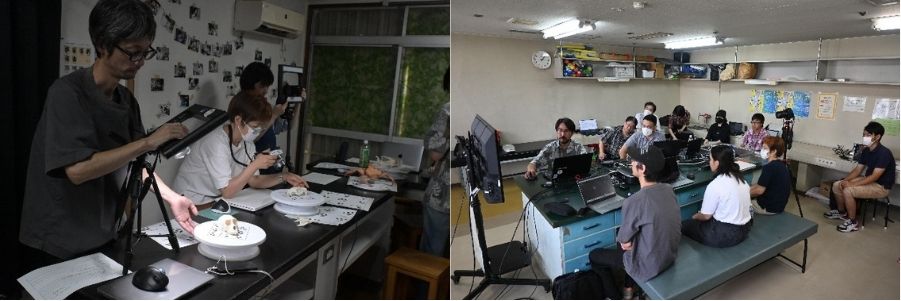 Street Museum 3D Photography Brigade in action
The new role of museums in the community
There are successful examples around the world where art works made by local residents are sold at museums, earning income for the creators and passing on culture. Director Mori believes that if museums "make it their own," the number of people involved will increase.
Director Mori
Modern people have a lot to do, but they simply don't have the time. The time they can spend on hobbies and entertainment is extremely limited. In this environment, the thing people spend most of their time on is "business." That's why I think it would be great if museums could become "places that can be used for business."
One case that made a strong impression on me was that of a museum in Africa that was introduced at ICOM. In this region, the tradition of handwoven colorful rugs was declining, and at the same time, poverty was becoming a serious problem. The museum therefore hired people who could make these traditional crafts and invited local people to come and make products for sale.
As a result, the museum has become a place where local residents can earn money, generating income through the sale of artworks, while at the same time passing on culture. I think this is a truly wonderful initiative. The ultimate goal is "cultural inheritance," so there are no limits to the number of means available to achieve this.
In fact, we could place "stimulating the economy" at the top of our goals. This is because culture can only take root when it is linked to daily life. To take it to the extreme, I even think it would be fine for people to say, "You can make money by going to the museum." If museums could become a place where people who make things as their livelihood can increase the value of their work by visiting them, it would be a great benefit to society.
Conversely, museums that hold such a vast amount of materials and information should be utilized more. Valuable "real information" is collected here, so it would be a waste not to share it with a diverse range of people.
I believe that if more people can make museums their own, the value of museums will naturally increase and they will become indispensable places in society.
The problem of "silent closures" - A survey of museums that are closing
We are also working on the Silent Closure Survey Project, which investigates the current state of museum closures across Japan, raises issues, proposes solutions, and raises awareness.
The reason why the Street Museum began to pay attention to "closures" was the news of the closure of Keikyu Aburatsubo Marine Park, an aquarium with over 50 years of history.
Saito-san
I happened to hear about the aquarium's closure on the news, and I wanted to archive this aquarium, which has been loved for so long, so I created a proposal.
After that, we had a connection with someone from the museum division of a certain company, and we were able to realize the "VR Keikyu Aburatsubo Marine Park" as a collaborative production. For this project, we worked with Keikyu Electric Railway to 3D scan the building and exhibition space, as well as take photographs and shoot videos of the aquarium. We also used footage provided by them for the show.
By combining these various digital records and using XR technology, we recreated the aquarium in a virtual space—" VR Keikyu Aburatsubo Marine Park." After working on this project for a year and a half, we realized that the closure was a turning point, and that there were also positive aspects to it.
I wondered if there were other museums closing as well, and when I continued my research, I was surprised to find that there were almost no official statistics on museum closures in Japan.
At the time, it was clear that an increasing number of museums were in dire straits, but until now there had been no sufficient understanding of "how many museums were closing" or "when and what kinds of museums had disappeared."
Through our research, we discovered that there was a lot we didn't know about the closure. That was a discovery in itself.
If the situation continues as it is, with the actual situation unknown, local libraries will quietly disappear without anyone noticing, and we will reach a future where by the time we realize it, it will be too late. It was this sense of crisis that led to the launch of the Silent Closure Research Project.
The Street Museum, which has been conducting research, proposes the idea of "progressive closure," which does not simply mark the end of a museum's closure, but turns it into a process that leads to the next step.
This could involve rationally relocating collections to neighboring cities and towns, creating a venue that aligns with educational curricula, or considering the minimum necessary new facilities and exhibition renewals. Even if the decision is made to close, holding workshops involving local residents can help to reaffirm the significance of the museum's existence and the achievements that should be passed on to future generations. By following the appropriate process, it is possible to prevent the loss of culture due to closure and, instead, create the possibility of revitalizing the region's cultural value and economy. If materials unique to the region are lost, cultural diversity will rapidly diminish. This is why the question of "how to close" is a topic that society as a whole must face.
Citing the example of "community nurses," nurses who work out into the community, Saito spoke about the need for a key figure who connects museums with society and the future prospects for street museums.
A "community nurse" is a nurse who goes beyond the constraints of a hospital where they can only meet "sick people" and goes out into the community to build relationships with residents by listening to their concerns and wishes. By blending into the community, people will recognize them as "Oh, that person is a nurse," which will naturally lead to health consultations, and ultimately contribute to preventive medicine and reduced medical costs.
This structure also applies to museums. If curators are only present in the museum, they will only reach those who are interested, making it difficult to communicate the museum's value to society as a whole. When curators go out into the community and interact with residents on an equal footing without putting their expertise at the forefront, relationships are born and a sense of the museum's presence in the community is fostered. We believe this will be the foundation for spreading the museum's social value.
Our museum continues to engage in grassroots initiatives, such as providing 3D models, but these only reach those with a keen sense of awareness. I believe museums also need to integrate into the local community and take on the role of a "community curator," starting by listening to the concerns of residents. However, community activities carry the risk of isolation and exhaustion, and a support system is not yet in place, so I see this as a medium- to long-term challenge.
In 2026, in our project to investigate the silent closure of street museums, we hope to be able to hold workshops that will use actual closures as a subject to create progressive closures. Currently, the question of "how should museums be closed?" is still unexplored territory, so our current goal is to develop guidelines on "how best to close" that can be rolled out nationwide in the future.
I want people outside the museum to be aware of this issue as well. I want to increase the number of people who can think about it and take action together.
Text: Keiko Watanabe
Edited by: Ayano Tokunaga (nomlog Editorial Department)
Like this article?
- editor
-
-
Find. Share. Shine.
Finding "likes" and connecting them to the future