NOMURA Co., Ltd., Ltd.'s first initiative! The creation of "mirocco, an indoor children's playground"
2026/01/22- share
-


- text and edit by
- Satoko Yokota
In July 2025, NOMURA GROUP opened the indoor children's playground "mirocco," which was planned, designed, and operated for approximately 11 years. Having created a variety of spaces, this is the first time we have operated a children's playground.
For more details about the project, click here.
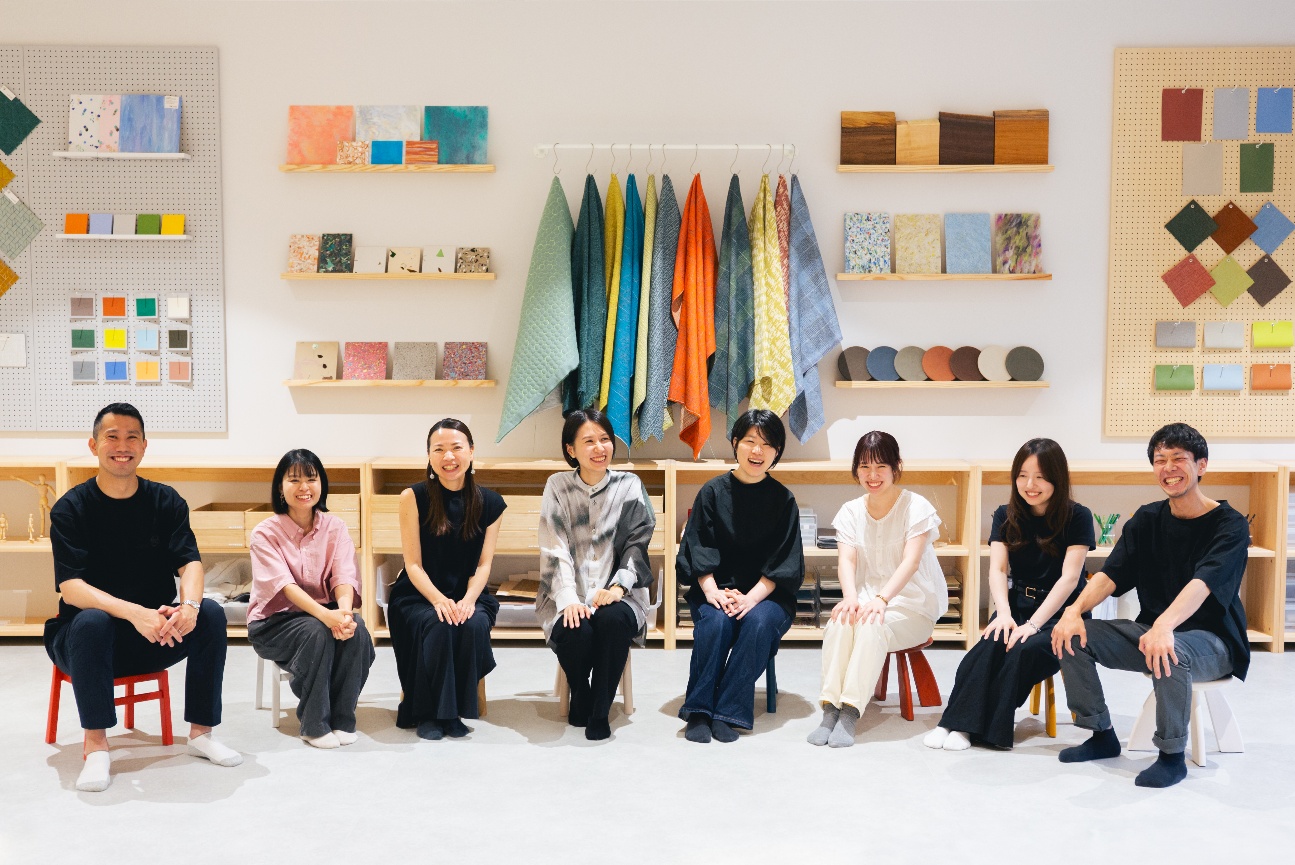
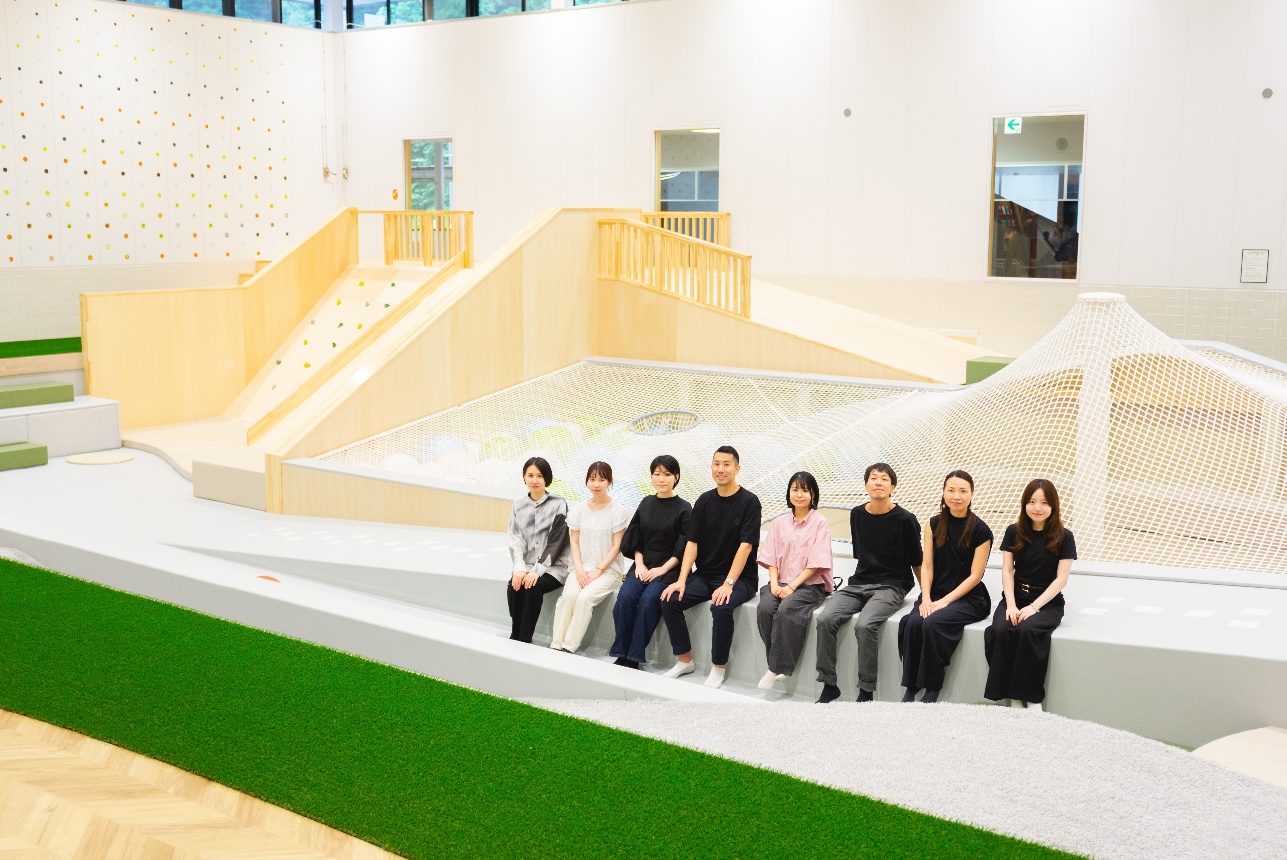
This project began with the renovation of the pool and hot spring facilities at Tamarina, a 22nd Century Hill owned by Kakegawa City, Shizuoka Prefecture, into an indoor children's play area. Members from within the company, each with their own areas of expertise, came together to work on this project. They toured the newly opened facility and reflected on the project process, each reflecting on the place they were responsible for. (Interview date: September 17, 2025)
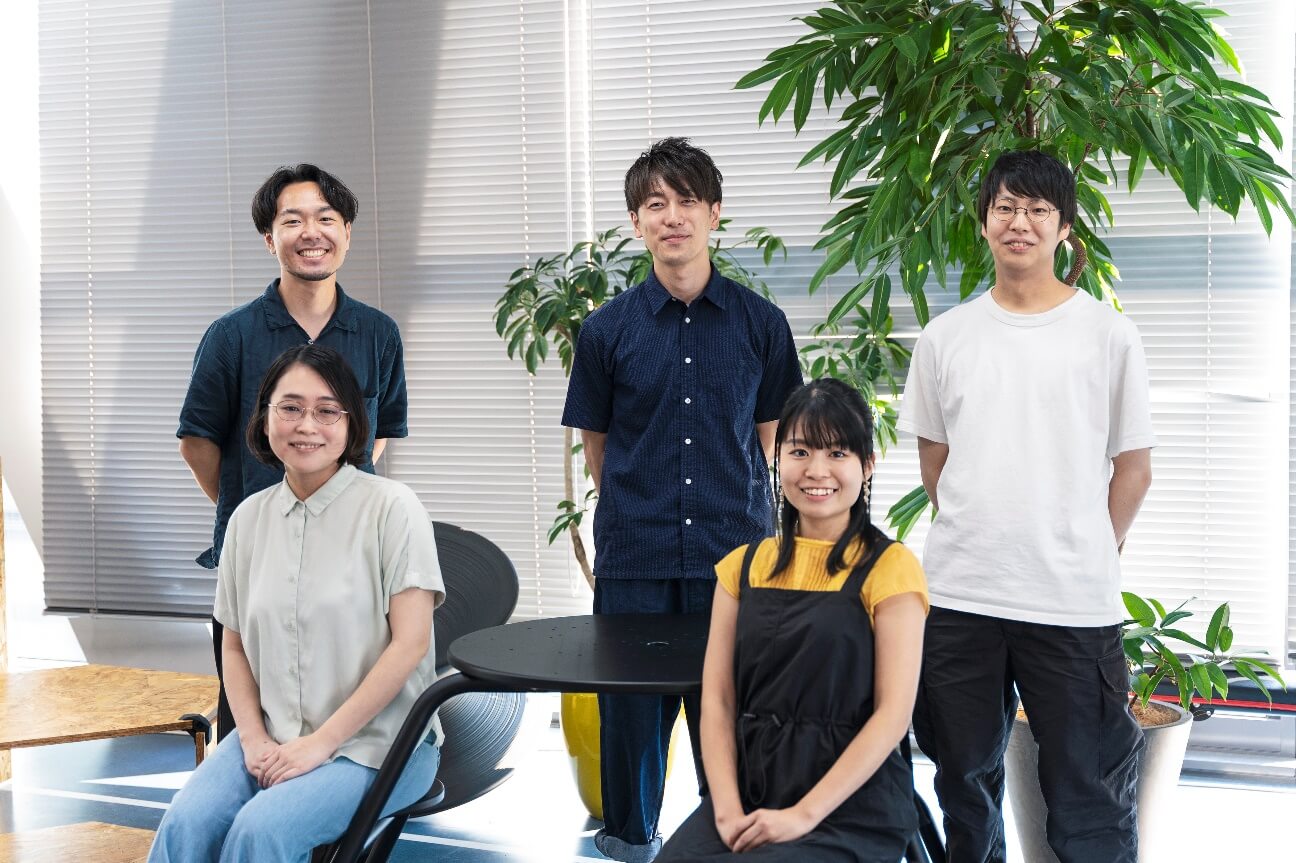
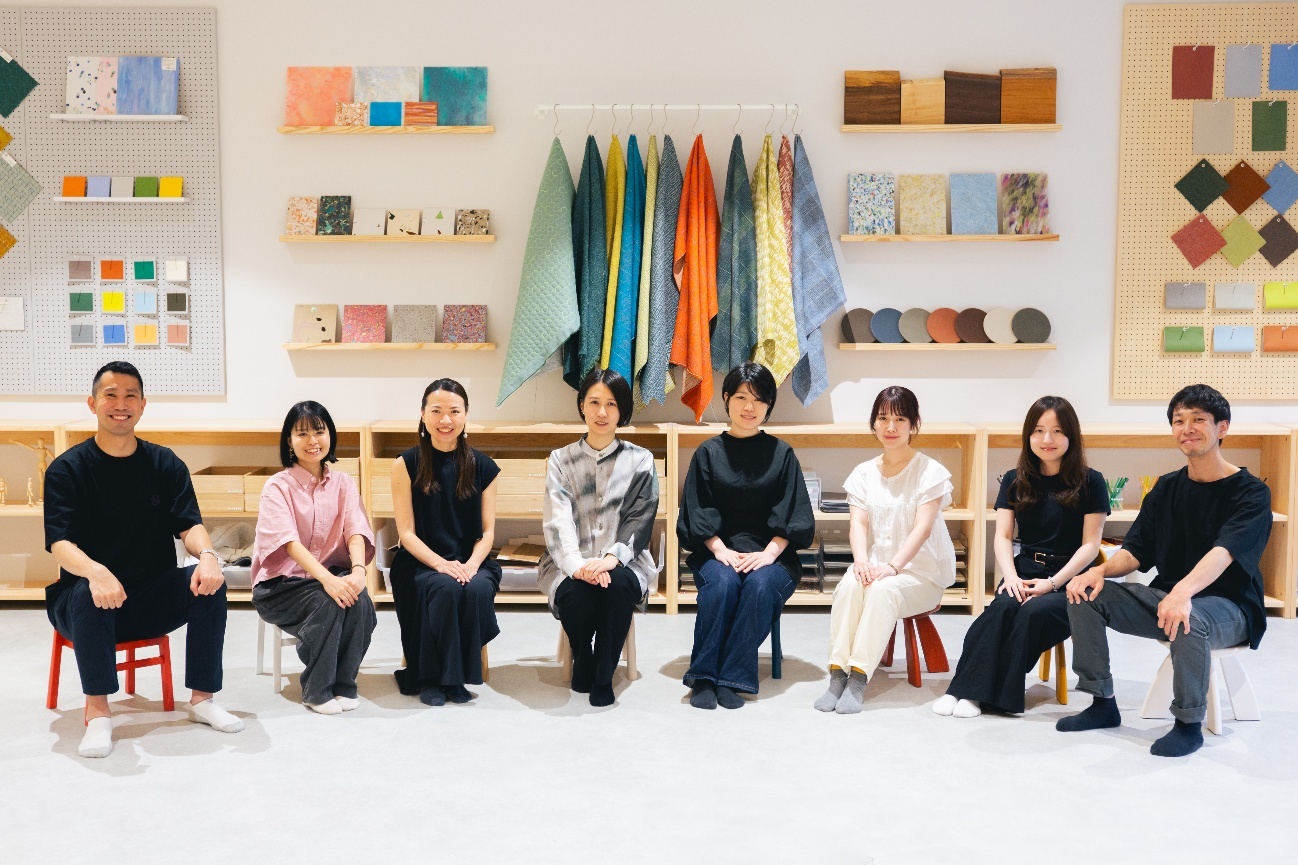 Project members (interviewees) from left
Development and PM: Junichiro Yoshida
Designer: Emi Matsuoka
Planner: Satoko Yokota (Concept Creative Lab Planning)
Graphic designer: IVD Toyoda Mayu (logo, VI planning, sign design, etc.)
Planner: Shima Kurumi (naming and local workshop planning)
Development and PR: Rika Nagai (event planning and management)
Operational management: Hino Natsuka
Designer: Sho Inanobe (architectural design)
The "mirocco" brandwas created by the entire team
Yokota (Planner):
I'm so thrilled to be able to come to mirocco, which we all opened together!
Yoshida (development/PM):
I'm really happy. Looking back, it all started with discussions with planners Yokota and Shima about what kind of playground NOMURA Co., Ltd. should create for children. Then, gradually, our team members grew, including designers Inanobe and Matsuoka, Toyoda from IVD, and Hino and Nagai from the Business Production Division... and we were able to form a really great team.
Yokota (Planner):
This was your first time as a member, was there anything that made an impression on you?
Island (Planner):
Since we all had similar sensibilities, we quickly agreed on what was best, which made it very easy to work with. I think the design appealed to adults as well, getting not only kids excited but also their parents, with comments like "It looks fun!" and "It's cute!" Because we all shared the same sensibilities, I felt that the concept, VI, and management policy were all decided on smoothly.
Yokota (Planner):
One of the great things about Yoshida was that he held regular branding and management meetings every other week. Planners, designers, and the management team all gathered together to discuss their respective topics. Most of the meetings were held online, but Yoshida listened carefully to each person's opinion.
I was particularly impressed by the fact that we were all allowed to give our opinions on the spatial and graphic design. I was particularly pleased that Toyoda-san made multiple suggestions regarding the logo, which would become the face of the facility, on the condition that he would listen to everyone's opinions.
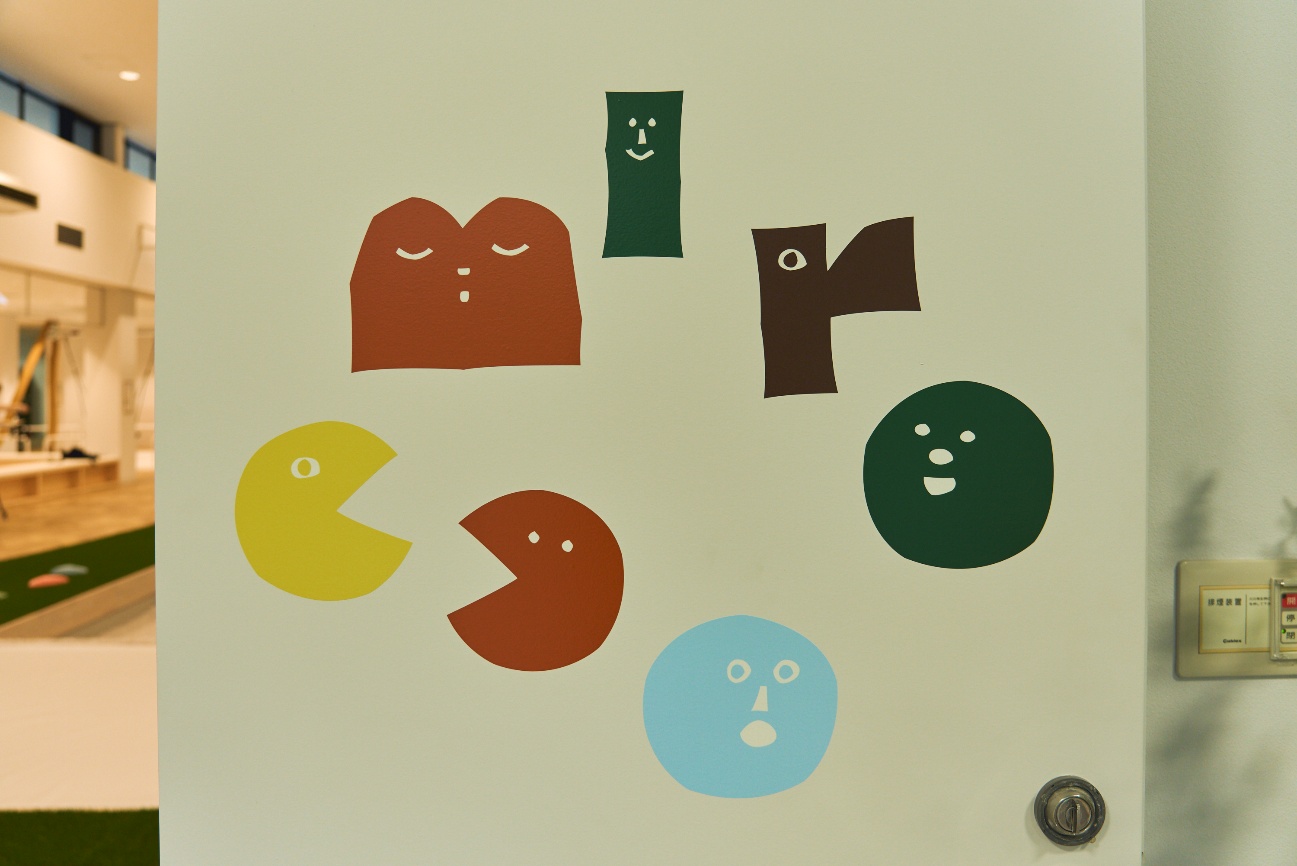
Toyoda (graphic designer):
When I'm creating something, I can't help but become self-centered, so I really appreciate everyone's objective opinions. Thank you very much (laughs).
Hino (operation management):
When the face logo was created, I felt that we had created the foundation for what makes mirocco unique!
Matsuoka (designer):
It was very encouraging that all the members actively offered their ideas and opinions when it came to the interior design and furniture selection. Perhaps it was through this process that we were able to create a facility that is unique yet welcoming to everyone. It was also a big help that Yoshida, the leader of the group, respected the designer's perspective.
Yokota (Planner):
Perhaps the personalities of the designers are reflected in the name. The name "Mirocco" that Shima-san came up with was also very good. Whenever we tell people the name of the facility, we explain that it is a facility where everyone will want to come 365 days a year (3 = Mi / 6 = Ro / 5 = Ko), and they respond with "I see!", and the cute sound matches the visual identity perfectly.
Nagai (development/PR):
I joined the event in the latter half, and while listening to everyone's discussions, I felt their passion and desire to "create a great facility." It seemed to me that they were not just building a play area, but were also focusing on "how children can enjoy it," and I wanted to join in and think carefully about this.
I'm currently in charge of posting on mirocco's Instagram, but in the future, that role will eventually shift to on-site work. Having firmly established the concept and visual identity of mirocco means that we can communicate it as a common symbol of the facility's worldview, so I'm grateful that everyone will be able to continue working with the same sensibility.
Inanobe (designer):
We also thought that the interesting point this time was that it wasn't just about "design" but also about "a business run by NOMURA Co., Ltd.", and from the start we were very conscious of "valuing the management perspective."
Yoshida (development/PM):
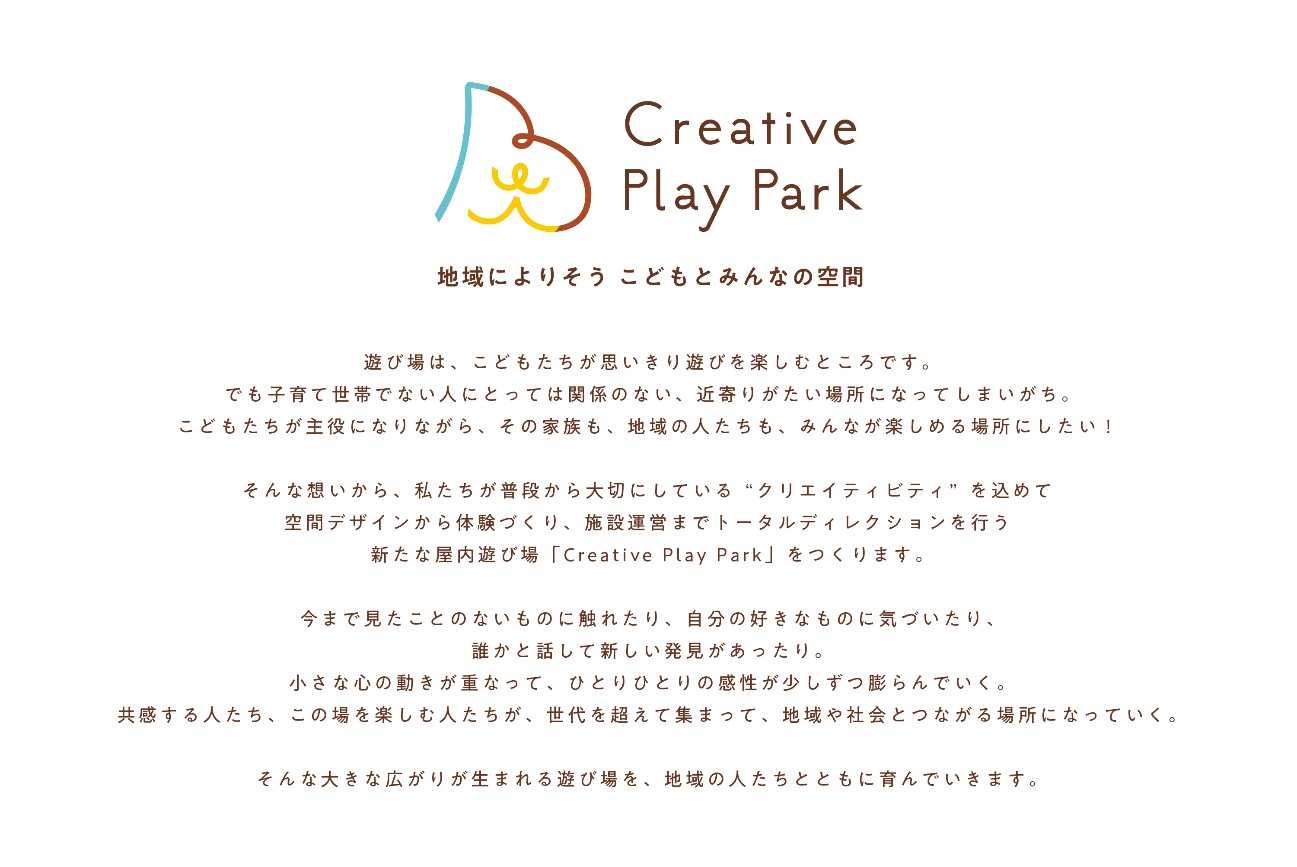
We had many discussions within the team about what a "children's playground run by NOMURA Co., Ltd." We all came up with words and phrases together, such as "Creative Lab," a craft space, and "Creative Play Park," which is also a registered trademark for the playground business run by NOMURA Co., Ltd. * I think we spent a very valuable time coming up with the answer.
* "Creative Play Park" is the name of an indoor playground project for children run by NOMURA Co., Ltd. Based on the theme of "creating a playground that connects everyone through creativity," the project is scheduled to be rolled out nationwide.
Yokota (Planner):
Depending on the purpose of the project, we may consider a unique concept or design that will leave a lasting impression on visitors, but in this case, we have received many comments from users that symbolize the comfort they can experience by being there, such as "It feels really comfortable" and "It feels like we're having fun playing."
It's normal to hear someone say, "(I don't know why, but) it just feels good," but I think a fine balance is important to elicit such feedback. I think the sensibilities of everyone on the team resonate with our customers.
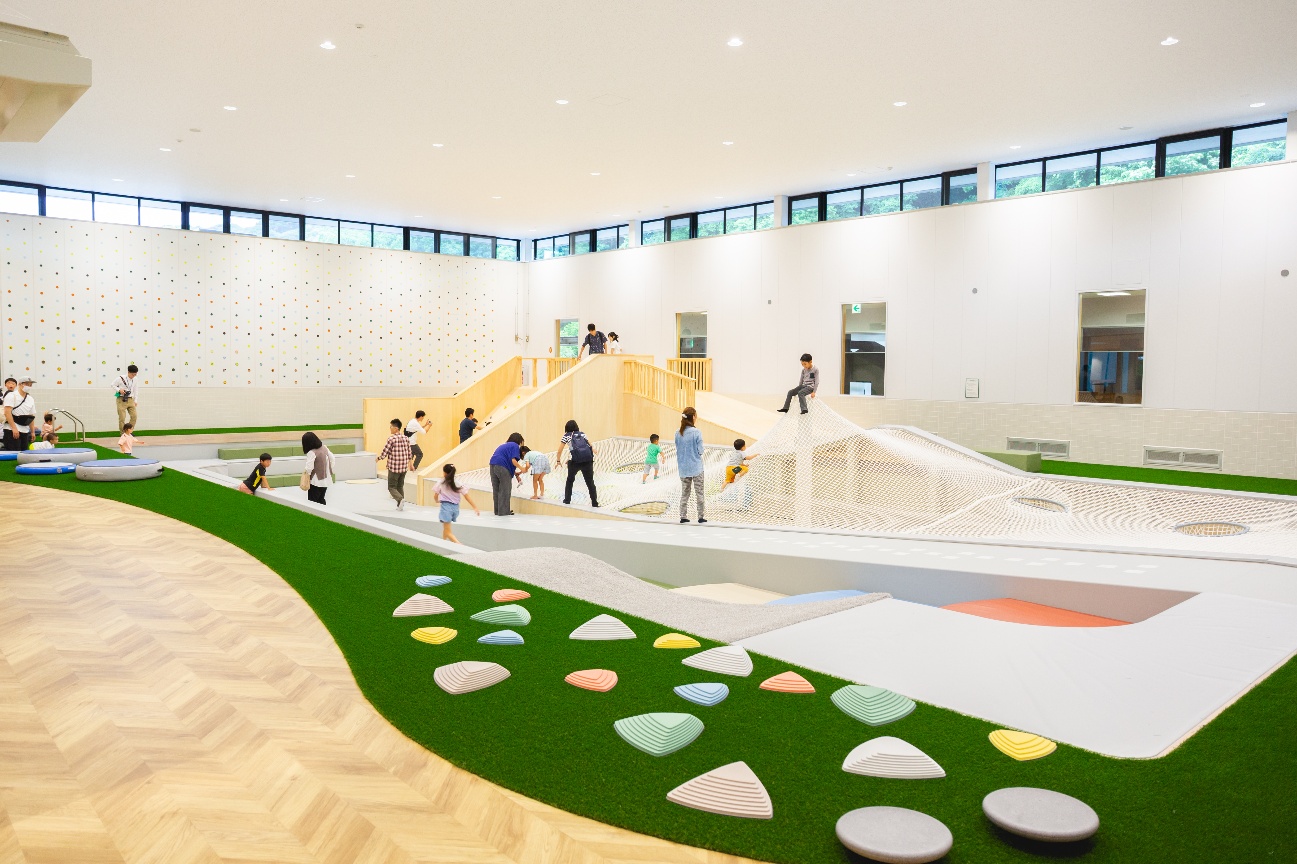
Variety of play and detailed design
Yokota (Planner):
Mr. Inanobe, it seems like it was quite difficult to come up with different ways to play within the limited conditions of renovating the pool and hot spring facilities.
Inanobe (designer):
Speaking of a "playground," I imagine they could have imagined more dynamic athletic play equipment, but the pool ceiling was originally lightweight, so they couldn't hang heavy objects. We tried various ways to overcome this, but in the end, I got the impression that it was supported by the strength of the management.
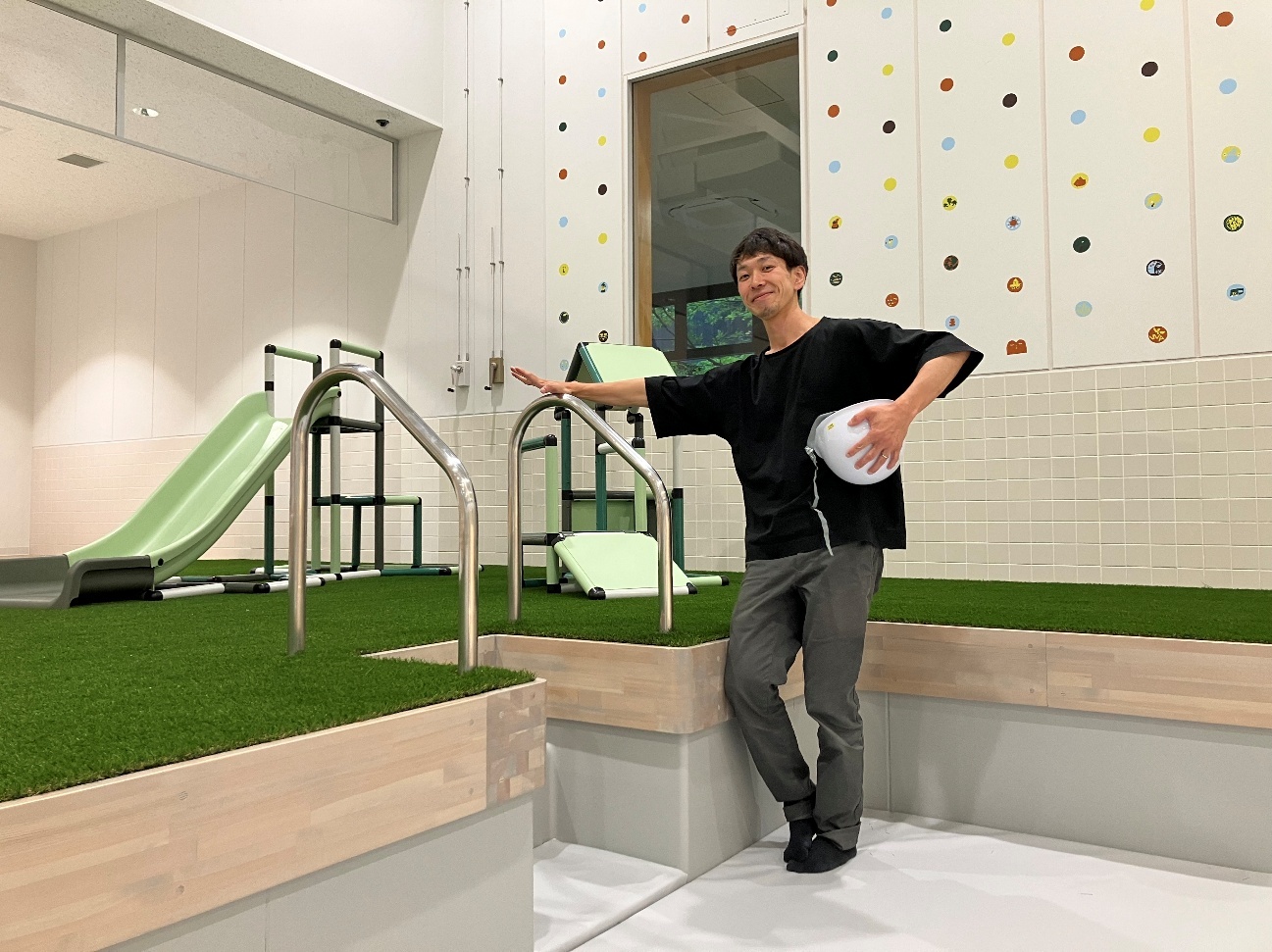 We designed a playground that retains the original pool digging and slope. The handrails were left intact to preserve the memory of the pool (Inanobe).
It was a big hurdle to completely change the use of the facility through a conversion like this, but I thought it was a very meaningful project because of the interesting transformation that symbolizes the current social climate: "The indoor pool and hot spring facility has been transformed into a children's play area and reborn as a place to liven up the local community."
Yokota (Planner):
Initially, there were concerns about whether there would be enough variety in the games, but in the end, it seems like a variety of games have been created.
Inanobe (designer):
That's right. At first, Kakegawa City was worried, saying, "Will the only large play equipment available to children be enjoyable? Will the net, slide, and bouldering be enough?" But when we showed them the materials that Yokota and Shima had selected, which listed the movable play equipment, baby toys, and rental play equipment, they responded, "Wow, there's so much to play with!" (laughs)
What changed the flow in particular was that we repeatedly explained, "This is a facility that will be built jointly by the public and private sectors." From then on, we were able to say what we wanted to say to each other, and Kakegawa City also started to give us their opinions, saying, "We won't be running it, but what do you think about a place like this?" I think we gradually built a relationship of trust.
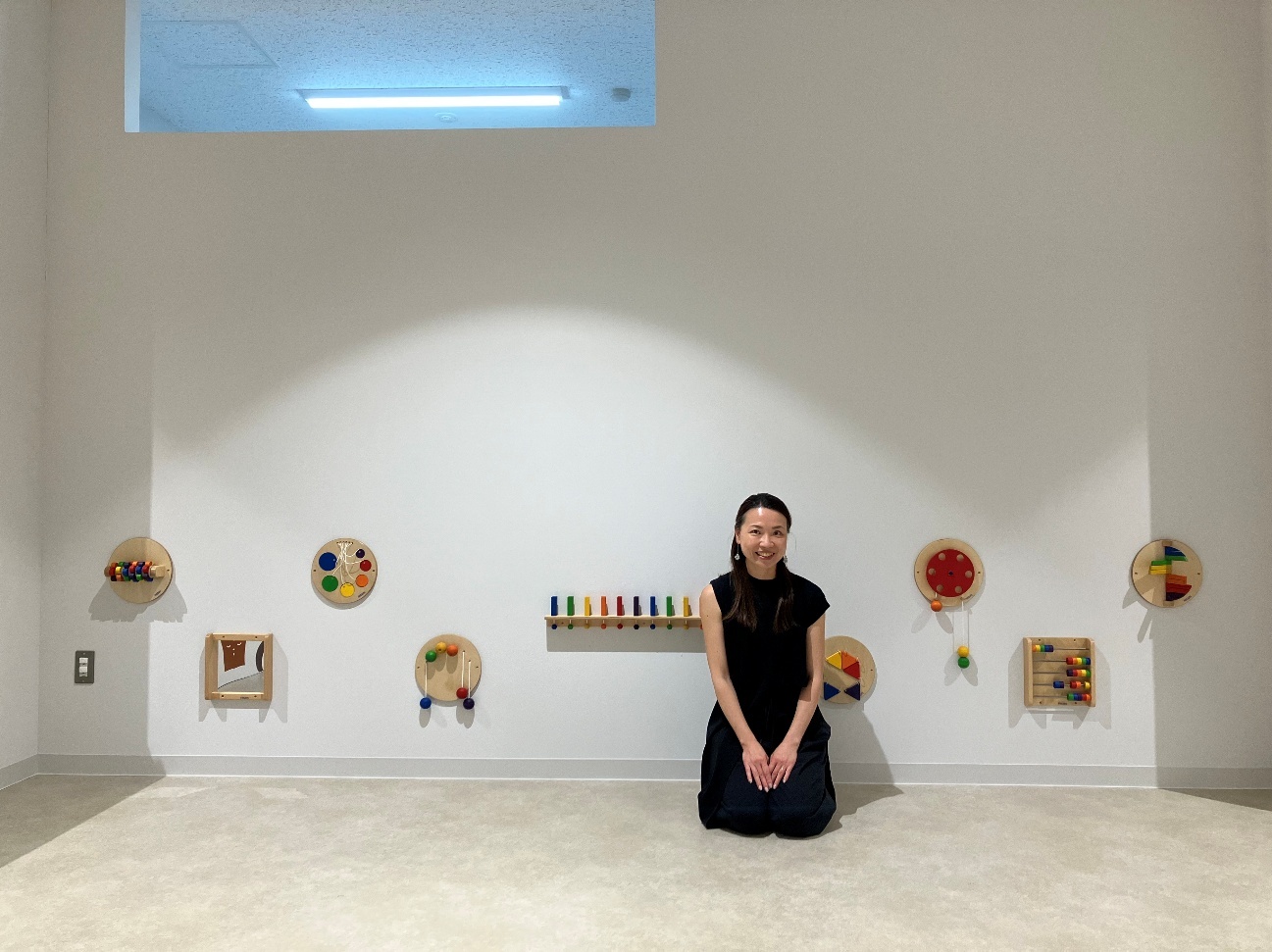 The planner carefully selected each and every toy in the baby play area, the play equipment, and the outdoor play equipment available for rental at the reception desk (Yokota).
Hino (operation management):
Surprisingly, the "Sunaba" area in the entrance area is also effective. On weekends, it operates on a 90-minute rotation system, but there is a fair amount of use during the waiting time. From an operations perspective, it seems like there are plenty of play areas spread out that everyone likes, such as the "Creative Lab," "Komorin House," and "Sunaba."
Yokota (Planner):
Mr. Matsuoka, you joined the company after winning the competition. Did you encounter any difficulties in designing the product, as you joined midway through?
Matsuoka (designer):
The zoning had already been mostly decided, so my main task was to match the design tone to the VI that Toyoda-san had given me. For the "Resting Lounge" and "Creative Lab," we redesigned the use of the space with an awareness of the "playground-like feel of a Nomura-run space." Toyoda-san created graphic art, we used ready-made products for displays, and we made detailed adjustments along with the branding.
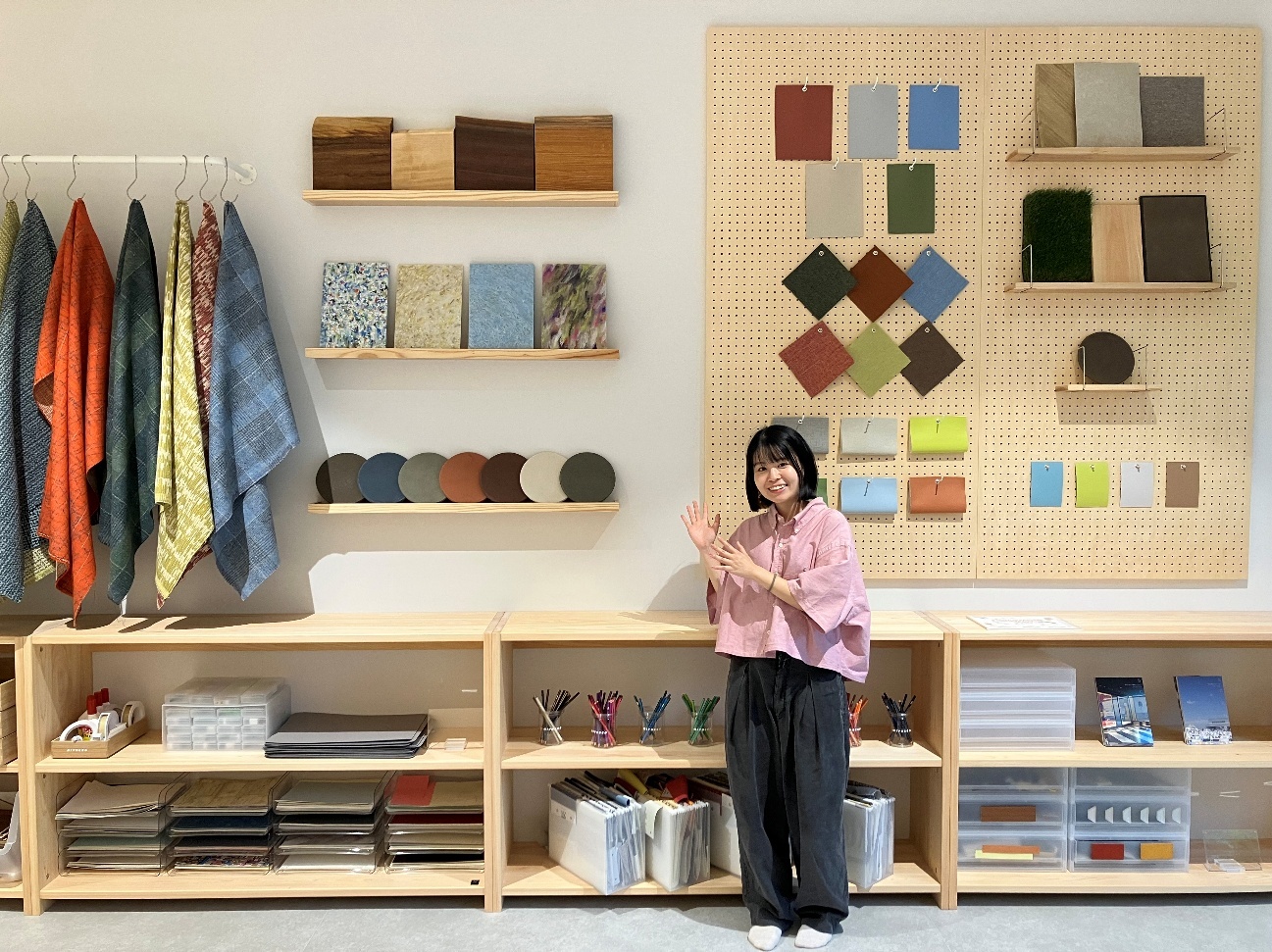 At the Creative Lab, we paid close attention to every detail, from the materials children would touch to the displays (Matsuoka).
Overall, it was more of a fun job than a difficult one. Kakegawa City is a great customer and they approved of the design, so I felt I was able to design freely.
Yokota (Planner):
How was the collaboration with Toyoda-san?
Matsuoka (designer):
It was surprisingly easy to work with. The quality of Toyoda's designs was so high that I got excited just looking at them. I could imagine, "I wonder if I should design the space like this based on this design." The chat within the team also got excited every time Toyoda's designs were uploaded. I think this was a collaboration that could only be achieved within the company. We are colleagues at the same time and were classmates at university, so I was happy to be able to work together this time.
Toyoda (graphic designer):
Yes, we were classmates and contemporaries, so I think we shared the same values and atmosphere. "The fusion of space and graphics" was something that the team I belonged to, "IVD," was aiming for, so I was impressed that we were able to achieve it at a rapid pace.
Because it was an independent project, the in-house team was the main judge of what was good and what was bad, and Kakegawa City was very tolerant, so I think it was a job with a lot of freedom. I think the fact that the team members had similar sensibilities and values helped to improve the precision of the design.
Branding generally has a strong outward-facing image of "we want outsiders to think this way," but recently I've been thinking that by targeting the internal audience, in other words by incorporating messages like "let's cherish these feelings," it also has the power to create excitement from within a company. So I felt a sense of accomplishment personally seeing everyone get excited and positively discussing "what if we did this? What if we did that?"
Yokota (Planner):
How did the local staff react to the VI and spatial design?
Hino (operation management):
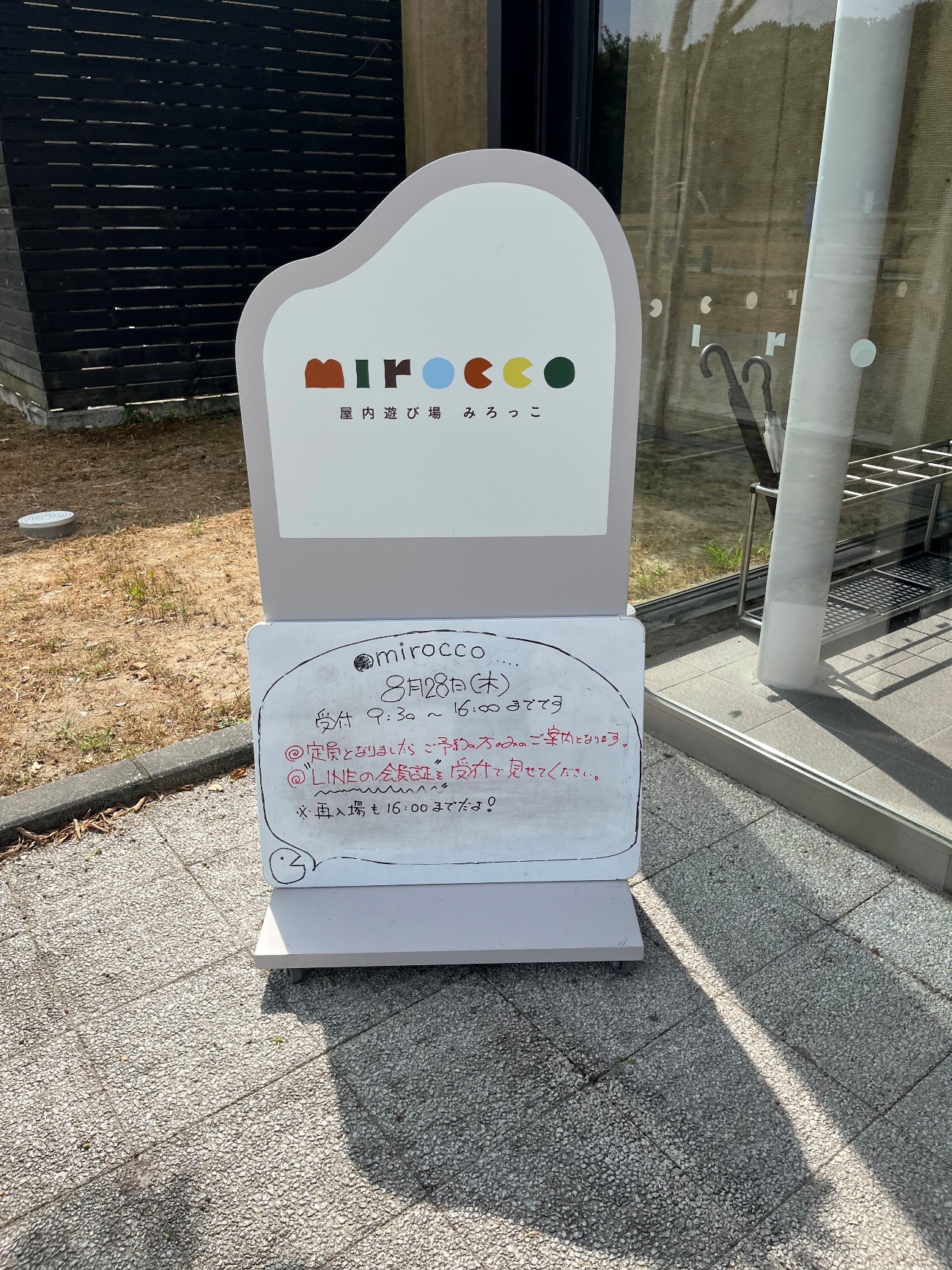
When we first showed our newly hired staff around the facility, it was completely different from the public playground they imagine, and they had a great reaction to the attention to detail in the spatial design and graphics. The "mirocco" logo, which is also featured on the uniform T-shirts, was particularly popular, and even when writing announcements on the whiteboard, the staff were practicing to be able to write the logo with a face by hand...it really seems like they're becoming attached to the place.
Toyoda (graphic designer):
I'm so happy! I was able to design even the smallest details, and while warning signs like "Do not enter here" are usually left to the local staff, this time we created each one carefully, which I think helped to create the world view and stance of the facility.
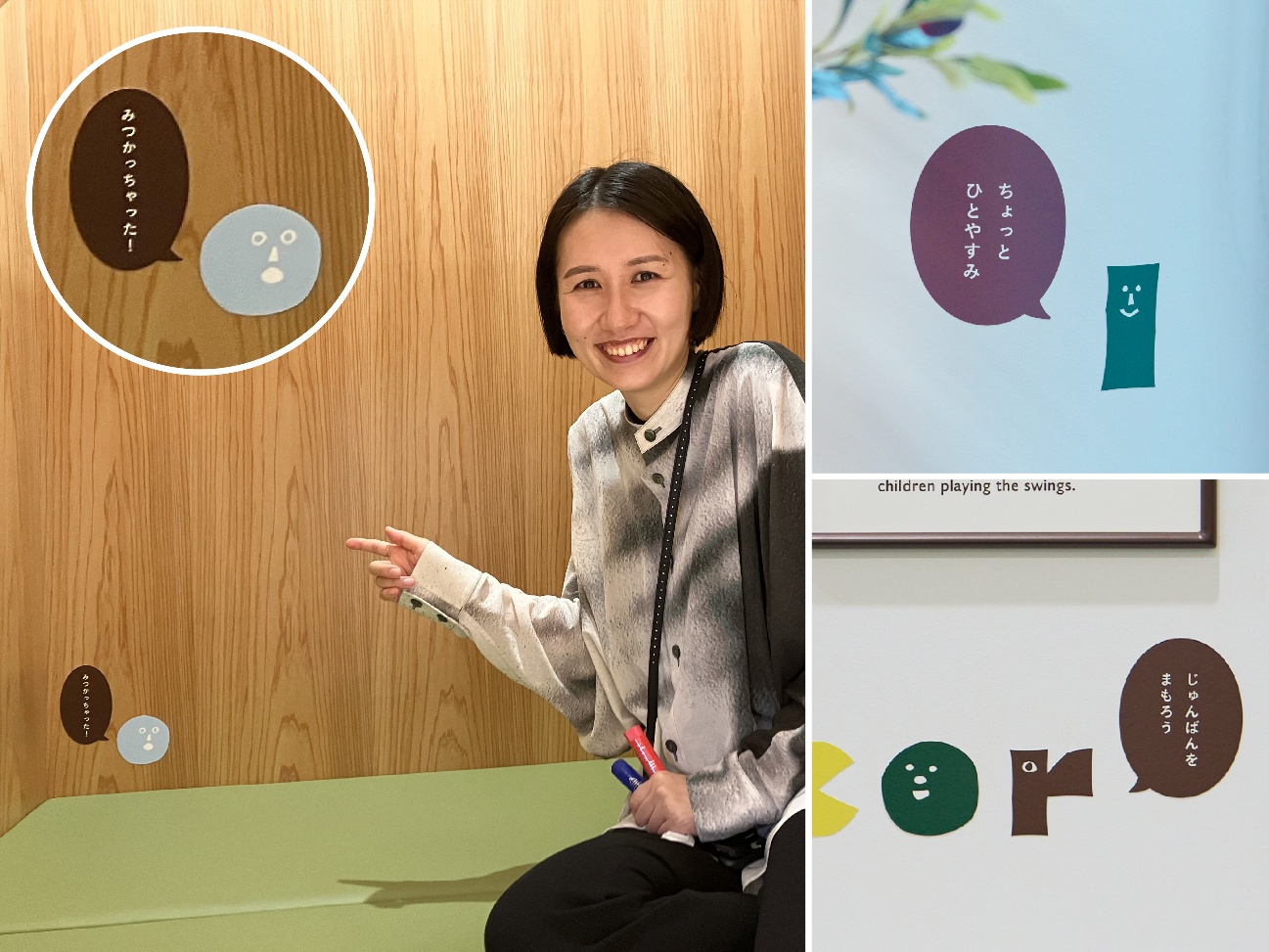 Talking signs can be found inside Komorin House. We aimed to create the impression that the VI and logo are on the same level as the users. (Toyoda)
The craft space "Creative Lab" is the core of the facility
Yoshida (development/PM):
I think the big starting point for this project was the creation of the "Creative Lab." Initially, we had envisioned a different activity, but then someone suggested that we needed a craft space after all. We all weighed the pros and cons, had many discussions, and agonized over the idea... In the end, it became a space that symbolizes the playgrounds unique to NOMURA Co., Ltd., and also a place for co-creation with the local community.
Yokota (Planner):
Yoshida suggested that we make the Creative Lab out of "mottainai" materials that children don't usually get to see, materials that only a company that creates spaces can provide. However, we had a lot of discussions about whether we could actually run the project, such as "How do we ensure a continuous supply of materials?", "What do we do with the products we create?", and "Isn't it dangerous for small children to be in a place where scissors are used?". In the end, we were able to meet companies that were willing to provide materials... I'm really glad that we gave it a try.
Island (Planner):
It was great that we were able to conduct various tests at a craft workshop that we invited local residents to before opening. Based on the children's reactions at the workshop and questionnaire surveys, we were able to come up with ideas such as "This kind of tool would be good for children of this age" and "If materials are stored like this, it will be easy to take them out," and we were able to discuss and come up with a product.
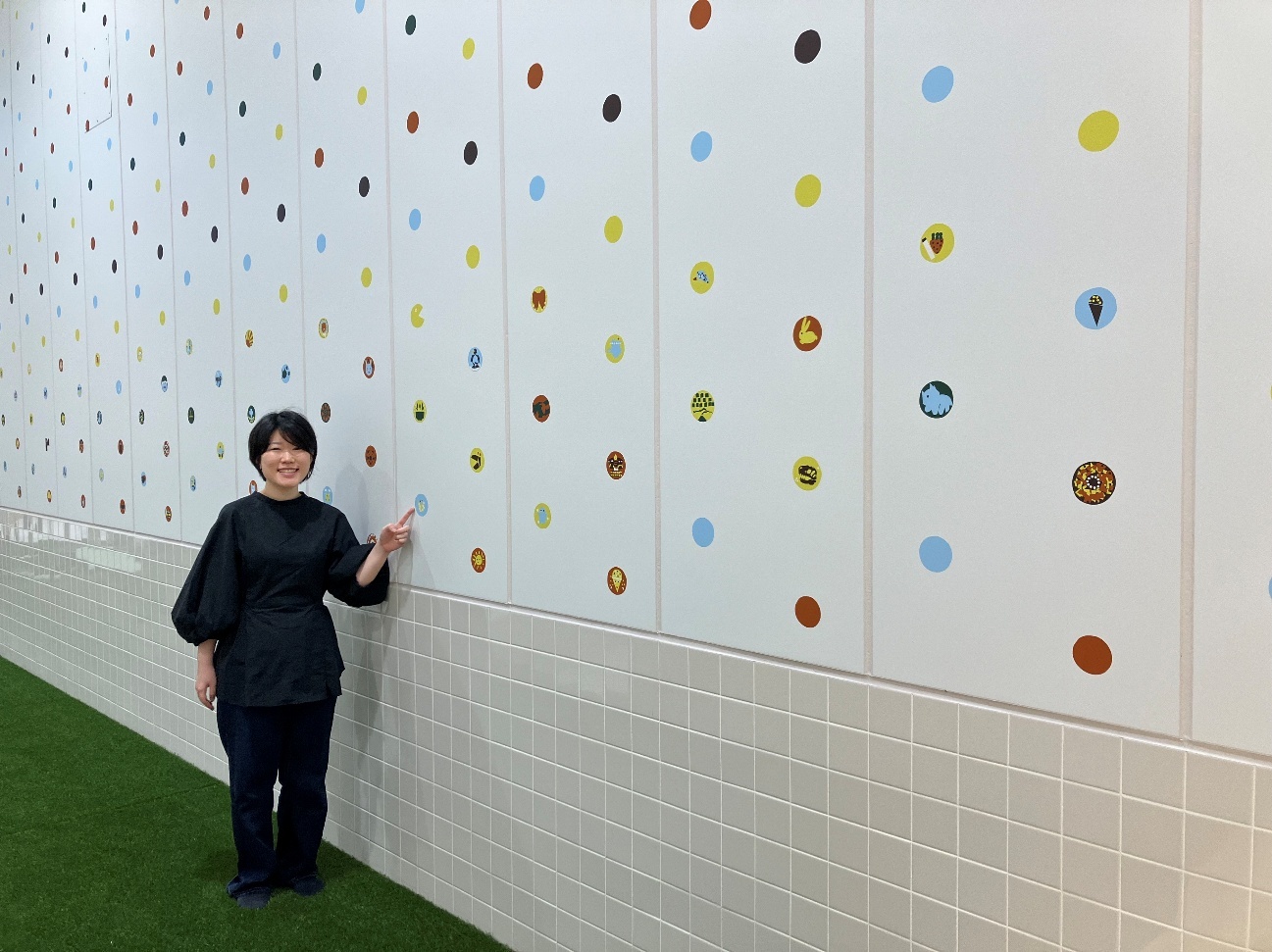 One of the local workshops held before the opening was an event where children decorated the playground walls with paper cutouts, and we were able to see many creative works (Shima).
Matsuoka (designer):
I can sense from Instagram that the facility is gaining popularity. The "Creative Lab" was created as a craft space, but it has also been used for co-creation events with various companies, including Shiseido and Yamaha, and I think it's great that it has expanded to include activities beyond just crafts. (List of events)
Nagai (development/PR):
Although it is a small space, we present our conditions to the organizers and they think about the content of the event each time, so we have been able to operate it without any problems. When we have events that you can participate in without making a reservation, children flock together, and some even look at us with their eyes and ask, "Can I participate?" (laughs).
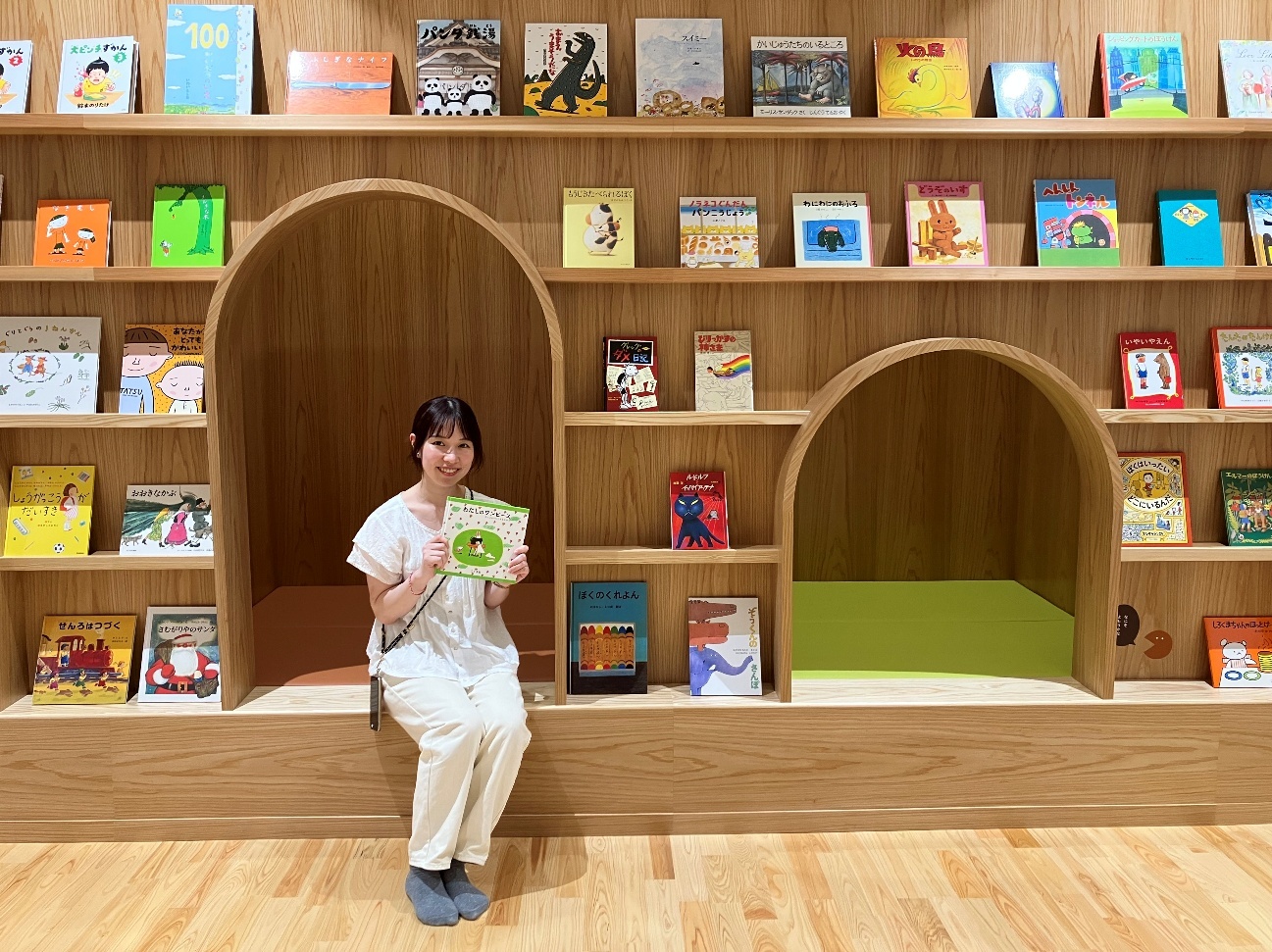 To encourage play, we lined the walls of Komorin House with picture books selected by a bookstore in Kakegawa. Each team member also selected a book. (Nagai)
Matsuoka (designer):
Do you get the impression that there are a lot of repeat customers?
Hino (operation management):
Many of our guests have been there many times, and you can tell just by looking at their faces. Even in the tatami area, which we discussed during the planning process as "Will this area be used?", we see all sorts of scenes, like babies lying down and mothers and grandmothers chatting for long periods of time.
Yoshida (development/PM):
Thanks to Toyoda's VI, it seems that families who are also interested in the design are visiting, and we have seen their impressions of using the facility spread. We were surprised to see that 80% of visitors are from outside Kakegawa City. (As of September 2025)
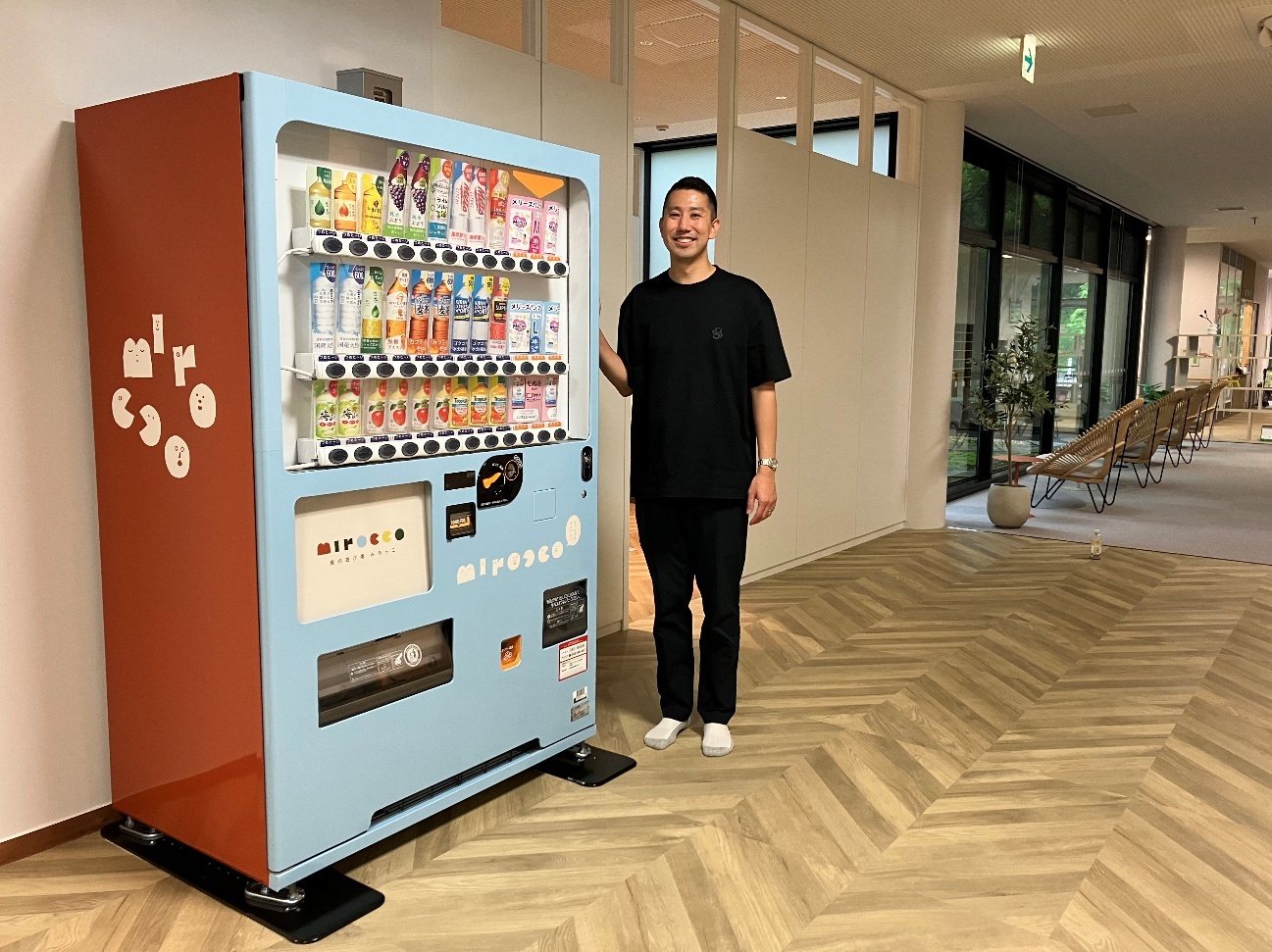 As part of our hospitality efforts, we planned and designed an original mirocco vending machine where disposable diapers can be purchased. (Yoshida)
Hino (operation management):
We've had a lot of people say, "400 yen seems like a cheap price for such a well-equipped facility with so much to do." We're really glad to hear that after they've come and played, they think so. Recently, we've seen children crying because they don't want to go home... Some children even find the "sand basin" near the entrance and cry, saying, "I wanted to play here too..." (laughs).
During the Halloween event, we collaborated with the facility's cafe, "This Is Café," and it was great to be able to work with a restaurant that could set up such a system. The staff were very helpful, and it was great that the play space in the small coffee shop was linked to the mirocco play area.
Staff motivation is what makes miroccounique
Hino (operation management):
What has made me happy since we opened is that our staff have become fans of mirocco, bringing their children to use the facility on their days off, checking user comments on social media and suggesting areas for improvement.
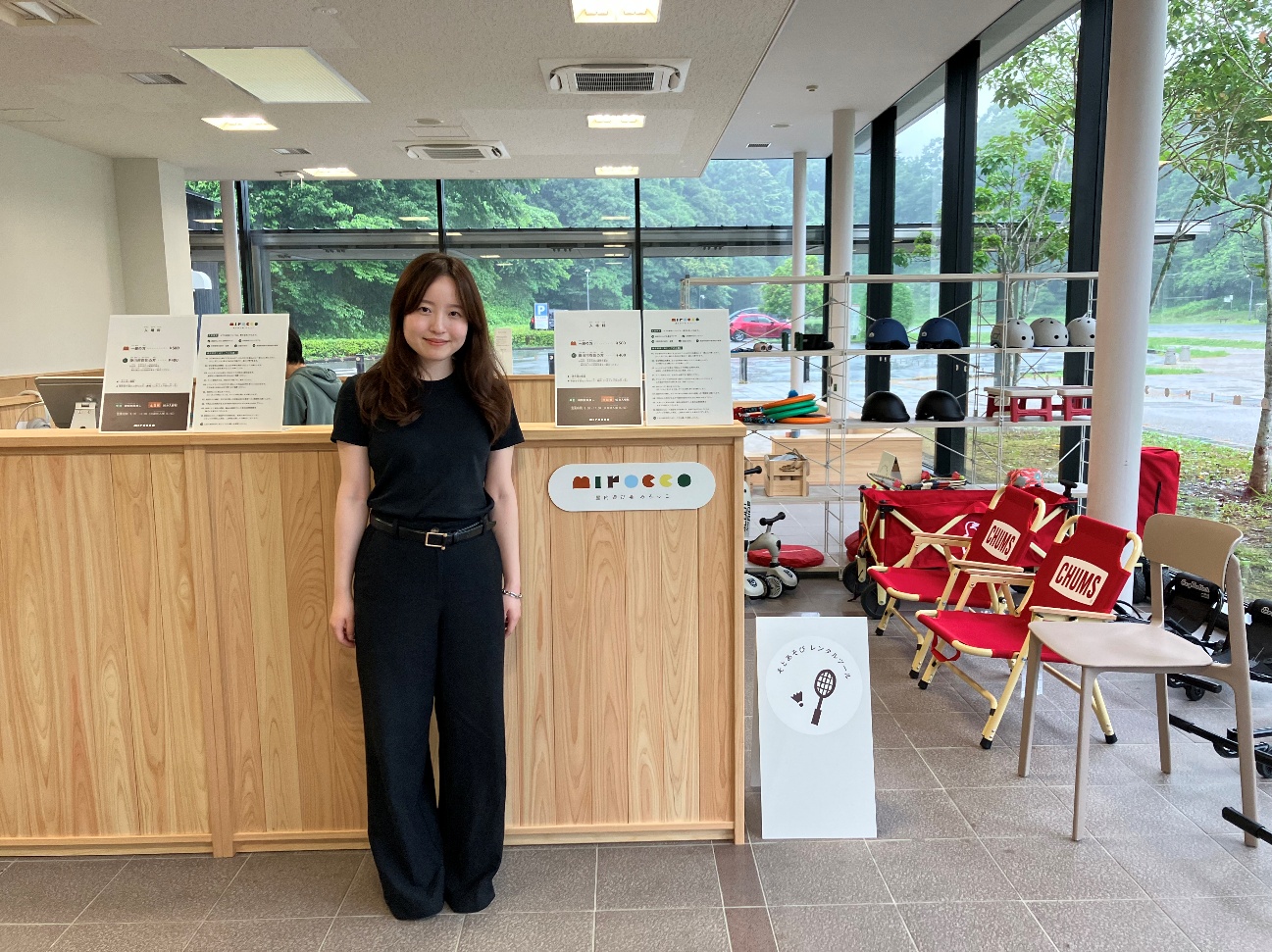 Every day, I work closely with the staff on-site to continue exploring ways to make the facility even better so that we can welcome customers with a smile. (Hino)
Yokota (Planner):
That's great to hear. I wonder what the reason is that the staff are so supportive.
Nagai (development/PR):
When we first hired people, we introduced them to the concept document we had all created, and for those who passed the recruitment exam, we held a one-day mindset training session to explain to them the kind of attitude we wanted them to have when they came to work, but we didn't actually do anything big from our side.
Hino (operation management):
Because it was a newly opened facility, all the staff members shared the feeling that "we are all working together to start this up," and they independently came up with ideas for how to run the "Creative Lab."
Nagai (development/PR):
During the training, we had a workshop where we all came up with ideas for events for the facility, and we came up with a huge amount of ideas. I think the fact that what they came up with was "made a reality" also contributes to their proactive attitude.
A message forthe future ofmirocco
Yoshida (development/PM):
When I see the faces of customers who visit mirocco, I think, "I'm really glad we built it." In addition to increasing the number of mirocco fans, I would like to create playgrounds in other areas that will become the hub of local activity.
Nagai (development/PR):
With about 10 years of operation ahead of us, I feel a dual emotion: "We need to keep trying new things" and "We need to keep holding on to the passion we had at the beginning." I want to provide our customers with new enjoyment, while also cherishing the essence of mirocco, and I want to convey that passion to the staff on-site so that we can all move forward together, facing the same direction, while also being creative and careful in my work.
Hino (operation management):
As the manager, I would like to see the facility become more popular with the people of Kakegawa City. I think most people still come here with the impression that it is a "new facility," but I would like to work hard over the next 10 years to establish a solid brand that makes people think, "You can't go wrong with mirocco." The staff on-site will likely be replaced in the future, but I would like to work on creating a workplace where the current atmosphere and motivation can be passed on to the new staff.
Island (Planner):
This was my first time working on a facility for children, and I learned a lot. I've been involved in many other projects at facilities for children, so I'd like to make use of the knowledge I gained from this experience, and I hope to continue contributing in any way I can.
Yokota (Planner):
Over the next 10 years or so of operation, I hope to be able to create a system for providing materials for the Creative Lab and support events in collaboration with companies and the local community. While cherishing what makes mirocco unique today, I hope to gradually create aspects that make people say, "Hey, mirocco is a little different from before," and become a facility that encourages everyone to grow.
Toyoda (graphic designer):
Throughout the project, I felt a sense of accomplishment from being able to motivate the team members, which made me happy. Today, I had the opportunity to hear various stories about what will happen after the opening, and I hope that the mirocco logo will become even more loved by customers and will continue to grow, so I hope that the logo and VI will continue to be used more and more within the facility.
Matsuoka (designer):
I think that through mirocco, we have been able to expand the possibilities of "facilities run by Nomura." This was my first time working on designing a children's play area, and I learned a lot that I would like to use in the future.
Inanobe (designer):
I think that the mirocco project we worked on this time served as a good example to test the waters. Based on this experience, I would like to use the difficulties I faced this time to further challenge NOMURA Co., Ltd. in the future. It was a pleasure to work with you all. Thank you very much.
[From a project member]
Akira Morifuji (Project Manager):
I still have memories of the place where I used to play on the jungle gym, horizontal bars, swings, etc. in the local park. I hope that children who played at mirocco will also look back on the playground equipment and space as memories even after they grow up.
miroccowebsite
https://mirocco.jp/
Project Details
https://www.nomurakougei.co.jp/achievements/page/mirocco/
Special Thanks(Project members other than the interviewee)
Sales Promotion Headquarters Chubu Branch Sales Department
Akira Morifuji
Sales Promotion Headquarters Area Product Management Department 3rd Section
Takayuki Tamai
Creative Headquarters, Design Management Department, Design Division 2, Architectural Design Section
Masaki Harashima and Keiko Kiyo
Creative Headquarters Future Creation Research Institute Social Design Department I&A Design Lab
Mika Watanabe
Like this article?
- editor
-
-
nomlog editor-in-chief
Connecting Planner|Planning across Areas