

- text and edit by
- Masayuki Yoshida
Museums, libraries, archives, community centers, NPOs and community circles
There are irreplaceable community-based facilities and activities throughout Japan. individually or in series
I think it's better to have a variety of points of contact, such as collaboration, theme, and general. As time passes, these things pile up to create the current state of things, and I hope that there will be more opportunities for people to feel that they are part of that flow. From these experiences, I believe that changes will appear in the connection with the community and society.
Something small, but important, that I had almost forgotten. A dream story that reminded me of such a thing is a memory
I think I'll write it down before I go to the other side.
(I am walking near the school with my classmates, accompanied by a person whom everyone calls ``Sensei''. Under the blue sky, the sun is shining softly. ``Sensei'' is the teacher at school. I don't know if he's from the museum, or if he's an uncle who lives around here.
"Now, let's take everyone to an interesting place."
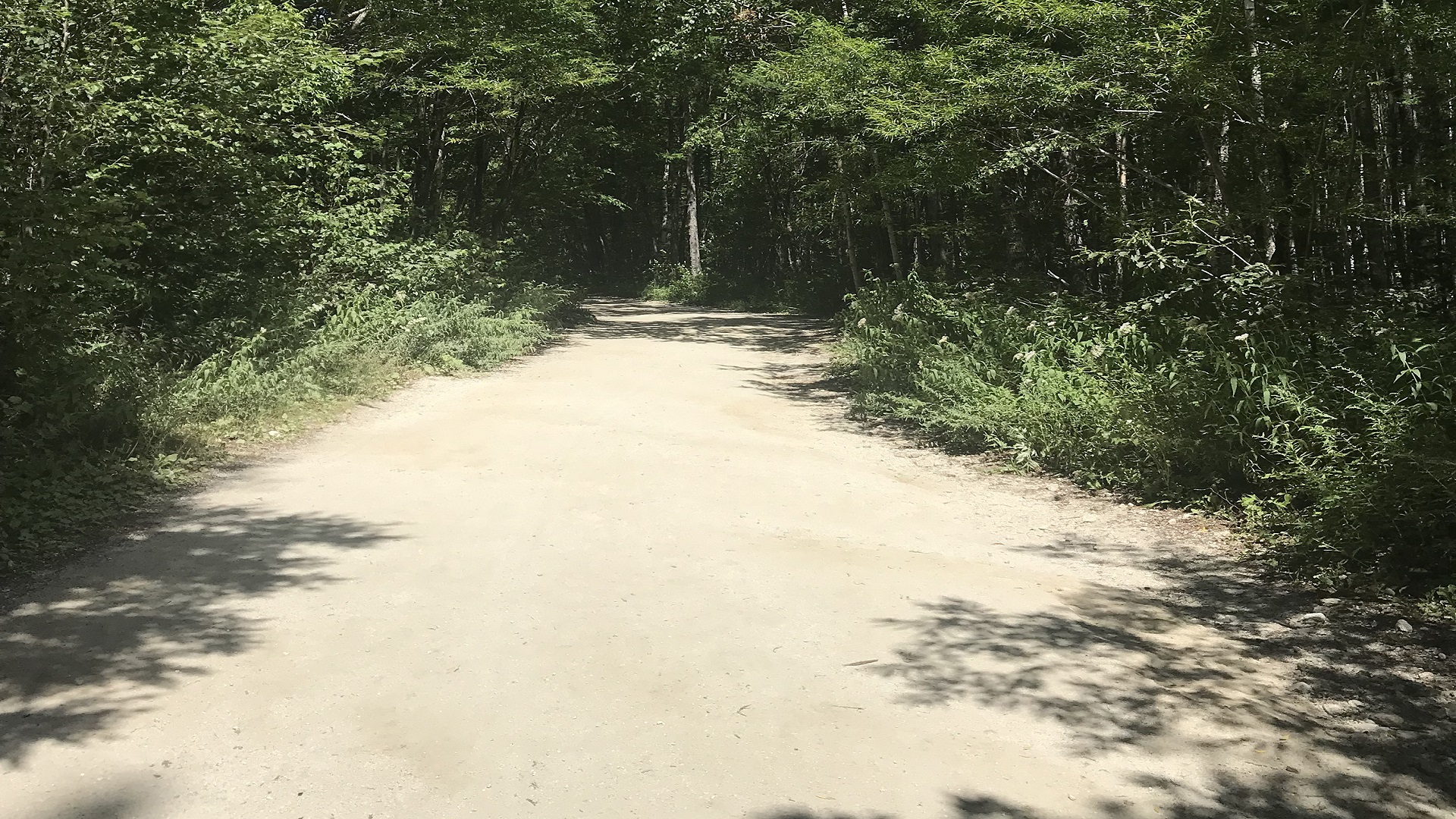
(Leave the paved road in the residential area and enter the bumpy road along the mountain)
"What kind of road is this road that everyone is walking now? What kind of road do you think it is?"
"Mountain road!"
"Forest road!"
"Yes, it certainly stretches toward the mountains. It's not a concrete road. It's through the forest. I got it."
“Look over there. You can see the bus running right now. This road that is no longer used, this narrow road along the river that everyone is walking on now is an old road, a road that has been used for hundreds of years before cars started running. Thousands, too many people to count passed by."
"Take a good look at your own feet. Look, under Hojo-kun's shoes, there must be footprints of people from long ago."
(Everyone looks at their feet and grins)
“Unlike today's roads, the roads are narrow and bumpy. In the past, this was enough for people, horses, and carts to pass. In the past, there were no convenience stores or department stores, so people living in this area would leave their homes before sunrise and come back when the sun went down to go to the town market. It was normal for us.”
"Well, let's take a short walk towards the river."
(It gets darker and darker as you go deeper into the mountains.)
"Teacher, I'm tired. How far are you going?"
"Let's try a little harder and walk to the back. There's something interesting."
"You hear the river flowing. Can you see the green fruit growing on the tree over there? What is it?"
"Ah, walnuts."
"Yes, you know me well."
"Walnuts are like grapes like that. The walnuts that we usually eat are the seeds left over after the green part around them has rotted, and we split them open and eat them."
"Yes, everyone, stop for a moment. Look around here. What's there? Who found it?"
“Sensei, something is built in the grass.”
"There is a stone tower in the grass"
"Grave?"
"I wonder what"
(Children approach the stone tower, but the teacher stays away. Stands at a distance.)
“Teacher, there is something written on it.”
"What did you write?"
"twenty-three"
"Okay, somehow"
"Nijusanya"
"That's right, it says Twenty-three Nights Tower."
"What kind of tower is this?"
"Sensei, isn't it the night of the full moon?"
"Yeah, there's a 15th night that everyone knows about."
"What do you do in everyone's house on the day of the full moon?"
"Tsukimi!"
"I will pick silver grass and decorate it."
"Tsukimi and Dango"
"I agree"
"People who are doing things like watching the moon at home on the day of the full moon, eating dumplings, and so on, raise your hand."
(Children look around and raise their hands)
"I see. In the same way that everyone eats dumplings while looking at the moon on the 15th night at home, people used to say 'moon wait' on the 23rd night and eat together. There was also an event where people worshiped the moon while drinking alcohol.
“In the past, people worshiped the moon as a Buddha, and on the 15th night it was worshiped as Dainichi Nyorai, and on the 23rd night it was worshiped as Seishi Bodhisattva. Ask your neighbors, your grandfathers and grandmothers, and they will tell you interesting stories.”
"Teacher, what is 23 nights?"
"Well... the time when the moon cannot be seen is called the new moon, and as the moon changes from the new moon to the crescent moon, more and more parts are visible. On the 23rd day, when the moon appears in the eastern sky, the moon When the lower half of the moon is visible, it is called the waning moon, which is called the 23rd night.The reason why the bowstring is on the upper side is called the waning moon because it refers to the appearance of the moon when it sets in the western sky.Every night. Look for where the moon rises. The time and shape of the moon are constantly changing.”
"Teacher, it's kind of difficult and I don't really understand."
"I see. I guess it was a bit difficult to explain. To tell the truth, even Sensei doesn't know much about space.
"Teacher, I'm looking forward to hearing about the moon."
"Now then, about this Twenty-three Nights Tower, there is a story that a ghost actually appeared here."
"Eh~"
"No way~"
(The children look at each other and raise their voices in surprise.)
"What kind of ghost are you?"
"There is a story that the grandfather of Mr. Oishi's house, who lives near here, told me when he was a child."
“This is the story of a time when there was still no electricity, a time when there were no street lights or flashlights like now, and when we walked the streets at night, we carried lanterns in our hands.”
"What is a lantern?"
"Have you ever seen many hanging on the street during festivals and Bon Odori? The current one is a light bulb, but you can think of it as a candle inside instead of that light bulb."
"Oh, it's something like a lantern made of paper with the name of the shop written on it."
"That's right. Japanese paper is pasted on the bamboo frame, and it's bellows, so you can fold it up when you're not using it. It's the flashlight of today."
"Well, according to my grandfather's story, many generations ago, when our ancestor Kambei-san came to this place on his way home from town as usual, there were people crouching in front of the Twenty-three Night Tower. I found it. It seems that he noticed it just after turning that curve."
(Everyone quickly turns their gaze in the direction the teacher is pointing)
“Even though the sun had set and it was pitch black, for some reason they could tell from afar that people were crouching down that day. Thinking that, Kambei-san approached while holding a lantern.”
"As I got closer, I could hear a strange cry. I wondered why and when I got closer, I heard that a small boy was crouching in front of the Twenty-three Nights Tower and crying. I wonder what a child would do at this late night. "Boy, what's wrong with you? You're crying alone at this late hour..." When I said those words, the boy suddenly turned around.The eyes, nose, and mouth of his face looked vaguely white. Kambei threw out the lantern with a loud yell and ran down the road towards his house.”
"I'm sure he's no-frills."
“Teacher, you must be flat.”
"Yes, Nopperabo. Nopperabo... was crouching where Yui-kun was right now!"
"Gyaa"
(The children all jumped away from the Twenty-three Night Tower at once, and at the same time they looked at each other and started laughing.)
When you feel that you are living in the present age and are connected to history in some way, your thoughts and awareness about your daily life and the flow of time will change. It may be. Encountering history, encountering "stories", fieldwork seems to provide such an opportunity. The ripples of interest in the surrounding area and the world that spreads out from your own life. The small ripples will eventually spread naturally to the town and region where you live, and will spread from the present to the past and into the future.
Anything and everything has a story. I would like to cherish the gaze to the story and develop and spread the love of "things" and "things".
Like this article?
- editor
-
-
planner
fieldwork drunken dream