A thousand miles of road starts from one mile|Learning from Kyoto to create regional charm
2019/08/05- share
-


- text and edit by
- Reiko Kuroda
Ladies and gentlemen, do you like Kyoto? Do you go often?
I think there are many people who like it. I like it too, and sometimes I really want to go there.
I wondered why I wanted to go, and tried to enumerate.
"What to see (what to experience), what to eat, and service" These three beats
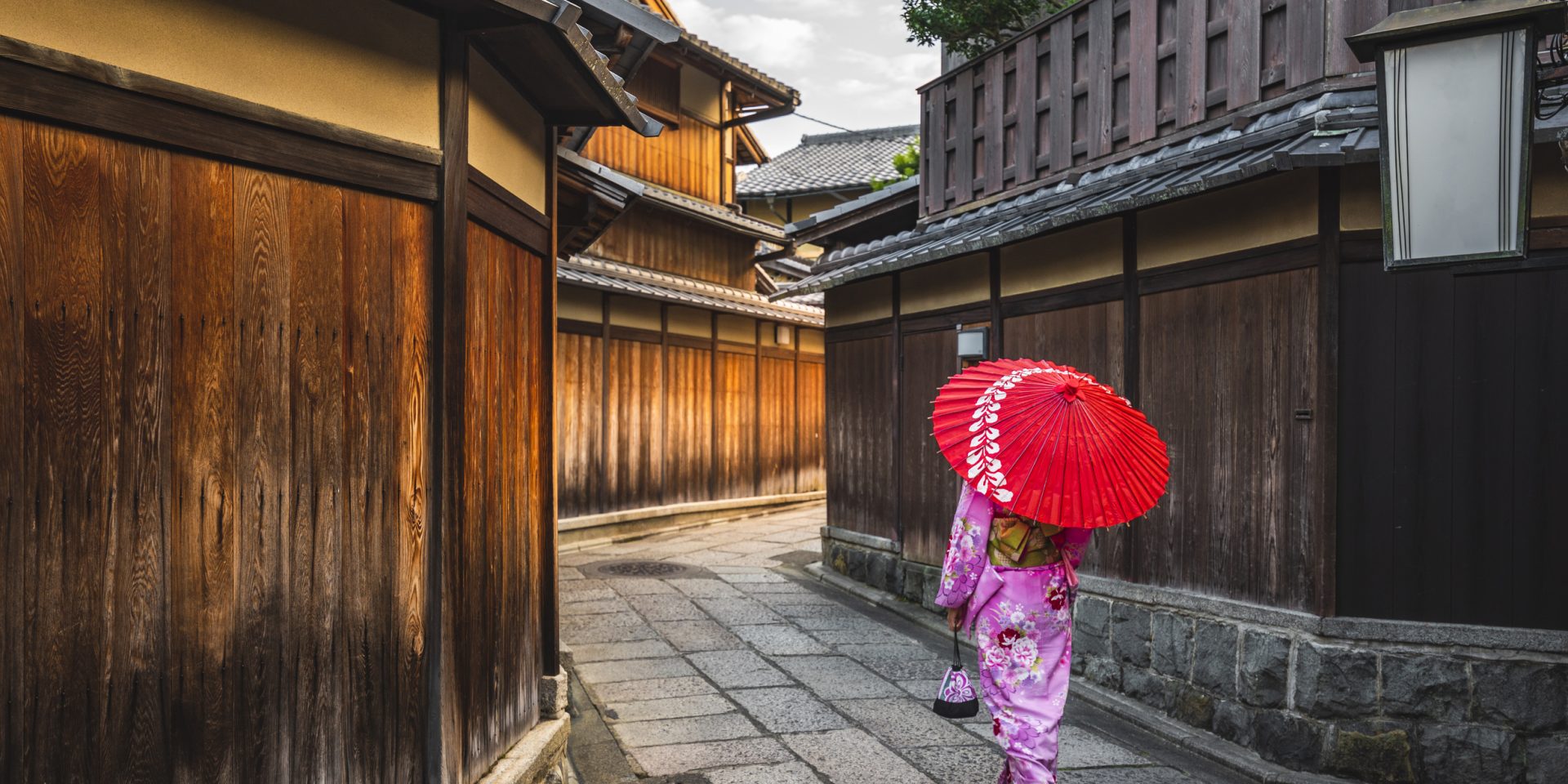
First of all, it is fun just to stand in the town. Also, there is a wide variety of foods to eat. And surprisingly (it may be rude to say so), the city is more friendly to tourists. I think that Kyoto is equipped with these three points at a very high level: "things to see (things to experience), things to eat, and services".
No matter how many times you visit, you will never be able to see all the sights
To be more specific, Kyoto City has a total of 1,770 shrines and temples (Economic Census 2014), which ranks high in Japan. Surprisingly, there are more cities than Kyoto, but Kyoto has a lot of stories behind each one. The buildings and gardens are also spectacular. In addition to temples and shrines, there are many historical sites such as Nijo Castle, alleys in the town, and many areas where you can enjoy the natural scenery. There are tourist attractions.
Residents are kind to tourists
And there are plenty of places to eat. The number of restaurants by municipality ranks 6th in Japan (Economic Census 2014), which is a considerable number considering the population.
Also, this is my personal opinion based on personal experience, but the residents are kind to tourists. Because when I was looking at the timetable at the bus stop in Kyoto,
“Where are you going?
And he will always call out. When I asked a person walking in the back alley for directions, he took me to an easy-to-understand road. I think this is related to the fact that many people are engaged in the tourism industry, but I think that hospitality to people from other places is well established.
It's like an "ultimate theme park"
If you think of it like a current customer attraction facility, it's like an "ultimate theme park." It fulfills the three elements that theme parks strive to fulfill on a very large scale. And the high quality and the length of the continuation are exactly "ultimate".
Is history a factor?
Why has Kyoto become one of the most popular tourist destinations in Japan, attracting so many foreigners?
Of course, there is almost no other place in Japan where the history, buildings, and natural environment are so complete, starting from where the capital was established more than 1,200 years ago. But as you can see, I don't think that's the only reason.
This is a bit off topic, but when you visit a shop in the city of Kyoto that looks old, there are times when you really want to ask about it. “This place has a history, right? " and.
A store on Sanjo-dori answered,
"Hey, it's at most 300 years old, so it's not that much, but the neighbor is 500 years old."
After all, I can confirm that it happened, and I feel relieved. In Kyoto, even if there is history, the answer is usually that it is not so much. I am overwhelmed by that humble response. Compared to other areas, it is quite a long-established store, but if you look around the city, there are even older places. Even if I was proud of myself, I wouldn't put it into words.
(As an aside, when I wondered when I should stop being humble, I was watching TV the other day and finally found an answer. I asked a similar question at a Nomochi shop.
"Yes, it's been 1000 years."
He answered honestly. Is the borderline 1000?)
Be that as it may, the fact that such values have been cultivated over a long history and are still alive in the city today gives me a slight culture shock.
people create value
I asked people in Kyoto why they have such an attitude.
"I don't like it when rumors spread in a small town and people laugh at older people."
"I'm just looking at the inside (Kyoto city) instead of looking outside."
I got a response. (This also contains a unique humility, and I think that the response varies greatly depending on the individual.)
From a resident's and industry's point of view, turning our attention inward may not always be a good thing. However, from the point of view of attracting tourists, it seems that by continuing to look inside for a long time, the residents have established a “value standard that values history”. And it is precisely because there was this common value standard that this “townscape” was preserved.
Penetration of value standards
In Kyoto, even if you're on a bus, you'll never get tired of seeing the casual appearance of the city.
In the city of Kyoto, regulations such as height and color usage are strict, and it is necessary to obtain the approval of the town. In addition, there are still customs to maintain the beauty of the area throughout the city, such as cleaning duty in the area. A system that protects and checks each other is functioning.
There are pros and cons about them, but I am reminded of the importance of residents' awareness.
Come to think of it, when I was involved in urban development work, I came across a phrase that made sense to me.
“It wasn’t like there was a beautiful village from the beginning.
(Quoting edited version of Kunio Yanagida's words)
Even so, when I think about the regional revitalization of my town, it is a truly magnificent and daunting story.
As the saying goes, "A journey of a thousand miles starts from one mile."
I would like to turn my attention to the inside, the act of reviewing the inside, reviewing and cultivating the beauty.
I have developed a selfish twist, but Kyoto is a profound city that invites such delusions.
It is said that Kyoto has been shaken by the rapid increase in the number of foreign tourists over the past few years, but I hope that it will continue to be the "ultimate" that runs at the forefront, making use of its long-standing wisdom.
Like this article?
- editor
-

-
Customer Attraction/Operation/Business Planner
Consulting for overall optimization