Geographer x Exhibition Designer: Imagining future exhibitions at the Hyogotsu Museum.

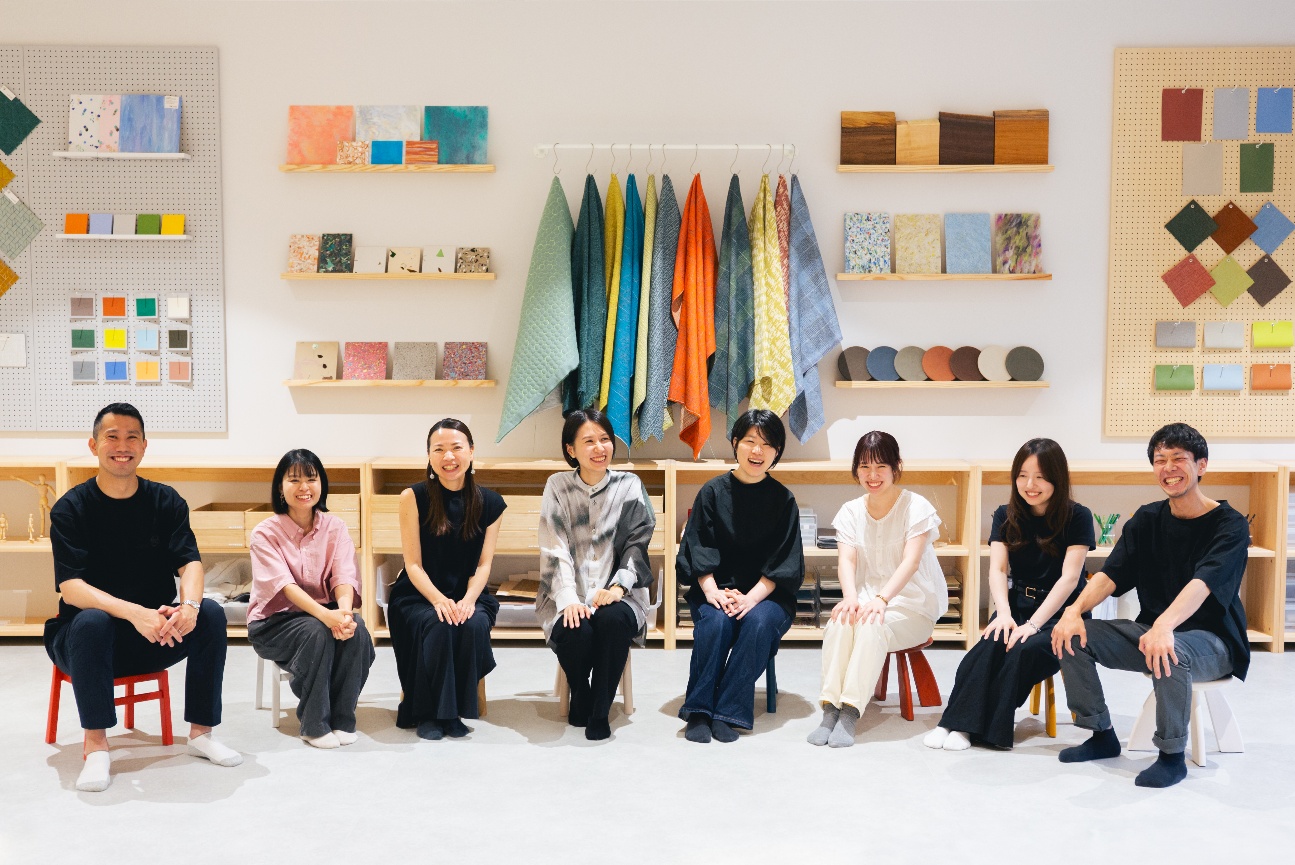
Web version of "Cultivate" team
ウェブ版「カルチベイト」チーム
share
  • Facebook
  • Twitter
  • Line

NOMURA GROUP has been publishing its owned media called "Cultivate" to make recommendations to society. Based on the concept of opening up new cultural horizons by examining themes such as "knowledge," "information," "creativity," and "communication" from multiple angles as elements of the "cultural environment" that surrounds us, we have approached the future of the "cultural environment" through interviews and discussions with various experts.

For the first time in 10 years, Cultivate will be relaunched as a web version on nomlog. The theme of this second installment is the history of the region as seen through maps, and the possibilities of imaginary exhibitions. We will consider the future of museums rooted in the local community.
Related article: Cultivate Vol.1 Museums move towards an era where their collections are the center of attraction

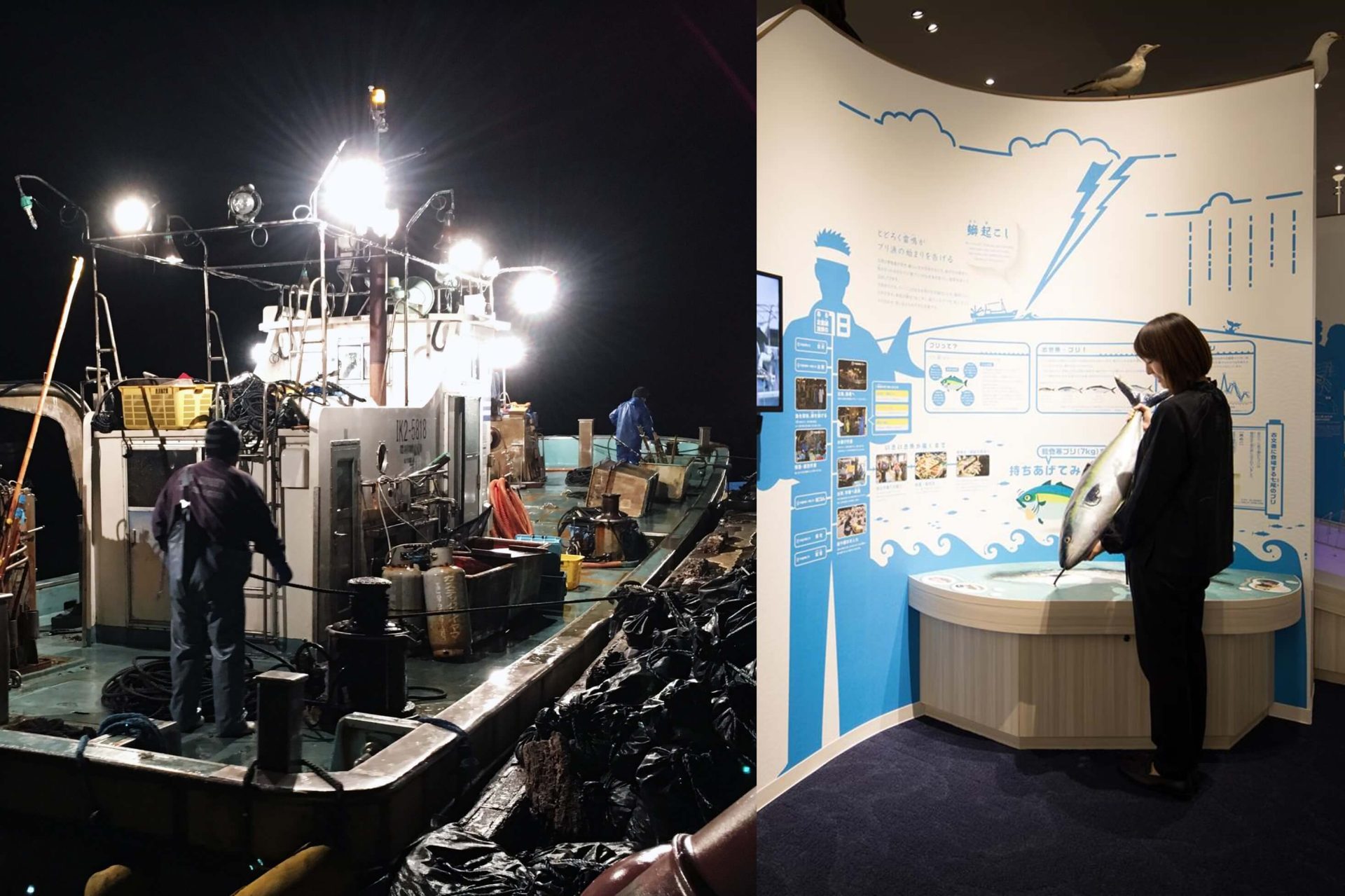
The Hyogo-tsu Museum is located in an area close to JR Kobe Station, Kobe Port, and Kobe Airport. Hyogo-tsu, a port city with over 1,000 years of history dating back to the Heian period when Taira no Kiyomori was active, is the place where the name of Hyogo Prefecture was derived from, and is the "place of origin" where the first Hyogo prefectural office was located after the abolition of the feudal domains and establishment of prefectures in the Meiji period. The Hyogo Prefectural Hyogo-tsu Museum is made up of two facilities: the "First Prefectural Office Building," which opened in November 2021, and the "Hyogo Beginnings Hall," which opened the following November.

As its name suggests, the "First Prefectural Office Building" is a restored facility of the first prefectural office, and features a reproduction of the office, temporary prison, and garden of the first governor, Ito Hirobumi. It is a space where you can feel like you have traveled back in time with realistic exhibits and video displays such as "Virtual Visit!". The "Hyogo Hajimarikan" is based on the concept of "see, hear, and touch," and aims to convey the long history of Hyogo-tsu in an easy-to-understand and interesting way through musical theater, videos that incorporate familiar expressions such as animation, and a variety of graphics.

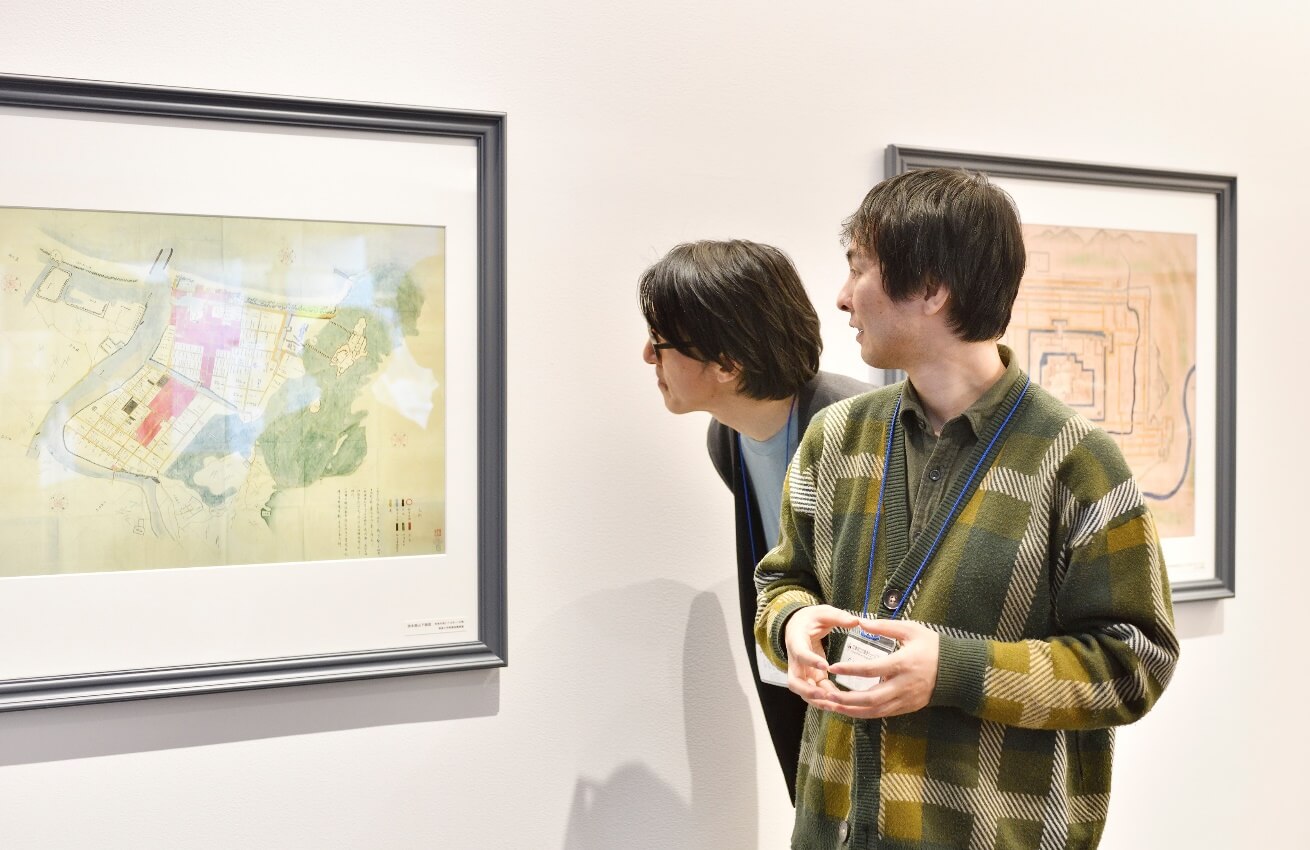
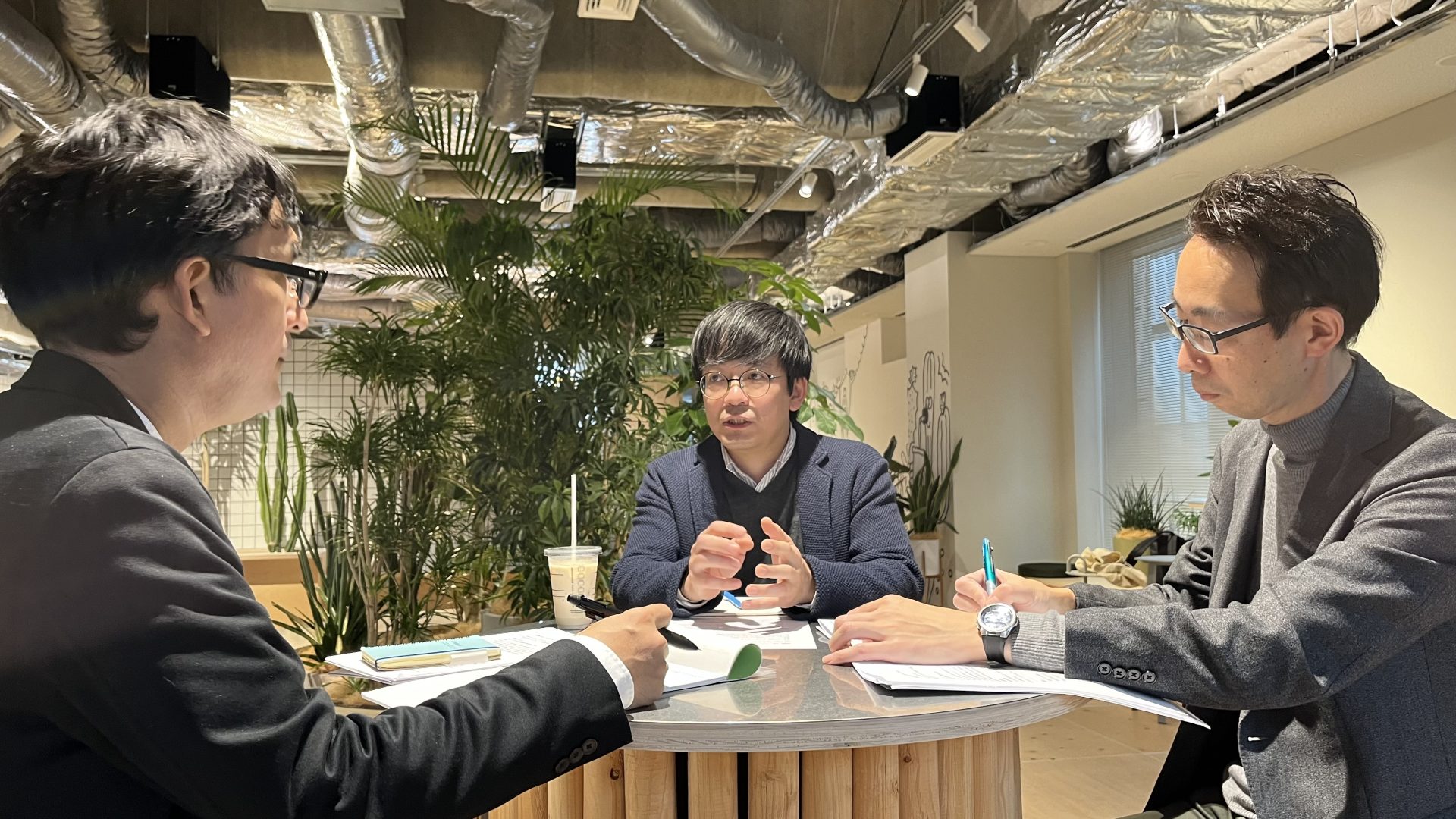
This time, we invited Imaizumi Takayuki, also known as "the geographer" who is a fantasy cartographer who is also involved in map design and geographical supervision and map production for television dramas, to the Hyogo Beginnings Museum. He toured the museum together with Kishida, the planner who worked on the museum, and we had a discussion about how to convey the multi-layered history of the region and how to improve museum exhibits, taking into account interdisciplinary perspectives such as geography, history, and archaeology.

Interviewee Profile
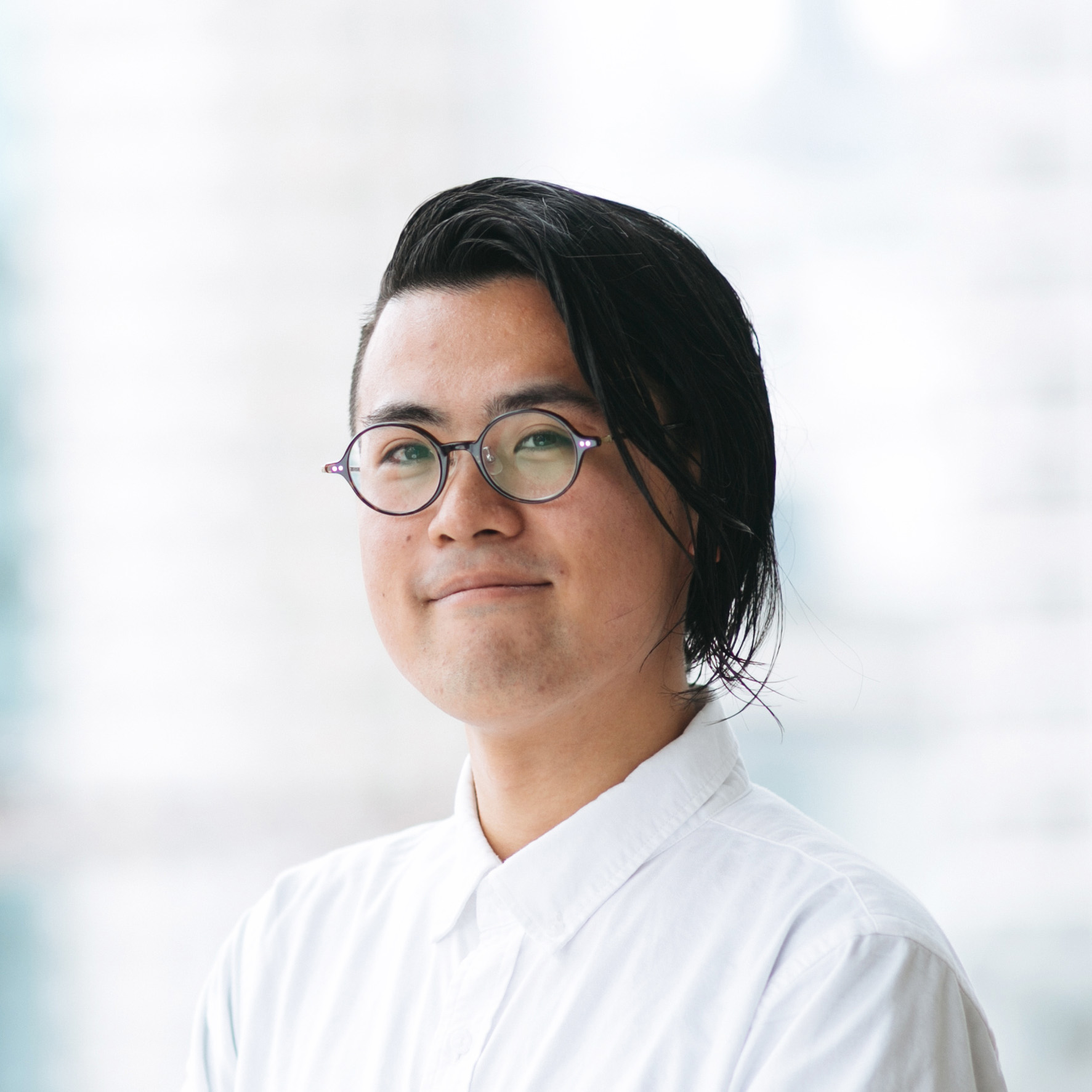
"Geography Person" Takayuki Imaizumi(right)
Fantasy Map Maker, CEO of Chirijin Institute Co., Ltd.
A cartographer who has been drawing imaginary maps (maps of fictional cities) since he was 7 years old. During his university years, he traveled to 300 cities in all 47 prefectures to become familiar with the layout of the country, and is involved in map design, geographic supervision and map production for television dramas. He also interprets human activities through maps, and practices creating new ways of looking at and communicating about cities.
https://www.chirijin.com/

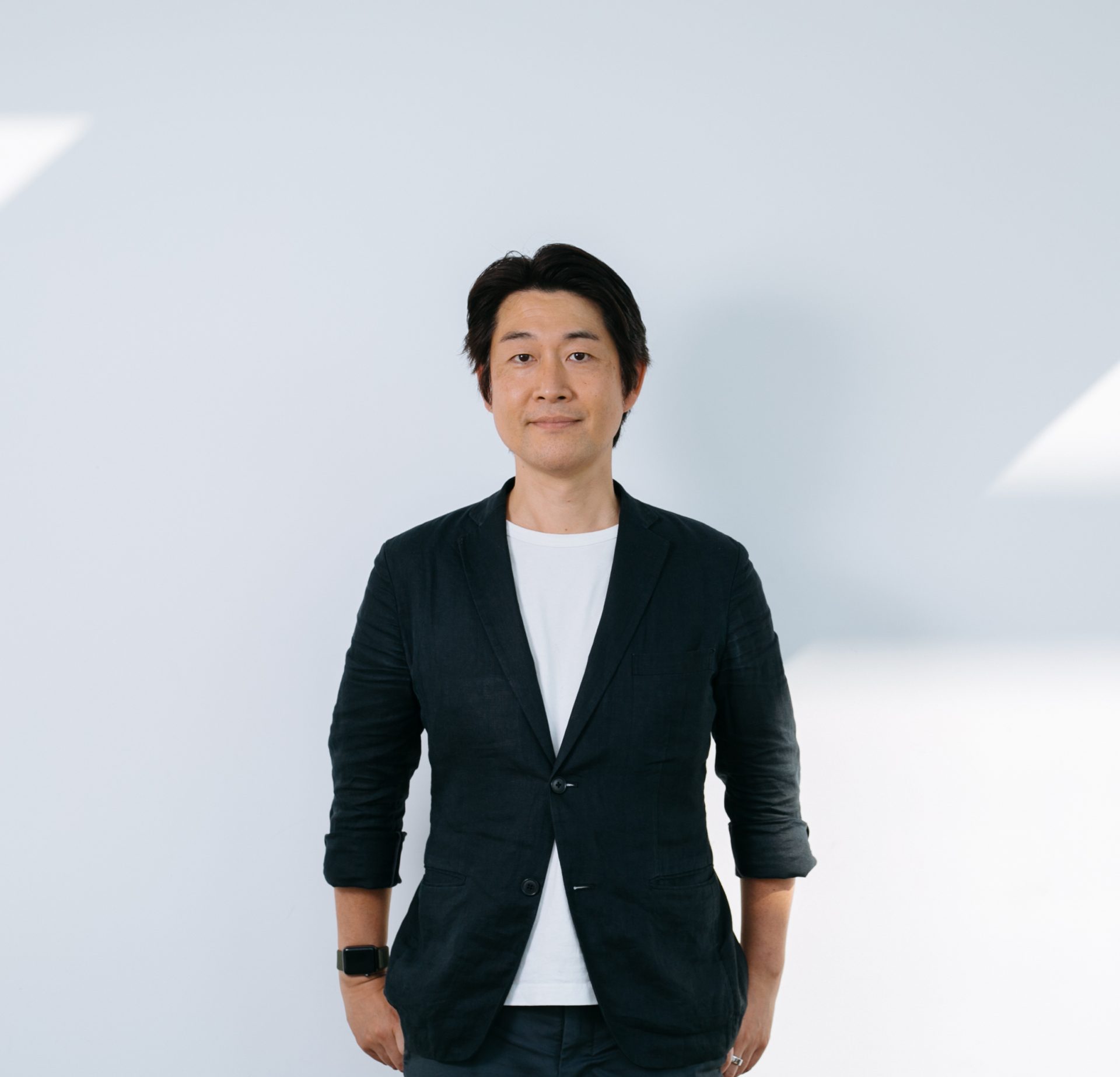
"Exhibitor"Kyohei Kishida of NOMURA Co., Ltd.(left)
A planner who conveys the appeal of the region.
He aims to use the exhibition as an opportunity to rediscover the charm of the region and increase the number of fans of the region. During his university years, he combined fieldwork and workshops to work on creating a "Monogatari Map" that records the memories of local residents. He believes that a "map sense" has great potential for exhibition creation.

Uncovering the history and charm of the region that has been hidden over time

It was during his university days that Chirijin began to visit cities all over Japan. He says he has already been to over 300 cities, but this was his first visit to Hyogo-tsu, where the Hyogo Hajimarikan is located.
On the morning of the day of our interview, Chirijin arrived at Kobe Airport by plane. He had actually spent several hours prior to the interview walking all over the area doing fieldwork.

Kishida
We understand that you did extensive research on maps of the region, even ancient ones, beforehand, but when you actually walked around Hyogo-tsu with your own feet, did you discover anything new?

Geographer
I had so much fun that I regretted not having visited there before. I had heard about Hyogo-tsu from Mr. Kishida and I had been very curious about it. The more I researched it, the more I realized that it was an important place in Kobe's history, but if I just looked at a map of Hyogo-tsu today, I would not have realized that it was the old town area.

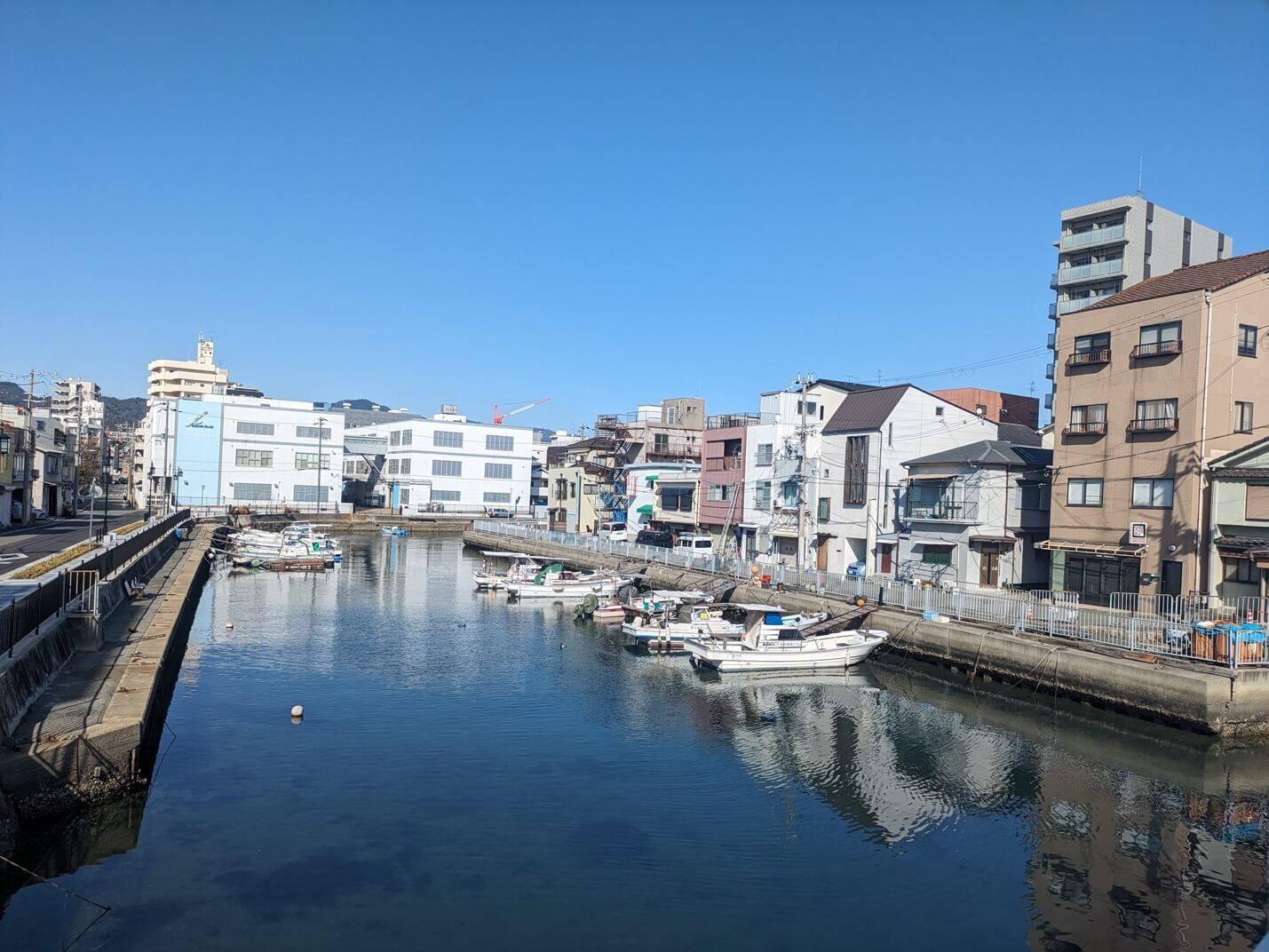
I was surprised when I actually walked around the town today. When I was researching on the map, I had serious doubts as to whether this was really a historic port town, but when I saw old photos of the market before it was replaced with the current new market, and found the "boat harbor" where many small boats that seemed to be privately owned were moored, I realized that it really is still a port town today. I also saw a seaweed shop and a seafood processing company.

Kishida
Even for geographers who have seen many places, the impression you get from looking at a map is different from the impression you get from actually visiting the place. Would you recommend walking around the city for visitors to the Hyogo Beginnings Center?

Geographer
Yes, I would love for people to see the town for themselves. In particular, the presence of the "boat harbor" means that it has been a port town since ancient times, and I think this place is a concentrated expression of that bustle.

Apparently a canal was built in Hyogotsu during the Meiji period, but the presence of a canal doesn't necessarily indicate that this was an old port town. In addition, the surrounding roads had been rezoned, so on the map it looked more like a new industrial or residential area, which was hard to tell at first glance. However, seeing the many small boats moored and the small and medium-sized seafood processing companies nearby, I imagined that it must have been bustling with people since the Edo period. However, it's very difficult to feel that it's an old port town unless you see it.

I believe the road rezoning was carried out after the war, but there were not many old buildings from the immediate postwar period, and it was striking that there were many buildings that looked like they were built between the 1970s and 2000s. The rezoning made it possible for cars to pass each other on the narrow alleys in residential areas, as well as on the main roads, making it easier to build buildings, and so they were rebuilt one after another. I think this was good from the perspective of the living environment and disaster prevention, but it makes it hard to see the old port town character. Furthermore, the old town names and areas were changed by the law on residential addresses that came into effect in the 1960s. As a result, it could be said that the original form of the old town as it is written on current maps probably disappeared around the late 1960s to the 1970s.

Kishida
It's like being a detective! When you observe the city with a sense of a map, you feel a connection to its history and culture, and realize that new discoveries await you. I think that by deepening their interest in history and culture at the museum, and by going back and forth between the city and the museum, their attachment to the city seems to have deepened even more.

The reason why the fantasy cartographer, Chirijin, never misses out on fieldwork

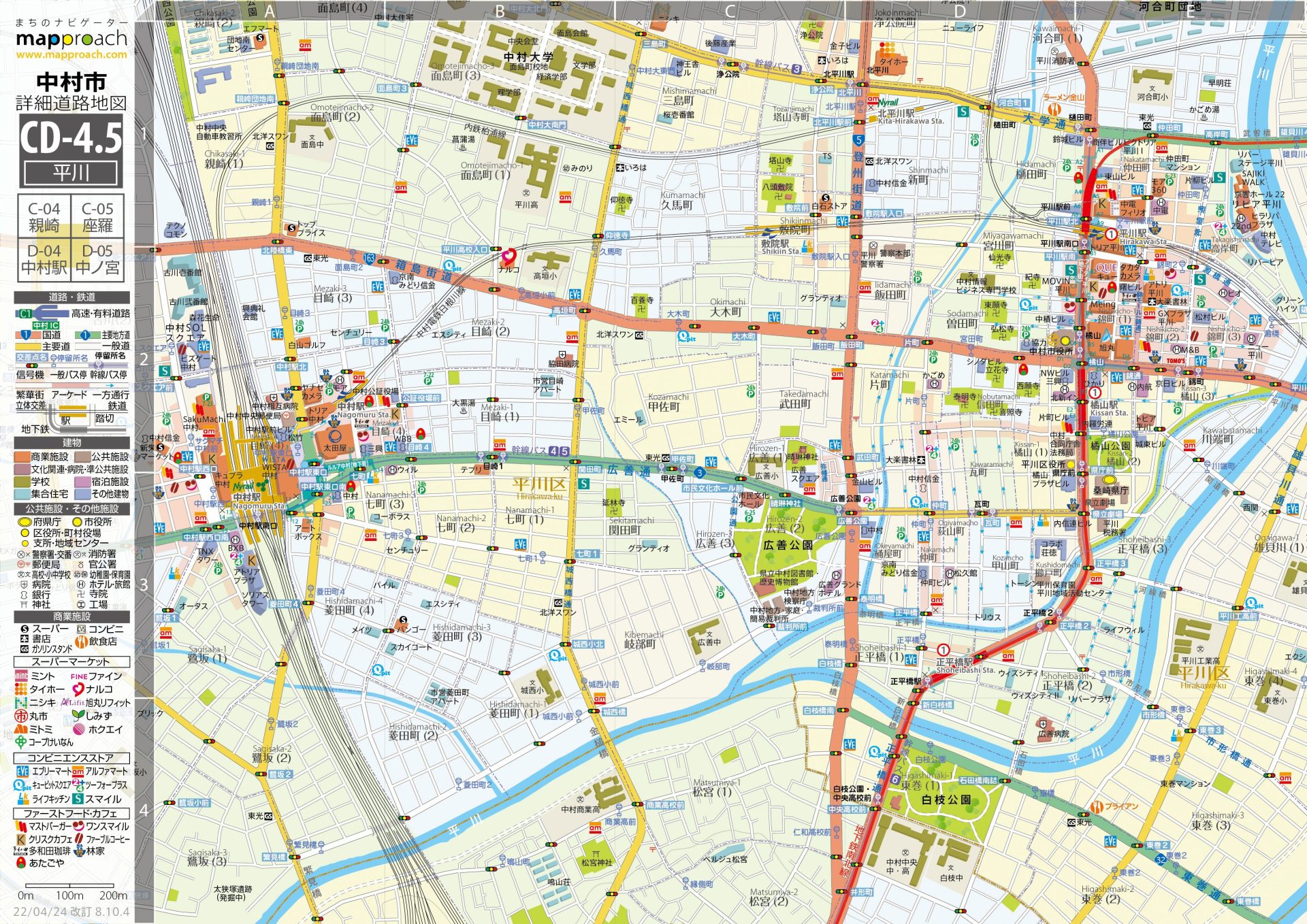
Chijin has been intermittently updating his imaginary map of "Nagomurushi" for over 30 years, which could be called his life's work. When I asked Chijin, who has conceived various imaginary maps in the past, how long he thought the history of the places he would depict on his imaginary maps should be, he replied, "About 150 years." The reason he thinks about such a long time span is because of his careful attitude and sharp observational skills, which allow him to interpret various things from maps and actual towns.

Kishida
Imaginary maps have the same realism as real maps, but how does walking around and observing actual cities come into play when creating imaginary maps?

The geographer
Yes. When you hear "imaginary map," you might get the impression that it's a fantasy, depicting an ideal city. However, that's not the case for me at all. Rather, I want to pursue the origins of reality, including the reality that doesn't go smoothly.

For example, in areas where castles were built in the Edo period and remnants of the castle towns that grew around them still remain to this day, there is an atmosphere that makes you feel a certain history. When you visit such areas, you want to find out the reasons and elements that give you that sense of history.

I draw imaginary maps by taking the unique characteristics of the towns and regions I have extracted in this way, such as the characteristics of towns that have a sense of history, towns that have been redeveloped, and areas that were developed for housing during the high economic growth period of the 1960s, and sketching them bit by bit in real towns and regions. The idea is that by visiting the locations, the number of elements I can include in my imaginary maps increases.

I sometimes get requests to make fantasy maps for TV drama props or game settings, but now that I have more knowledge of real cities, I can respond to a variety of requests. The sense that the world that the writer of a TV drama script or game wants to depict emerges realistically may certainly be the result of fieldwork.

Kishida
It's interesting that as soon as the "characteristics" collected from the actual area are abstracted and turned into an imaginary map, the characteristics of Nakamura City emerge. I can clearly see that geographers' accumulated fieldwork supports their very unique activities. Even when planning museum exhibits, it is a difficult but enjoyable time when we are trying to capture the characteristics of the area and the museum. I think that the sense of map is both a way of collecting and communicating the characteristics of the area.

Geographer
I believe that visitors come to museums to experience new, unknown worlds, but for you, I think there are two stages to this: grasping various worlds and then creating a form that can communicate them. I think it's amazing that you can do this, but at the same time, it also seems both difficult and fun.

A bird's-eye view and a deeper understanding of the "warp" and "woof" makethe exhibition even more interesting.

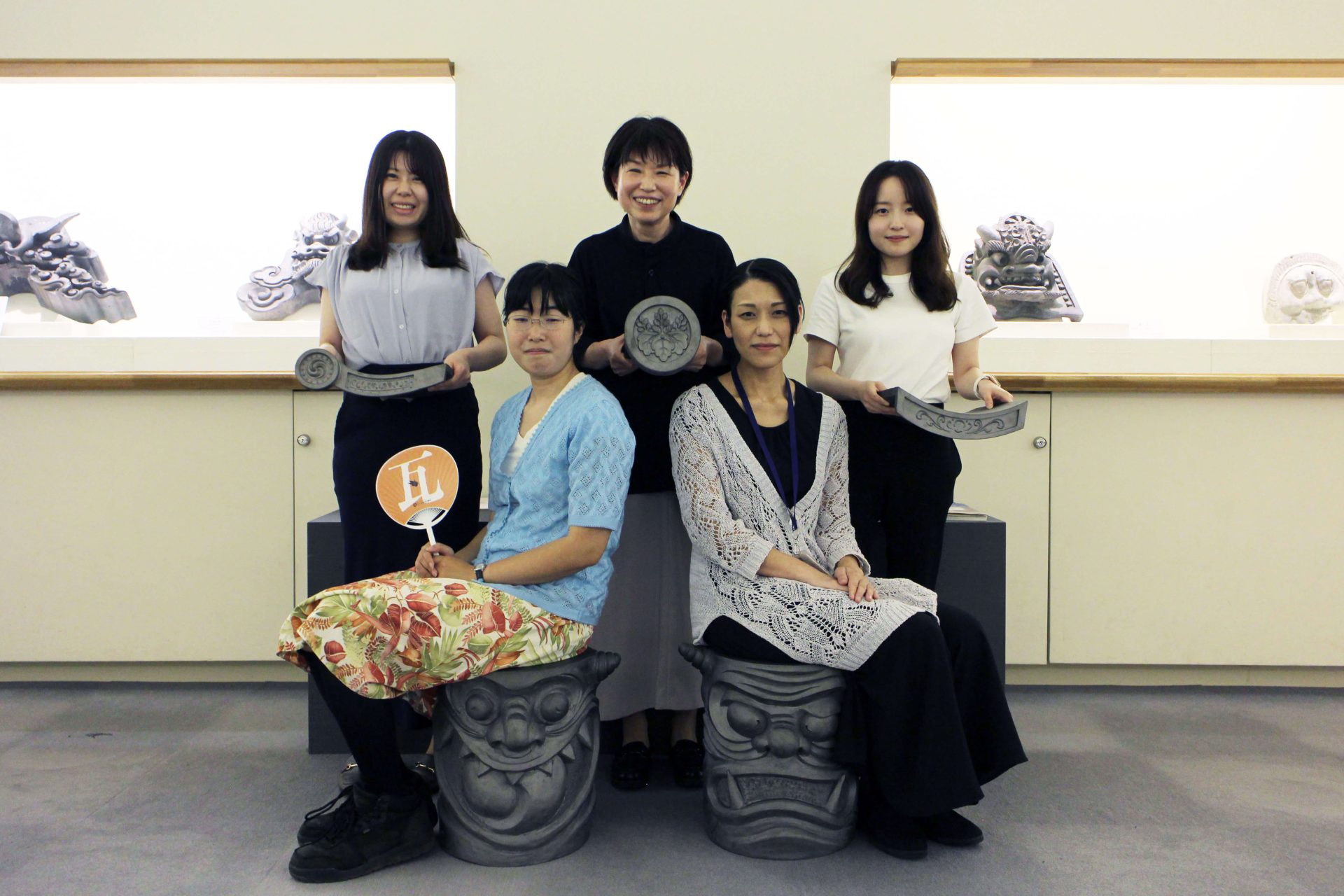
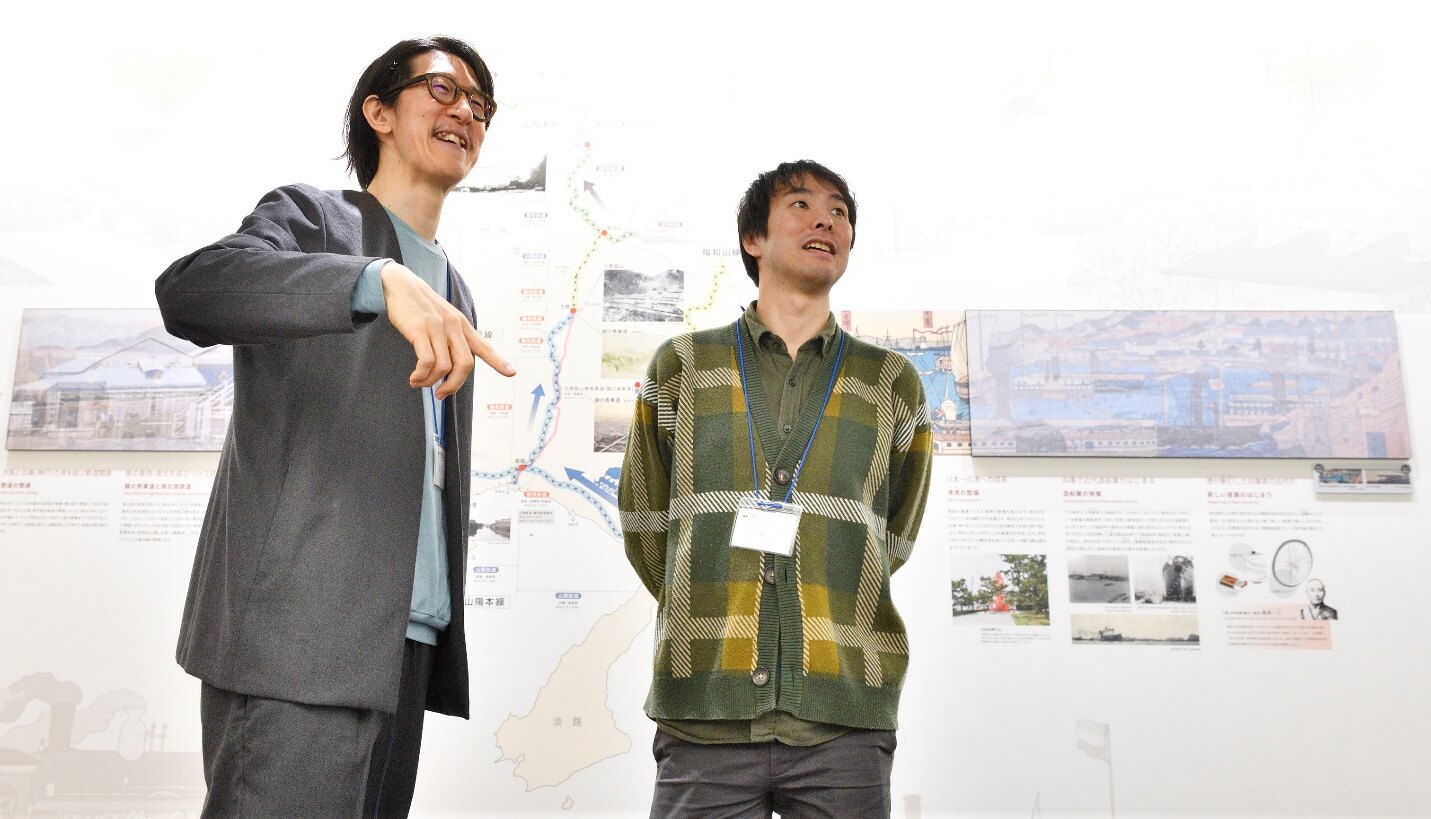
We then guided Chijin to the Hyogo Hajimarikan Museum. He was accompanied by the museum's curator, Shigeharu Taga, and the exhibition director, Takeshi Kami, and together we viewed the exhibits. To conclude the conversation, Chijin and the exhibition director, Kishida, talked about imaginary exhibits, not imaginary maps.

Kishida
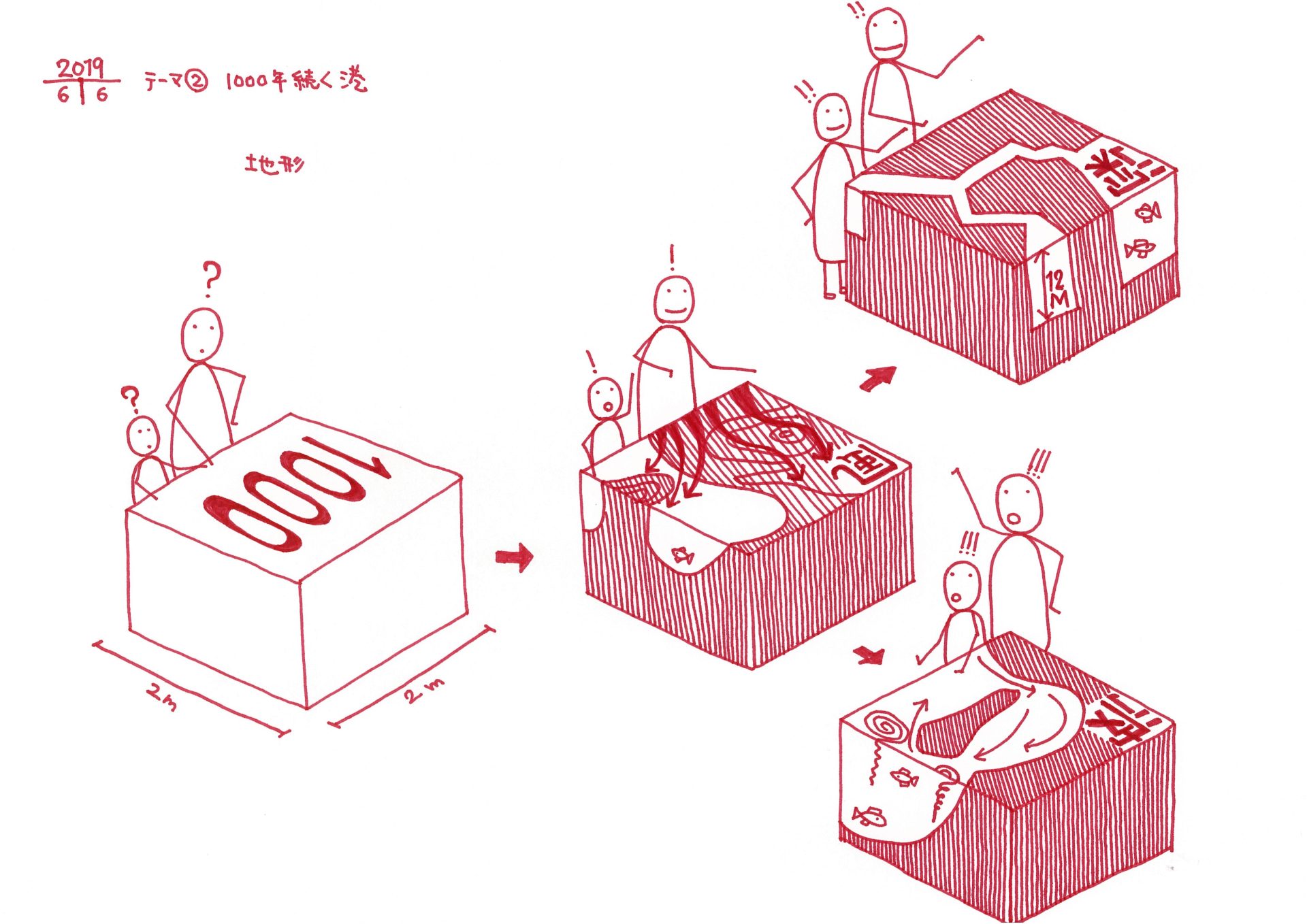
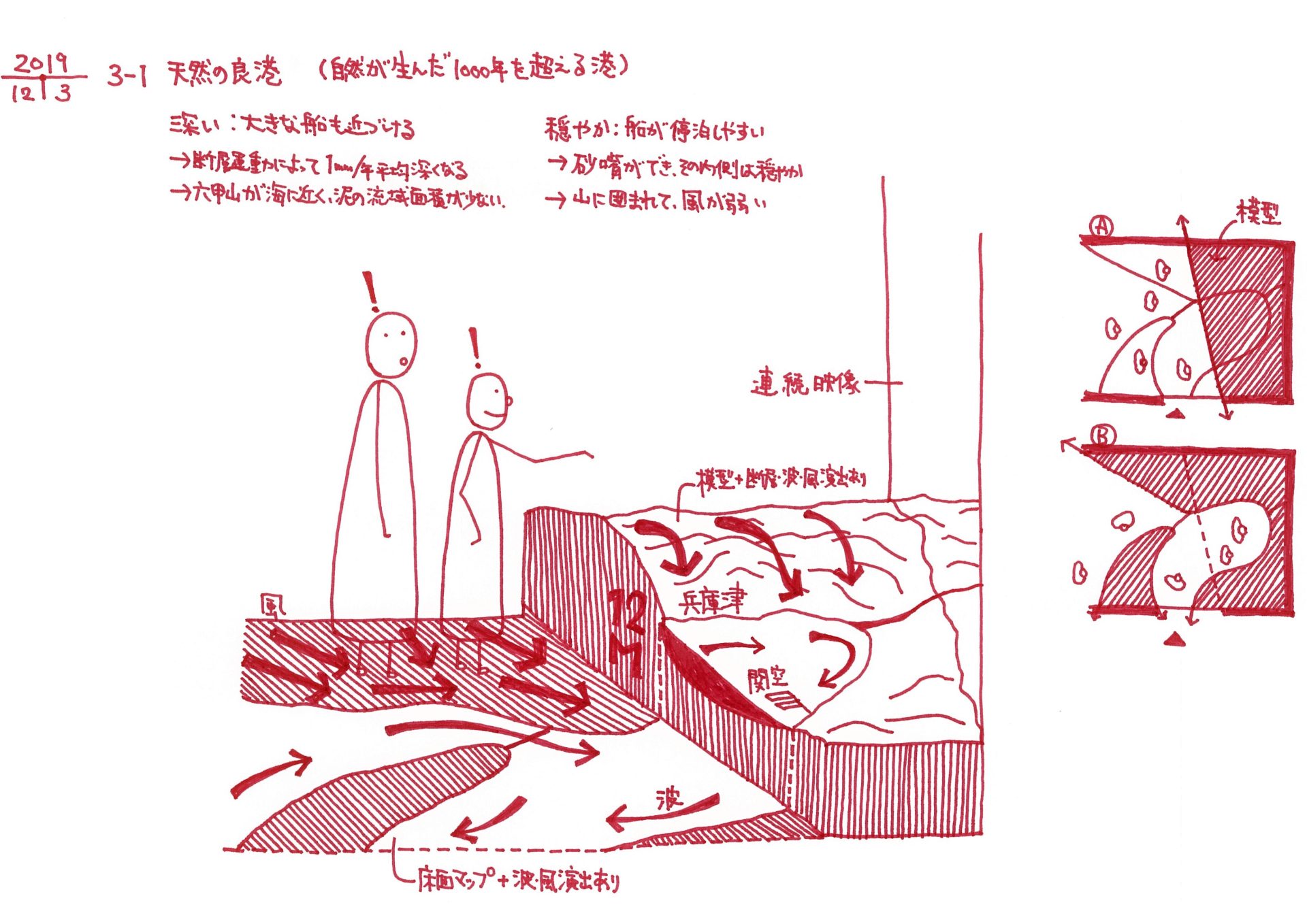
The exhibits at the Hyogo Hajimarikan Museum start with the topography. Hyogo Port has a history of over 1,000 years, and many of our forefathers, including Taira no Kiyomori, Ashikaga Yoshimitsu, and Ito Hirobumi, were involved. We learned that the area has developed by making use of its blessed topography, and that this has influenced history, so we proposed an approach that starts the exhibits with the topography. Whether it's a history exhibit or a nature exhibit, when imagining an exhibit, we find it interesting to think and express it with a map-like sense.

Geographer
I'm glad to hear you say that.
When I look at the exhibits, I sometimes get the sense that I am tracing the "perspective" of the curator or person who supervised the exhibition, something that I do not have as I am able to decipher various things from a map.
For example, I don't have an archaeological perspective, so I wonder why they display so many of the excavated stones, but archaeologists are able to decipher various things from these stones.

Now that I think about it, I've just remembered that in social science universities, students study a variety of fields, including history, geography, archaeology, and cultural anthropology. Although each has a different "perspective," I think there are some points of overlap in the research fields.

For example, a map is a single image that captures the whole picture, so I think geographers tend to try to see the whole picture as a surface. Whether it's modern or historical, they don't just look at maps, they also look at statistics and data, and they try to get a grasp of the big picture by doing some quick fieldwork.
On the other hand, historians also look at similar materials, but they continue to read books and detailed records, such as who did what and when. Even if the sentence is very long and difficult to read, the longer it is, the more they seem to break it down and understand it.

If we use the analogy of fabric, a geographer would see it as a whole, while a historian would try to read each and every warp and weft thread that makes up the fabric. Do they see it as a piece of fabric, or do they unravel it into individual threads? The difference in "perspective" or "gaze" is interesting.

Kishida
I see. A geographical perspective can help convey the overall picture in an easy-to-understand way and make it more enjoyable. When creating an exhibition, it's important to incorporate a perspective that looks at things from a surface perspective, like cloth, rather than just looking at the individual threads in detail.

Geographer
In addition, I think it is very important that a museum, like the Hyogo Prefectural Hyogotsu Museum, is located in a place where history has actually been woven. After talking about this, I feel like I want to try to see how I can thread the thread I have unraveled through to the modern city. I would like to stitch together historical places and events with modern places, so that visitors can feel that "this was really the place!"

Kishida
It's really a question of how to connect the museum with the local community.

Geographer
Yes. For example, the permanent exhibition room ended with an introduction to the Meiji era, but if we added exhibits that conveyed events from the Taisho, Showa, and Heisei eras using photographs and maps, it might give a more realistic sense of the continuity of the period with the present.

Kishida
From the perspective of connecting with the local community, this could be useful for communicating with people who are involved in guiding the history of this region, and for thinking about initiatives that we could do together. I can already imagine an exhibition. Thank you very much for today!

Text: naomi

Like this article?

editor
ウェブ版「カルチベイト」チーム

Web version of "Cultivate" team

Cultivate, which proposes the future of the "cultural environment," is relaunching as a web version on nomlog for the first time in 10 years.