Increasing the value of architecture through the power of spatial design -- What is long-term value in a sustainable era?
2024/07/10- share
-


- text and edit by
- nomlog editorial department
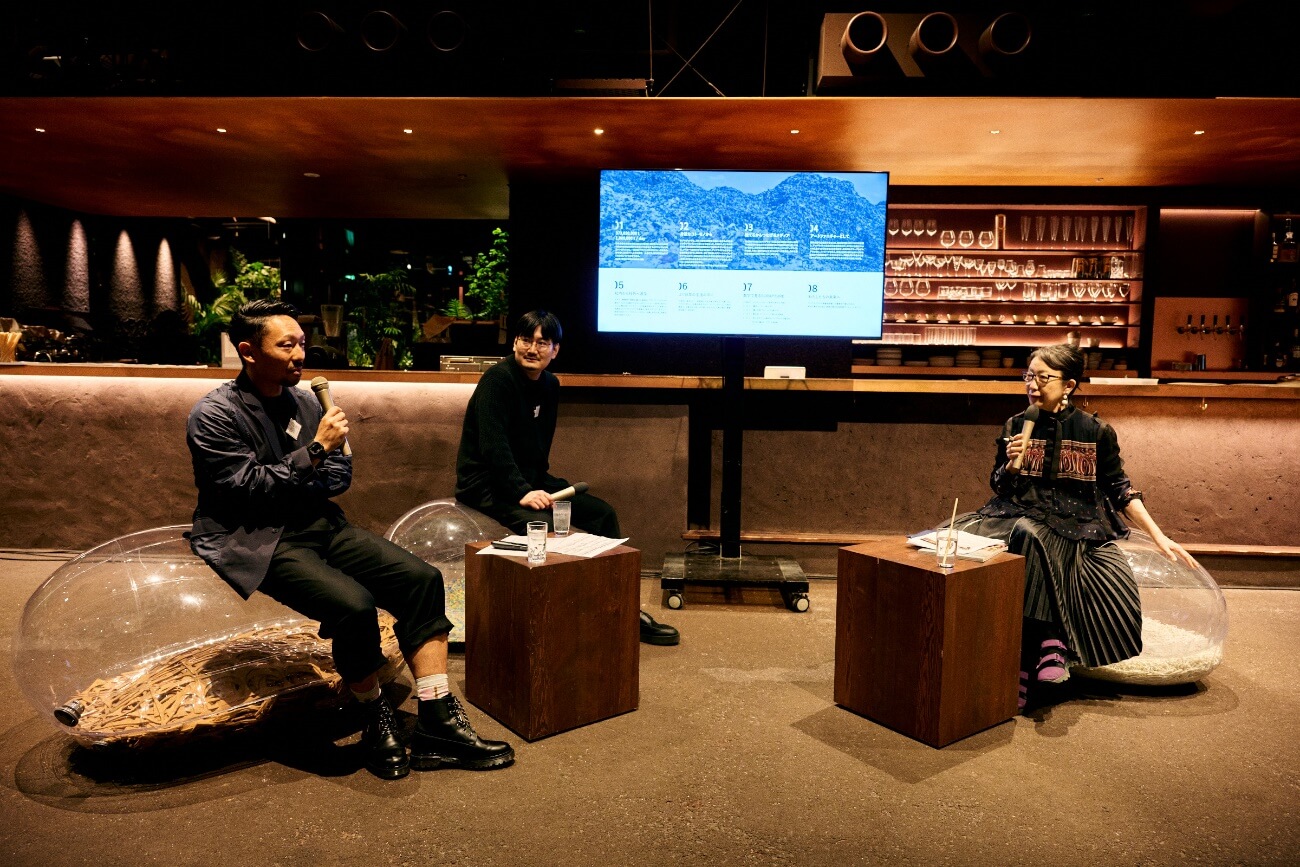
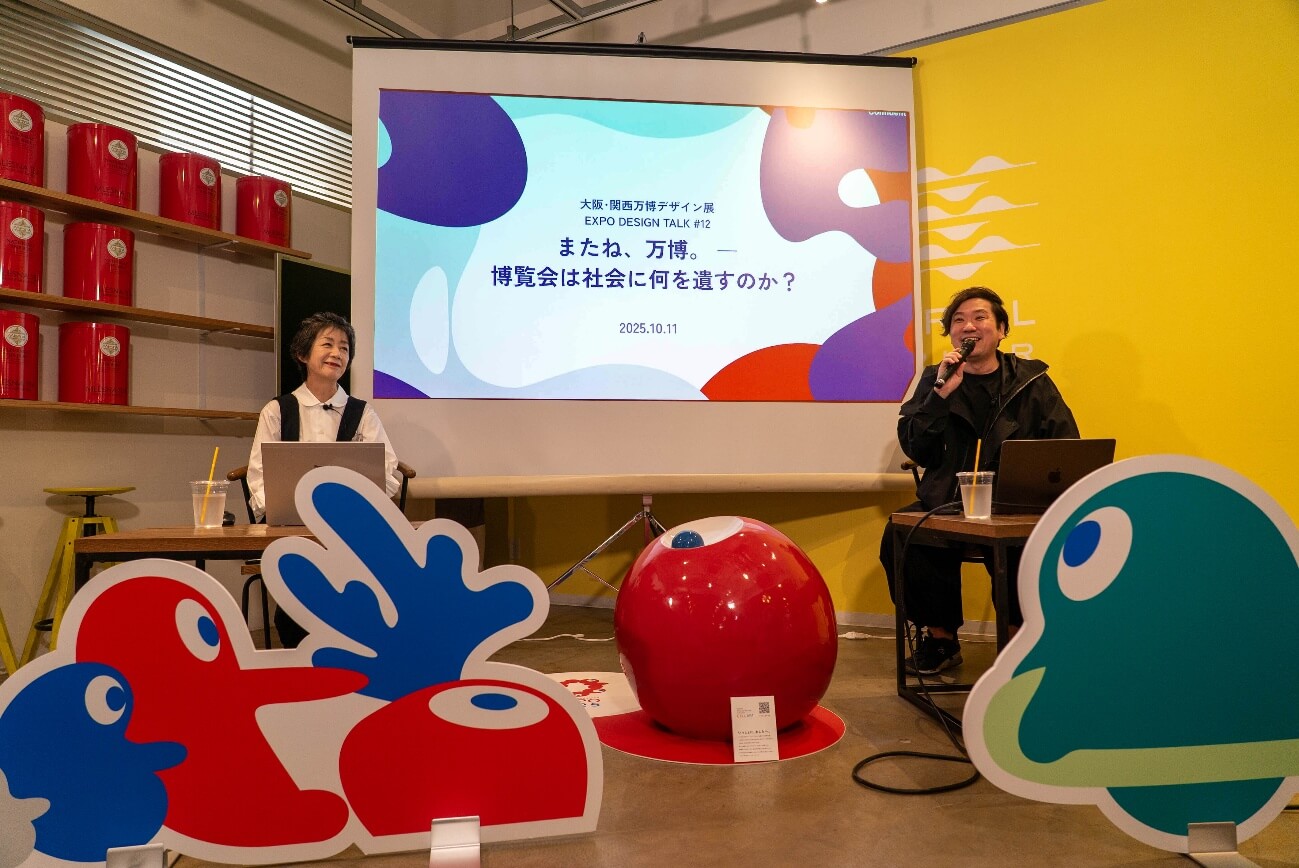
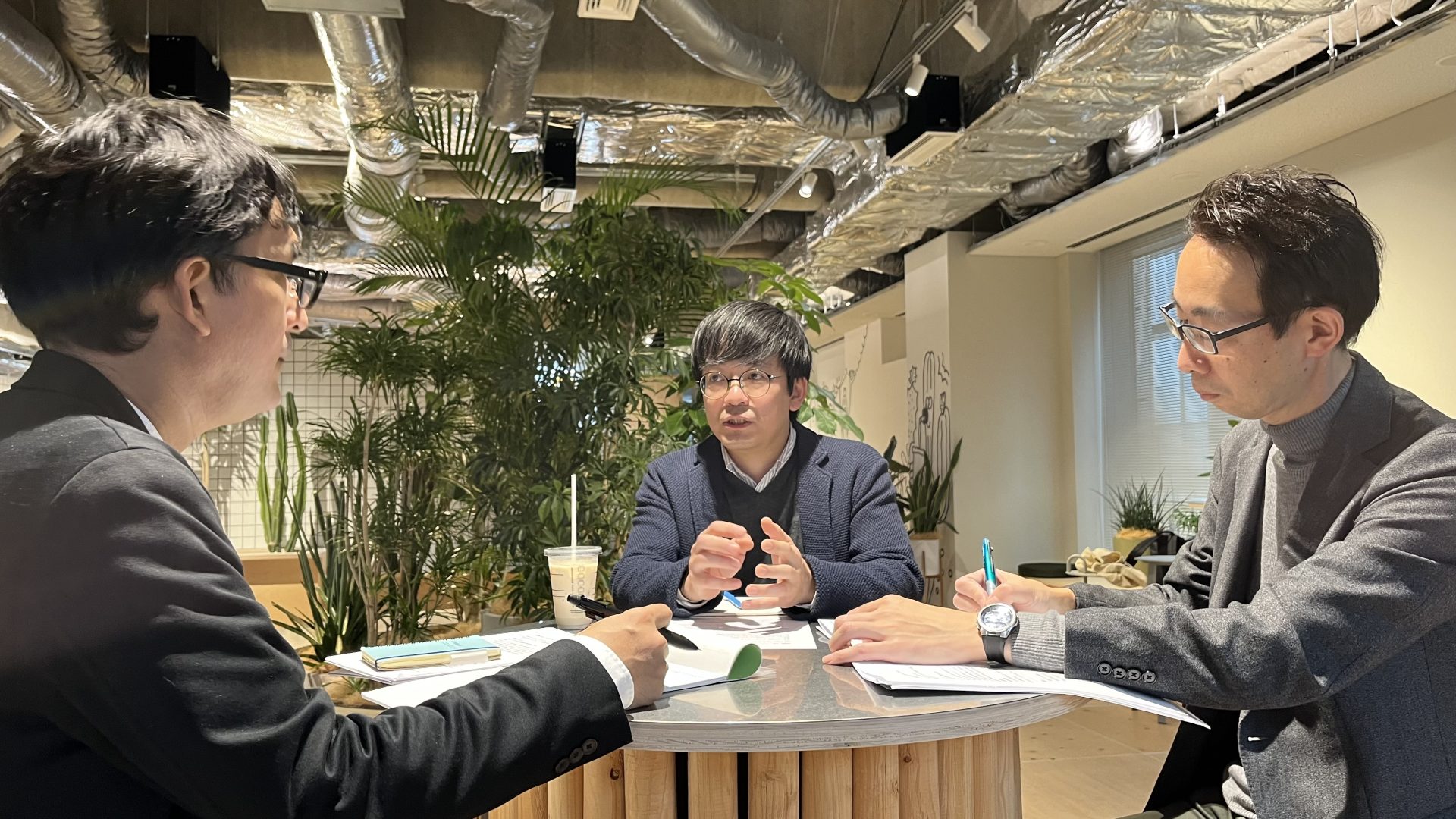
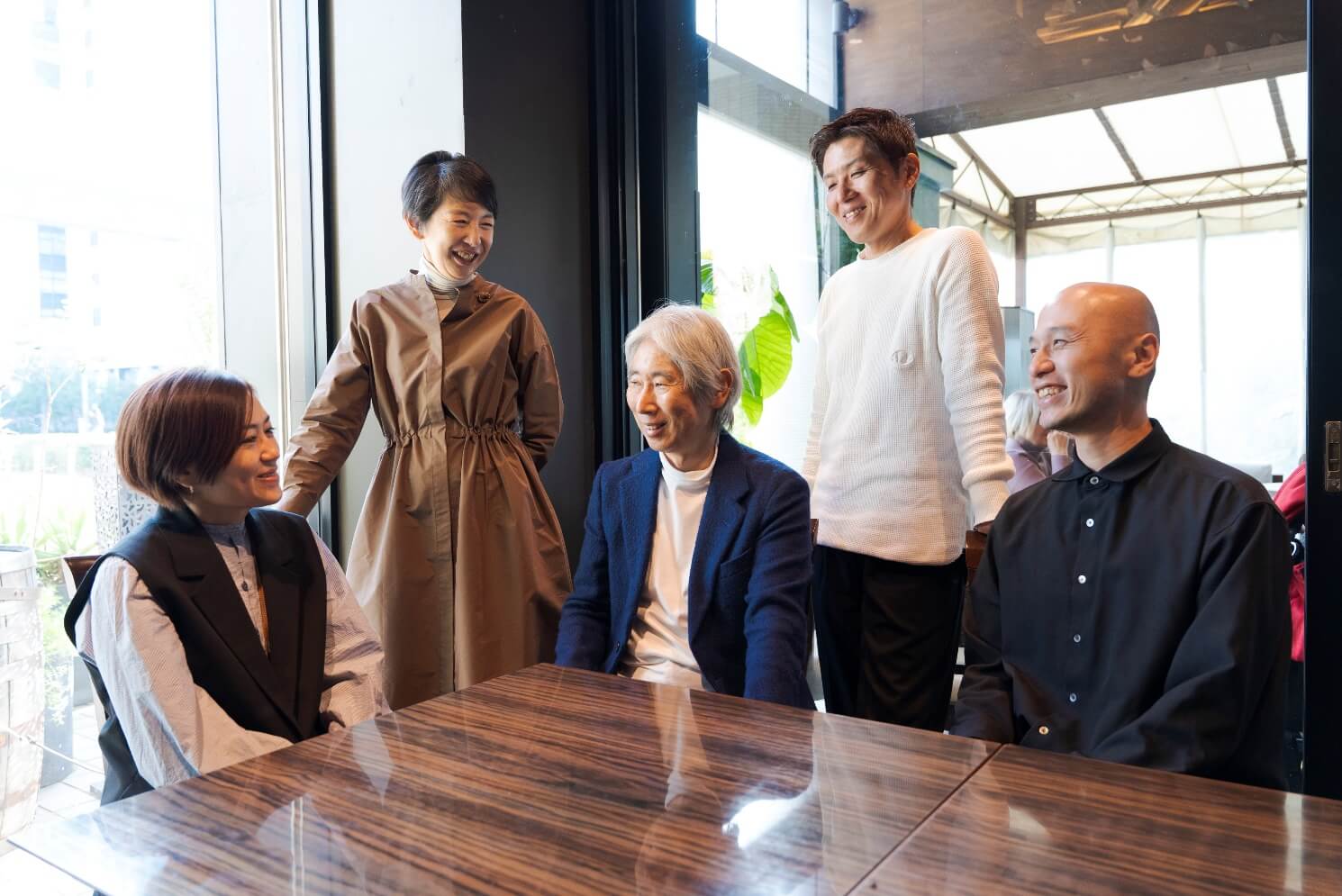
Now that sustainable social activities are required, the nature of architecture and space is also changing dramatically. On November 21, 2023, NOMURA Co., Ltd., Ltd. held a seminar and talk session titled "Long-time value of space." The first half of the seminar was a talk session with Shinichi Hashimoto, CEO of M's Lab Co., Ltd., and the second half was a talk session with NOMURA Co., Ltd. Co., Ltd. employees. Members who still had more to say moved to another location for an after-talk. In this article, we will provide an overview of the seminar and an after-talk in which we discussed the possibilities of "long-time value" that can be brought about by spatial creation.
<Speaker introduction>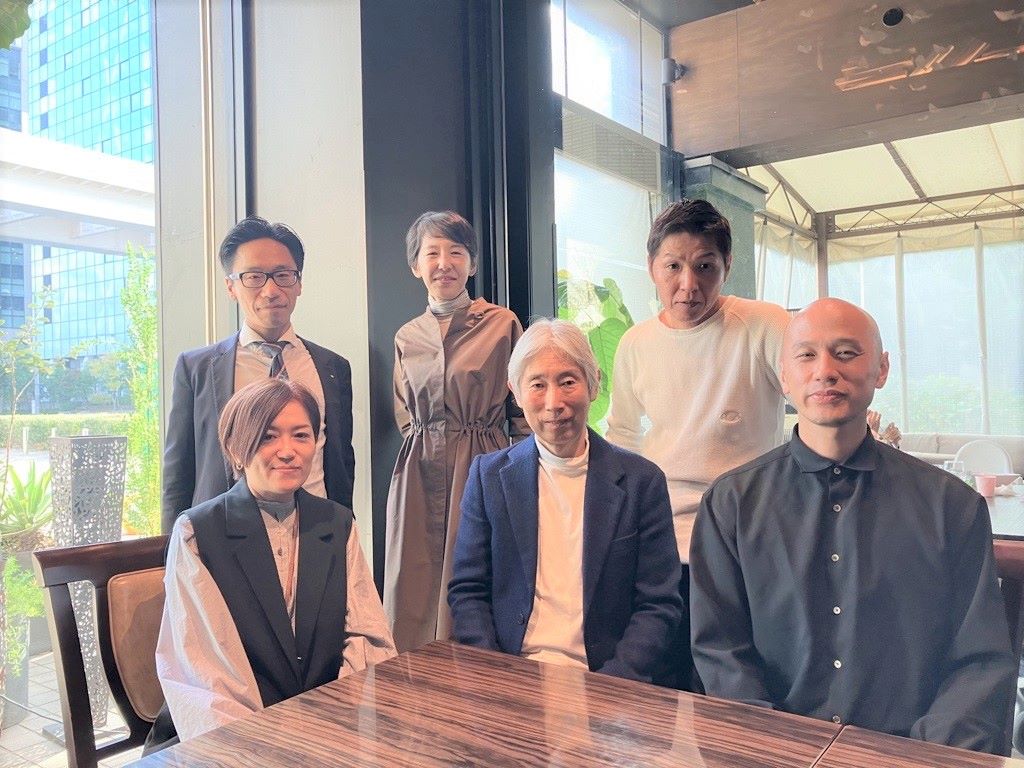
Shinichi Hashimoto(front row center)
Representative Director of M's Lab Co., Ltd. / Former Director of the General Research Institute of the Construction Price Research Institute
After working at Danchi Service Co., Ltd. (now Japan General Housing Co., Ltd.), he joined the Construction Price Research Institute in 1992. He is engaged in research on construction costs, construction statistics, international comparisons, and other aspects of construction economics and cost management. In July 2019, he established M's Lab Co., Ltd., and is engaged in consulting activities focusing on construction costs. He currently serves as a visiting researcher and part-time lecturer at Shibaura Institute of Technology, a part-time lecturer at Nippon Institute of Technology, a director of the Japan Construction Cost Estimating Association, and a member of the Architectural Institute of Japan's Building Social Systems Committee, providing cross-market research and business support in areas such as architecture, real estate, and home renovations.
Creative Headquarters First Design Center Design Department 5 Manager
Design Director
Michiyasu Fujita(back row right in photo)
General Manager, New Field Project Development Department, Second General Affairs Division, Business Production Headquarters
Planning Director
Sahoko Suzuki(Photo: back row center)
Creative Headquarters First Design Center Design Department 1 Baba Room Room Chief
Design Director
Kumiko Baba(front row, left)* Click here for her achievements
Creative Headquarters Creative Production Center No.10
designer
Jun Watanabe(front row right in photo)* Click here for his achievements
Sales Promotion Headquarters, 4th Business Division, Sales Department 2, General Manager
Takuya Kitai(back row left in photo)
What is the seminar talk "Long-time value of space"?
Lecturer Hashimoto established M's Lab Co., Ltd. in July 2019. He is engaged in consulting activities focusing on construction costs, and conducts cross-market research and business support in areas such as architecture, real estate, and home renovation.
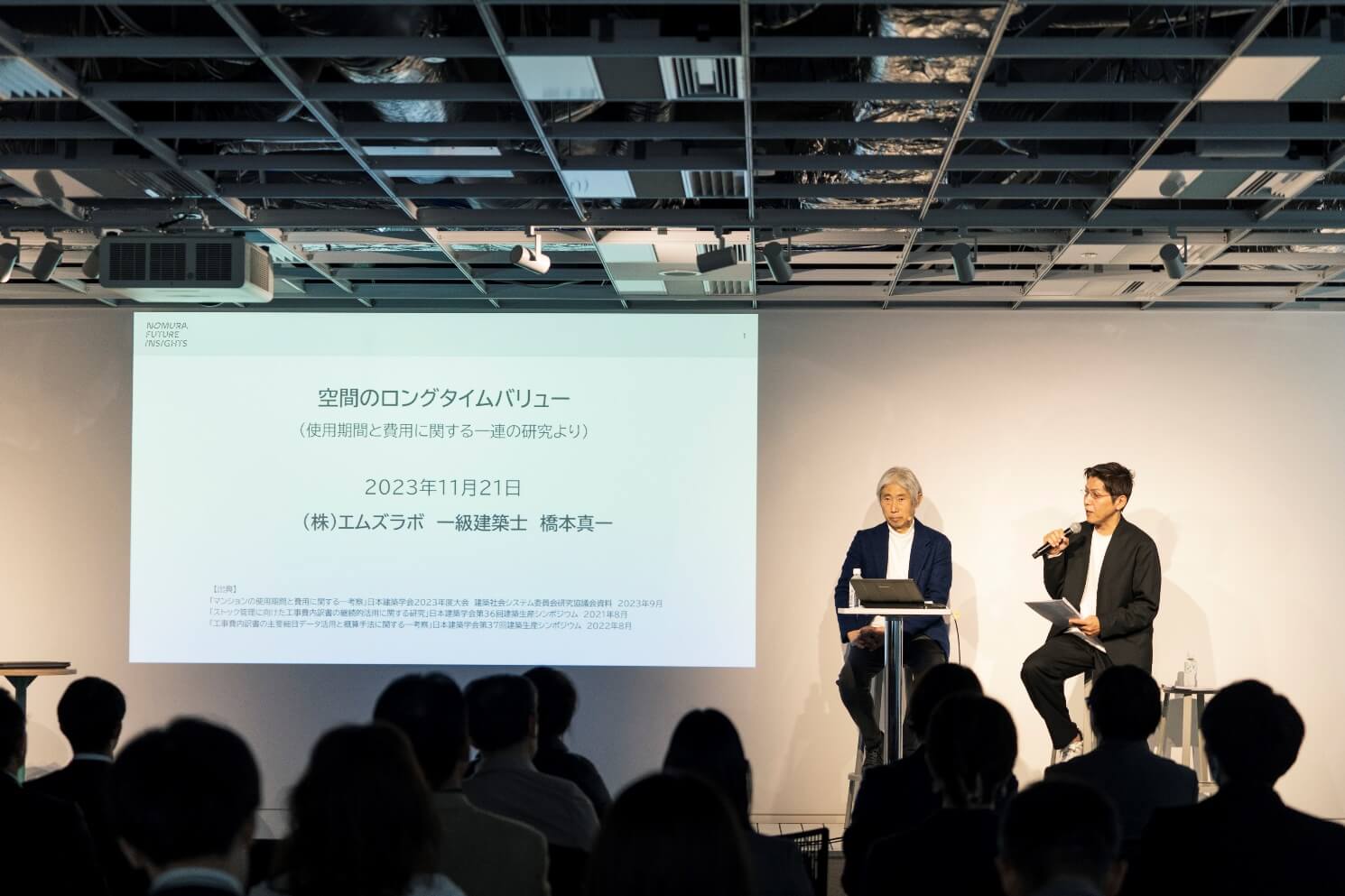
We need to extend the lifespan of the vast amount of architectural stock that exists in the world. To utilize existing stock, it is essential to increase the value of the space according to needs. And to make adding value to space a business, we need to evaluate the value of the existing stock over time and additional investments. He explained the framework of architectural value, and further provided a more specialized explanation on "the value of existing stock by part" and "the concept of evaluating useful life and the value by part."
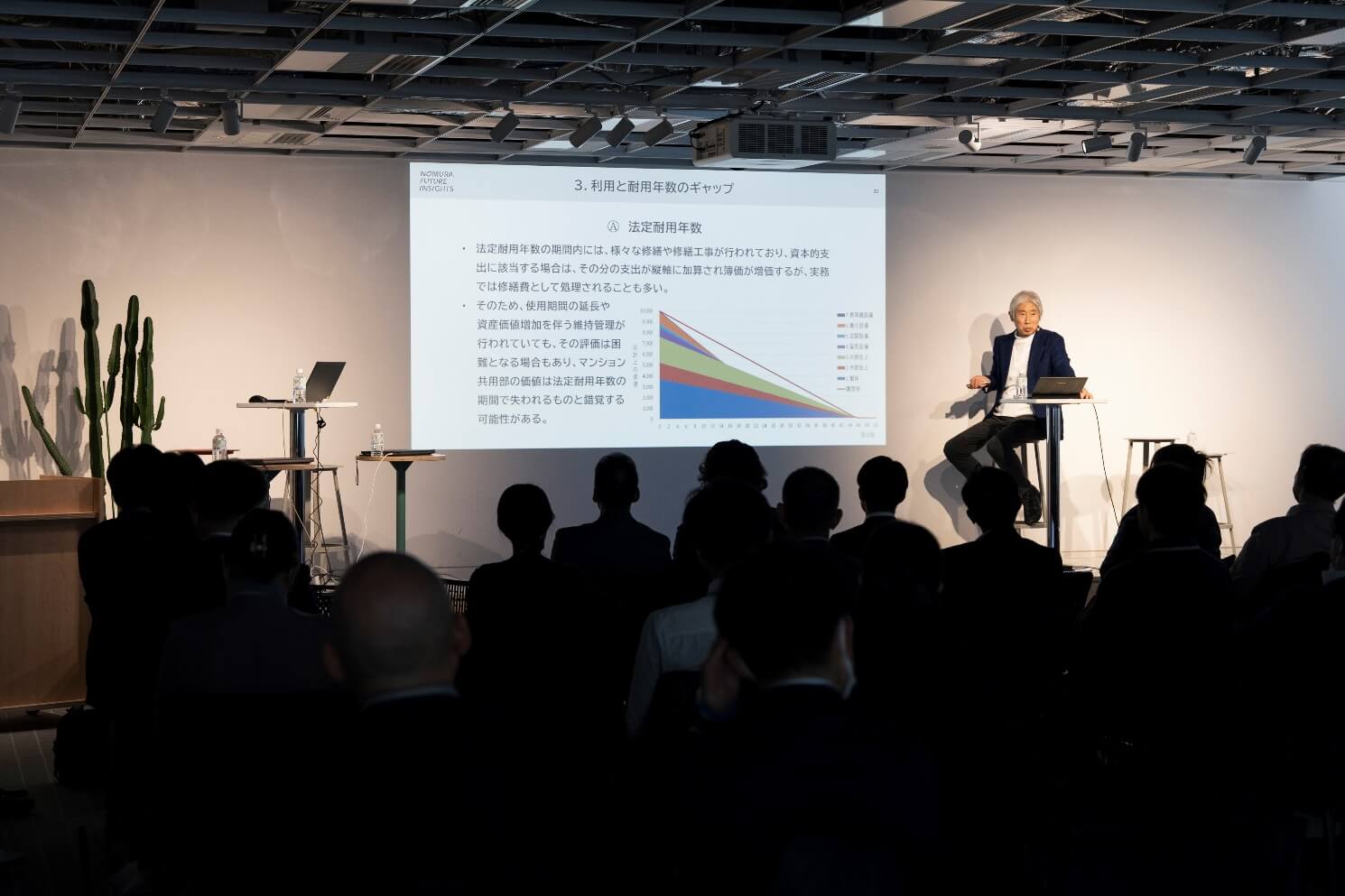
NOMURA Co., Ltd., Ltd. Value-up Case Study 1: Panasonic IMP Building
After the seminar, an after-talk began at the lunch venue, where participants reflected on the contents of the discussion.
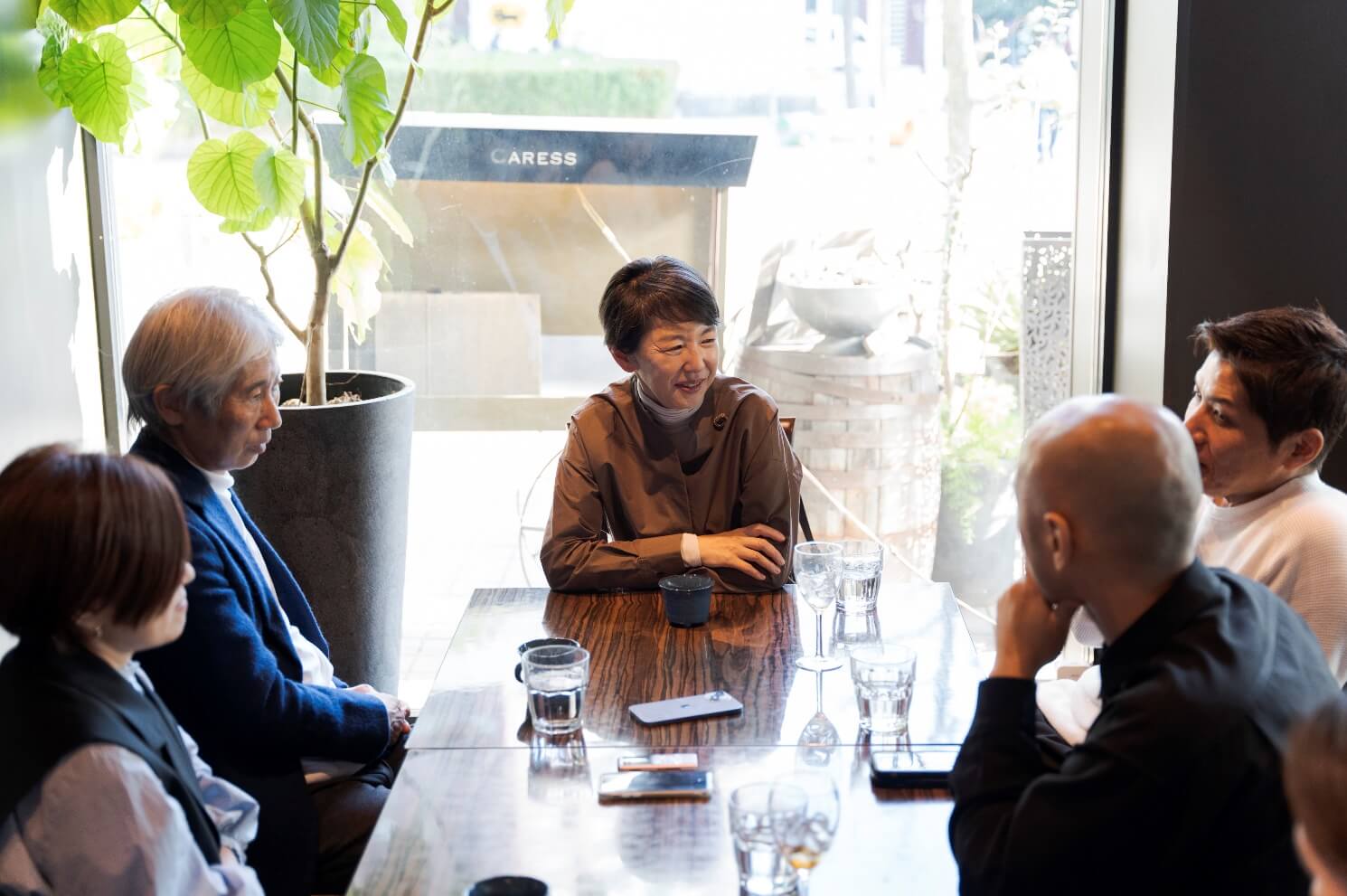
Fujita
Thank you, Professor Hashimoto, for your valuable insights today.
Hashimoto:
I'm the one who should be thanking you.
Fujita
I would like to introduce two examples of Nomura's work that were presented in the seminar earlier. Could you please give us your comments on them?
Hashimoto:
of course.
Fujita
Now, Mr. Watanabe, please give us a brief overview of the cases you have handled.
Watanabe
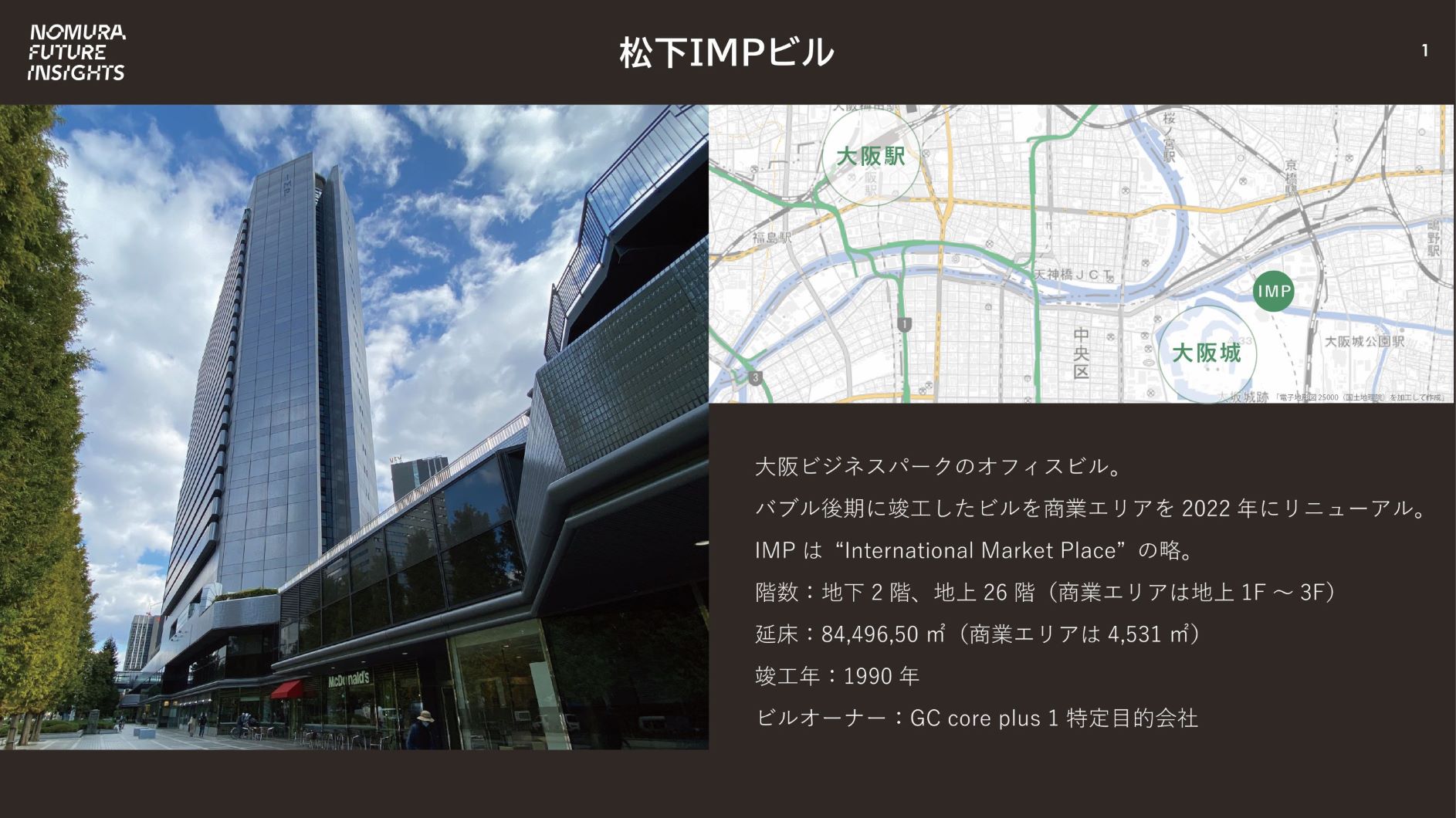
Yes. It is a project to renovate the commercial area of the Panasonic IMP Building in Osaka.
Suzuki
This renovation won the Bronze Award for Large-Scale Commercial Spaces at the Japan Space Design Awards 2023.
Watanabe
Yes, thankfully. Located in Osaka Business Park, an area very close to Osaka Castle, IMP is a 30-year-old building built during the bubble era.
Baba
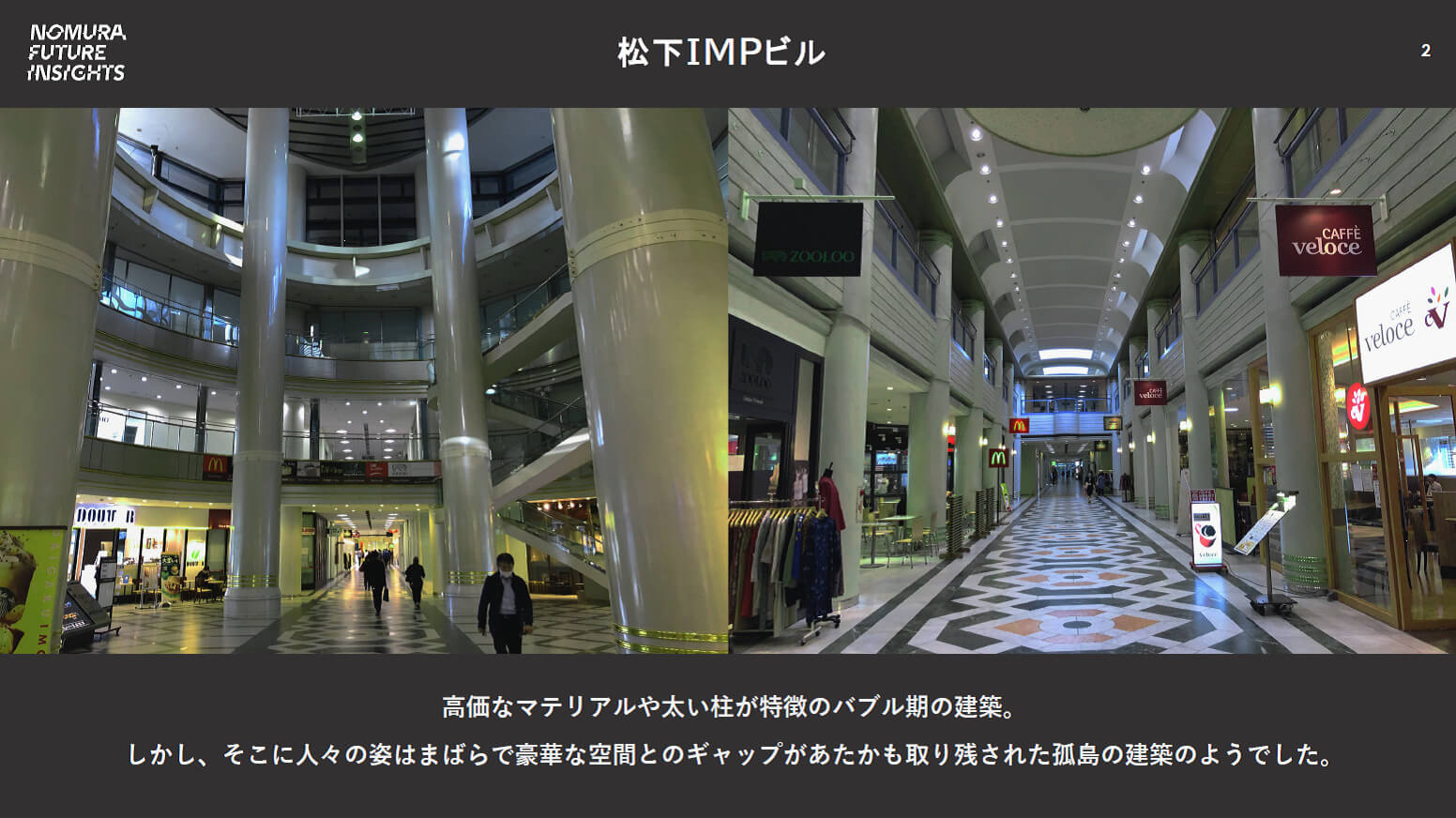
Indeed, when looking at photos taken before the renovation, you can see vestiges of the Bubble era here and there in the interior.
Watanabe
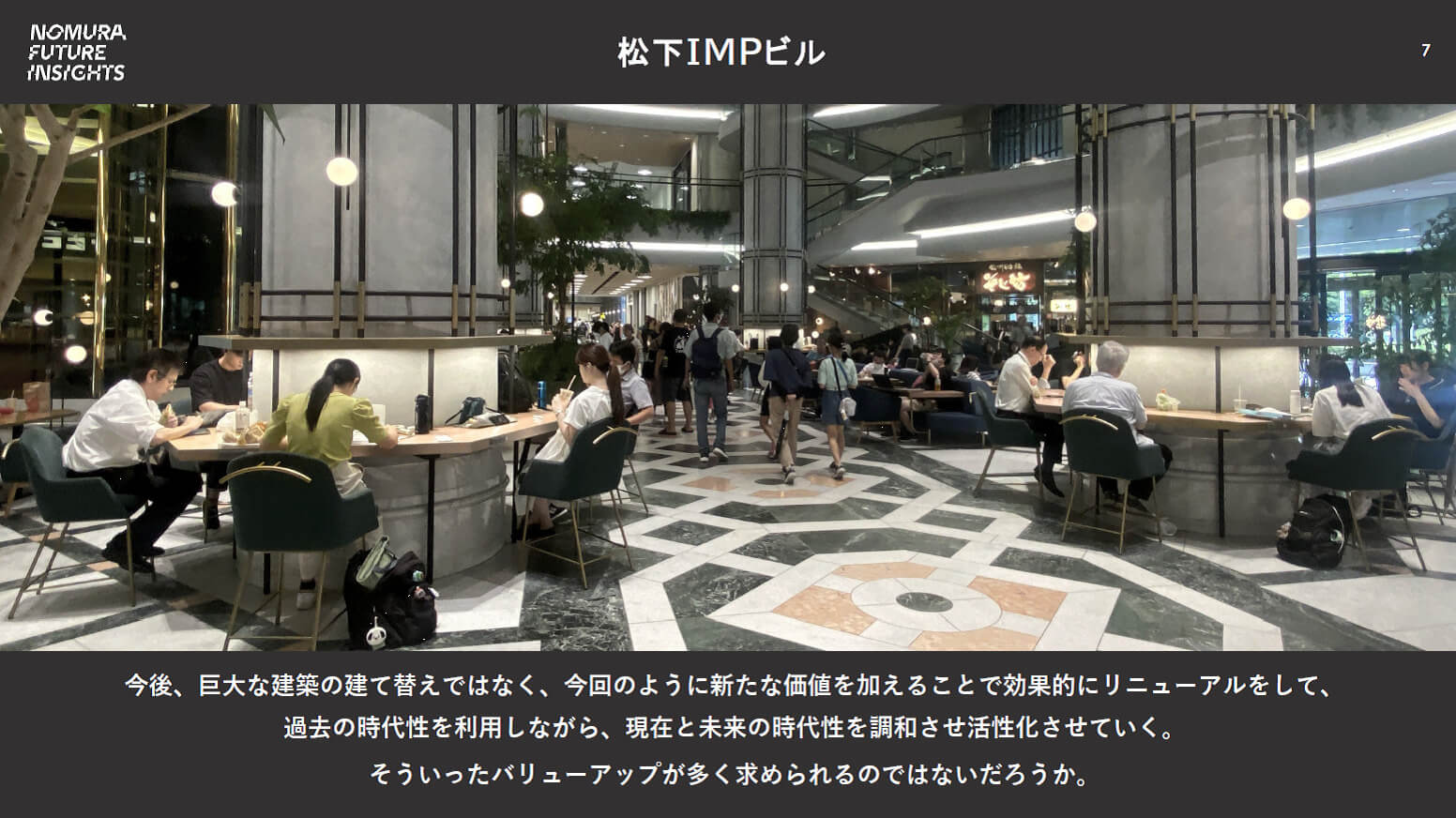
We were in charge of renovating the commercial area from the first to third floors, and everything about it was gorgeous, with its open atrium, thick pillars, and distinctive flooring. However, as time passed, the design no longer matched modern sensibilities, and it was becoming difficult to attract visitors. We carried out various investigations into how to add value to the area, and proceeded. Rather than demolishing everything, we made the conscious effort to utilize the existing architectural design, aiming to connect it to the present and the future.
<BEFORE>
<AFTER>
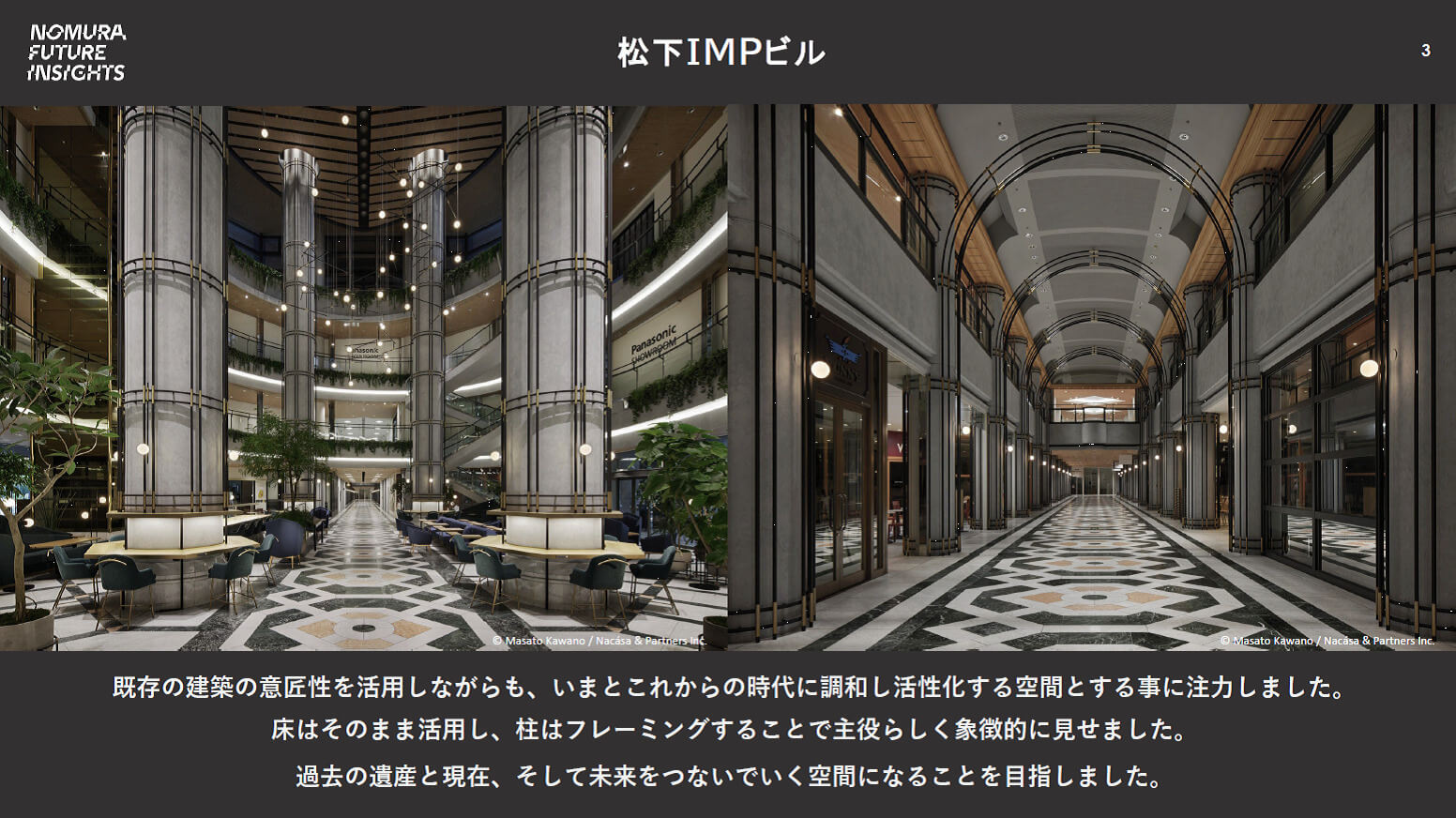
Baba
It also created a new space.
Watanabe
Yes. There was a space that had been used for events, but now it is almost empty, so we thought we could make good use of it. We started working on this project just when the COVID-19 pandemic started to dramatically change the way we worked. We predicted that things would change even more in the future, so we thought it would be a good idea to create a workspace that could be used by people working in this building as well as the surrounding offices.
<BEFORE>
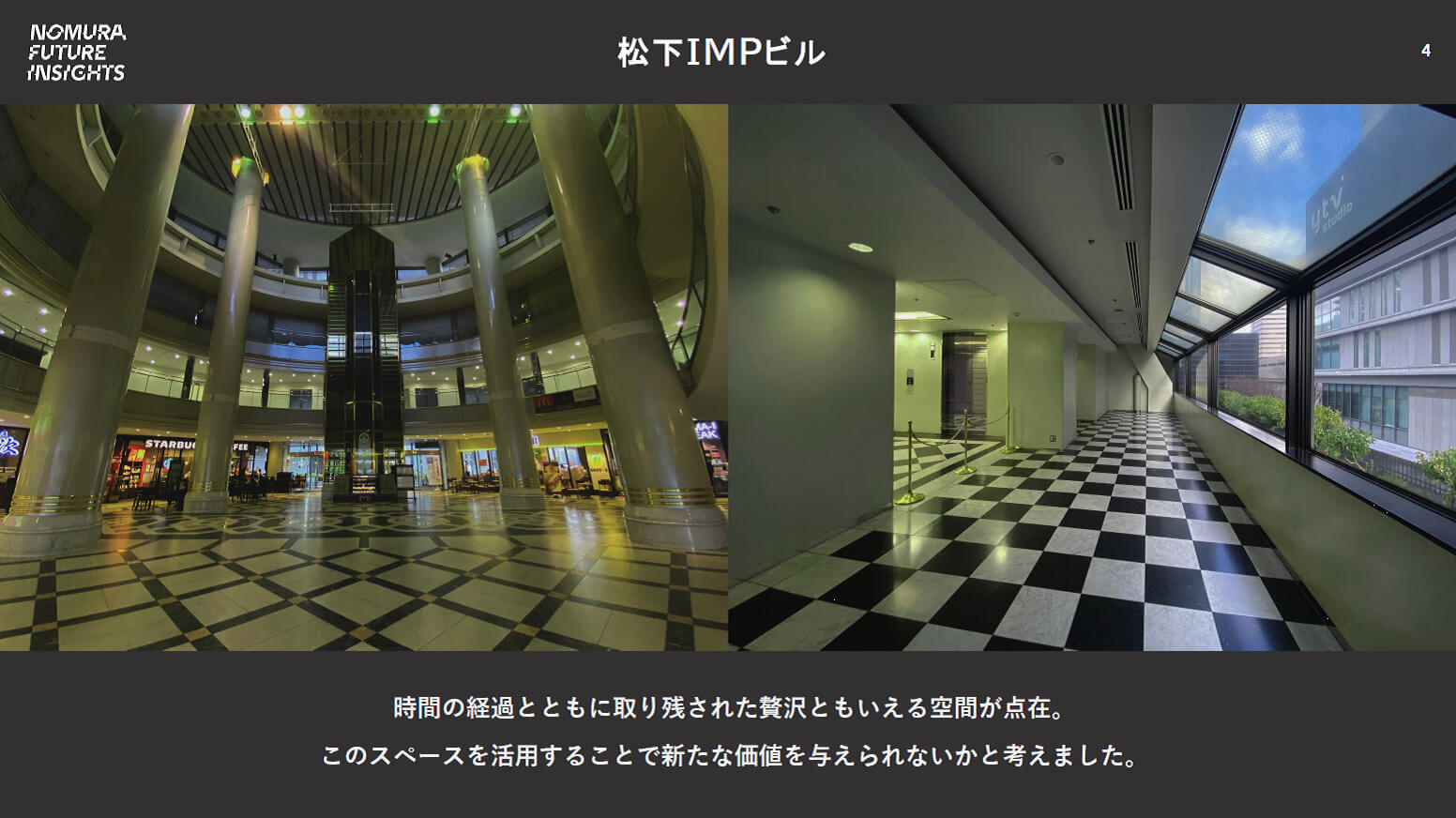
<AFTER>
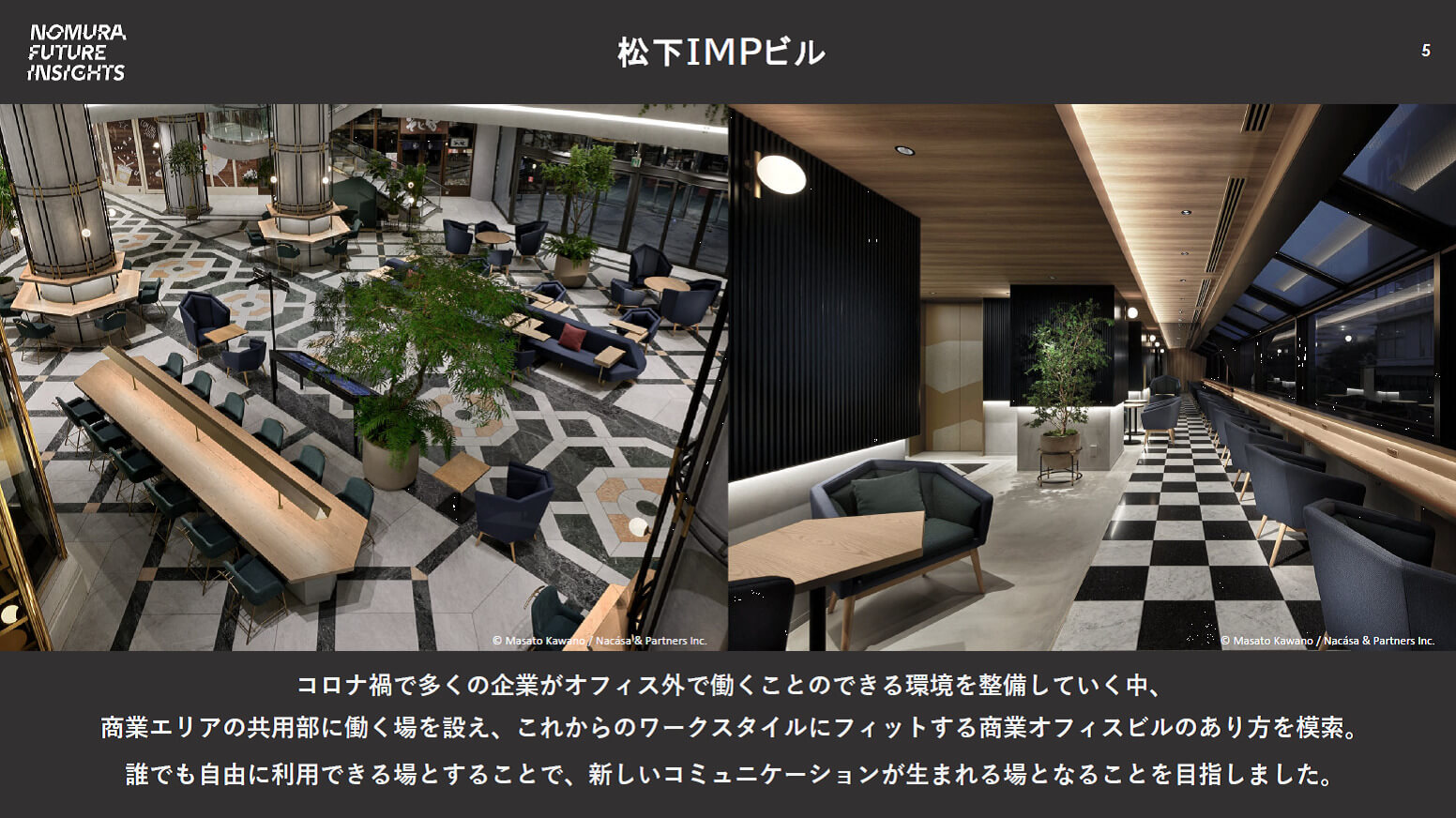
Suzuki
This is an office district, but Osaka Castle Park and Osaka Castle Hall are also nearby, so the movement of people is different on weekdays and holidays. Were you aware of these characteristics?
Watanabe
Tourists from overseas and other regions can also use it as a rest area. This may lead to new forms of communication between locals and office workers. To summarise what the professor said in the seminar earlier, the design harmonises with the present and future by making use of expensive materials and distinctive designs, which I believe has increased physical value, and by creating a workspace, people gather here. I believe this has increased economic value.
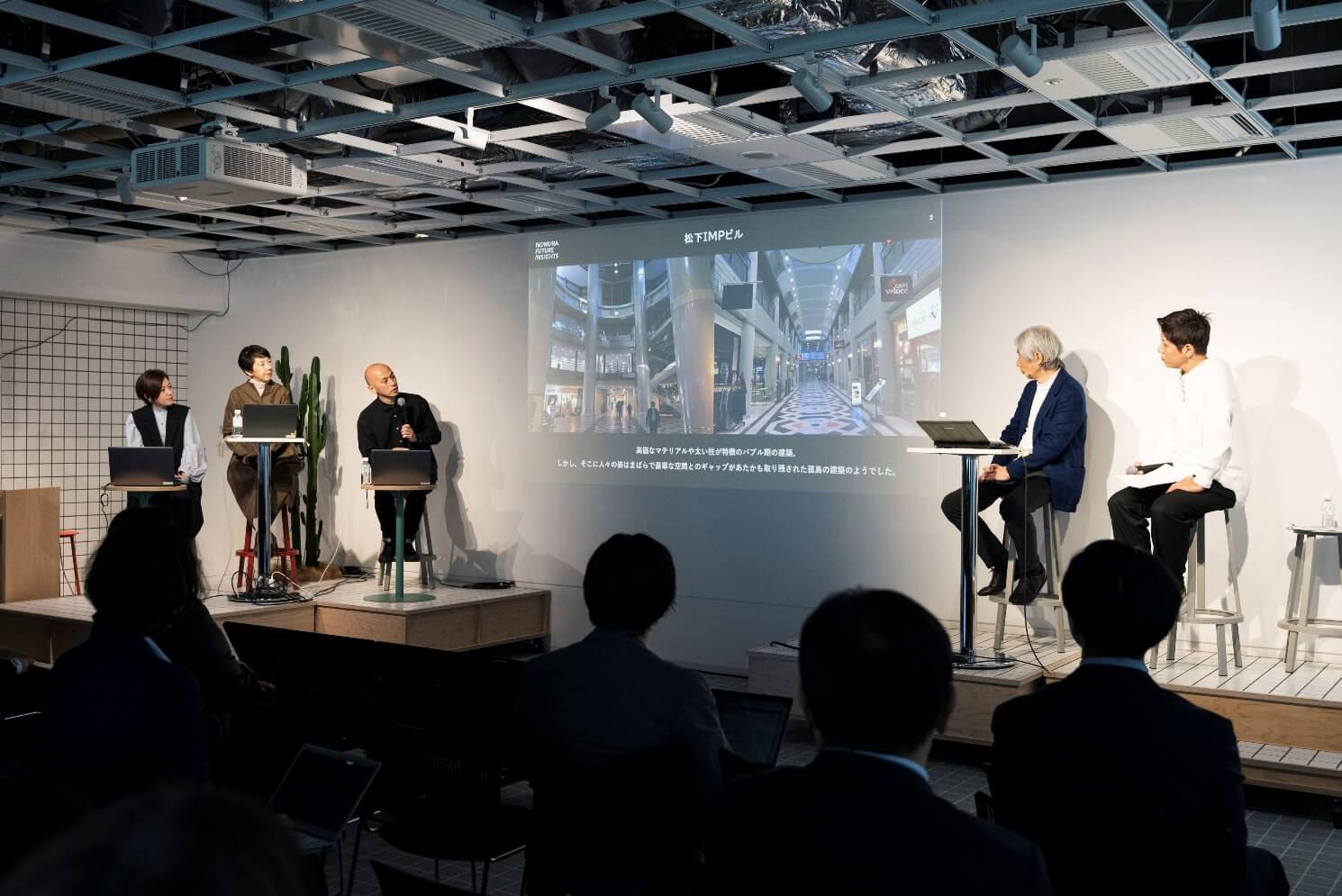 The talk seminar venue
Baba
How will it be after it opens?
Watanabe
As expected, many people gathered in the workspace, working and eating, making it lively. I think we will be doing more of this kind of effective renewal work while adding new value in the future. Rather than repainting the legacy of the past to make it new, we will use the characteristics of the past while harmonizing the present and future. I think that this kind of value-adding will be required from now on.
Hashimoto:
I thought it was a wonderful example of a project that achieved both physical and economic value. It would be even better if they could collect data on the "effect of liveliness" before and after the renovation. If they could show the data, I think it would really resonate with the building owner, and it could also be used in future value-adding projects.
Fujita
From your perspective, are there a lot of buildings in Japan that have potential but are demolished?
Hashimoto:
Yes. When it comes to redecorating, the common idea is to strip the interior down to a bare bones and redo everything. However, since we spent so much money to create it, I sometimes wonder if that's really the right thing to do. But it's also not good to be so focused on keeping things that it gets in the way of the design. It's important to be careful about that.

Fujita
Next, Mr. Suzuki and Mr. Baba, please.
NOMURA Co., Ltd., Ltd. Value-up Case Study 2: RiverCity21 Shinkawa
Suzuki
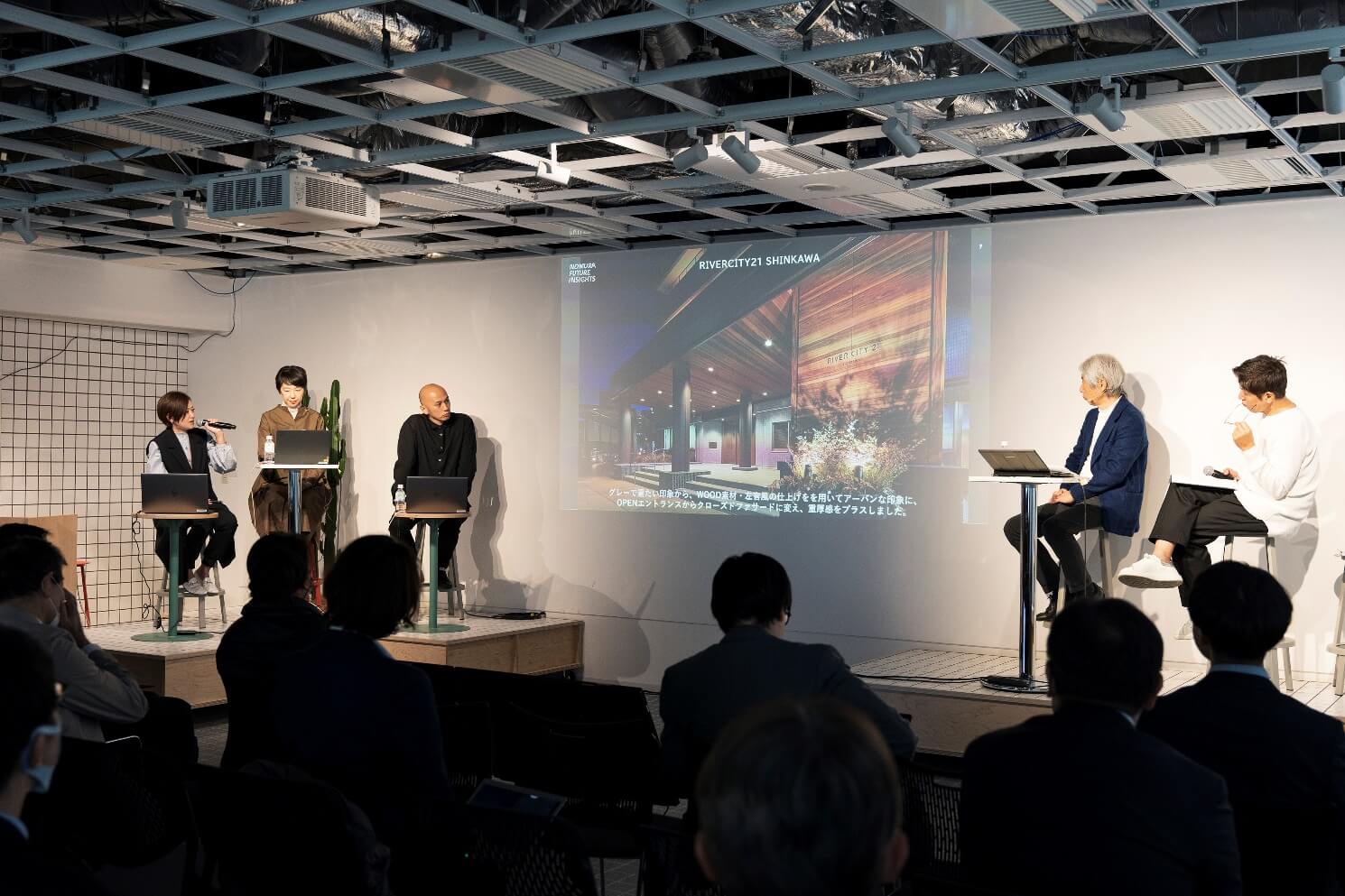
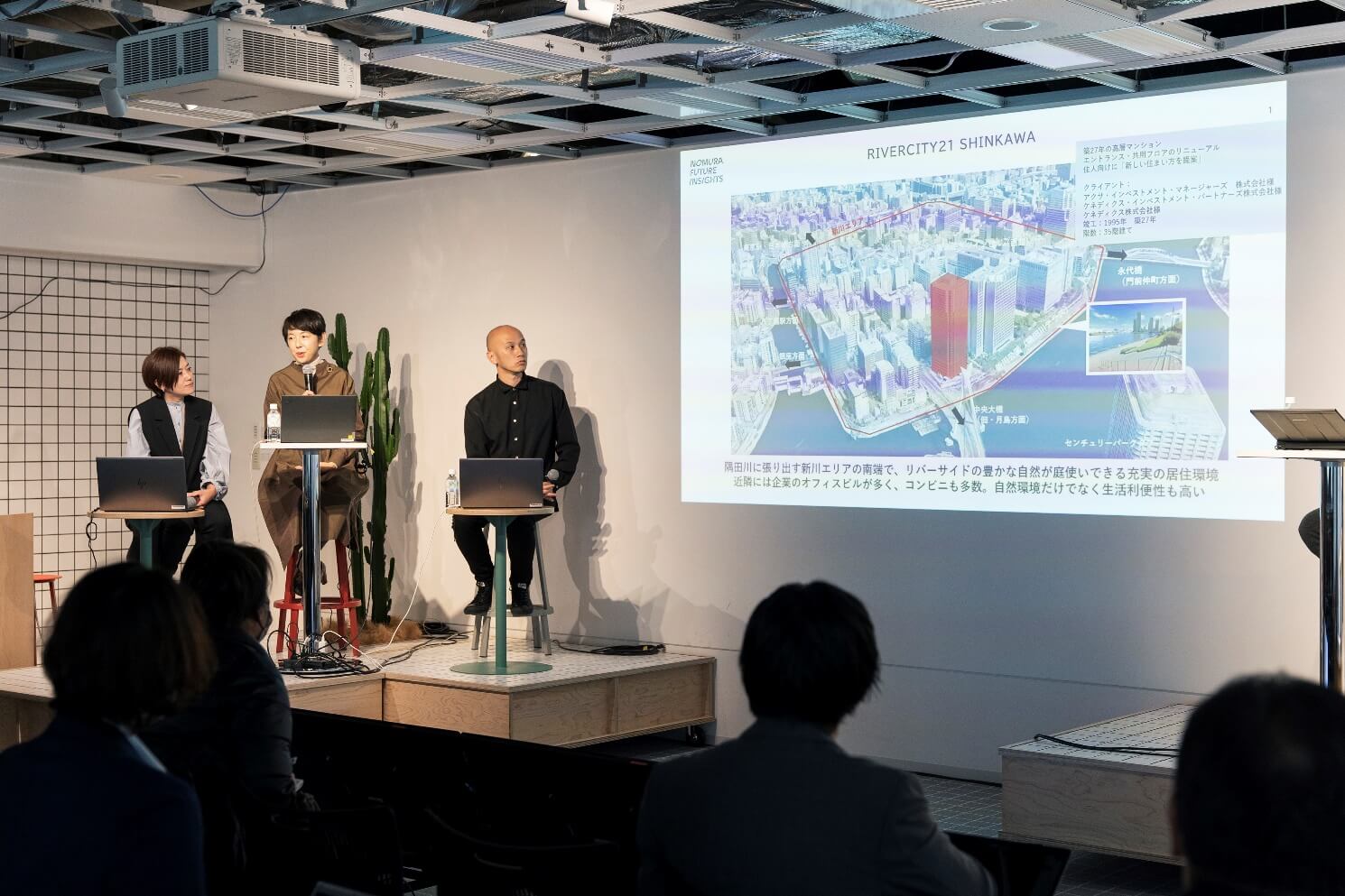
There is a rental tower residence called "RiverCity21 Shinkawa" in Chuo Ward. This time, we helped refine the common areas when the owner changed. We thoroughly considered "what kind of life do people who work in the city lead, and what kind of life do they want to lead?" and established a persona. We also incorporated the perspective of the SDGs. The leasing concept was set as "Life-size Retreat, Just the Right Choice," and this was the design strategy.
 The talk seminar venue
Baba
First of all, the entrance to this building was dark, and the blue tiles gave it a cold impression, but the building was renovated while taking advantage of its good structure and round pillars, etc. Wood materials and plaster-like finishes were used to give it an urban feel.
Watanabe
The impression has changed completely.
<BEFORE>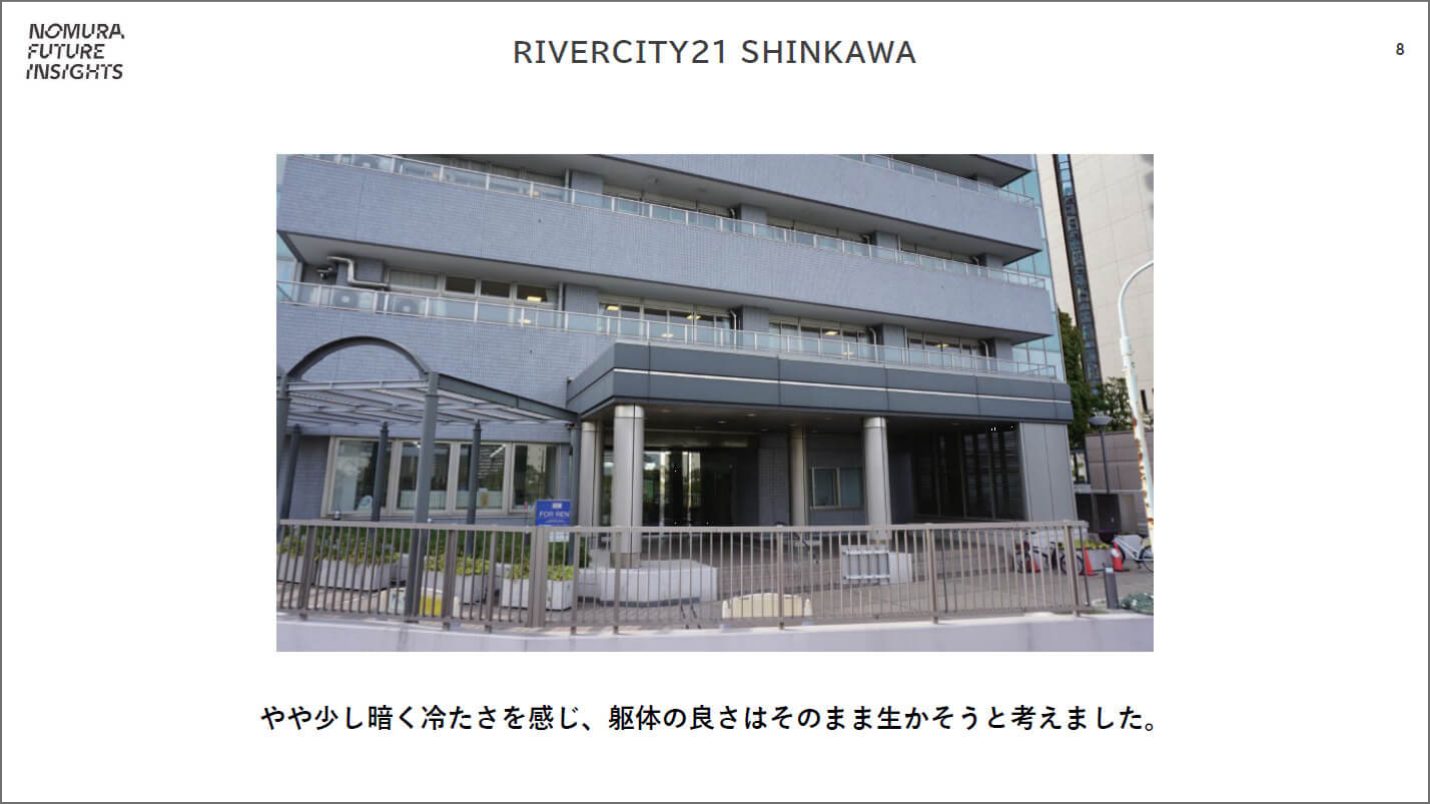
<AFTER>
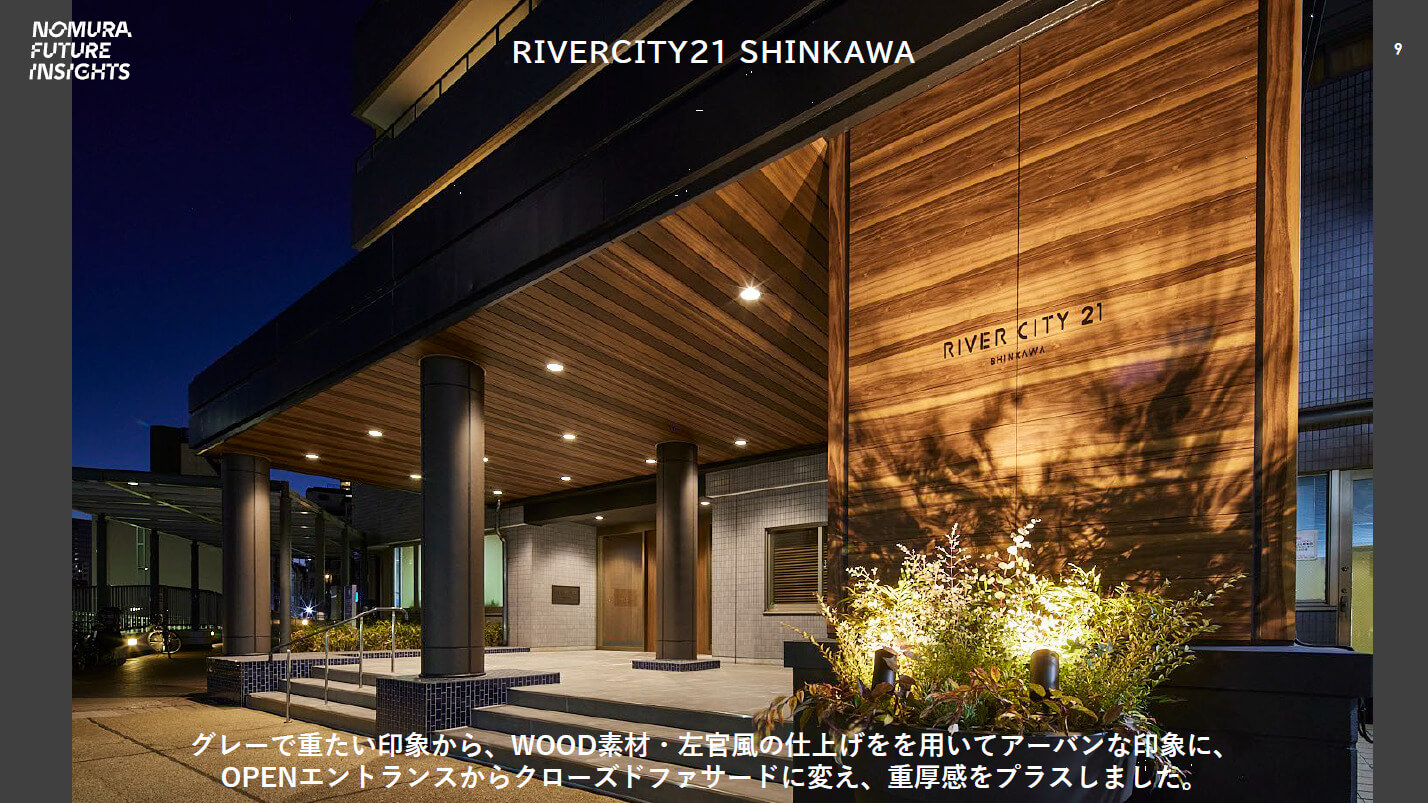
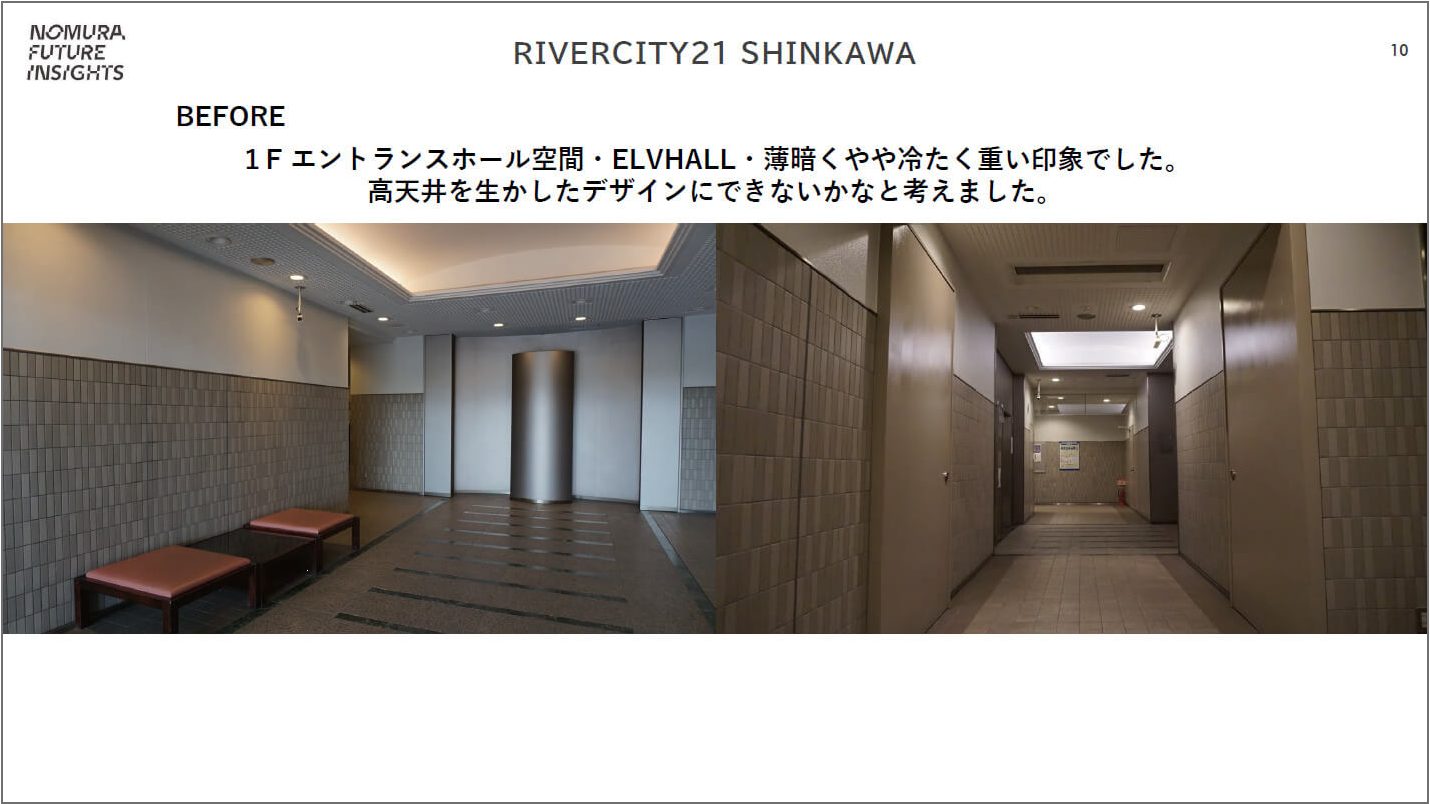
Baba
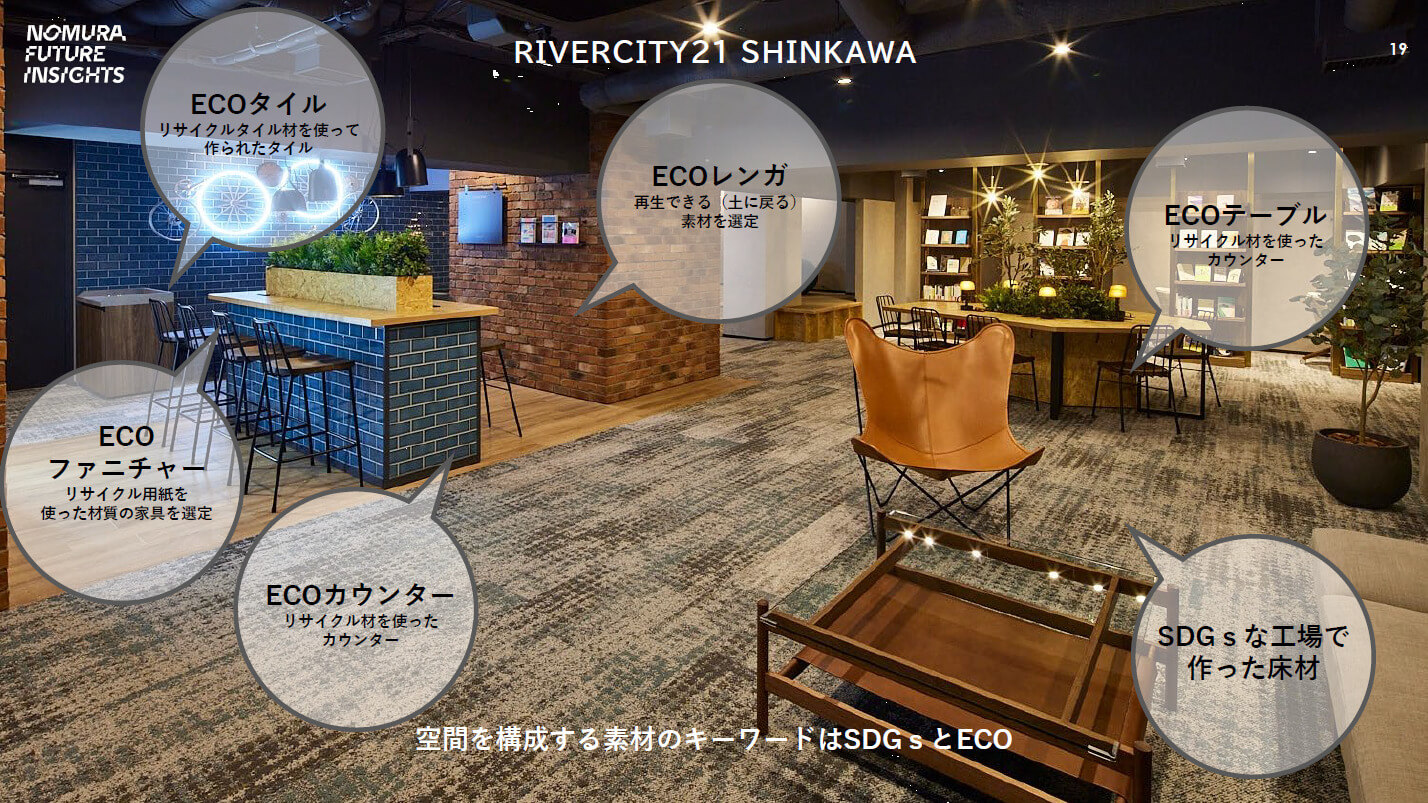
But in fact, the grey tiles on the walls are still in place. The elevator hall also had a cold impression, but we wanted to make the most of the high ceiling, so we added a new design with lines on the floor and walls, and created a space made of 100% eco-materials. The value-add this time is to achieve the SDGs, and more than 80% of the surface materials are made of eco-materials.
<BEFORE>
<AFTER>
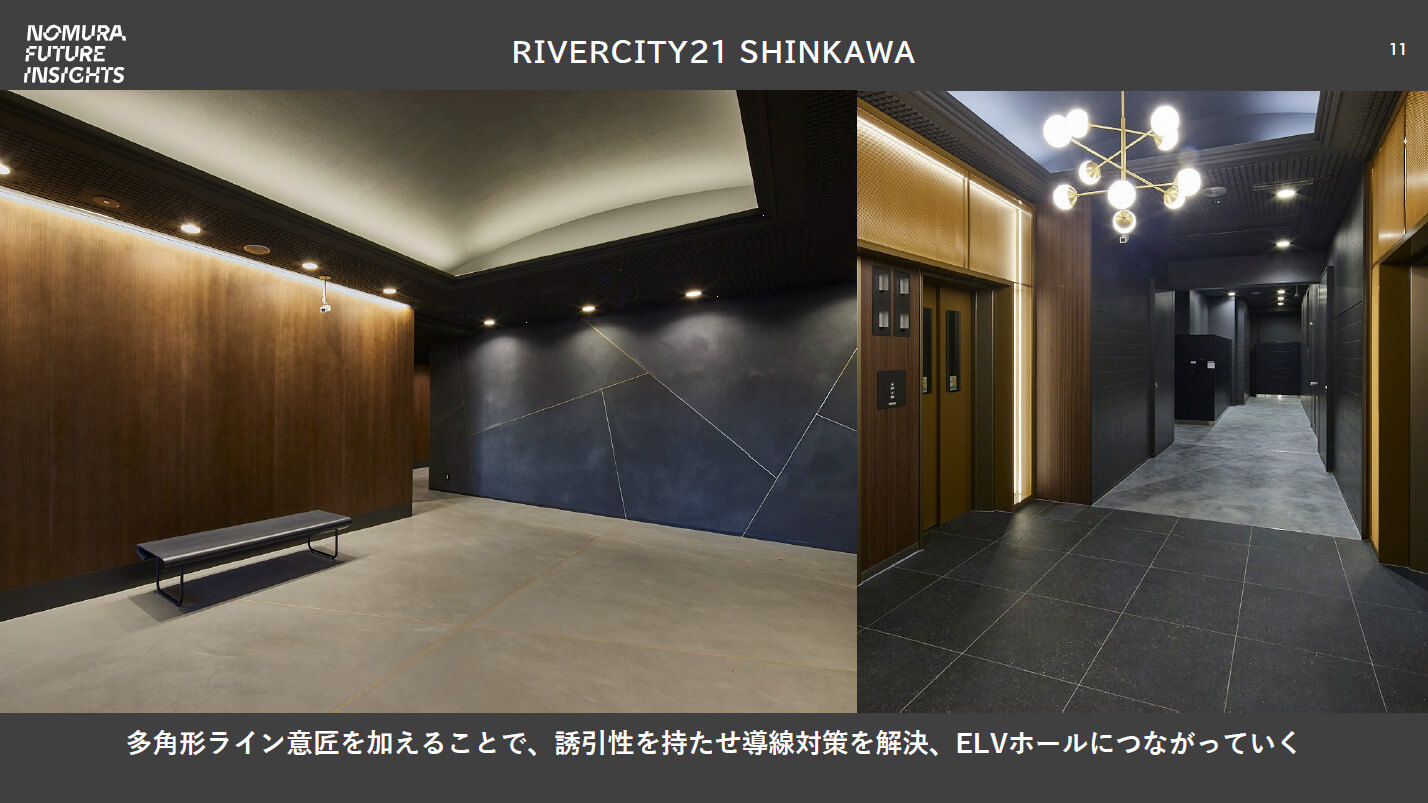
Suzuki
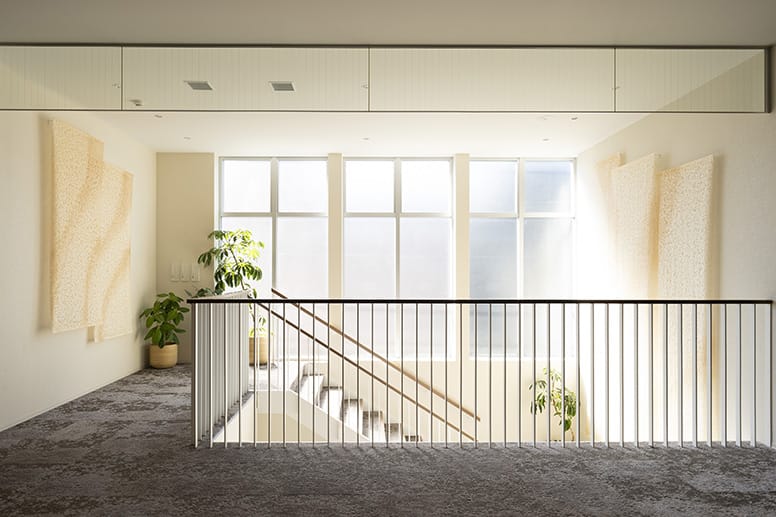
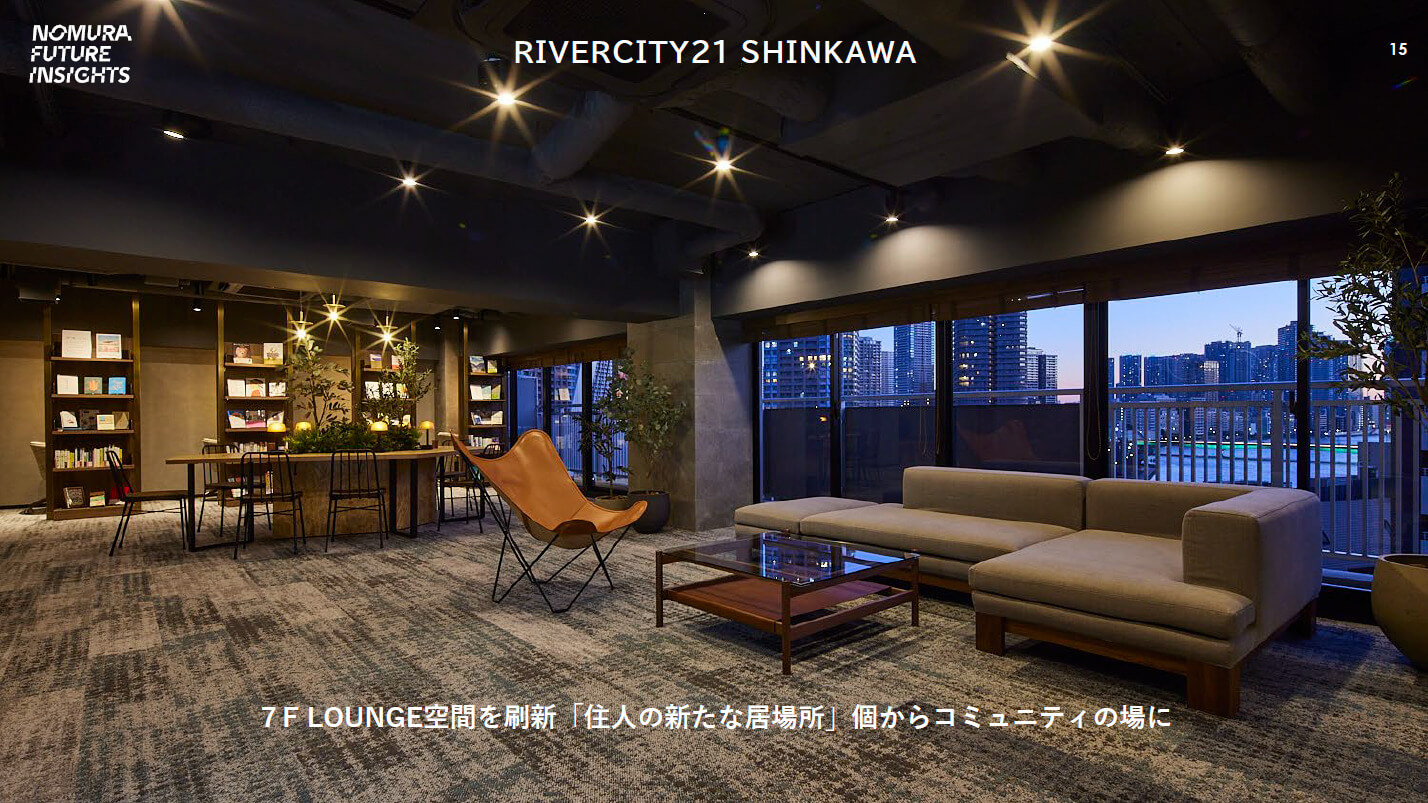
In addition, the shared space on the seventh floor, which had been largely unused for a long time and where residents were rarely seen, was significantly refined and turned into a new lounge space. Based on the concept of "creating a second living space that will make this an apartment that people will choose," it was revamped to create a new place for residents and a place for the community. Due to changes in working styles caused by the COVID-19 pandemic, the space is being used more than originally planned, and it appears to be being used in a variety of ways.
<BEFORE>
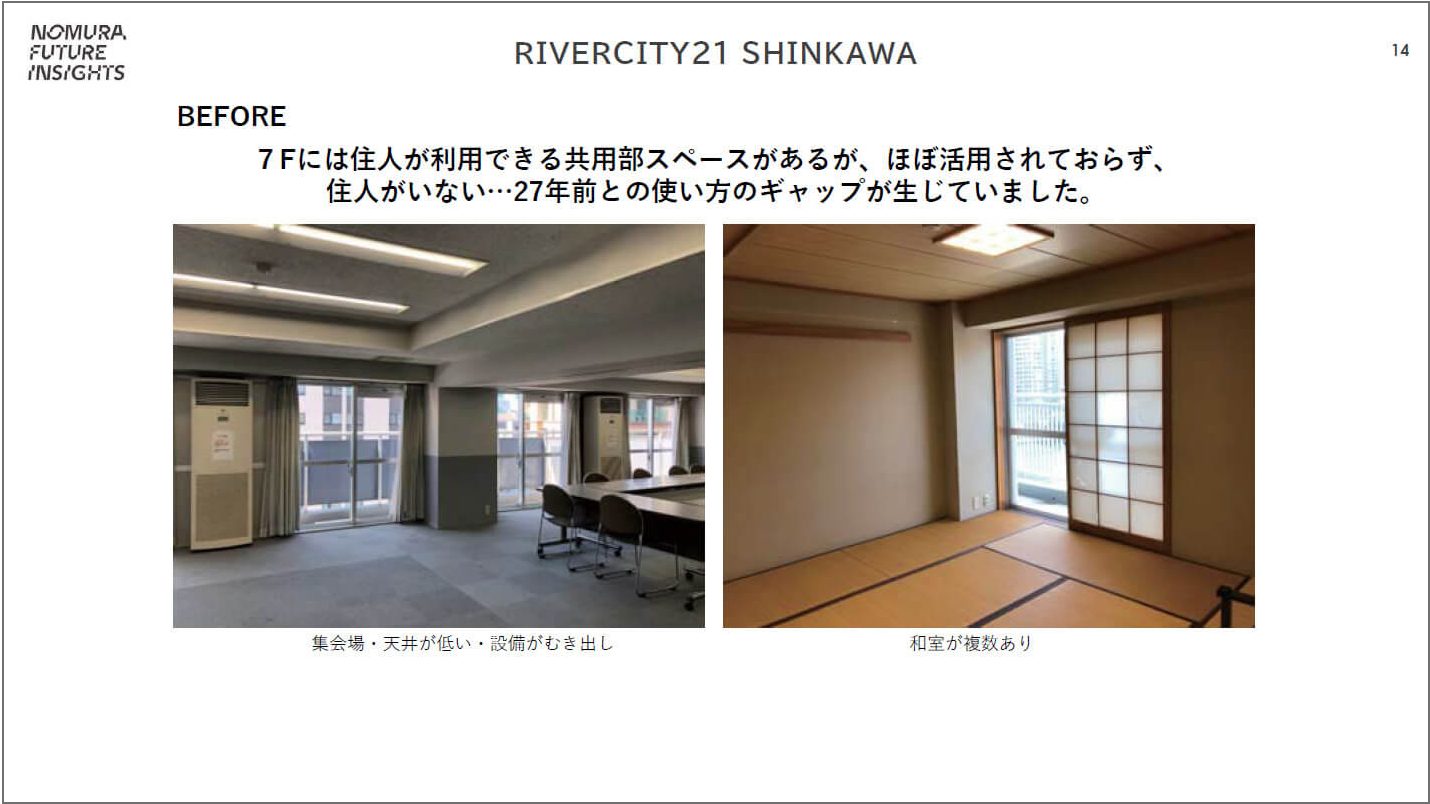
<AFTER>
Hashimoto:
This is another example that clearly shows the planning and design capabilities of NOMURA Co., Ltd. The economic and social value is improved because users are happy to use it and their needs are fully satisfied. Eco-materials are used, and environmental value is also taken into consideration. The good thing about this is that they did sufficient marketing from the beginning and made the concept clear. This is what we call the use of data science. What is the basis for the design or concept? This is a very important part when refining. The value that extends from that is the eco-materials and user satisfaction. Especially the lounge on the 7th floor. If it had been bustling for 20 years, there would be no need to make any changes. But once it stops being bustling, the value of the space is lost. And now it has been restored like this. This is a very good example.

The idea of "environmentally conscious architecture" is a must overseas
Kitai
Speaking of eco-materials, the idea of environmental value has become standard overseas, hasn't it?
Hashimoto:
The idea of green building has been popular overseas for the past 5 to 6 years. Environmentally friendly architecture is almost a must. Environmental assessment standards have been established, and they are also evaluated in the value of real estate. In Japan, scrap-and-build construction is repeated, but I think that overseas ideas will soon become the norm. NOMURA Co., Ltd. 's efforts to prioritize the selection of such eco-materials are wonderful.

Baba
In this case, too, it was quite difficult to increase the usage rate of eco-materials to 83%. Just stocking eco-materials increases costs, but we have a budget, so we select them while considering the balance between investment and effect. However, when working with import brands, anything other than 100% is unthinkable. We feel that this is becoming the norm. We believe that we must have materials that can be left in a positive form for the future as a weapon in the future.
Suzuki
After listening to your talk today, I understand that there are several types of value. Nomura focuses on designing experiences, not buildings, and aims to create spaces that can accommodate people's diverse values. The goal is not just to renovate buildings and sell them at a high price, but to continue to add long-term value to stock from various perspectives, which will result in a high price. I hope that this mindset will take root in Japan soon. People who invest for the economy and people who invest for the earth. Even if it's the same investment, the content of the value-add is different.
Hashimoto:
In the case of architecture, the relationship between useful life and period of use must be considered. Even if the cost of the building structure in the case of initial investment is only one-third of the total, the physical useful life of the structure currently lasts for over 100 years, so it is cheap when calculated on an annual basis. On the other hand, the remaining two-thirds of the cost of finishing and equipment is fully amortized over about 20 years. Therefore, it is misguided to hesitate to pay the cost of the building structure, which is the foundation of the architectural space, and I would like to see more awareness that the value of a building can be increased by additional investment and value-adding to the internal space during the useful life of the structure. The idea of depreciation of useful life overseas is that the statutory useful life is reset when there is a change of ownership. If Japan were to adopt such thinking, the valuation of building stocks would change dramatically...
Kitai
In Japan, changing ownership has a negative image, so that may also be a factor.

Environmentally conscious design appeals to people's emotions
Fujita
On a different note, the recent buildings that have begun to be constructed in accordance with overseas CO2 emission reduction regulations don't really appeal to me emotionally. Of course, I can understand that they are wonderful in the sense that they have a low environmental impact.
Watanabe
What does that mean?
Fujita
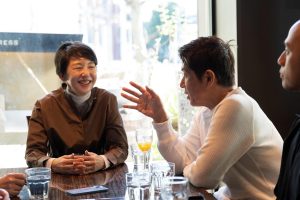
In Japan, it is said that there are 108 earthly desires. Some people around the world say that there are 70 human wants. In other words, I wonder how much of the topic of environmental impact is a human want. Building with environmental issues in mind is, of course, wonderful and necessary. However, I am a little worried about the current trend of buildings that look simple and frugal. Before long, some people may start to rebel, and new artistic movements like Art Nouveau may begin.
Suzuki
There may be a misconception today that design must be stoic in order to demonstrate a reduction in environmental impact. I think that if design and planning began to show a little more romance and were well combined with the theme of environmental impact, it could become a new culture.
Fujita
That's right. The law "reduce environmental impact" has been enacted, and right now we are in the stage of doing everything we can to comply with it. I wonder if that is why we are unable to express emotions. But as time goes on and it becomes easier to clear the standards, I think we will be able to express romance and emotion.
What direction should NOMURA Co., Ltd. aim for from now on?
Fujita
Japan is also aging and the population is decreasing. This means that we must also think about overseas in the future. I think it is no good if we keep this in mind and learn about the current situation overseas. At the same time, I think we need to think about how Japan can become wealthy. This is not just an issue for NOMURA Co., Ltd., Ltd., but an issue for the entire country.
Suzuki
One of the reasons Japan has become poor may be because of the scrap-and-build policy, in other words, because we have been treating buildings as disposable.
Hashimoto:
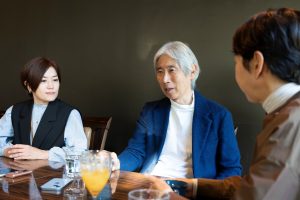
That's right. Even though buildings can be used for 100 years, Japanese people only sell detached houses after 20 years for the land price. From the point of view of foreigners, they think, "This old building can still be used for 80 years, but they're selling it to us for just the land price. What a nice guy." We need to do something about this quickly. Look at the streets of Yokohama. The Red Brick Warehouse and Hotel New Grand are still standing strong despite being around 100 years old. Those classic buildings are adding value to the city of Yokohama.
Fujita
What is needed is a spatial design that adds economic value and extends its lifespan.
Suzuki
Japan also needs to seriously consider the long-term value of buildings and do something about the current situation where valuable buildings continue to be sold to foreign investors.
Fujita
Really... To digress a little, isn't there a Japanese mentality that talking about money is vulgar?
Baba
Ah, yes there is.
Watanabe
But looking at the current situation in Japan, I don't think it's the time to be saying such things anymore. The SDGs now include the issue of "talking about money from elementary school," and I think it's really important to educate people about money from a young age. And also about "landscape" and "building value." Of course, this is not within Nomura's scope, but it's something I feel keenly right now.

Fujita
That's true. Economic and financial education is important to rebuild Japan.
Suzuki
I believe it will be difficult to move from an era of scrap-and-build to an era of building stock, but what should we at NOMURA Co., Ltd. Co., Ltd. do from now on?
Hashimoto:
I'm sure that the people who attended the seminar felt strongly that the value of space is increasing after seeing NOMURA Co., Ltd. 's track record. The purpose of a building is not to build it, but to use it. That is something that must be carefully considered. "To use" requires additional investment. If we are to make additional investments, it will be in maintaining the space and facilities. This means that NOMURA Co., Ltd., a group of creators specializing in space, will have a great meaning in the future. What investors want is design, and the corresponding effects and costs. In the future, total production that includes all of these, in other words, a general contractor-like approach that includes construction, will be required. I think that NOMURA Co., Ltd. will be required to take on a super general contractor-like position specializing in interior design, interior decoration, and space in the future.
Suzuki
Although the term hasn't been coined yet, I think it could be a design general contractor, a super general contractor with design as its starting point. The professor also mentioned "quantity surveyors" who manage costs and projects, and it looks like our role will expand.
Fujita
I see, thank you very much. We will do our best so that everyone can evaluate us highly. Thank you for your valuable talk today.
Text: Shoko Minamoto
Photo: Tomo Kawakami
Like this article?
- editor
-

-
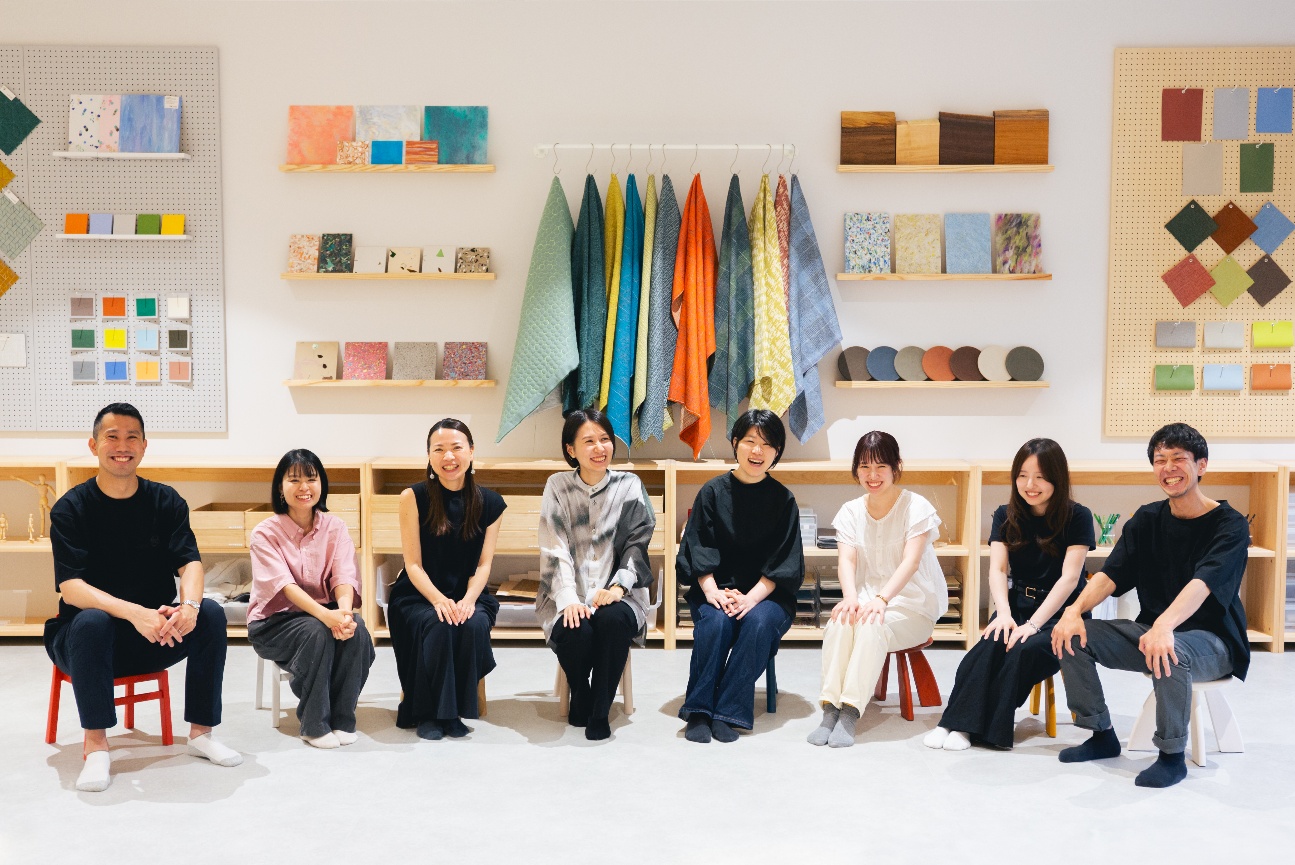
A team that pursues “space and experience”
Cutting out the possibilities of "space and experience" from a professional's point of view