How to create a space that realizes well-being? - The secret to success in office and communication spaces -
2022/08/24- share
-


- text and edit by
- nomlog editorial department
“Well-being” refers to a state in which a person is in good physical and mental health and is in a state of good health and happiness. In the ever-changing social environment, awareness and importance of health care have increased. Companies are aiming to improve employee satisfaction through work style reforms and health management, while local governments are actively adopting new regional revitalization measures. Although we intuitively recognize the importance of such "well-being", is there any scientific evidence?
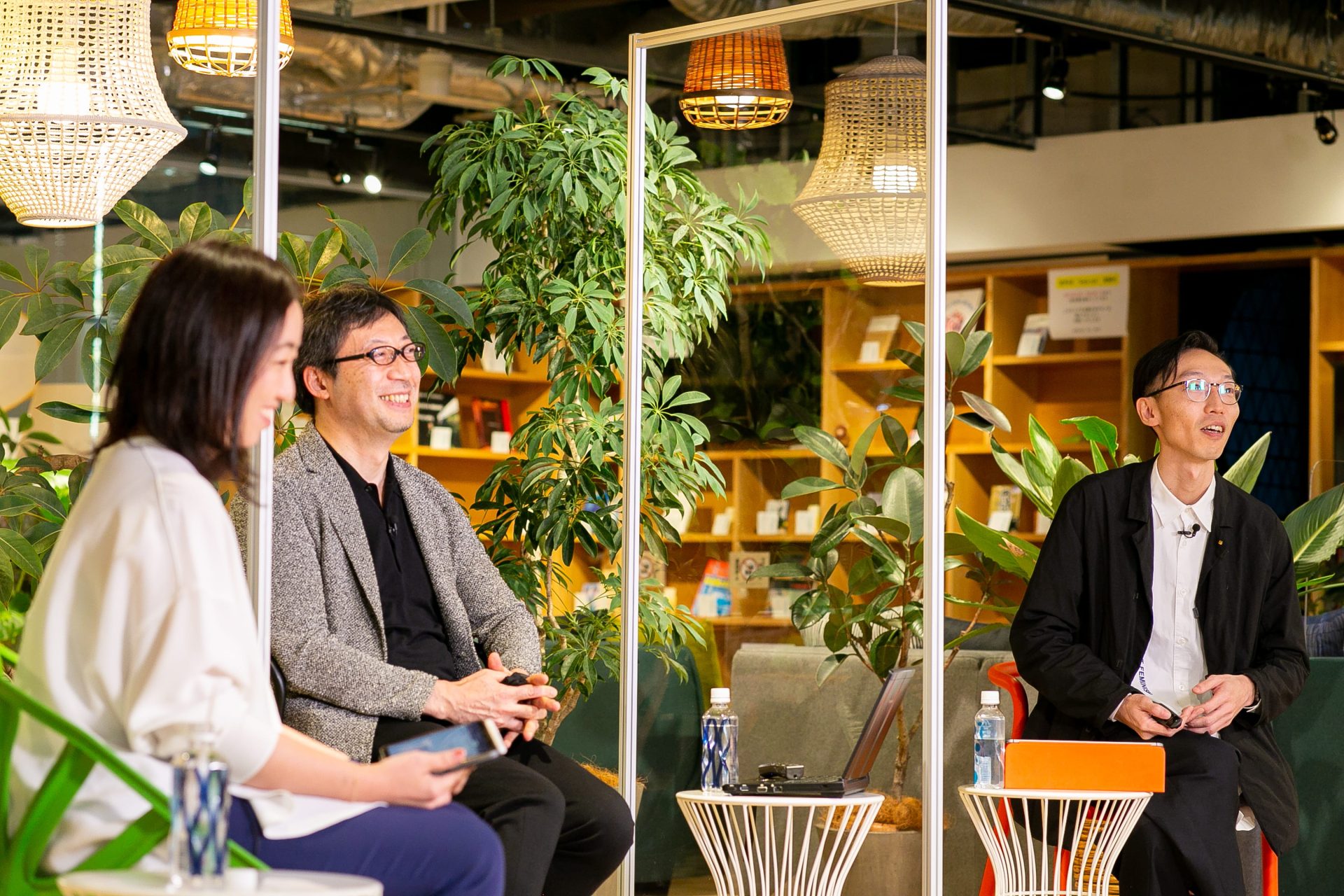
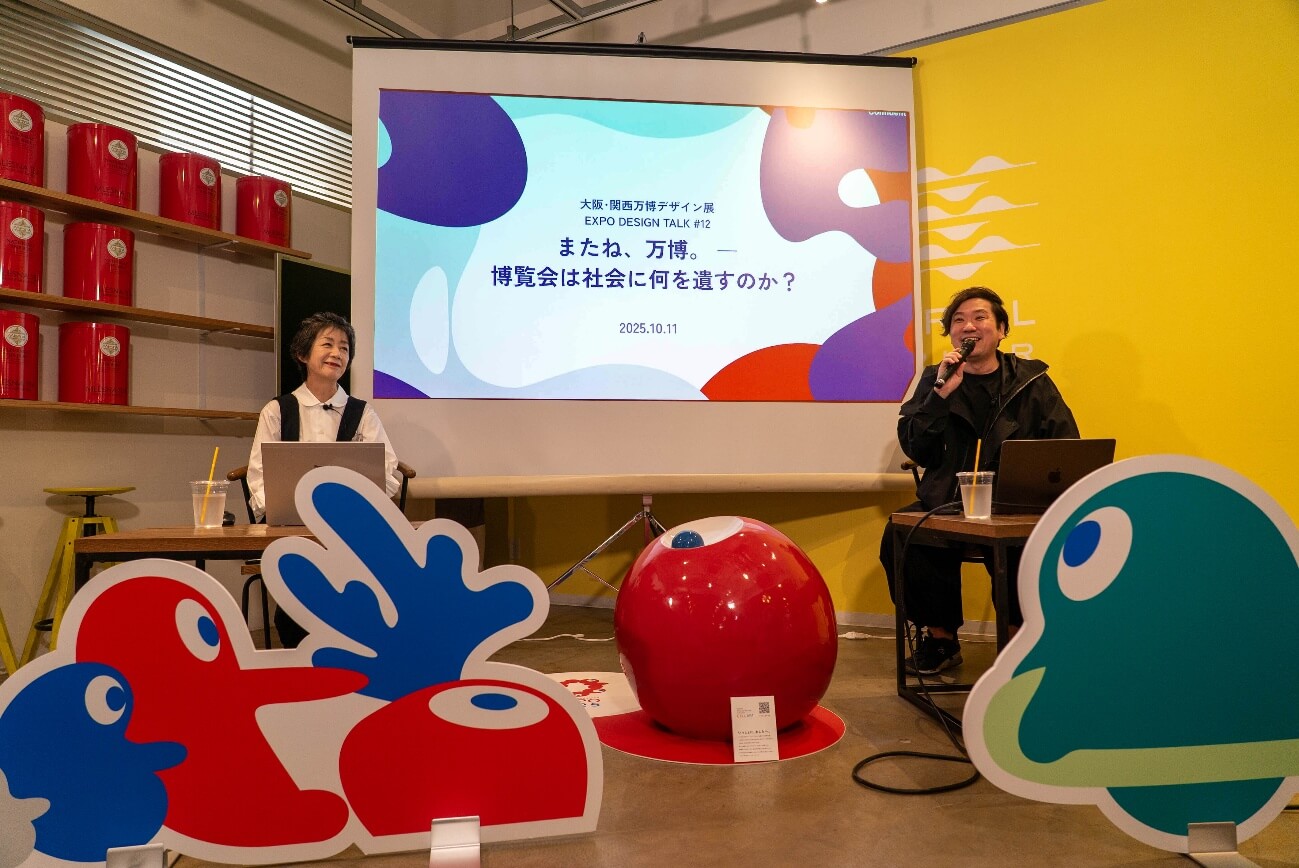
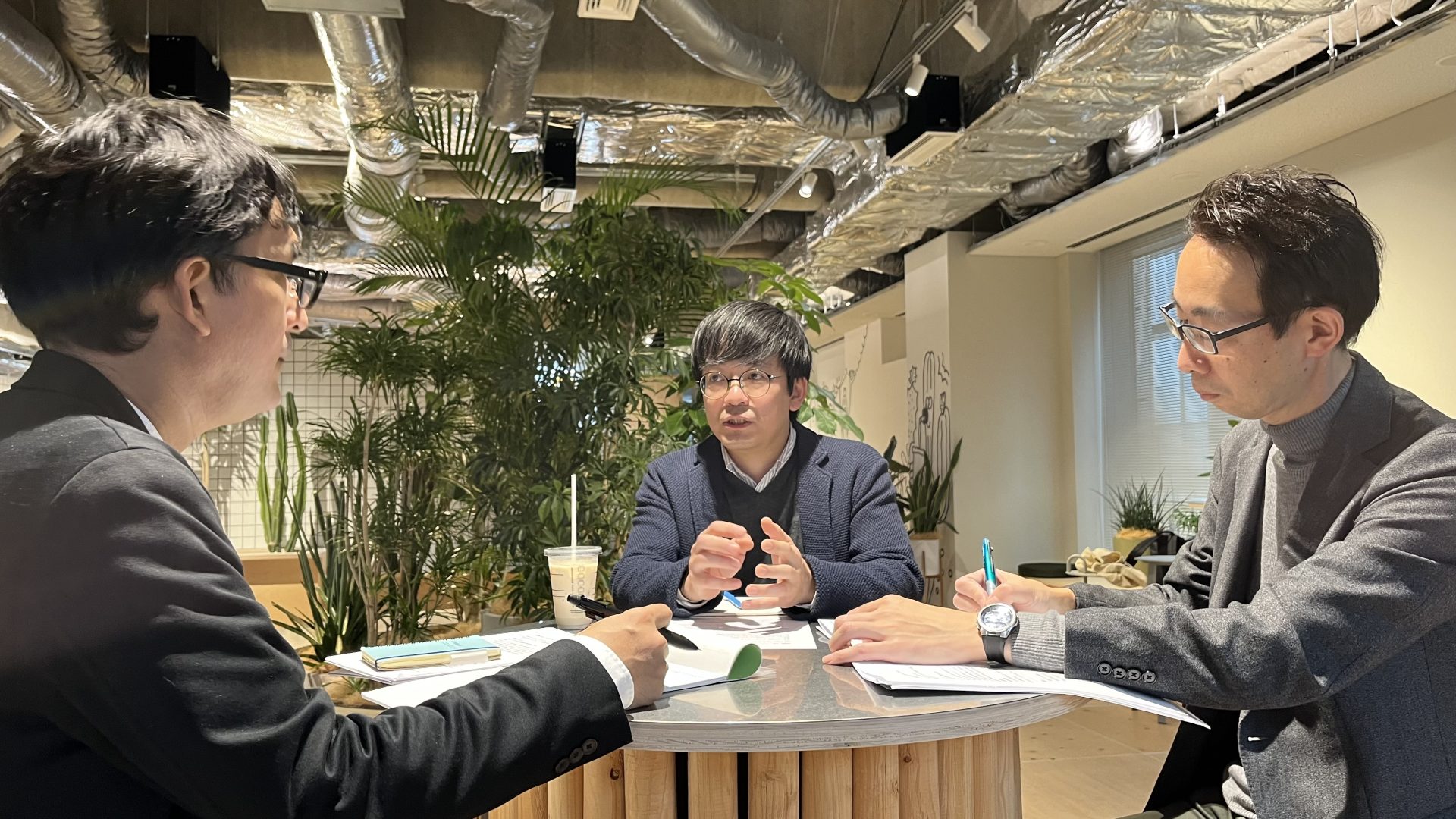
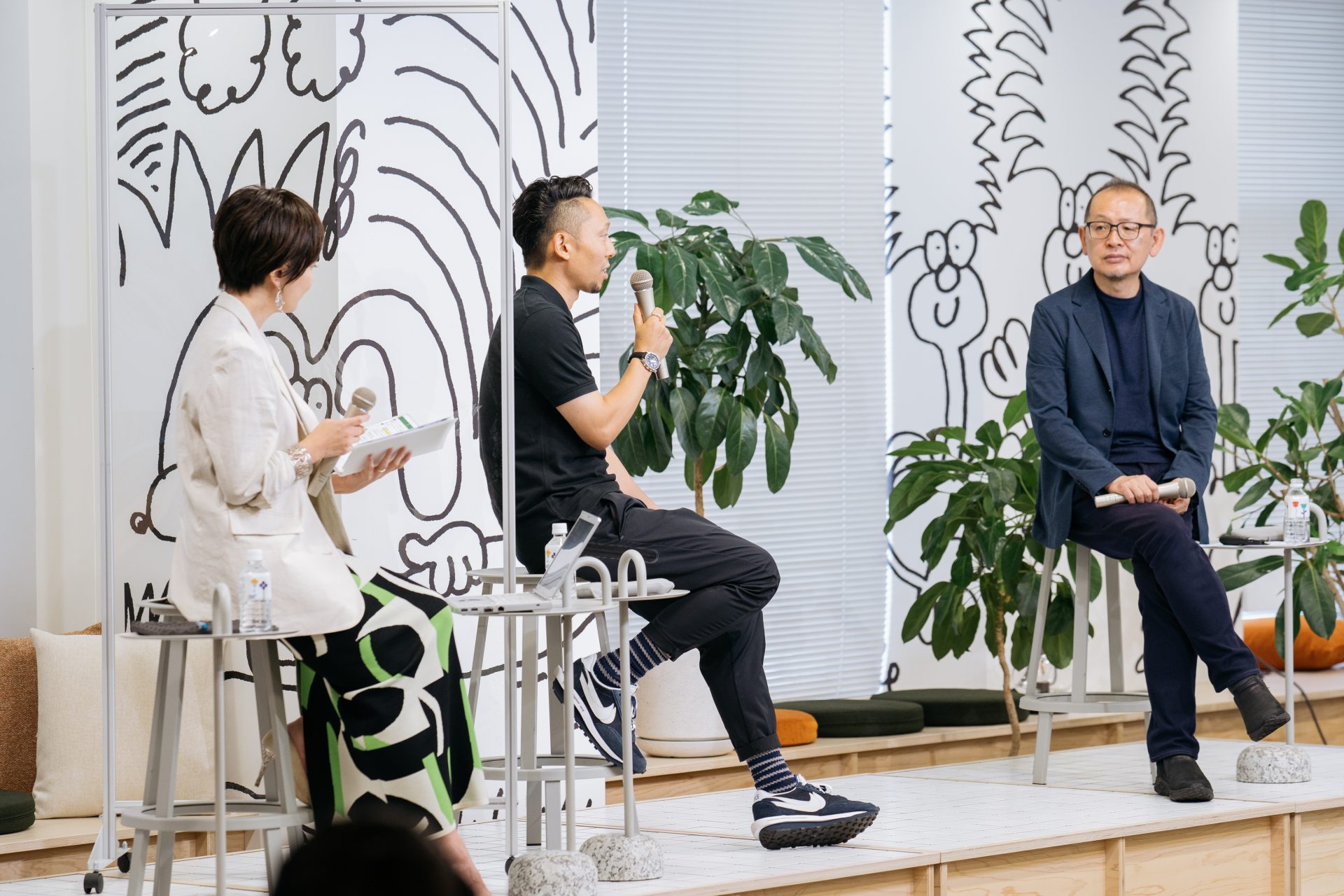
At the seminar held at NOMURA Co., Ltd. on July 20, 2022, Keio University Professor Takashi Maeno, a leading expert in well-being research, took the stage, and from the second half, NOMURA Co., Ltd. planner Ryusuke Nomura. , discussed how to create a space that realizes well-being through the examples of office and community spaces.

Professor Takashi Maeno /Photo right
Graduated from Tokyo Institute of Technology in 1984, completed master's course at the same university in 1986. After working as a visiting researcher at Canon Inc., the University of California, Berkeley, and a visiting professor at Harvard University, he is currently a professor at Keio University Graduate School of System Design and Management. Concurrently serves as director of the Keio University Wellbeing Research Center.
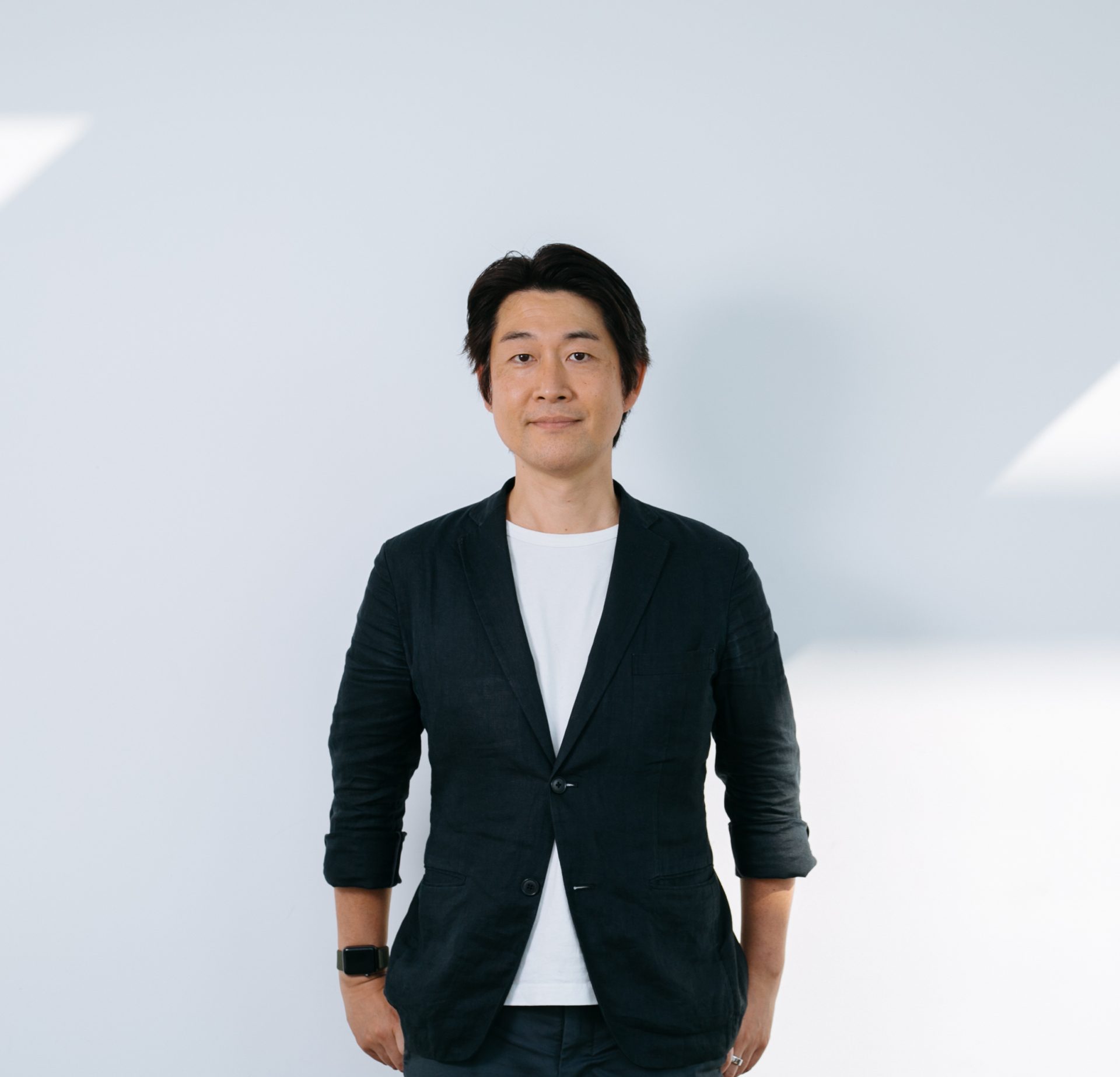
Ryusuke Nomura /photo left
NOMURA Co., Ltd. Planning Center Planner | Creative Director. Engaged in development of commercial facilities, regional revitalization, concept planning of workplace space design, etc. We are working on solving customer problems in various fields, building communication, and focusing on spatializing it.
reference: Serendipity connects the office and the city. The Possibility of Semi-Public Talks with Motoko Tanaka
In the article above, Ryusuke Nomura talks about his efforts with the community and his office. Please take a look.
The “Four Factors of Happiness” Essential for Creating a Well-Being Space

Professor Takashi Maeno has been interested in the human body and mind since researching robots, and is currently expanding his research to happiness studies, co-creation studies, and social system design, and is a leading researcher in well-being research.

Under the theme of "well-being: a place to feel happiness and how to work," Professor Maeno explained what well-being is, how it relates to work styles, and how a happy state of mind is created. Based on the latest research results, he talked about how it relates to the creation of a place.
It seems that the relationship between people's happiness and work performance is being scientifically proven. Professor Maeno explained that well-being includes three states: social well-being, physical well-being, and psychological well-being. , 1 Let's try factor (self-actualization and growth), 2 Thank you factor (connection and gratitude), 3 Somehow factor (positivity and optimism), 4 Let's be true factor (independence and self-esteem). said to be deeply involved.
For more information, pleaseArchived videos of seminarsPlease refer to thehttps://www.nomurakougei.co.jp/service/seminar/0720seminar_archive_entry
"Creating Spaces that Achieve Well-Being" After the Lecture by Professor Maeno at AFTER TALK
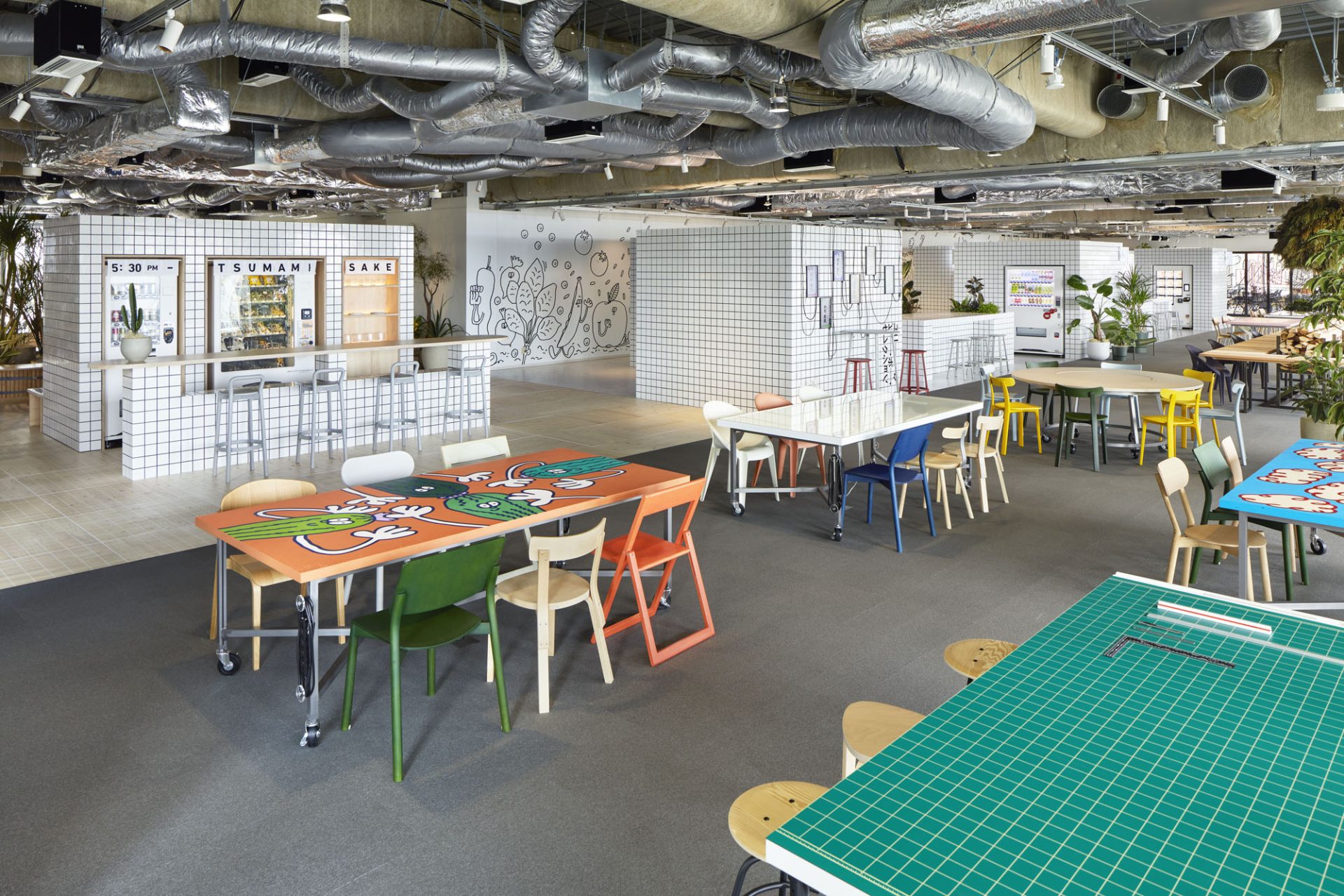
After Professor Maeno's speech, Ryusuke Nomura introduced the background and effects of the development of the company's in-office communication space, in which he participated as a creative director, and gave hints on "creating a space that realizes well-being." We also introduced the communication space “RESET SPACE_2” (hereafter referred to as RE/SP_2), Nomura Egei's in-house communication space, and the creation of a community space that works with the local community and its effects.
After the seminar, nomlog editorial department asked Professor Maeno about his impressions, episodes that could not be introduced, and future efforts.

How I became aware of well-being in creating spaces
The value provided by NOMURA GROUP is to "deliver joy and excitement to our customers", but there is a management philosophy on the premise of that. It fits very well. While reading the management philosophy, I started to think about what kind of space would provide joy and excitement to people, and this is how I became aware of well-being.
In the spaces we create, there are basically the clients, and then the consumers. What kind of space should I create there... This is completely my personal opinion, but I think it's desirable to have a situation where everyone who gathers there smiles. It's the same in corporate showrooms, commercial facilities and cultural facilities. It was very refreshing to associate the state of smiling with well-being, which is a keyword that has been attracting attention recently. *1
*1 NOMURA Co., Ltd. proposes awell-being space as “creating a space that makes you feel healthy and happy both physically and mentally”.
A mechanism for creating smiles in the design of our own office and communication space "RE/SP_2"
In creating spaces, I have a personal theme of creating opportunities for people to act. It's not enough to just have a space, I think it's necessary to sprinkle things that motivate the people who gather in that space to take action.
I usually create such opportunities for my clients, but I wondered how our company's communication space, "RE/SP_2," would get employees to gather here and interact with each other. Hmm... I thought about creating a lot of those touchpoints.
For example, “eating” or “drinking” is a big content that triggers resetting. I think it is very important how to arrange the place to eat and drink. Also, when you buy food or drink from a vending machine, if you intentionally put the cutlery a little further away so that it takes a little longer to get it, you can think of something during that travel time, or accidentally It is important to "create a margin" without making it too convenient.

Waste is never a waste
The concept of "RE/SP_2" is "Unique Park", but the underlying theme is "slacking off". I thought that creating a park-like space in the company that didn't exist before where people could "skip work" would be directly linked to work well-being. It is very important to have a place like a third place that is not where you usually work when you want to change your mind.
At Professor Maeno's seminar, I was very happy to hear that "wastefulness actually increases productivity." Because what we have done intuitively has been backed up by academic evidence. When I say "intuitive", it's actually a feeling I've accumulated over the course of doing various spatial designs, but when someone who has done academic research backs it up, it's definitely true! I was hungry again. Professor Maeno listed several items that represent a state of well-being, and if we can explain them by linking them with our experiences in the space we are creating, we will be able to convey them in an easy-to-understand manner to various people. I think you can and you will understand.
What should a workplace well-being space look like?
If you create a workplace only for productivity, efficiency, and so-called functional aspects, it will become a place for conventional so-called clerical processing. The workplace of the future should be a place where people gather and create something new. We have to think about what kind of space is best for people to gather. It is necessary to create a place that motivates and motivates employees to come to work.
After this pandemic, we are in a world where we don't know what will happen at any time, and what we thought was right until now has changed 180 degrees, so it is necessary for any company to always be creative. "SOUZOU" (imagination) and "SOUZOU" (creation) are both "SOUZOU", but both of these are necessary. I believe that corporate workplaces will become such places.

Data that supports spatial design!
Listening to Professor Maeno's talk, I realized once again that we need to collect data as well as sensory accumulation. Since we have a testing ground like "RE/SP_2", I think it would be great if we could make various efforts. As I mentioned at the seminar, I would like to make more use of scientific data analysis, such as emograf *2, which visualizes and quantifies the smiles of people in a given place, and people flow analysis.
However, I believe that numerical values are only necessary to support spatial design, and that numerical values should not stand alone. After the seminar, when I talked to various people, they knew about "RE/SP_2", but after hearing stories related to well-being at the seminar, the value of this space increased greatly. I heard a voice I realized again that it is important to convey not only photos and videos, but also the activities that take place in this space.
Well-being is a big trend in the coming era. We would like to realize well-being spaces together with our customers, including workplaces and community spaces where employees can be healthy and happy both physically and mentally.
*2 emograf is a prototype (experimental stage) device jointly developed by NOMURA Co., Ltd. NOMLAB and One To Ten Co., Ltd. A camera equipped with a machine learning module can shoot people's facial expressions in real time, analyze them, and quantify the atmosphere of the space. At the seminar, we introduced our upgraded prototype.
(Interview and text: Sho Iwasaki/Photo: Yui Yasuda/Planning: Yukiko Okamura, Satoko Yokota, Ai Ichikawa)
Like this article?
- editor
-

-
A team that pursues “space and experience”
Cutting out the possibilities of "space and experience" from a professional's point of view