

- text and edit by
- Souji Tominaga
Live, work and play in Tokyo
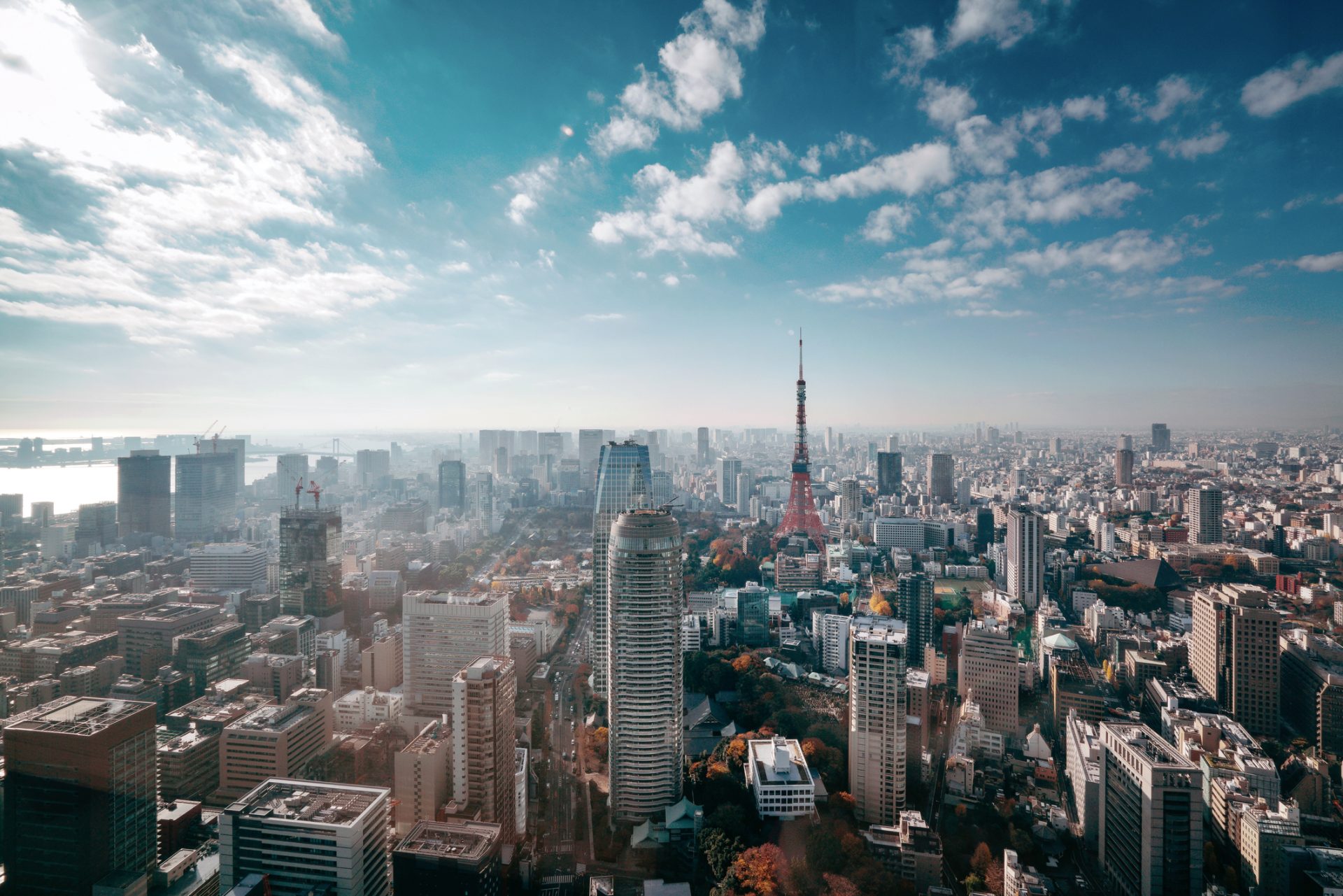
As my life in Tokyo grows longer, I really feel that Tokyo is a mature city that ruins people. This is because you can be satisfied with the action range of the triangle zone that connects the three points of living, working and playing. You may think, "No, there are more various towns and spots in Tokyo," but even if you look back at the author's life log, you can see that the range of activities is unexpectedly narrow. Each time a point such as home or work moves, the triangle zone (action range) is reconfigured. My family moved a lot, so the town I played in changed each time, and it was closer to the town where I lived. Therefore, the triangle zone (range of action) was a right-angled triangle or an acute-angled triangle.

* A triangle zone (area of activity) that connects the three points of living, working, and playing that the author considers
TOKYO's global city power
Tokyo, where excellent human resources and tourists gather from all over the world, will continue to attract people from all over the world with constant topics such as technology, art, fashion, food, and the Olympics. I believe that we will continue to maintain that brand power globally.
World City Comprehensive Power Ranking (From a report published by the Mori Memorial Foundation Urban Strategic Research Institute)
1st place LONDON
2nd placeNEW YORK
3rd place TOKYO
*Out of 48 target cities in the world
Tokyo downtown renaissance
On the other hand, what is attracting attention in a form different from the large-scale redevelopment of the city center is the "Shitamachi area" located on the east side of Tokyo.
After the Meiji Restoration, the samurai of Satsucho Doi established their residences as new rulers in Yamanote, and the old townspeople, that is, Edotsuko, lived in Shitamachi. In the Edo period, the upper towns were for samurai families and the lower towns for townspeople. This difference in residents created the regional ethos, and gave rise to the difference between intellectuals on one side and non-intelligents on the other. People in the downtown area have a strong sense of duty and humanity, and are good-natured and courageous. Yamanote is rationalistic and individualistic .
*Source: “Kanto and Kansai: Two Histories, Two Cultures” Kiyoyuki Higuchi PHP Library
Nihonbashi, Kanda, Asakusa, Honjo, and Fukagawa are typical areas, but in reality, popular downtown areas and spots are more extensive and subdivided.
Here, I would like to take a look back at how the "Shitamachi Renaissance", one of the attractions of Tokyo, came about.

* An area with the image of a downtown area that the author thinks about
The topics of the "Shitamachi area" are easily organized by age.
2000s:
Centered around Nihonbashi, Bakurocho, and Asakusabashi, a movement called CET (Central East Tokyo) has arisen, in which artists and creators utilize vacant properties to create a "new town." The Yanaka, Nezu, and Sendagi areas were nicknamed "Yanesen" as a spot for outings dotted with old-fashioned townscapes (alleys) and new Japanese grocery stores, and magazines and other media began featuring them.
2010s:
Not only the Asakusa area as a tourist spot, but also the B side of the city (Oku Asakusa and Oku Asakusa), such as "Oku Asakusa" and "Ura Asakusa" where new cafes and galleries are lined up. As a result, the image of a fashionable spot that young people visit on weekends has spread.
year 2012:
When TOKYO SKYTREE TOWN opened in Sumida Ward, people from all over the world flocked to TOKYO SKYTREE, and the downtown culture of the surrounding area, such as Hanamachi Mukaishima, where traditional Japanese restaurants remain, and Kyojima, where row houses remain, became a spotlight.
2015-:
Blue bottle coffee in Kiyosumi Shirakawa and Dandelion Chocolate in Kuramae have made the downtown area the world's first choice for opening Japan's first stores. In particular, the Kuramae area has been described as ``Tokyo's Brooklyn'', and not only are there cafes and restaurants that are particular about it, but there are also hotels for backpackers. increase.
Future TOKYO is a super-mature city where you can enjoy while on a circuit!?
The central Tokyo area will continue to connect with the world in real time and continue to transmit its "value as a global city." In the downtown area, the individuality and style of the city have diversified, and the unique "downtown culture" continues to spread. The futuristic "global city TOKYO", which combines both of these attractions, is an image of constantly transforming while moving through the triangle zone (range of action) mentioned at the beginning. Imagining that it will become a super-mature city where people can enjoy a circuit-style urban life while on the move, I can't help but look forward to future urban development and community development.
Due to the influence of the new coronavirus, people's lifestyles and behaviors will continue to change, and it will be necessary to update various aspects of urban development in the future.
Like this article?
- editor
-
-
activation planner
Honne and tatemae