The future of traditional crafts and what spatial design can do.
2024/08/16- share
-


- text and edit by
- Hikaru Hatae

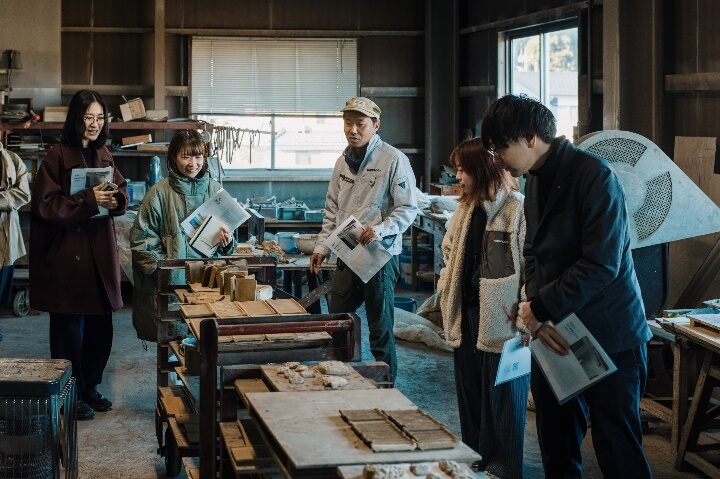
In December 2023, NOMURA Co., Ltd. and Echizen City Tourism Association (Inc.) collaborated to plan and hold a "Handicraft Trip*" with the aim of allowing architects and designers with a strong connection to handicrafts to learn more about the crafts of Echizen City, Fukui Prefecture. Planners and designers from NOMURA Co., Ltd. actually visited Echizen City and spent two days and one night touring various traditional craft studios such as Japanese paper, lacquer, and roof tiles, deepening their understanding of "materials" through dialogue with the craftsmen.
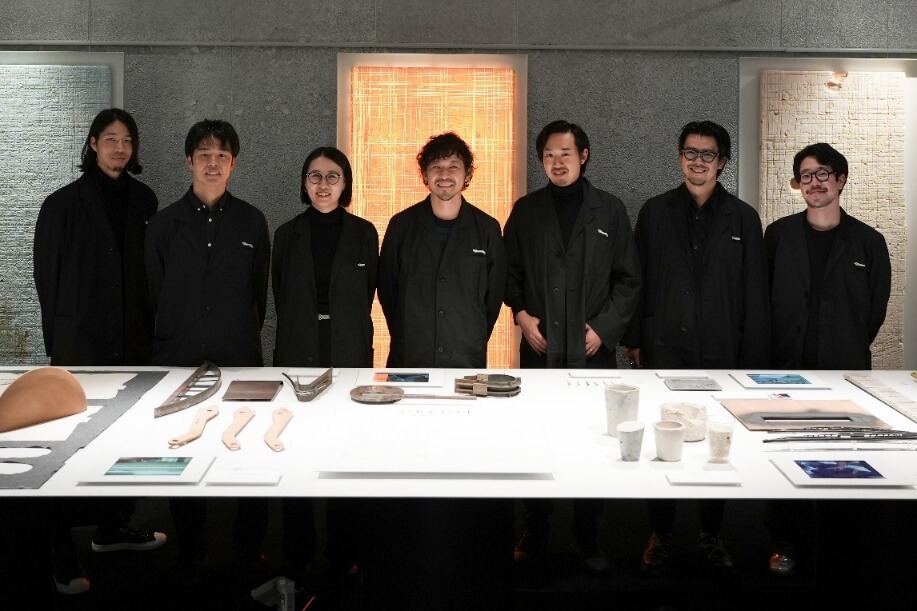
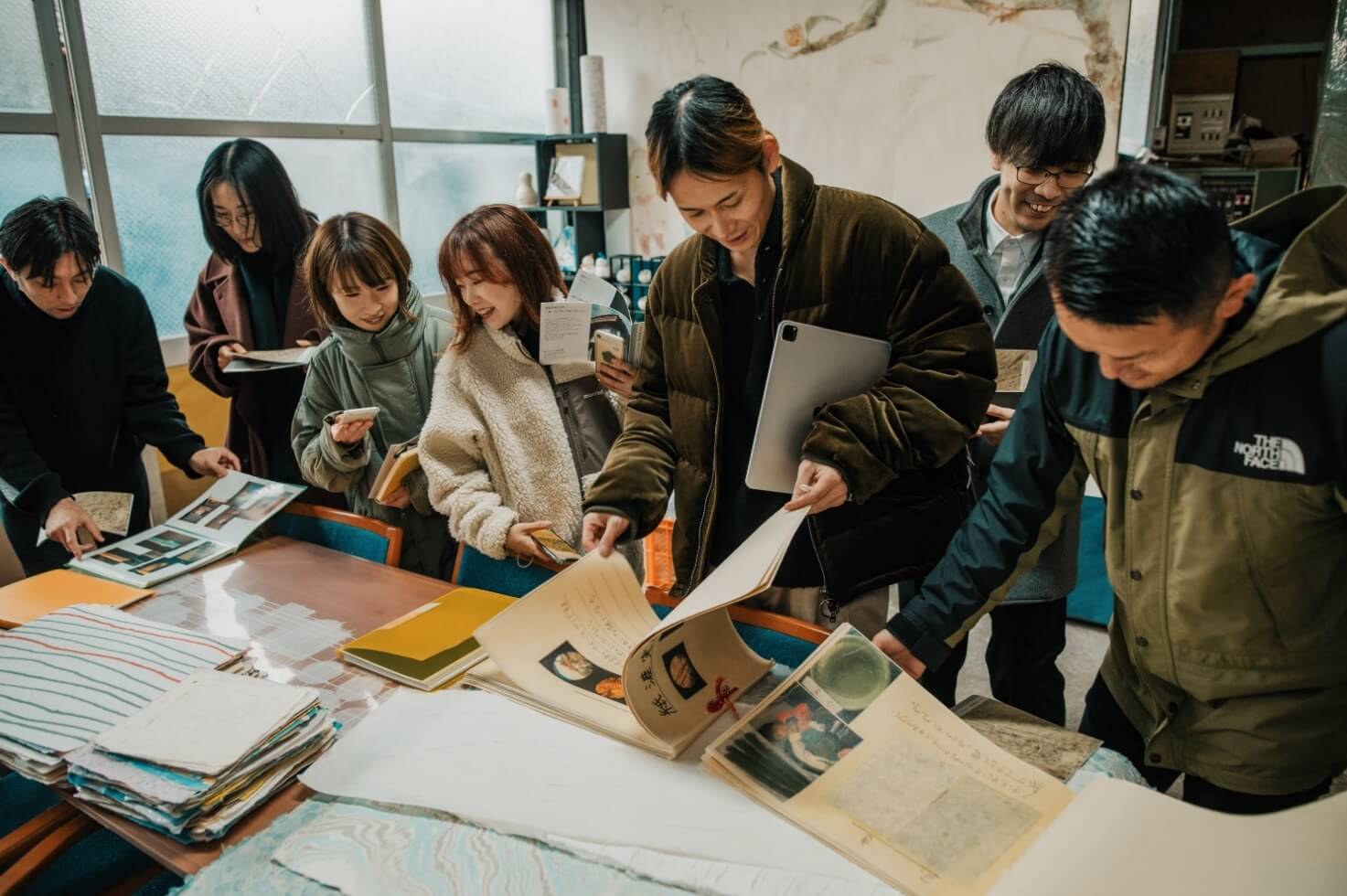
About a month later, the members who participated in this "Handicraft Journey" gathered again at NOMURA Co., Ltd., Ltd. They looked back on what they had gained from the trip and, together with the three guests, discussed what they can do as a comprehensive spatial production company to further the development of traditional crafts.
*Click here for the first part: Fieldwork that changes the current state of traditional crafts: "A journey of handicrafts"
- Traditional crafts are "soft things" that are full of potential.
Hikota
Nomura members, what was it like actually participating in the "Handicraft Journey"?
Hatae
The biggest change was that the image of traditional crafts has changed from being something old and "hard" to being something "soft" that is full of potential.
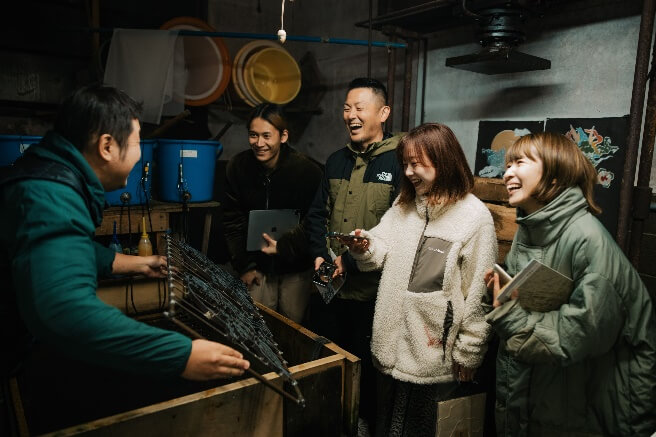
While touring the workshops, I was reminded that traditional crafts are made by combining natural materials with the skills of artisans. When people hear the term "traditional crafts," many have a fixed image of it as something traditional that has been passed down from ancient times, but I felt that by combining materials and techniques, there is the potential for a variety of outputs that go beyond the image of traditional crafts that we have in our minds. In the spatial business that we are involved in, we need to distinguish between things that will decline, things that need to be protected, and things that need to be developed, and we need to continue to develop by accumulating the skills of artisans.
Hikota
I also felt that the creators had a strong desire to try new things. They don't just keep making traditional things, but they keep trying to create new things, and although it's not a case of combining tradition and innovation, I felt that they were continuing to challenge themselves.
- Hints for ideas lie in unexpected places in the workshop.
Tanaka
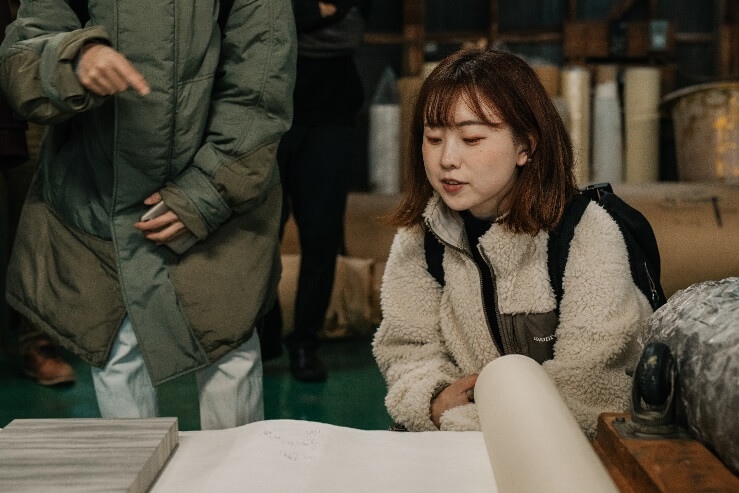
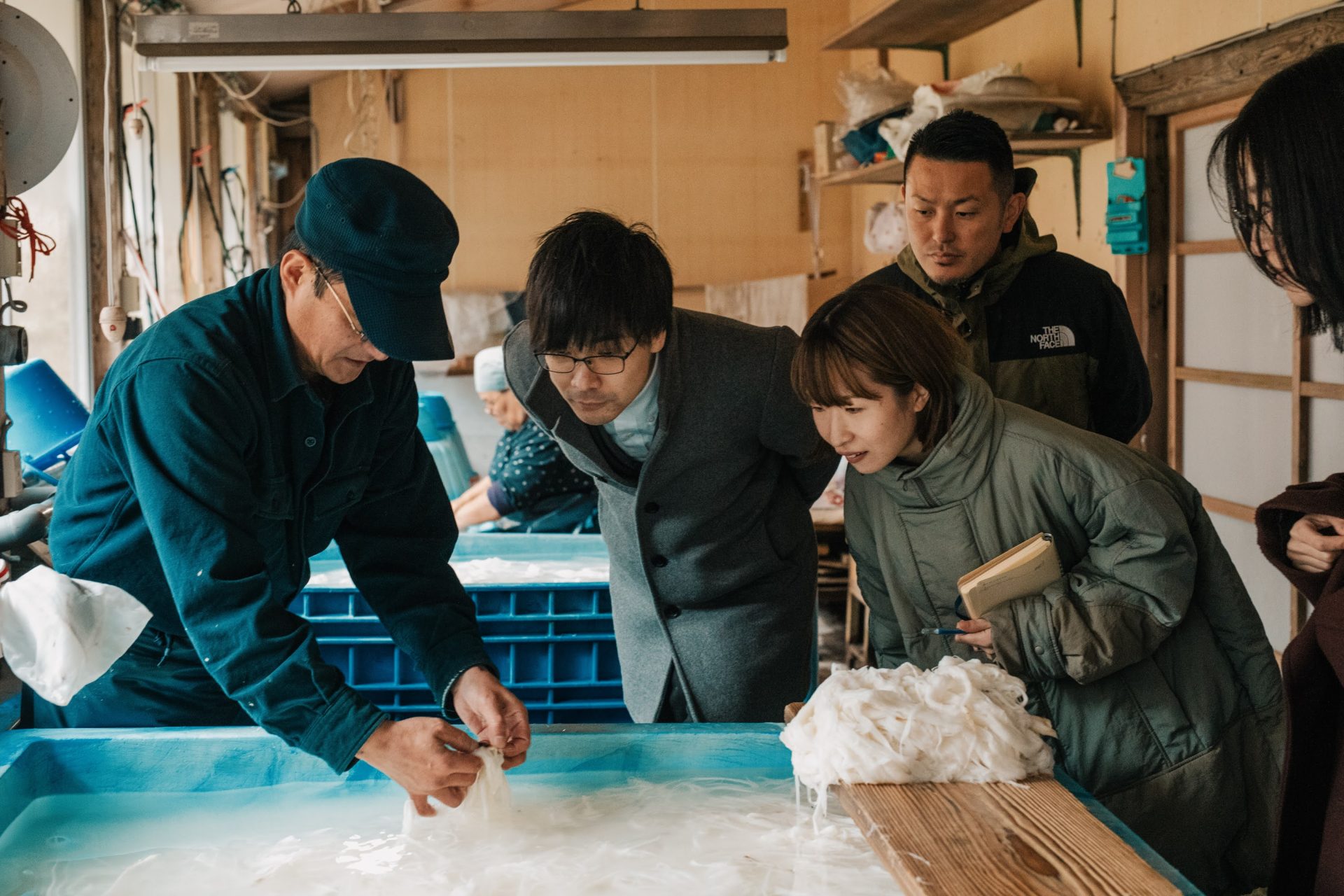
I've known about washi paper for a long time, but while watching the workshop and the process, there were many parts that could be used in this way even during the process, even in parts that the craftsmen don't notice, and they could be hints for creation. I was reminded that it is very important for designers to experience it on site. I think we need to create more and more opportunities like this so that we can give back.
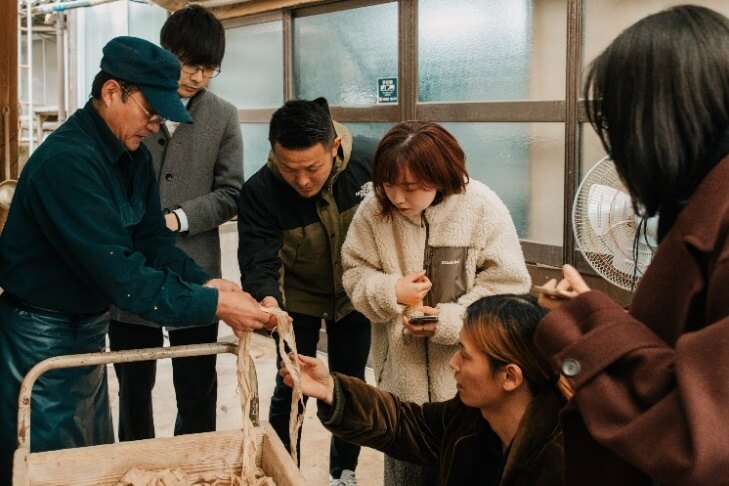
- Experience the physical properties of materials, something you can only understand by actually going there.
Hikota
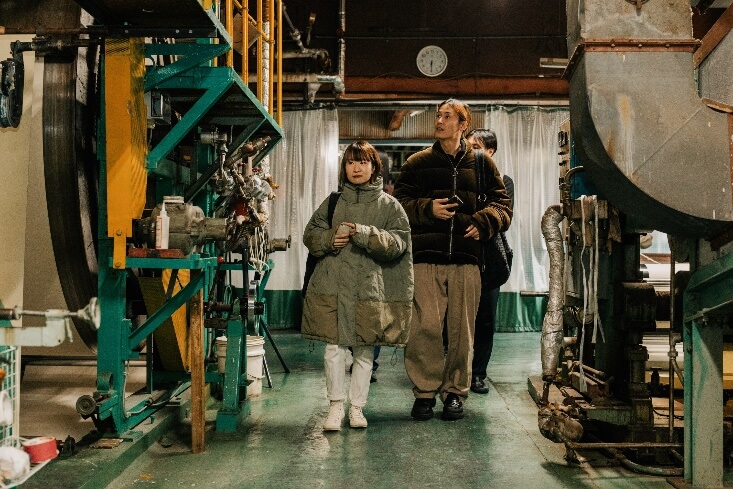
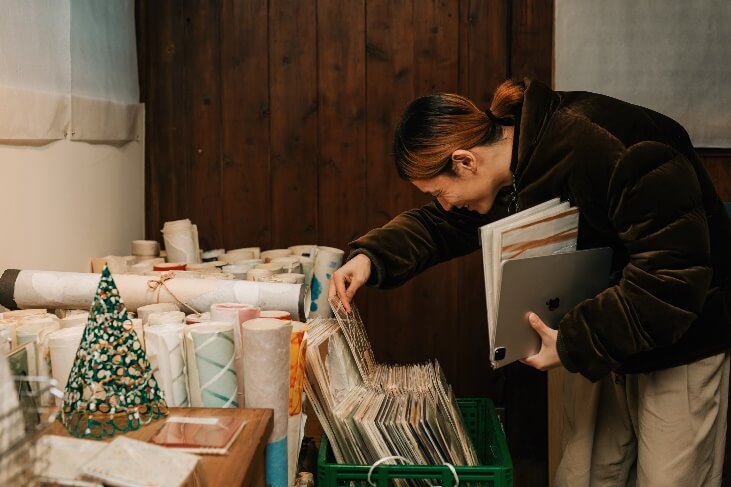
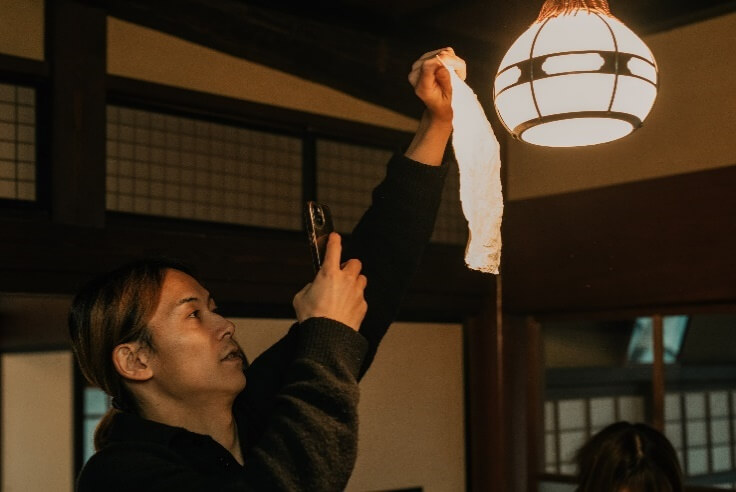
I had the image of washi paper being used in a flat way, but as I was looking around, I was very impressed to see ideas for using it in three-dimensional ways.
Sukegawa
I had the impression that traditional crafts are difficult to use unless there is a reason to use them in places like when you want to recreate a Japanese space or when they have a connection to Echizen. It was a great experience to actually go there and experience their physical properties. The impression of washi paper also changes depending on its density and transparency, and in spatial design, the impression it gives to the entire space when viewed from a distance is different from the impression it gives when viewed up close, as the quality of the light changes. This is something that cannot be conveyed in a photograph, and was only noticed by actually going there and experiencing it.
Because the crafts have the name "Echizen" in them, I will be able to introduce the region as a brand, which will help increase recognition as an industrial city, and I'll be able to promote the area by showing that I've been there myself...I think this will have some very positive effects.
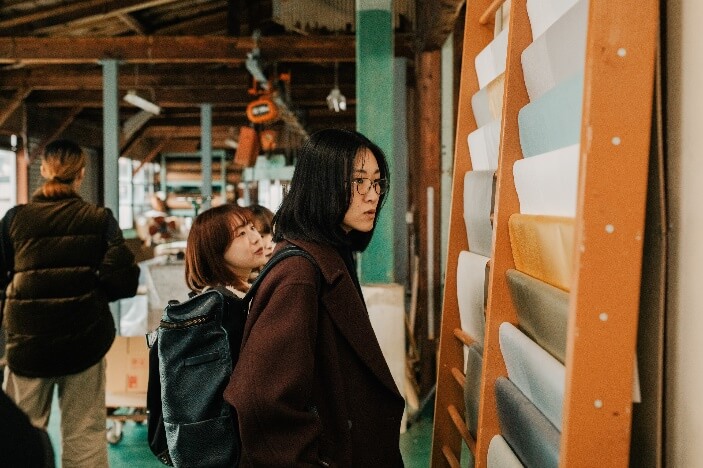
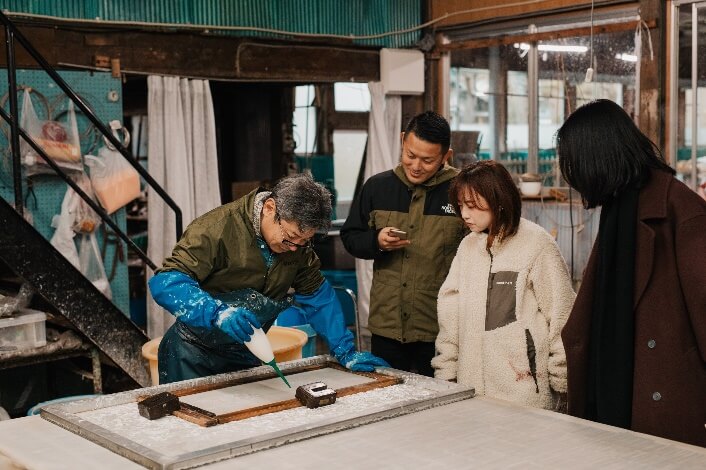
- A new way of using materials that makes the most of their characteristics.
Mountain name
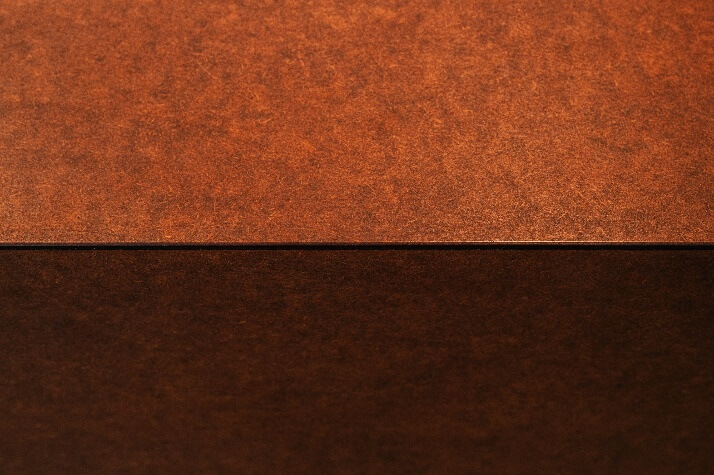
I was surprised to see various "handmade works" this time and learned that traditional crafts can be used in new ways that we never imagined. For example, applying lacquer to MDF creates a nice atmosphere, including changes over time, and there are lampshades made by applying lacquer to threads and hardening them, taking advantage of the characteristics of lacquer. I think it is possible to specify what people first imagine when they hear "traditional crafts" into a space, but I thought that because we work in spatial design, we would like to be able to incorporate them in a positive way in the future, such as by incorporating them in new ways.
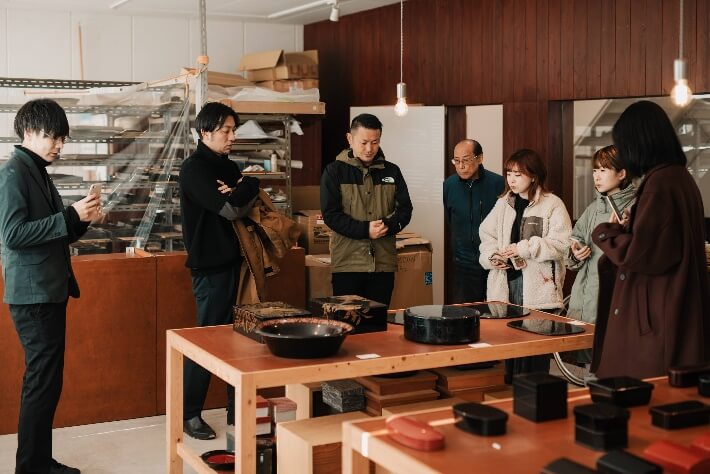
- The story behind the design that can't be conveyed through sample books or material boards.
Matsuo
We usually only see the materials in A4-sized sample books, but when I heard that they are made in a cold factory without heating so that the finished product does not discolor during the manufacturing process, I thought that it was wrong to present to customers just a material board made by cutting and pasting materials. I felt that it was important to show pictures that conveyed the movements of the craftsmen and to actually invite customers to the workshop to experience it.
- Deepening your understanding and communicating with the craftsmen will change what you can do.
Hatae
When I participated in the "Handicraft Journey," I was impressed by what Mr. Nagata said: "Even if the craftsman says he can't do something, there are many things that can be done if you have a dialogue with him."
Nagata:
When you learn the process and ask why a craftsman can't do something, it's often something you can do. When you ask why they can't do it, the reason is often something trivial. For example, their back hurts (laughs).
He said that if he did this, he would have to wash the barrel once, and at that time, he would say, "I'll do it," and loosen it up.
When people hear the word "crafts," many think of something that is complete and cannot be changed, but crafts are much more flexible, and there is a lot that can be done if you communicate with them.
- There is a demand for utilization that is "necessary" for the purpose.
Nagata:
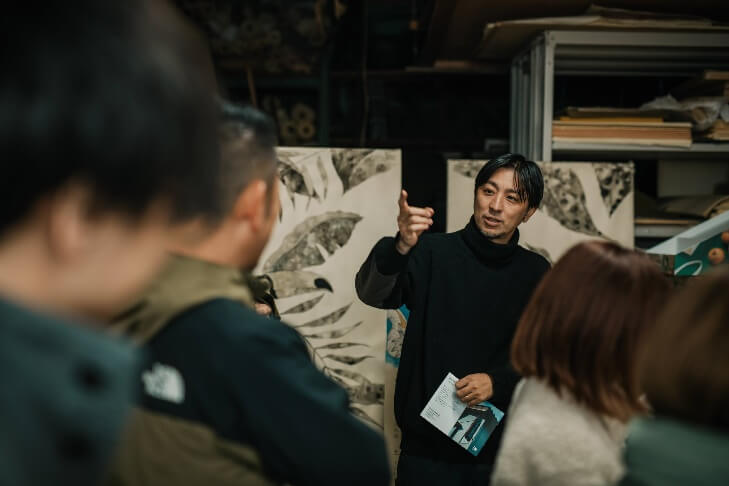
You mentioned "tradition and innovation" earlier, but one thing is missing: "necessity." Why do we have to use washi paper in this space? That's why it's this. There is currently no know-how to present the reason why traditional crafts should be used for a purpose with a sense of necessity. We need to be able to properly explain why we put this washi paper here, why we put this craft here. I think things will change if we can properly explain why lacquer is good, rather than just saying that it's good because it's lacquer. For example, MDF is weak to water and stains, and it can be unevenly colored, but if you wipe it with lacquer, it will have a luxurious feel and can become a material that changes positively over time.
If we can continue to promote exchanges that increase this necessity, traditional crafts will go beyond being seen as something special and can be used in a variety of places, and this is what production areas are looking for.
Tanaka
Business owners often ask me, "Why that?" Of course, functionality is important, but it's also important that the staff can explain it to the guests who will be using it. After hearing about the necessity of it, I thought that the designers also needed to be able to explain it properly.
Nagata:
Although it may not be able to compete with cutting-edge materials in terms of functionality, it does have emotional and narrative qualities, so in terms of overall balance it is a winning material.
Hatae
In today's world, emotion and storytelling are very important, so the fact that it has both that cultural background and the inherent functionality of the material is very appealing.
Considering the future of traditional crafts in Echizen City
- Aim for an area that will make you want to go, a "daring" area.
Hikota
Finally, what do the people of Echizen City think about the "Handicraft Journey" from next year onwards?
Kamijodo-san
To borrow Nagata's words, I want Echizen to be a place that continues to be chosen, where people can dare to visit and "take on the challenge." I want to raise the brand of the entire Echizen area, and instead of being seen as being on par with other tourist destinations, I want to use tourism as a way to invigorate the industry. Next year, I would like to continue inviting top professionals to brush up on the content, discuss what kind of initiatives we should take in the future, and consider whether there are any areas that can be used by expanding the area a little more, while also borrowing Nagata's knowledge and experience.
Hikota
Is your vision for this to work in cooperation not only with the people of Echizen City, but also with neighboring cities in Fukui Prefecture?
Kamijodo-san
I feel that very strongly, and I don't think this is something that can be completed by Echizen City alone. I would like to work with neighboring cities to promote the whole of Fukui, and the whole of Hokuriku, even though they are separate administrative districts, so that they will be chosen as an area.
Tatsuta
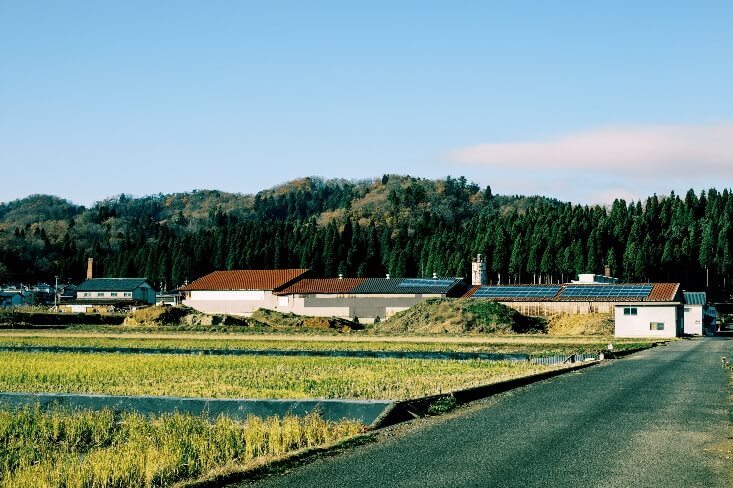
We are the ones who decide the administrative districts, but I think it is our job to make sure that visitors can see everything they want to see together. It just so happens that the city has a Shinkansen station, so I hope it can function as a gateway. We are moving forward with plans to create a future creation base that will also include crafts in the future, and we are currently considering how to develop it so that it will be a high-added-value, yet sustainable region.
- What is the Material Center plan that connects production areas with creators?
Hikota
Could you please tell us as much as possible about the "Materials Center" that is currently being planned?
Tatsuta
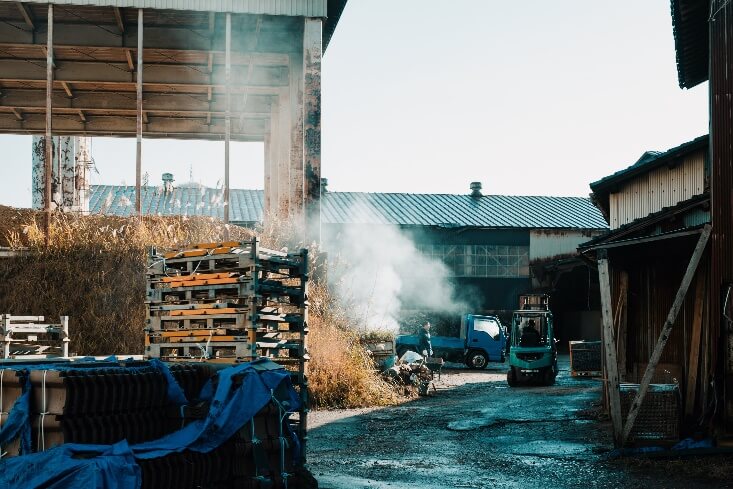
As everyone said earlier, I think having people actually visit production areas is a good thing for both industrial manufacturers and creative people. There are things you can sense in the town as a whole, such as the air you feel in the production areas, the water flowing nearby, and the people who are creating there, so I hope we can cherish the things that can only be felt there and that only come from creativity in those places.
In addition to actually having people visit the workshops, we would like to create a "material center" at the junction of the Shinkansen and expressways as a preliminary step, where people can see all the materials at once and then visit the workshops that interest them, in an effort to connect them more seamlessly. We need to think about how to do this in the future, such as whether there is actually a demand for it and whether it would be better to have a satellite in Tokyo.
Up until now, we have lived in a time when if you made something good it would sell, but I don't think that approach will work that way going forward, so I want to add more added value.
Nagata:
When creating a space, individual owners often request the entire space, and I would like to be able to create something like a presentation room in a place like a material center, where they will say, "This is the cool space I've always wanted."
Tanaka
That's a great idea. Before going to a workshop, you could first go to a material center to find out what's available, and then visit the production area to learn more about the products. I hope there will be such places in Fukui and Tokyo as well, where you can start doing this.
Nagata:
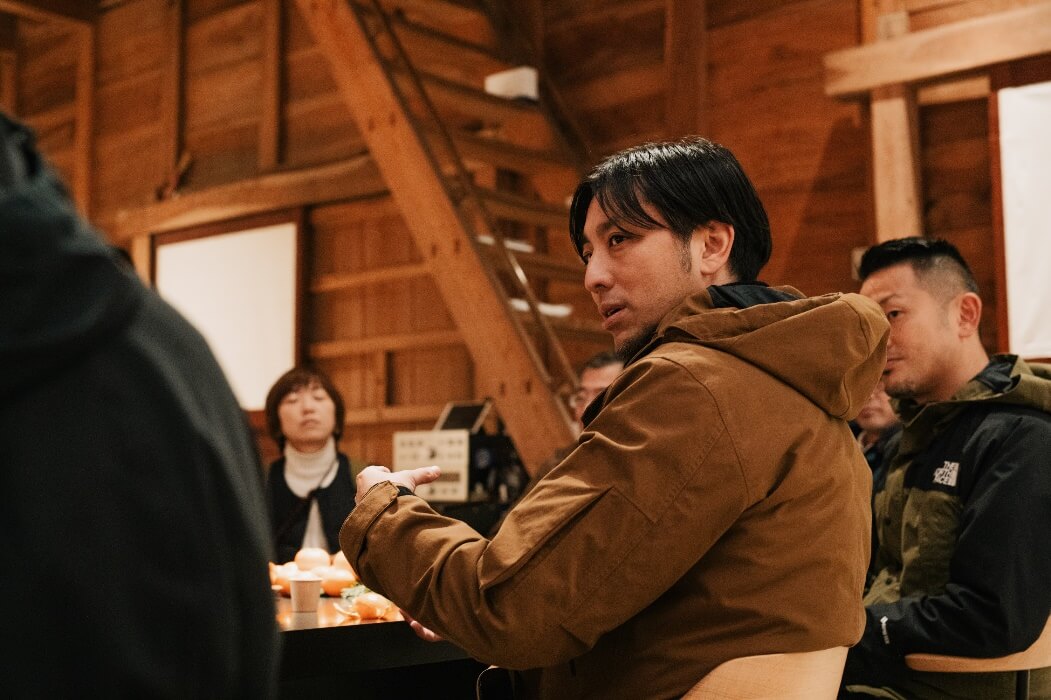
I was shown the material room in NOMURA Co., Ltd., Ltd. office earlier, and there were a lot of materials, but there were no materials lying around like those in the Fukui factory, for example. To be honest, I thought that there are only one-of-a-kind items at handicraft sites that you won't find in material rooms like this! (laughs) In other words, there is a lot of room to propose other materials. Anyone can see the materials in the material room if they order them, but there are a lot of materials at handicraft sites that you can't get unless you go out of your way, so I hope to create an opportunity to encounter such things.
Hatae
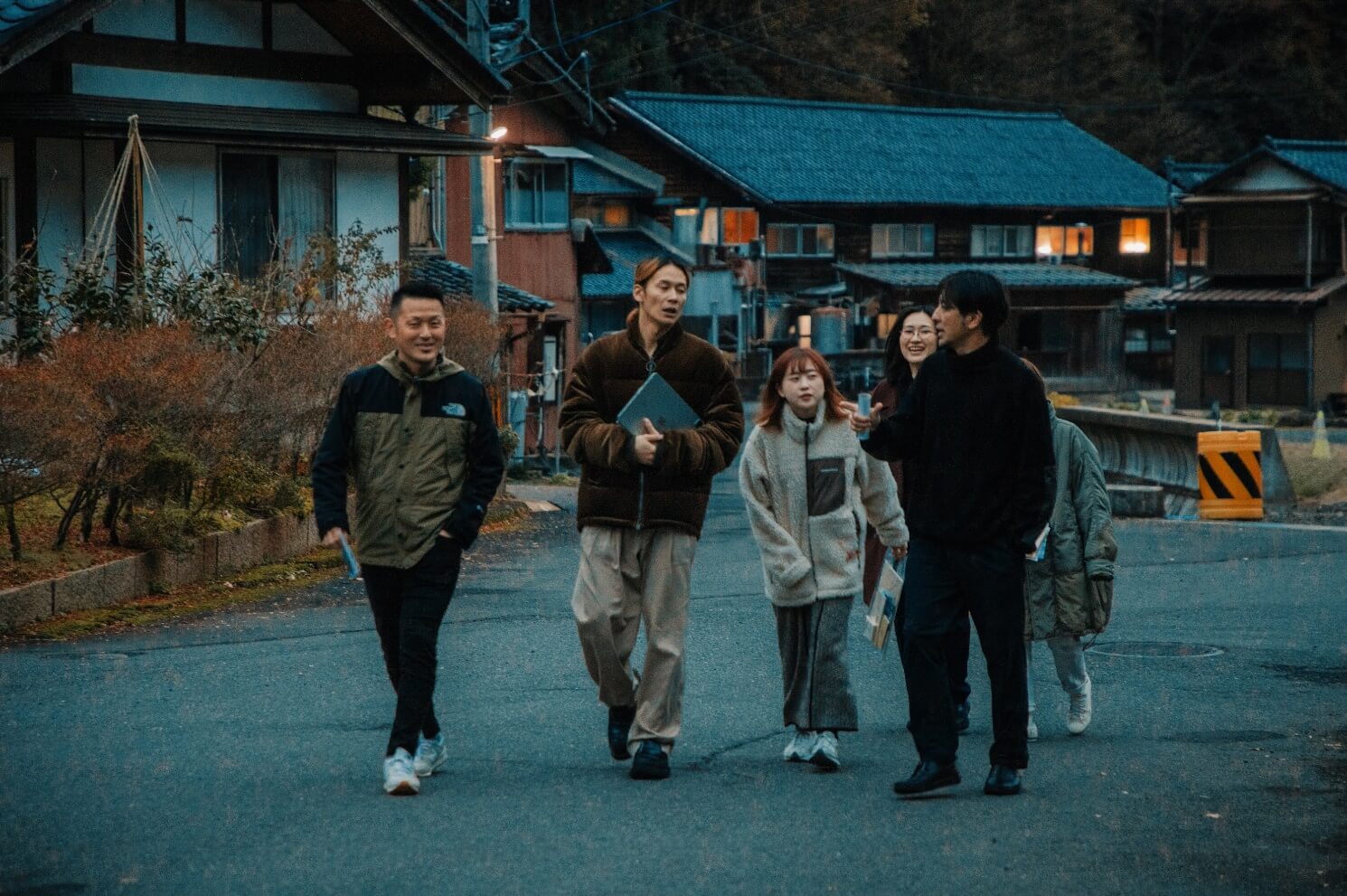
This time, I once again felt that there are many things that you can't understand unless you actually go to the site. I was moved by the atmosphere unique to traditional craft production areas, including the way the craftsmen work in the factory and the scenery surrounded by nature around the factory. When considering materials, I would like to explore new possibilities by not only incorporating the finished product, but also thinking about the scenery in the production area and visiting the production area and having conversations with the craftsmen. I think that many Nomura employees who work in spatial design will sympathize with this feeling, so I would like to spread the feelings I felt this time by having them visit Echizen City as well.
Tanaka
I am very grateful to have had this opportunity as one of the designers.
For those of us who think about design, we feel that seeing the actual production site and feeling the characteristics and texture of the materials is an opportunity to accumulate information that cannot be gleaned from the catalogs or screens that we casually glance at every day.
What kind of environment do the craftsmen create their products, and what kind of thoughts do they have? What was most valuable to me was that by talking to the craftsmen, I learned that each material has a history and a story, and by learning this, new ideas were born within me, which was very stimulating, and I feel that it is a chemical reaction that can only occur in a place like this. I think it was a valuable time to once again experience the passion and breadth of the craftsmanship of the people of Echizen City. I would like to create more opportunities to have a deeper relationship with the people of Echizen City in the future.
Sukegawa
This time, I visited many workshops and was able to experience the possibilities of traditional crafts in space from a broad perspective.
I believe that the warmth of handcrafted work will be even more in demand in spatial design and spatial experiences in the future. I would like to contribute to the development of both parties by learning about the delicate nuances that can only be created in limited areas that make the most of the local natural and climatic conditions, and the diversity of expression that has been born from numerous trials by artisans, and by deepening our relationship as designers.
I would like to use this experience to continue taking on new challenges together with everyone involved in traditional industries.
Read the first part of the article here
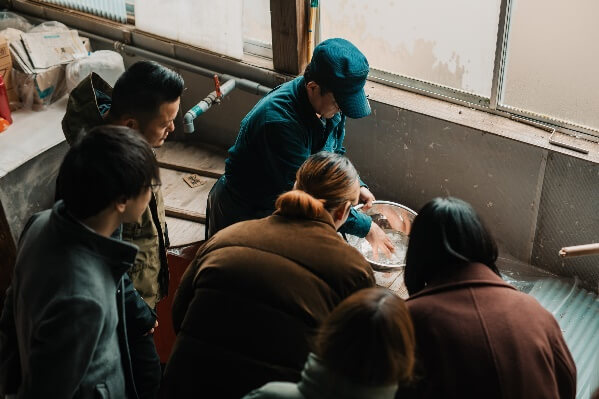
"Handicraft Journey" - Fieldwork that changes the current state of traditional crafts
Like this article?
- editor
-
-
A planner that spins thoughts
Add a plus to the city from a small space.